Drud, the Bavarian nightmare spirit from the Oberpfalz
By Ralf Ittermann · last reviewed on
Drud is a demon of alpine tradition.
A nocturnal night-pressure demon that presses down on the chest of sleepers. Similar nightmare spirits are recorded in valleys throughout Bavaria.
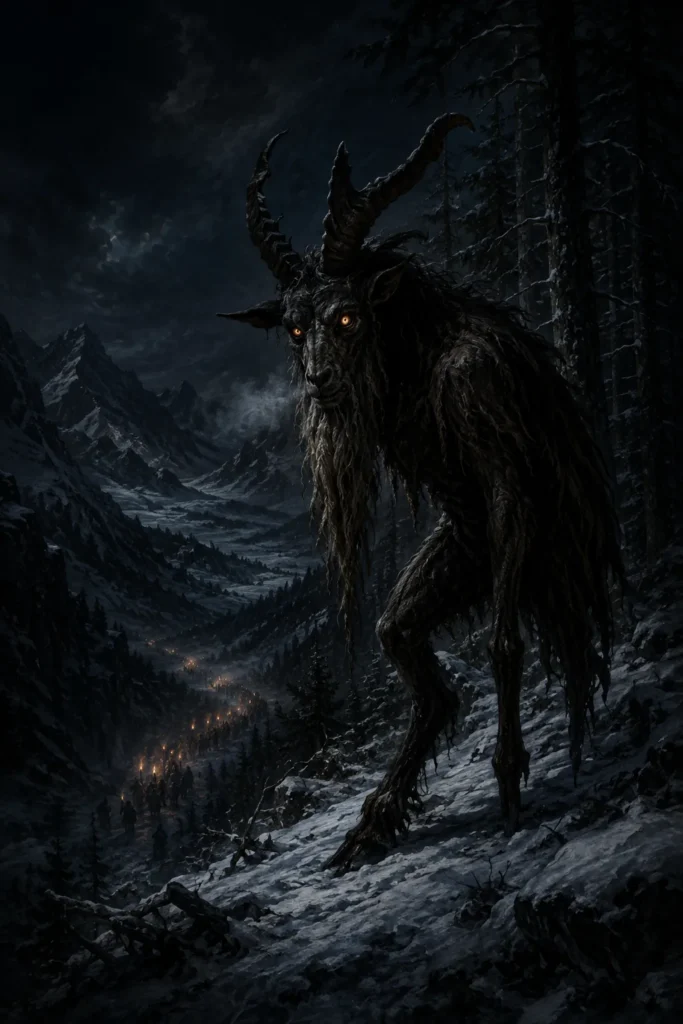
The Drud is a sinister figure of Bavarian folklore that is active mainly at night. As a small, hideous house or night-hag figure, she sits on the chest of sleepers, hinders their breathing and brings on severe nightmares.
Belief in her was so widespread in the Oberpfalz and Old Bavaria that hardly a village was without a woman reputed to be a Drud; she is richly documented in writing in the 19th century by Schönwerth and Panzer.
Type: Night-hag demon that presses down on sleepers
Origin: Bavaria, mainly the Oberpfalz and Old Bavaria, with offshoots into Austria
Texts: dense folkloric field collections of the 19th century (Schönwerth, Panzer), Handwörterbuch des deutschen Aberglaubens
Period: oral tradition since the Middle Ages, richly documented in writing in the 19th century
Appearance: a being that roams bodiless at night, able to take the form of a cat, black dog, straw or old woman

Context of tradition
Period of the Texts
Widespread orally since the Middle Ages, richly documented in writing in the 19th century by Franz Xaver von Schönwerth (1857/58/59) and Friedrich Panzer (1848/1855).
Area of Diffusion
Bavaria, mainly the Oberpfalz and Old Bavaria, with offshoots into Austria.
Sources
Dense folkloric field collections of the 19th century, systematically compiled in the Handwörterbuch des deutschen Aberglaubens.
Name and variants
Middle High German: The word Drud derives from trute, trut, the origin of which is unclear; by folk etymology it is linked with the verb treten (to tread) and interpreted as the pressing down, the treading on the sleeper.
Shape-shifting and effect
Appearance
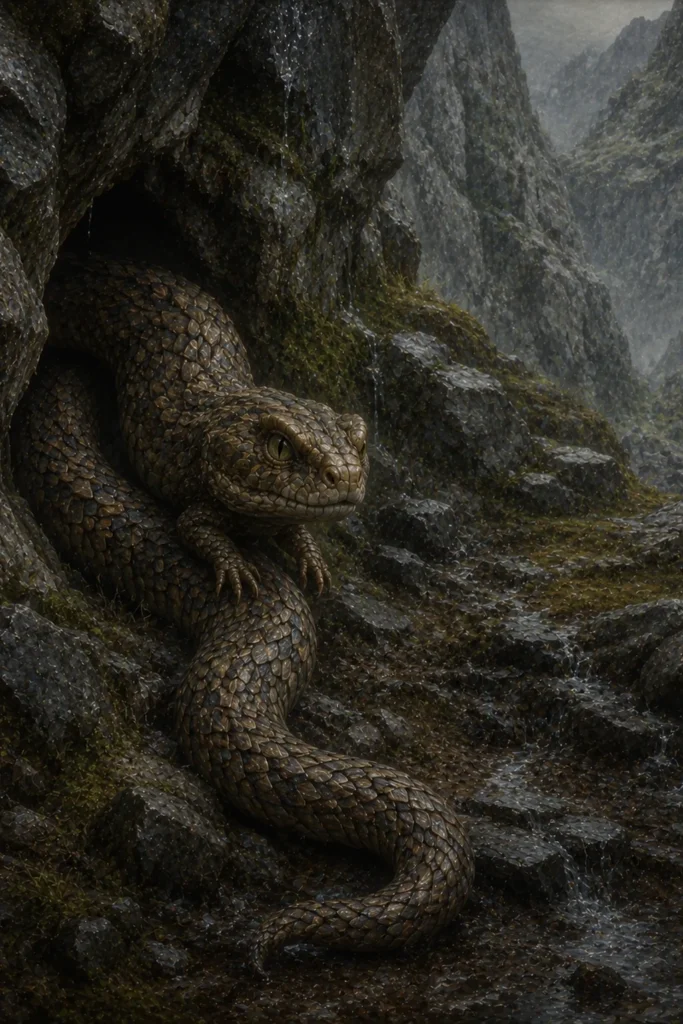
According to folk belief, when the Drud sets out she first sheds her body, allowing her to slip through the smallest cracks, keyholes or draught gaps at windows. She takes on the most varied shapes, such as a straw, a quill, a broom twig or a pea, but most often a black cat, a black dog or an ugly old woman. A Drud in human form is said to be recognisable by clumsy, broad hands and by eyebrows that meet above the nose.
Effect
In Bavarian tradition, the Drud is regarded as no good spirit: she bewitches whatever displeases her, and the name of the Drudenfuß as an apotropaic sign still recalls this activity today. The Drud comes at night, roughly between nine and twelve o’clock, always before moonrise, and once she begins, she usually presses down for nine nights in a row. She is said to particularly seek out women in childbed who are not lying in a canopy bed with the curtains closed, as well as newborns, at whose small chests she sucks until they swell.
Profile: Drud
The most important aspects of the Bavarian night-hag at a glance.
A Bavarian-Alpine night-hag, closely merged with witch belief in the Oberpfalz and densely documented by Schönwerth and Panzer.
Sleepers of all kinds, especially women in childbed and infants; failing that, also chickens, sheep and geese in the stable.
Usually a black cat, a black dog or an ugly old woman with clumsy hands and eyebrows grown together.
Nocturnal pressing and breathlessness, in the Oberpfalz also serving as an explanatory pattern for misfortune suffered through witchcraft.
The Drudenfuß on the doorstep, an upturned broom, a knife in the door, as well as salt, garlic and amulets.
The supra-regional Alp as the more widely used name for the same night-hag concept; the Drud is distinguished from it by her Bavarian roots and her closeness to witch belief.
From baptismal error to merging with witch belief
The word Drud derives from Middle High German trute, trut, the origin of which is unclear; by folk etymology it is linked with the verb treten (to tread) and interpreted as the pressing down, the treading on the sleeper. According to the folk belief of the Oberpfalz, as recorded by Franz Xaver von Schönwerth in his collection Aus der Oberpfalz, Druds are actually people at whose baptism a mistake occurred; those affected must then, often against their own will, press down on living beings at night. Schönwerth notes that around Roding, old, gaunt women with unkempt hair were regarded as Druds, and there the concept of the Drud merged with that of the witch.
Men, too, could be regarded as so-called Druderer, who could additionally climb about roofs and walls as Breitensteiger. Friedrich Panzer collected numerous related accounts from across Old Bavaria in his work Bayerische Sagen und Bräuche. The Handwörterbuch des deutschen Aberglaubens places the Drud within the more widespread concept of the Alpdruck, which appears as Schrättele in the Swabian-Alemannic region; regionally, the Drud is also understood as a distinct night-hag figure alongside, not instead of, the Alp.
The Drudenfuß as an independent symbol
The Drudenfuß, as the Drud’s protective sign, has largely detached itself from its original figure as an independent symbol and is still used today as a synonym for the pentagram, regardless of the Bavarian legend cycle. The Drud herself remained more strongly rooted regionally than the Alp and lives on in Bavarian dialect expressions such as druckt mi wie a Drud, used to describe an oppressive feeling.
From a religious-studies perspective, the Drud belongs among the explanatory patterns with which pre-modern societies interpreted the physically real but uncanny phenomenon of sleep paralysis. The close entanglement with witch belief, visible in the equation of Drud and witch in parts of the Oberpfalz, shows how an originally fateful marginal figure, herself a victim of a baptismal error, could become a culpably acting perpetrator in the course of the early modern persecutions. The rich collection of concrete apotropaic practices, from the Drudenfuß to the loaf of bread, makes the Drud one of the best-documented examples of everyday apotropaic magic in the Bavarian region.
Drudenfuß, loaf of bread and other protective means
Folk belief knew numerous means against the pressing of the Drud. The most important and, to this day, best-known sign was the Drudenfuß, a pentagram drawn on the door or doorstep, which was said to bar the Drud’s entry, since she was forced to count all its lines; equally widespread was the related Drudenkreuz. A broom leant upside down against the parlour door, a knife stuck blade-up into the door, or a loaf of bread laid on the face, were also meant to keep the Drud away. Other traditional means include incense, prayers, salt, garlic, a worn protective stone or amulet, the speaking of charms over the ailment, and invoking one’s guardian angel. So-called Drudensteine, pebbles with a natural hole, served as portable amulets, hung on the bed or in the stable.
Night-hag figures compared
The Drud belongs to the widespread family of night-hag demons that popularly explain the phenomenon of sleep paralysis. In the Swabian-Alemannic region she corresponds to the Toggeli, related to the Alp, also known at the same time in Bavaria and Austria, which likewise sits on the chest of sleepers at night. In the Nordic and Slavic regions a structurally similar figure appears as Mara, from which the English term nightmare is also derived. The Schrat shares with the Drud the ability to shape-shift and nocturnal activity, but appears more as a woodland and house spirit than as a pure night-hag. Unlike the Toggeli, the Drud is primarily rooted in Bavaria and closely merged with the witch belief of the Oberpfalz.
Frequently asked questions about the Drud
What is the difference between the Drud and the Alp?
Both describe the same basic occurrence, the nocturnal pressing down on sleepers, but the Drud is more strongly rooted regionally in Bavaria and Austria, where she is often merged with witch belief. The Alp is regarded as the more widespread, supra-regional name for the same night-hag concept.
Why is the Drudenfuß regarded as a protective sign?
According to folk belief, as soon as the Drud catches sight of a pentagram, she is compelled to count its lines and can find no end, which prevents her from entering. The sign was therefore placed on doors, stables and cradles.
Can one become a Drud oneself?
According to the belief of the Oberpfalz, no one became a Drud through their own fault, but rather through an error at baptism or through someone else’s malice. Tradition therefore also knew ways of releasing a person from this curse again.
Further links
Further reading:
- Alpine region – all beings of alpine folklore
- Alp, Mara, Schrat, Toggeli – related nightmare figures
- Drudenfuß, Amulet, Salt, Charming, Invoking a guardian angel – traditional forms of protection
- Protection Compass – protective means at a glance
Literature (selection)
Further standard works in the bibliography.
As the Drud she still travels through Bavaria in the Bavarian dialect, and the protective Drudenfuß on thresholds and cradles is a reminder of just how concretely people once knew how to defend themselves against her nightly pressing.