Reptilians, demon of the modern tradition
By Ralf Ittermann · last reviewed on
In modern conspiracy narratives, Reptilians are humanoid-reptilian extraterrestrials or interdimensional beings said to control humanity. In terms of religious studies, they represent modern parallels to older demonic takeover mythologies, colonized by UFO and conspiracy discourses.
Reptilians
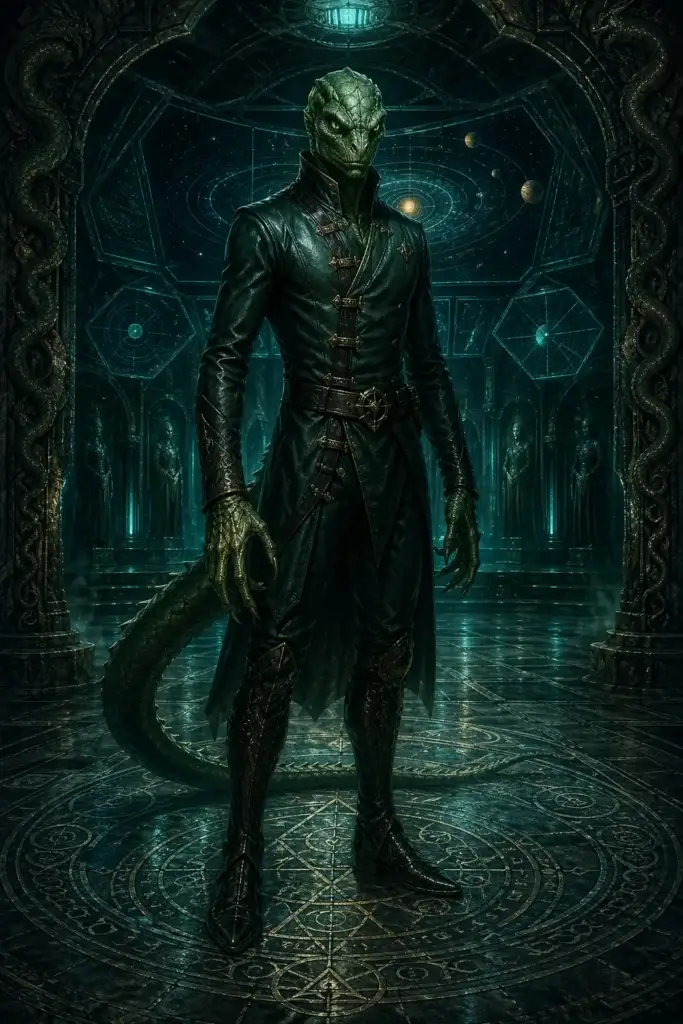
Reptilians are beings with reptilian-humanoid features (green or brown skin, scales, snake eyes, claws) to whom supernatural shapeshifting abilities are attributed. They are said to live in underground bases or to cross dimensional boundaries.
Central myths: David Icke’s Reptilian conspiracy (from the 1990s onward), QAnon variations, Area 51 narratives. Functionally, they replace traditional demons as an explanation for evil and control: wars, elite corruption, transhumanist agenda.
At a glance: Reptilians
The Reptilian narrative emerged in the 1990s through the British conspiracy theorist David Icke (The Biggest Secret, 1999) and was later globalized through internet culture (Reddit, YouTube, QAnon). Central sources: Icke’s writings, Robert Morningstar (UFO disclosure), modern conspiracy blogs and podcasts.
State of research: Michael Butter (The Nature of Conspiracy Theories), Joseph Uscinski (Conspiracy Theories and the People Who Believe Them), Karen Douglas (Why Do People Believe Conspiracy Theories?). The Reptilian thesis is academically classified as pseudoscientific and mythological.
Context
Period of the texts
The narrative of reptilian shapeshifters is a creation of the 20th century and has no premodern history of transmission. Its present form spread mainly from the 1990s onward through publications and lectures by the British author David Icke, who combined older elements from UFO literature and entertainment media into a worldview.
What may appear to be a tradition is in fact a recent interpretive pattern, whose components are continually reassembled within contemporary conspiracy circles and passed on through internet forums, books, and video platforms.
Area of distribution
Followers of the reptilian narrative interpret numerous social and political events as the work of secretly ruling reptilian beings and see in this a comprehensive explanation of power relations.
This idea did not spread through trade or migration, but through translated books, lecture tours and above all through the internet, which carried the originally English-language content rapidly into the German-speaking world and worldwide. The striking similarity of the depictions in different countries is due to the adoption of common source texts, not to an old cross-cultural tradition.
Source situation
Primary sources are David Icke’s The Biggest Secret (1999) and Children of the Matrix (2001), magazines such as NEXUS, podcast and blog content (Alex Jones, David Wilcock, from 2000 to the present). Period: 1990 to today. Language areas: English (primary), later German, French, Spanish. Geographic origin: UK (Icke), later the USA (internet culture). Researchers: Michael Butter (conspiracy theories), Joseph Uscinski (political psychology), Cecilie Naesby and Soren Riis (Alt-Right Mythologies). Source legitimacy is academically invalid; the Reptilian thesis is based on speculation, syncretism of myths and trauma projection.
Name and variants
Reptilians are depicted in the various sources and artistic traditions with certain recurring iconographic elements that remain relatively constant across decades and across different geographic areas.
These elements are not purely decorative or randomly chosen, but are deeply symbolically coded and carry great meaning. They centrally convey the functions, sources of power, areas of responsibility and cosmic role of the being.
The overall system is like a sacred scripture or a coded image; it allows initiates or the culturally educated to grasp the essential deep meaning and understand it correctly. Colors, sacred objects or weapons, physical attributes, specific accessories: everything is significant and traditionally handed down.
Characteristics
The handling of the reptilian idea is not shaped by trained religious specialists, but by self-appointed enlighteners and authors from the conspiracy milieu. They spread their interpretations through books, lectures and internet channels, and claim to expose a hidden agency behind the visible events.
In place of a handed-down doctrine there is a loose, constantly changing web of assertions, set in motion by individual spokespeople and taken up, supplemented and passed on by a following.
The lasting appeal of the reptilian narrative is explained not by proven ritual efficacy but by its function as a closed system of interpretation. It offers its followers a simple explanation for situations of power and crisis that are perceived as opaque, and at the same time names a hidden culprit.
Researchers in sociology and psychology point out that such narratives serve a need for overview and control, and persist precisely because they immunise themselves against refutation, since every objection is interpreted as further proof of the cover-up.
Profile: Reptilians
The Profile on Reptilians considers their morphological description, their role in conspiracy narratives, their alleged origin and agenda, their portrayal in popular culture and science fiction, protective practices (as understood in modern esoteric circles) and cultural parallels to older traditions of demonology.
Reptilians' origin
Reptilians emerged as a modern mythology in the 1990s, temporally correlated with UFO disclosure movements and modern internet esotericism. Geographic origin: North America/UK, later global.
Cultural origin: a synthesis of the ancient astronaut hypothesis (von Däniken), New Age alien spirituality, Christian reptile symbols (the serpent in Genesis, Satan as a reptile), military-industrial paranoia and depth psychology (the triune brain theory of Paul D. MacLean).
Temporal dating: first mass popularity from David Icke in 1999, peak in 2010 and 2020 with QAnon integration.
Related to
Belief in Reptilians appeals to conspiracy theorists, alternative spiritual seekers, anti-establishment activists and traumatized persons (especially victims of allegedly satanic ritual abuse, a now discredited panic of the 1980s).
Occasions: a search for meaning in a fragmented world, a need to explain injustice and elite corruption, internet radicalization, psychological trauma. Social context: alienation, loss of trust in institutions, technological fear, QAnon infiltration into mainstream political movements.
Appearance
Reptilians are visualized as humanoid with saurian features: green or brown scaly skin, reptile eyes (vertical slit-shaped), rows of teeth, sometimes wings or a tail. Modern variants: silver-grey or golden, more alien-elegant than demonic. Clothing: futuristic-metallic or naked and scale-covered.
Attributes: technological control devices, an aura or dark energy field. In popular culture (the V television series, Reptilians films) they have a more alien-invasive aesthetic; in conspiracy narratives: hidden, shapeshifting, able to become invisible (a cultural projection of fear).
Activity
Sphere of action: The Reptilians or reptilians are a central motif of contemporary conspiracy mythology.
Significantly popularized by David Icke (The Biggest Secret, 1999), they draw on older precursors: H. P. Lovecraft’s “Cthulhu myth” (from 1928) supplied the imagery of reptilian otherworldly beings, Robert E. Howard’s “Conan” tales added cosmic serpent beings, and from the 1970s onward science fiction literature (for example “V, The Visitors”, 1983) developed the inventory of motifs.
In Icke’s conspiracy narrative, Reptilians are interdimensional beings who infiltrate powerful families (royals, politicians, bankers) through shapeshifting. From the perspective of religious studies (Barkun, Partridge), this is a modern form of gnostic narrative patterns, the world as imprisonment, secret elites as helpers of the demiurge, combined with antisemitic tropes of classical conspiracy literature.
Scholarly research (Lewis, Robertson) reads them as “stigmatized knowledge”: bodies of knowledge rejected by the mainstream and reactivated in subcultures.
Means of protection
Protective practices against Reptilians (as understood in modern esoteric and conspiracy culture): light-body activation (Kundalini yoga, crystal energy), psychic shields (mental visualization of protective firewalls), invocation of galactic light beings or archangels (IL 15), abstention from reptile-frequency food (allegedly: red meat, negative emotions), meditation and expansion of consciousness.
Critically to be noted: these practices can be validated in psychotherapeutic terms as trauma coping or resilience training, not as magically effective against external entities.
Related beings
Comparable figures are traditional demons in reptile form (Christian Satan iconography as a serpent, Jewish Lilith variants, Islamic Iblis), Nagas (Hindu-Buddhist serpent beings), Lamia in Greek mythology, and the Mesopotamian dragon cult (Marduk vs. Tiamat). Modern variants: UFO abductee theory, alien reptilians in science fiction. Common to all: serpent form, superhuman power, control, otherness.
Reptilians, parallels in other cultures
Reptilians belong to a modern complex of myths that became popular in ufology and conspiracy literature from the 1950s onward.
Functionally comparable are the serpent gods of Mesoamerica (Quetzalcoatl, Kukulkan), the Mesopotamian serpent beings such as Mušḫuššu, and the Naga tradition of India and Southeast Asia. Unlike these ancient traditions, the Reptilian is a contemporary construct with a pseudo-scientific claim.
Jewish tradition: The serpent in Genesis (Naḥash) is originally neutral or wise (Gnosticism: positive), later demonized. Lilith is sometimes described as a serpent hybrid (kabbalistic).
There is no direct Reptilian thesis, but a structural precedent: reptilian supernaturalness as a sign of evil or of the power of chaos.
Greco-Roman world: Medusa combines human and reptilian. The chthonic gods (the underworld, the earth) also have reptilian-demonic features. Gnosticism (the Ophite sect) venerated the serpent, which was later reinterpreted as demonology.
Mesopotamia: Tiamat (a saltwater monster, dragon-shaped), as chaos against Marduk, is the archetype of the reptilian-demonic. The Lamassu (hybrid beings with wings) also show a similar morphology. There is no Reptilian narrative as such, but a cosmic reptilian danger.
India/Asia: Nagas (serpent deities in Hinduism, Buddhism) are ambivalent: they can be guardians of treasure or demons. Kali or Durga fight against Asuras (demons).
Tibetan Buddhism knows nagas and yidams with reptile features. Chinese Daoism and Taoism: dragons are cosmically ambivalent, not purely demonic. There is no Reptilian conspiracy, but a deep reptilian supernaturalness in Eastern cosmology.
History of origin and ideas
The idea of reptilian beings secretly steering the fortunes of humanity is a comparatively young phenomenon of the conspiracy culture of the 20th century. Older roots lie in the science fiction and pulp literature of the 1920s to 1950s, in which snake-like and lizard-like extraterrestrials appeared as antagonists of humanity.
Robert E. Howard’s tale The Shadow Kingdom (1929), with its serpent beings disguised as humans, is frequently cited in research as an early literary motif.
A second source is the UFO and contactee scene from the 1950s onward, in which, alongside the classic Greys, reptilian extraterrestrials were also described.
From the 1980s this motif combined with narratives about underground bases and alleged government agreements with foreign species. Authors such as the geologist and amateur researcher John Rhodes collected and systematized such reports.
The idea received its decisive boost through its connection with classic antisemitic and anti-elite conspiracy narratives. The claim that a hidden group steers politics, finance and the media was extended into the pseudo-biological and the extraterrestrial through the reptilian component.
Religious studies and extremism research therefore classify the Reptilian narrative as a modern myth that clothes older enemy images in a new, seemingly cosmic guise.
David Icke and the popularization
The Reptilian narrative was decisively spread by the British author David Icke, a former professional footballer and sports journalist.
In books such as The Biggest Secret (1999) and Children of the Matrix (2001), Icke devised a comprehensive worldview in which a lineage of reptilian beings from another dimension had infiltrated royal houses, politicians and economic elites. In doing so, Icke combined fragments from esotericism, ufology, Gnosticism and older conspiracy writings.
It must be critically emphasized that Icke repeatedly referred to the Protocols of the Elders of Zion, an antisemitic propaganda text proven to be a forgery.
Several researchers, among them the political scientist Michael Barkun in A Culture of Conspiracy (2003), have shown that Icke’s Reptilian narrative perpetuates antisemitic patterns structurally and in part in terms of content, even though Icke himself rejects such an interpretation.
Icke’s lectures, books and later internet appearances reached an international audience. His impact rests less on new evidence than on a catchy overarching narrative that bundles very different grievances.
The reception ranges from commercially successful lecture tours to entry bans in several countries. In serious research, Icke’s work is consistently regarded as unsubstantiated and methodologically worthless, but is well documented as a cultural phenomenon.
Distribution, reception and sociological classification
Since the 1990s, the Reptilian motif has spread through books, internet forums, video platforms and social networks. Surveys in several Western countries, for example polls by Public Policy Polling in the USA, found that a small but measurable proportion of respondents consider the existence of human-shaped reptilian beings possible.
Such figures are interpreted with caution in research, since they may also contain protest answers and non-serious responses.
Sociologically, the narrative is described as an example of a superconspiracy, that is, a narrative that unites numerous smaller conspiracy theories under a common roof.
Its appeal lies in reducing complex social processes to a single, clearly nameable cause. This is often combined with a feeling of possessing exclusive knowledge that the majority does not recognize.
Extremism and antisemitism research point out that talk of a non-human elite conveys dehumanizing logics and can connect to classic enemy images. At the same time, scholars of religious studies emphasize that not every person who consumes such content shares its ideological deep structure.
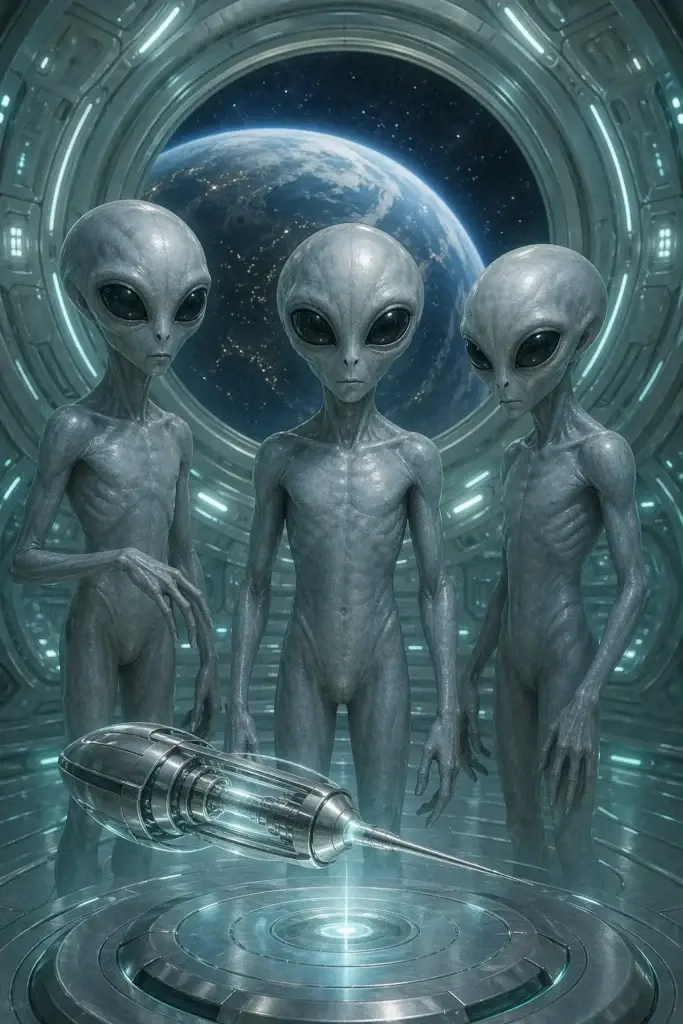
The phenomenon is therefore analyzed as a hybrid of pop culture, esotericism and political conspiracy ideology. For a factual engagement with the subject, a comparison with related ideas from the milieu of the Greys and of modern ufology is recommended.
Criticism and state of research
From a scientific point of view there is no evidence whatsoever for the existence of reptilian, human-disguised beings. The claims are formulated in a way that cannot be tested, since the alleged shapeshifting, other dimensions and deliberate cover-up fend off any refutation from the outset.
In terms of the philosophy of science, the narrative is therefore regarded as not falsifiable and not as a hypothesis to be taken seriously.
Cultural studies research is less interested in the question of truth than in the function and history of the motif. Studies analyze how reptilian narratives gain significance in times of crisis, which media carry them and how they combine with other currents.
In this, a high degree of adaptability becomes apparent: the basic motif can be transferred to changing political opponents and events.
Counseling centers and prevention projects deal with the topic above all in connection with the question of how people can detach themselves from closed conspiracy worldviews. iWell Guard expressly classifies the Reptilian idea as a modern conspiracy belief and not as a handed-down mythological figure.
The presentation on this page serves to inform about the origin, proponents and reception of the phenomenon, not to confirm it.
Further links
Research literature
In some currents of the New Age, the alleged reptilian power is interpreted as a hidden deity or background steering authority, while in terms of religious studies it remains open whether this is a mythical projection of old dragon motifs into modern conspiracy narratives.