iWell Guard

Bean Nighe, the death messenger of the Highlands who can be outwitted

Bean Nighe is a spirit of Scottish tradition.

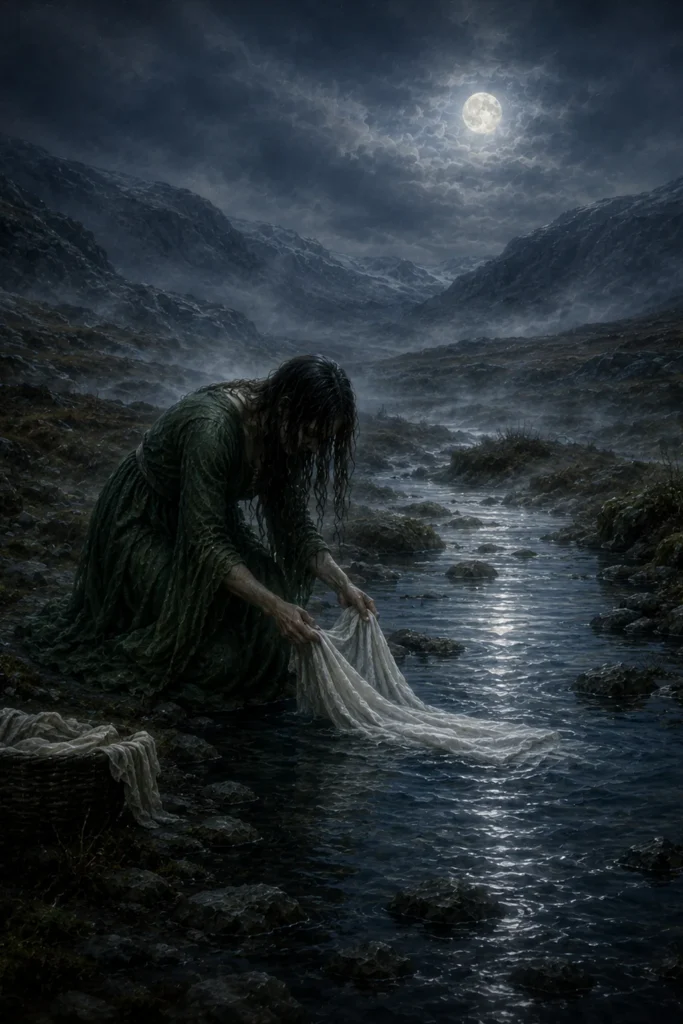
She washes the death shirts of those soon to die at the ford.

SpiritCeltic

Table of Contents

Bean Nighe, spirit of Celtic tradition
Bean Nighe

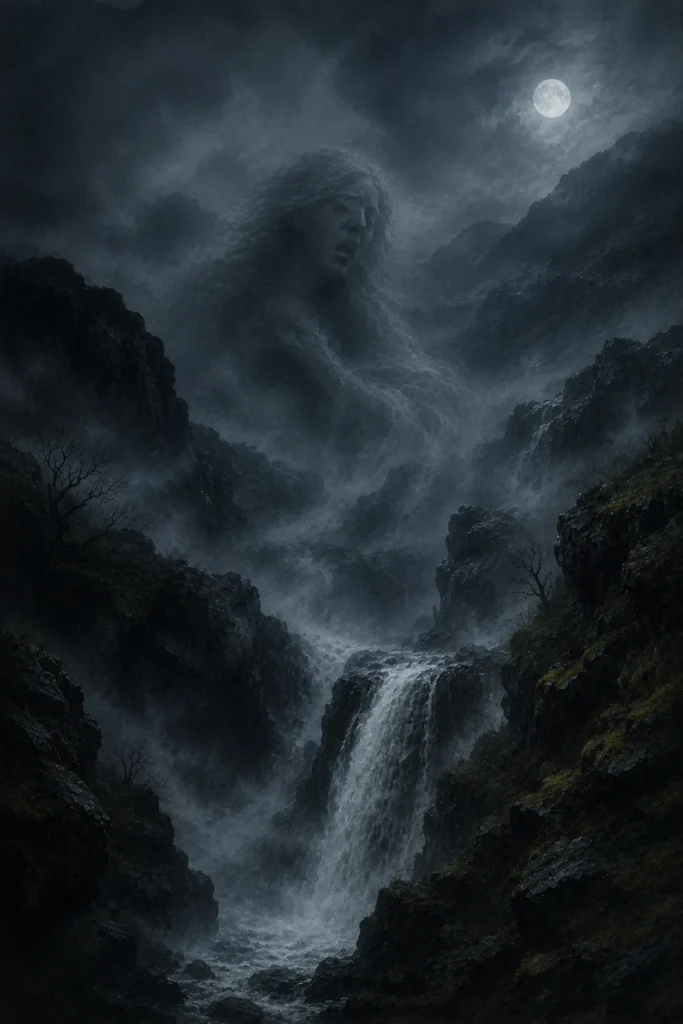
Bean-nighe, the washerwoman, is a Scottish death spirit from the Highlands and Islands. At lonely fords she washes the blood from the death shirts of those who will soon die, thereby announcing their death.

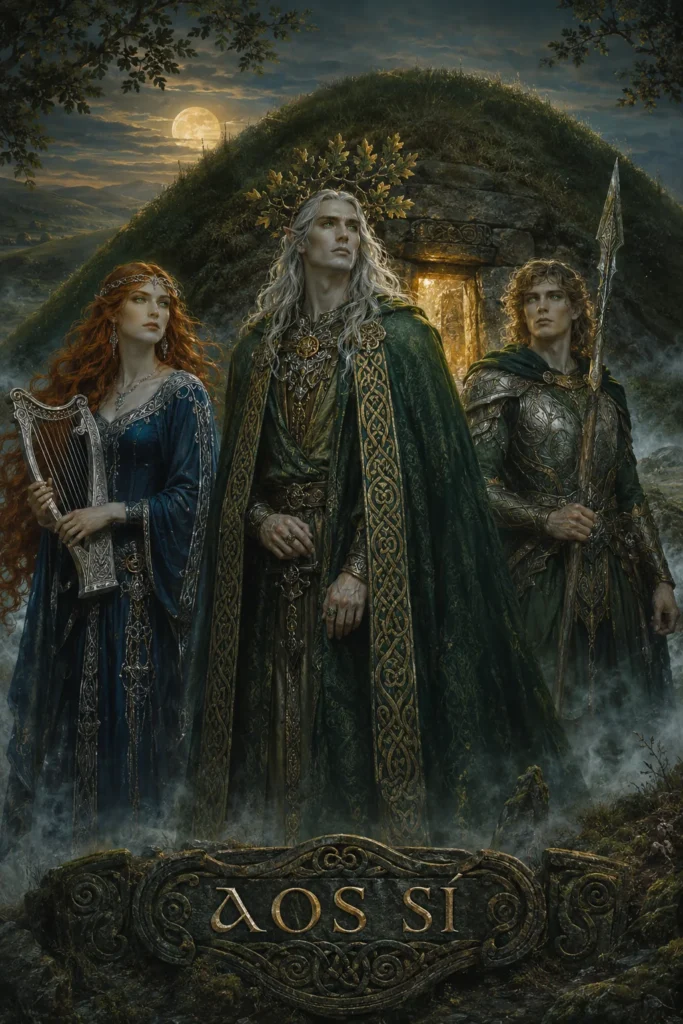
As a particular type of ban-sìth, the Celtic fairy woman, she is closely related to the Irish banshee, but appears exclusively as a washerwoman. According to tradition, whoever approaches her unnoticed and catches her by surprise can force her to grant three wishes; whoever is seen by her first, however, must in some accounts expect misfortune of their own.

At a glance: Bean Nighe

Type: death omen, washerwoman spirit of the banshee type
Origin: oral tradition of the Scottish Highlands and Islands
Texts: Campbell’s Superstitions of the Highlands and Islands of Scotland and Carmichael’s Carmina Gadelica
Period: recorded in writing in the 19th and early 20th centuries
Appearance: female spirit at lonely streams and fords, described differently from region to region

Context of the tradition

Period of the Texts

Passed down orally over generations in the Highlands, the tradition was only recorded in writing in the 19th and early 20th centuries.

Area of Diffusion

The Scottish Highlands and the offshore islands, with descriptions varying by region from Perthshire to Skye, Mull and Tiree.

Sources

Good: above all John Gregorson Campbell’s collection and Alexander Carmichael’s Carmina Gadelica.

Name and variants

Language: Scottish Gaelic from bean, woman, and nighe, to wash: Bean Nighe simply means washerwoman. The diminutive form nigheag denotes the little washerwoman at the ford.

Appearance

Appearance

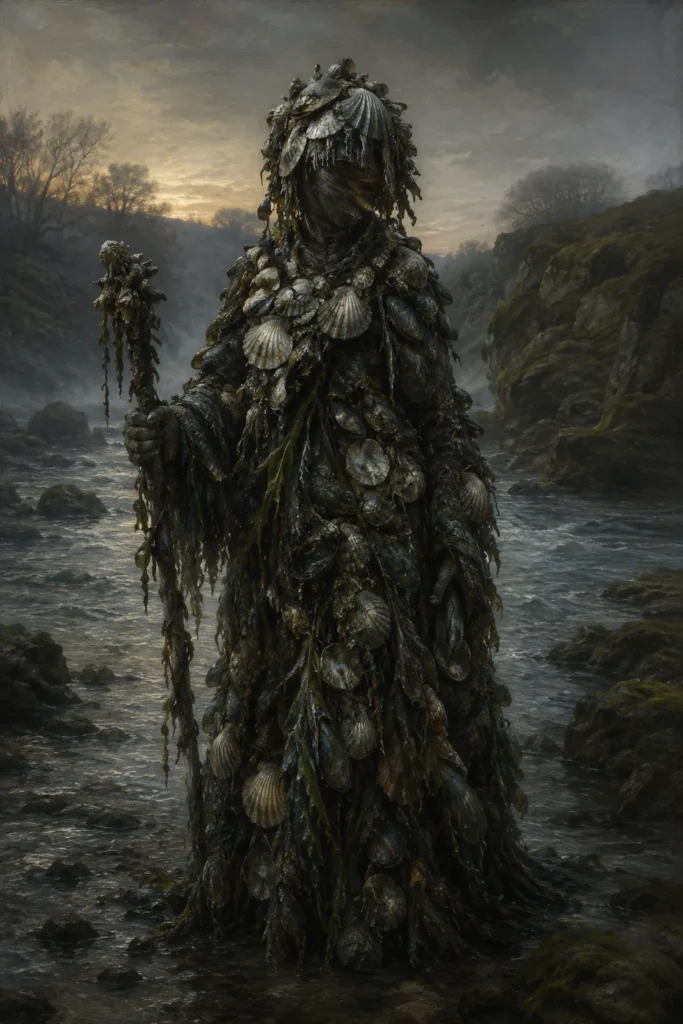
The Bean Nighe appears differently from region to region: in Perthshire as a small, plump figure dressed in green, on Skye as a dwarf-like being, on Mull and Tiree with unusually long breasts that she throws over her shoulders. In some accounts she has only one nostril, a large protruding tooth and red webbed feet. Washing at the ford links purification, birth and death, since the water crossing is regarded as a classic threshold place between worlds.

Effect

She washes the bloody death shirts of those who will soon die, often singing a mournful dirge as she does so. Whoever sees her learns of an impending death; if he recognises the washed shirt as his own, he can try to avert his fate.

Profile: Bean Nighe

The key aspects of the washerwoman at a glance.

Cultural Context

A particular type of ban-sìth, the Celtic fairy woman, and the Scottish relative of the Irish banshee.

Relates To

Those marked for death, whose bloody death shirts she washes at lonely fords.

Depiction

A form that varies by region: a small green woman, a dwarf, or a being with breasts thrown over her shoulders.

Sphere of Influence

Announcement of death through the washing of shrouds; with skilful action, also the granting of wishes.

Approach

Approach quietly and seize her for three wishes and the name of the dying, otherwise beware of her gaze.

Related beings

The Irish banshee and the Scottish Caoineag as further wailing death messengers, along with the Welsh Cŵn Annwn as soul guides of the Otherworld.

Bean, Nighe and the little washerwoman at the ford

The name is Scottish Gaelic and combines bean, woman, and nighe, to wash: Bean Nighe simply means washerwoman. The diminutive form nigheag denotes the little washerwoman at the ford and emphasises the unassuming figure who nonetheless carries the most weighty of all omens.

She is regarded as a particular type of ban-sìth, the fairy woman, and is thus closely related to the Irish Banshee. According to the origin myth, the washerwomen are the spirits of women who died in childbirth and are condemned to carry out their task until the day their life would actually have ended. In France, the equivalent figure is the Lavandières, the night washerwomen. The Bean Nighe is documented above all by John Gregorson Campbell and in Alexander Carmichael’s Carmina Gadelica.

A fixture of Celtic folklore

The Bean Nighe is a fixture in collections of Celtic folklore and, alongside the Banshee, is one of the best known Scottish Gaelic death omens. As the washerwoman at the ford, she is a recurring figure in modern fantasy and horror.

From the perspective of religious studies, the Bean Nighe is a classic death omen and a messenger from the Otherworld, without killing herself. She is linked to Celtic beliefs about the dead and to the motif of the unredeemed dead bound to a task, here the woman who died in childbirth. It is important to note that she is not a psychopomp but an omen figure.

The art of outwitting the washerwoman

Several tricks are attested in the sources: whoever approaches her quietly from behind and seizes her before she notices can force her to name the person who is going to die, and, according to tradition, is granted three wishes fulfilled. In the variant from Mull and Tiree, one takes one of her breasts, thrown over her shoulder, into one’s mouth and declares oneself her foster child; she then reveals any knowledge desired. If the cloth being washed belongs to an enemy, one lets her carry on; if it belongs to oneself or a friend, one stops her. On Skye, however, it is said that if the Bean Nighe sees the person first, he loses the use of his limbs. According to folk belief, salt, rowan branches and a drawn protective circle also helped against encounters with beings of the Otherworld at fords and streams.

Death messengers of the Celtic world

The Bean Nighe corresponds to the Irish Banshee and the Scottish Caoineag, the weeping herald of the clan. In Wales she is joined by the Cyhyraeth and the Gwrach y Rhibyn, with the Gwrach y Rhibyn also regarded in Cornwall as a washerwoman at the ford. The mythological Celtic figures of the Morrígan and the Cailleach are also related to her. Another death messenger of the Otherworld is the Welsh Cŵn Annwn, whose pack roams the night sky.

Frequently asked questions about the Bean Nighe

Is the Bean Nighe the same as a Banshee?

She is a particular subtype of the ban-sìth, the Scottish counterpart to the Irish Banshee, specialised in washing the shrouds of the dead.

Can she be outwitted?

Yes. Whoever seizes her unnoticed is, according to tradition, granted three wishes and the name of the person who is going to die; if one recognises one’s own shroud, one can attempt to avert one’s fate.

Why does she wash?

She is regarded as the spirit of a woman who died in childbirth and is condemned to carry out her task until the natural end of her life.

Further links

Recommended internal links:

Literature (selection)

A selection of key sources and studies:
  • Campbell, John Gregorson: Superstitions of the Highlands and Islands of Scotland. Glasgow 1900.
  • Carmichael, Alexander: Carmina Gadelica. Volume 2. Edinburgh 1900.
  • Briggs, Katharine: A Dictionary of Fairies. London 1976.
  • MacKillop, James: Dictionary of Celtic Mythology. Oxford 1998.

Further standard works in the bibliography.

As a Scottish washerwoman, the Bean Nighe remains the washerwoman at the ford: a death omen that, unlike most of its kind, can be outwitted if one meets it with courage and cunning.

Classification & Protection

IILEVEL
The Protection Compass assigns this being to influence level II, Noticeable influence.

Against its influence, cross-cultural tradition names these protective means:

Compare in the Protection Compass →

Recommended protective means

iWell Guard

The simplest protective means in this collection: 41 layers of fine gold 999, platinum, silver and silicon, manufactured in Ruhla, Thuringia. It requires no activation, is bound to no person, and is effective within a radius of around 50 meters, even without being worn.

All protective means at a glance →