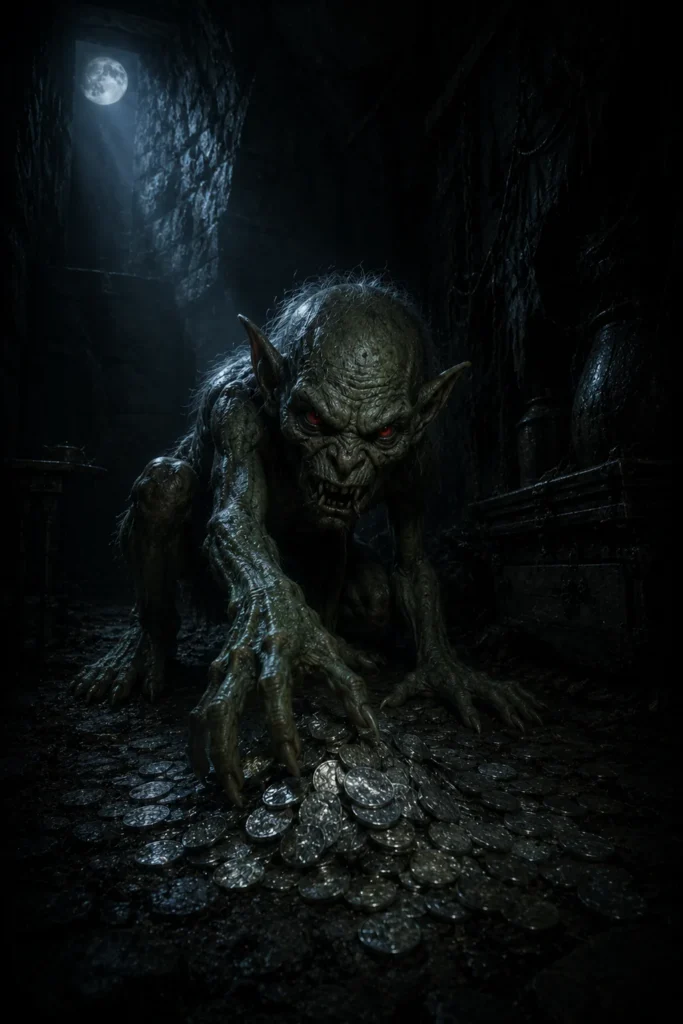
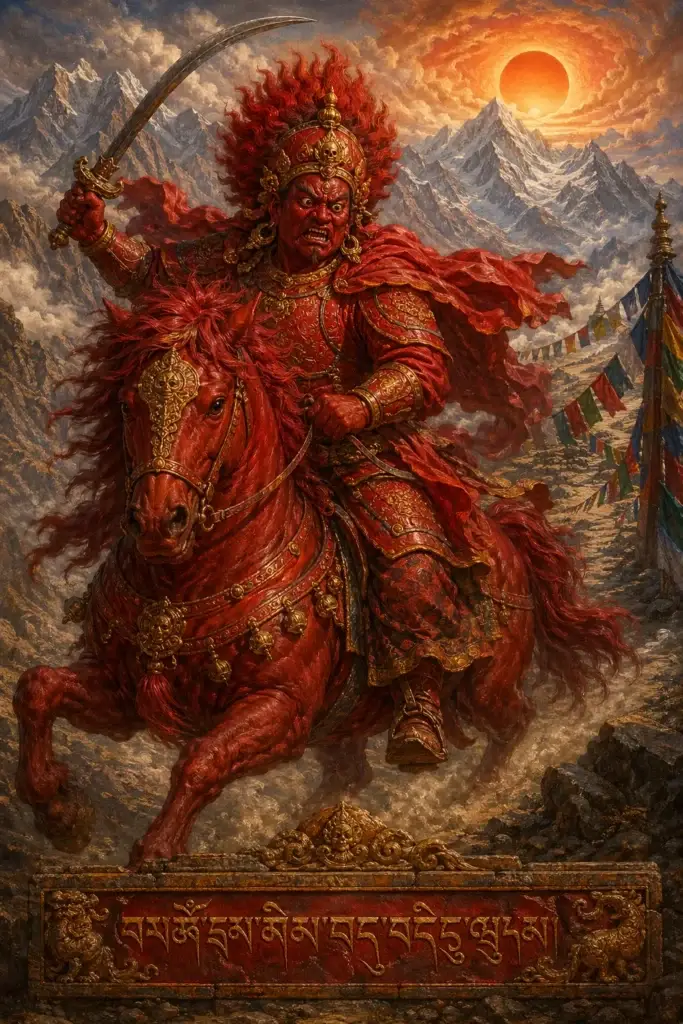
Orang Bunian, the invisible neighbours in the rainforest
By Ralf Ittermann · last reviewed on
The Orang Bunian are spirits of the Malay tradition.
The hidden people who live alongside humans deep in the forest. The entry describes the Orang Bunian as a hidden people who share the rainforest with humans, unseen but ever present.
Orang Bunian is the invisible, elf- and fairy-like forest people of Malaysia, who live parallel to humans in deep forests and mountains. Beautiful and usually invisible, they can befriend humans, but also abduct them or marry into their families.
The Orang Bunian are predominantly benevolent and support healers and shamans. But whoever ends up in their realm can vanish from the human world for years; the dilation of time is a recurring motif, for hours among the Bunian correspond to days in the human world.
Type: Hidden, elf-like parallel people of the forest
Origin: Old Malay tradition within Islamic-animist syncretism
Texts: Scholarly recorded around 1900 by Skeat, along with Winstedt
Period: alive to this day
Appearance: human-like, beautiful, in archaic clothing, invisible to most people

Textual history
Period of the Texts
The tradition is Old Malay and remains alive to this day; it was scholarly recorded around 1900 by Walter William Skeat.
Area of Diffusion
The Malay Peninsula, Sumatra and Borneo, the Malay cultural region as a whole; the people dwell in deep forests and mountains.
Sources
Well documented: Skeat’s Malay Magic of 1900 and Winstedt’s study on the Malay magician.
Name and variants
Malay: orang, person or people, and bunian, usually interpreted as hidden, hence hidden people, or as whistling, since their presence is recognised by sounds without a visible source.
Appearance and behaviour
Appearance
The Orang Bunian are beautiful and wealthy and have their own social order with families, clans and nobility resembling that of the Old Malays. They inhabit a parallel, hidden world, at times even the same houses as humans; the absent philtrum, the groove between nose and upper lip, marks their subtle otherness despite an almost identical appearance.
Effect
The Orang Bunian are predominantly benevolent and support healers and shamans. But whoever ends up in their realm or marries into it can vanish from the human world for years; hours among the Bunian correspond to days in the human world.
Profile: Orang Bunian
The key aspects of the hidden people at a glance.
Islamic-animist syncretism: of pre-Islamic origin, at times paralleled with the Jinn, but standing on its own as a distinct hidden people.
Forest visitors, wanderers and children, as well as healers and shamans, who are supported by the Bunian.
Human-like, beautiful, in archaic clothing and usually invisible; the only physical marker is the absent philtrum.
Help and friendship for the respectful; abduction, marriage and time dilation as dangers for those who transgress boundaries.
Respect in the forest: behave politely and quietly, ask for permission, do not carelessly tear up plants and do not pollute the forest.
Hidden or whistling: the people alongside humans
The name combines orang, human or people, and bunian, usually interpreted as hidden, thus hidden people, or as whistling, since their presence is recognised by sounds without a visible source. The background is an Islamic-animist syncretism: of pre-Islamic animist origin, the people are in Islamic Malay sometimes paralleled with the Jinn, but remain distinct as their own hidden people.
The tradition was first recorded scientifically around 1900 by Walter William Skeat. Bunian society mirrors the old Malay order with families, clans and nobility; their world lies parallel to the human one, sometimes within the same houses.
Everyday culture and classification
The Orang Bunian are a firm part of everyday Malay culture and present in stories, media and travel literature. Missing-person cases in forests are popularly explained by abduction by the Orang Bunian; this attribution is a belief, not a fact.
In terms of religious studies, the Orang Bunian are the type of the hidden parallel people within Islamic-animist syncretism. Functionally, they convey an ethic of nature protection, respect for the forest, through belief in spirits.
The rules of the jungle
Well attested in sources are respect within the forest, that is behaving politely and quietly and not making noise, asking permission before entering certain places, not carelessly tearing up plants, and avoiding pollution of the forest. Nature guides and parents pass on these rules of the jungle explicitly; protection from the Bunian is thus at the same time a code of conduct for the forest itself.
Hidden peoples in comparison
The Orang Bunian correspond to the European elves and fairy folk, the Irish-Scottish Aos Sí and the Scandinavian Huldrefolk, the hidden people around the Huldra; shared motifs are invisibility, parallel worlds, abduction and time dilation. Within their own cultural sphere, the Philippine Diwata are close to them as benevolent nature beings.
Frequently asked questions about the Orang Bunian
What does Orang Bunian mean?
Hidden people or whistling people: from bunian, hidden, or from the whistling sounds without a visible source.
Are they evil?
Mostly benevolent; dangerous mainly through abduction and loss of time, not out of malice.
How does one protect oneself?
Through respect within the forest, asking permission, avoiding noise and not polluting.
Further links
Further reading:
- Aos Sí – the Irish fairy folk as counterpart
- Huldra – the figure of the Scandinavian Huldrefolk
- Diwata – benevolent nature beings of the Philippines
- Amulet, Smoke cleansing, Salt – traditional protective means
- Protection Compass – protective means at a glance
Literature (selection)
Further standard works in the bibliography.
As Malaysia’s hidden people and an invisible forest people at once, the Orang Bunian embody the silent agreement between humans and forest: whoever respects the rules of the jungle has good neighbours; whoever breaks them risks years in another world.