Jinn, beings of the Islamic tradition
By Ralf Ittermann · last reviewed on
The hidden beings created from smokeless fire.
Jinn as a distinct category of beings
Jinn (singular jinnī) are, in the Islamic tradition, a third category of beings alongside angels and humans. Surah 55 refers to them as beings created from smokeless fire (nār-as-samūm).
They have religious obligations, gender, the capacity to reproduce, mortality and are partly Muslim, partly unbelieving. Surah 72 (al-Jinn) recounts how a group of Jinn secretly overheard Muhammad reciting the Quran and converted.
In the folk beliefs of North Africa and the Levant, specific subtypes exist: Marid (powerful water Jinn), Ifrīt (fiery, often malevolent), Ghul (graveyard Jinn), Si-lat (female, cunning).
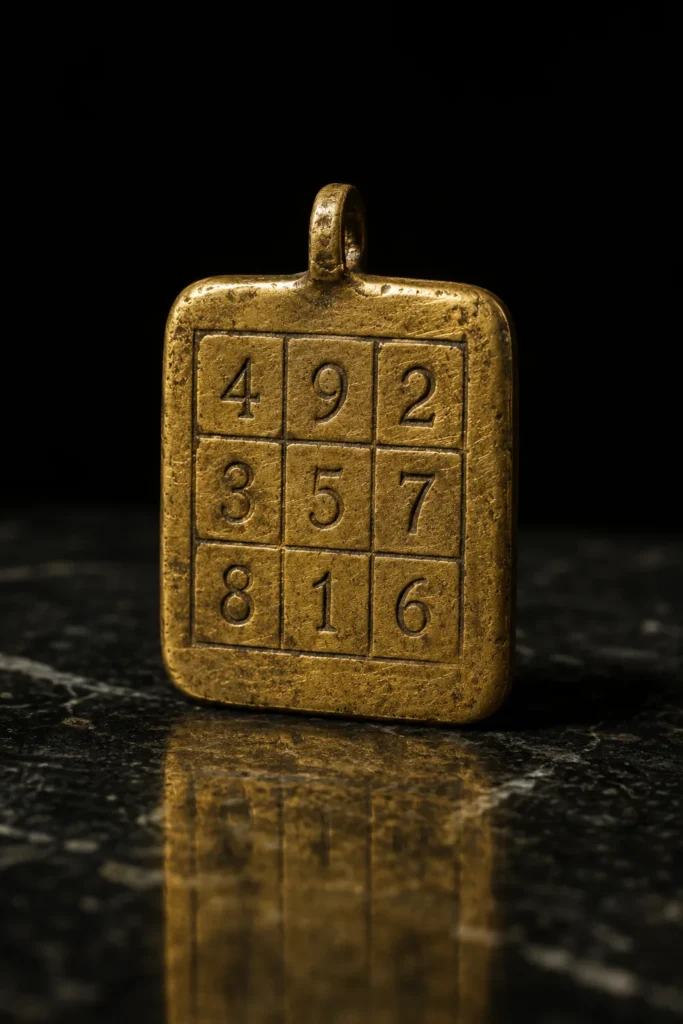
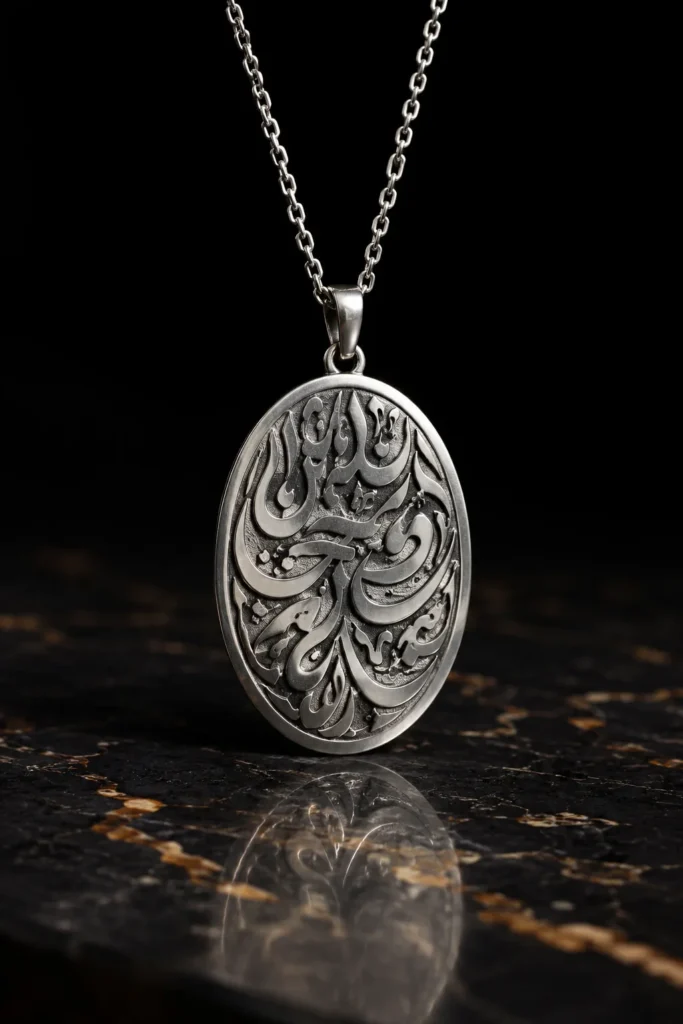
Solomon (Sulaiman) is regarded as their historical subjugator; his signet ring controls them. Protective practices include Quranic verses (Muʿawwidhatān, Surahs 113 and 114), salt, iron, and talisman engravings.
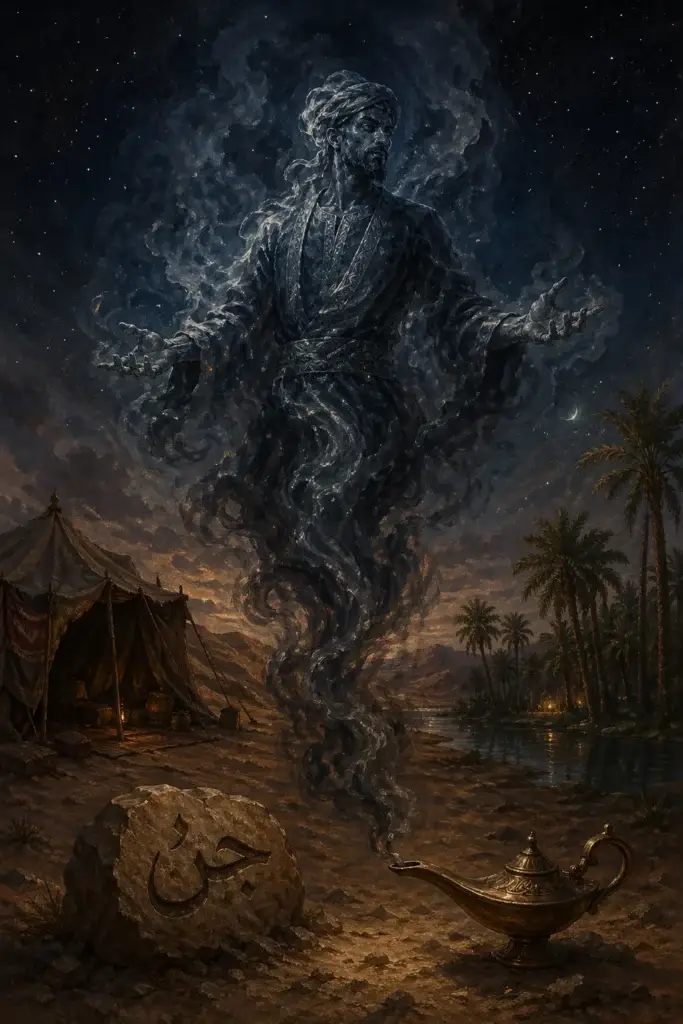
The Jinn are, in the Islamic tradition, a distinct category of beings, neither angels nor humans, but created from “smokeless fire” (Quran 55:15).
They possess free will, die, reproduce, and can be believers or unbelievers. An entire surah (Surah 72, al-Jinn) is dedicated to them, recounting how a group of Jinn heard the Quran and converted.
Beyond the Quranic foundation, the Islamic world has developed a rich Jinn tradition: in classical literature (One Thousand and One Nights), in folk belief and Ruqya practice, in art and modern popular culture.
In the everyday life of the Muslim world, Jinn are not an abstract theory but a present reality governed by their own social rules.
Jinn in the Quran: beings from smokeless fire
Surah al-Jinn (Surah 72) defines the Jinn as beings created from smokeless fire (Quran 55:15). They have free will like humans, can be believers or unbelievers, and are not invisible as such but can conceal or reveal themselves at will.
The Quran treats the Jinn as moral agents: they can understand commands, reject the truth, or accept it. Solomon’s power over the Jinn is mentioned several times (Surahs 27, 34, 38); the Jinn became his instrument for crafting golden lampstands and water basins.
Surah 51:56 states that the Jinn, like human beings, were created to serve God. This Quranic portrayal differs fundamentally from magical or demonological concepts: the Jinn are cosmological beings, neither demons nor angels, but an independent creation endowed with morality and the capacity for action.
Jinn at a Glance
Type: A distinct category of beings between angels and humans
Origin: Smokeless fire (Quran 55:15)
Texts: Quran (especially Surah 72), Hadith, classical literature
Period: 7th century to the present
Characteristics: invisible, mortal, endowed with free will
Context
Quran and Hadith (7th and 8th centuries CE) form the foundation; classical scholars (al-Damiri, al-Suyuti) systematize the tradition between the 9th and 15th centuries; One Thousand and One Nights (compiled between the 9th and 14th centuries) popularizes the Jinn in literature; modern Ruqya practice remains active.
The Arabian Peninsula as the region of origin; spread with Islam across all Muslim regions. Local overlaps with indigenous spirit traditions (Berber, Turkish, Persian, Southeast Asian).
Quran (numerous passages, dedicated Surah 72), Hadith, al-Damiri Hayat al-Hayawan, al-Suyuti Kitab al-Marjan, One Thousand and One Nights, ethnographic studies on contemporary Jinn belief.
Name and Variants
Arabic: jinn (plural), jinni (singular).
Etymology: Root j-n-n (“to be hidden, veiled”).
Subtypes: Jann (oldest Jinn type), Jinn (intermediate), Shaytan (evil), Ifrit (powerful), Marid (more powerful still).
European form: Genie (via French génie).
The root connects the Jinn to the concept of the hidden. Majnun, “possessed by a jinn,” simultaneously means “mad,” a linguistic indication of the close association with altered mental states.
Characteristics
Appearance
Mostly invisible. Can take any form: human, animal, smoke, fire. Forms favored in tradition include black dogs, snakes, cats, scorpions, and certain birds.
Behavior
Morally ambivalent. There are believing and unbelieving Jinn, friendly and hostile. They inhabit deserts, ruins, and remote places, but sometimes also occupied dwellings. Their society encompasses families, kingdoms, and trade.
Sphere of Influence
The entire world, with concentrations at threshold locations, water sources, graveyards, and ruins. Certain hours of the day (noon, sunset, midnight) are also regarded as Jinn time.
Mythological Origin
Created from smokeless fire (Quran 55:15), before humans. The first Jinn was Jann; Iblis belongs to this category. Modern folk tradition preserves pre-Islamic Arabian motifs of desert demons, embedded within the Quranic framework.
Jinn in pre-Islamic Arabian religion
Archaeological and literary evidence suggests that Jinn-like beings were present in Arabian mythology before Islam, probably as local spirits of springs, deserts, and ruins.
Early Arabic poetry names jinn as supernatural sources of inspiration, particularly for poets. Pre-Islamic Arabs revered or negotiated with Jinn, who were often bound to specific places: wells, mountains, and abandoned cities.
Islam reshaped this conception: instead of local spirits, the Jinn became eschatological beings accountable before God. The incorporation of the Jinn concept into the Quran legitimized it within a theological framework while simultaneously transforming its meaning.
This is a typical pattern: Islam integrated local Arabian mythemes and reinterpreted them in light of monotheism and theology.
Profile: Jinn
The most important aspects of the Jinn at a glance.
Created from smokeless fire (Quran 55:15), before humans. A distinct category of beings between angels and humans.
All people; particularly vulnerable at threshold locations, in ruins, near water sources, and at certain hours of the day.
Mostly invisible; can change form. Common forms: black dogs, snakes, cats, certain birds, smoke.
Ambivalent; can help or harm. When acting with hostility: illness, possession (majnun), misfortune, whispering.
Basmala before actions, Taʿawudh, daily protective surahs, Ayat al-Kursi. Ruqya in cases of possession. Respectful conduct at threshold locations.
Shedim (etymologically and structurally related), Greek daimones, Christian demons in general, Persian peri.
Everyday Practice
Protective Practice
Basmala before every action, recitation of Ayat al-Kursi before sleep, Taʿawudh when entering impure locations (bathroom, graveyard). Morning and evening recitation of the “protective surahs” (Falaq, Nas, Ikhlas). Refraining from whistling indoors, which in numerous cultures is considered a signal that attracts Jinn.
Ruqya
When Jinn influence is suspected (illness, nightmares, possession), Ruqya is performed: a structured recitation of Quranic verses by a raqi. Orthodox practice distinguishes itself from esoteric sorcery, which may aim for similar effects but is theologically condemned.
Amulets
Hirz / Taʿwidh, Quranic verses in leather pouches, worn on the body. The blue Nazar talisman and the Hamsa hand are widespread in folk tradition, though orthodox theologians regard them critically.
Cultural Reception
Classical literature: One Thousand and One Nights, with its Jinn stories (Aladdin’s lamp, Scheherazade, the fisherman’s tale), has shaped the worldwide image. The “spirit from the lamp” is a literary figure, not the theological concept of the Jinn.
Modern folk piety: Across large parts of the Muslim world, belief in Jinn remains alive. Ethnological studies document rich regional traditions: Moroccan-Berber, Turkish, Persian, Malay, and Indonesian. In urban societies the focus shifts but does not disappear.
Western Reception
The “genie” of English and French translations of One Thousand and One Nights represents a gentle Western reinterpretation. Modern popular culture (Disney’s Aladdin, Neil Gaiman’s American Gods, film adaptations of One Thousand and One Nights) remains anchored to the spectacular image.
Classification of the Jinn in Islamic theology and One Thousand and One Nights
Later Islamic theologians classified the Jinn by power, origin, and disposition. The highest class were the Marid. Below them ranked the Ifrit (also Efreet), powerful Jinn, often malevolent or chaotic, as well as Jann and ordinary Jinn. This hierarchical classification provided a framework for understanding supernatural forces.
In the collection One Thousand and One Nights (gathered from the 9th century onward, edited through the 15th century), Jinn appear as characters within narrative frames: powerful but not infallible, capable of enchanting or cursing as well as deceiving.
They act according to their own motives: pleasure, revenge, curiosity. This literary tradition shaped the Western understanding of the Jinn more than theological texts did, especially following European translations such as that of Antoine Galland (1704-1717).
The Jinn in the Quran
The Jinn are firmly embedded in the Quran and are not a marginal feature of folk belief. An entire surah, the 72nd, bears the title al-Jinn and describes how a group of Jinn hears the Quran, is moved by it, and becomes believing.
From this follows a foundational assertion: the Jinn are, like human beings, beings capable of religious response. They can be believing or unbelieving, good or evil, and they are subject to divine judgment.
The Quran explains that the Jinn were created from smokeless fire or a flame of fire, while the human being was created from clay. This origin in fire distinguishes them from the angels, who according to later doctrine consist of light, and from human beings.
In Surah 51, verse 56, it is stated that God created the Jinn and human beings only so that they might serve Him. Both categories thus share the same purpose of existence.
The Quran also knows the Jinn in a negative function. They can lead human beings astray, and some of them follow Iblis. At the same time the Quran makes clear that the Jinn do not possess superhuman omnipotence.
A narrative about the prophet and king Solomon recounts that Jinn were placed in his service and worked for him, including in construction.
When Solomon died, the Jinn who were laboring did not notice for a long time, which shows that they do not have knowledge of the unseen. The Quranic teaching thus clearly defines the limits of the Jinn: they are created, mortal, responsible beings, neither gods nor demigods.
Pre-Islamic Roots and the Transformation of Jinn Belief
Belief in the Jinn is older than Islam. In pre-Islamic Arabia the Jinn were a fixed element of the conceptual world. They were regarded as inhabitants of the desert, of inhospitable and dangerous places, and were associated with particular locations, stones, trees, and springs.
Old Arabic poetry refers to them frequently, and there were ideas according to which the Jinn inspired poets, which explains the close connection between poetry and inspiration of an uncanny kind.
With the coming of Islam, the Jinn were not abolished but integrated into the new religious system and reinterpreted. The Quran confirms their existence but subordinates them to the one God and makes clear that it is impermissible to venerate them or to seek protection from them.
In Surah 72, verse 6, it is explicitly censured that people formerly sought refuge with Jinn and thereby only increased their arrogance. The beings that had in some respects been treated as quasi-divine in pre-Islamic times became fellow creatures.
This reinterpretation is a good example of how a new religion does not simply displace existing conceptions but places them within an altered framework.
Research, for instance in the works of Toufic Fahd on ancient Arabian religion and in more recent studies on Islamic demonology, has worked out both this continuity and the break it entails.
Belief in the Jinn remained alive across the centuries, precisely because it was grounded in the Quran. Unlike certain pre-Islamic conceptions that were rejected as idolatry, belief in the Jinn retained a legitimate place within the Islamic worldview.
Types, Hierarchy, and Way of Life of the Jinn
The Islamic tradition, above all the commentary literature and works of folk piety, has elaborated the sparse Quranic statements into a differentiated picture. A classification of the Jinn into various categories emerged.
Frequently named are the ʿifrit, particularly powerful and dangerous Jinn; the marid, regarded as rebellious and strong; and the general term shaytan for a malevolent Jinn. The tradition also knows the ghul, a shape-shifting being of the wilderness. These classifications are not uniform and vary between sources.
According to the elaborated conception, the Jinn live in communities resembling those of human beings. They have genders, reproduce, eat and drink, form tribes and kingdoms, and die, although according to some accounts only after a very long time.
They can take on various forms, such as those of animals like snakes or dogs, or of human beings. They preferentially inhabit abandoned, impure, or remote places: ruins, caves, graveyards, and similar locations.
Folk piety knows a wealth of behavioral rules concerning dealings with Jinn, such as precautions when entering dangerous locations, when pouring water at night, or during certain activities.
These rules vary greatly by region and belong more to folk culture than to normative theology, which confines itself to the fundamental Quranic statements. Research therefore carefully distinguishes between the Quranic-theological teaching and the richly elaborated popular belief in Jinn, which varies considerably by region and period.
Possession, Healing, and Dealings with the Jinn
A practically significant area of Jinn belief concerns the idea that Jinn can enter a person’s body and influence them. The Quran itself provides a narrow point of reference when Surah 2, verse 275, speaks of people who rise as one whom Shaytan has confused by his touch.
On such passages rests the concept of Jinn possession, associated in Arabic with terms derived from the root j-n-n, from which the word for madness also comes.
From this belief a distinct healing practice developed. The treatment known as ruqya consists essentially of reciting Quranic verses over the affected person, particularly certain surahs and verses regarded as efficacious, such as the Throne Verse and the two protective surahs.
This practice is in principle recognized by orthodox teaching, provided it restricts itself to Quranic means and does not pass into magic, invocation of the Jinn, or harmful sorcery. The boundary between permissible protective and healing practice and forbidden magic is a recurring theme in scholarly literature.
The decisive theological point remains that every protection and healing is to be sought from God, not from the Jinn themselves. According to Islamic teaching it is impermissible to enter into alliances with Jinn or to seek their assistance.
The concept of possession and its treatment remains alive to the present day in many regions of the Islamic world, but is also discussed critically by contemporary voices, for instance in relation to medical and psychological explanations. Research examines this area as a field in which religion, folk belief, medicine, and social practice intersect.
The Jinn in Literature and Modern Culture
The Jinn have exerted literary and cultural influence far beyond the religious sphere. Their most widely known literary elaboration came in the collection One Thousand and One Nights, a narrative work that grew over many centuries.
In numerous of these stories Jinn appear, often as powerful beings bound within vessels, bottles, or rings, who grant wishes to, or threaten, whoever frees them.
This motif of the Jinn enclosed in a vessel who grants wishes shaped the image of the Jinn that the West received.
Through European translations of One Thousand and One Nights from the 18th century onward, the figure entered Western literature and later film, comics, and animation. In this reception the Jinn merged largely with the idea of the wish-granting genie and lost its religious seriousness.
From a religious-studies perspective it is important to distinguish this popular-culture figure from the Jinn of the Islamic tradition. In the living Islamic world of belief, the Jinn are not fairy-tale wish-granters but real, created fellow beings who have a fixed place in the cosmology and whose existence is grounded in the Quran.
In many regions of the Islamic world, from North Africa through the Middle East to South Asia, belief in the Jinn remains part of everyday life and influences ideas about illness, misfortune, and protection.
At the same time, modern Arabic and internationally oriented literature and cinema have taken up the Jinn seriously once more, for example in horror films that draw on popular belief. The range thus extends from the theological textbook through living folk belief to global entertainment culture.
Sources and Literature
Further standard works in the literature index.
The protective practices described here represent a religious-studies classification of historical traditions. iWell Guard connects with this cultural-historical lineage of portable protective objects and represents a contemporary form of it. More about iWell Guard →
Frequently Asked Questions about Ghul
What is a Ghul in Islam and in folk tradition?
The Ghul (Arabic ġūl, in English ghoul) is a demon of the desert and graveyard found in Arabian and Islamic folk tradition. It is regarded as a subordinate form of the Jinn, sometimes as a category in its own right.
Ghuls are shape-shifters; they often appear as beautiful women or travelers in order to lead wanderers astray and kill them. Their specialty is consuming the dead: they dig up fresh graves and eat the corpses. The modern English word ghoul derives directly from this term.
How does one protect oneself from a Ghul?
Classical protective practices in Arabian folk tradition include: reciting Quranic verses (especially Surah 2:255, Ayatul-Kursi, the Throne Verse), wearing an amulet bearing the Hamsa symbol or the name of God, avoiding solitary paths at night, and lighting a fire at campsites.
In the One Thousand and One Nights a Ghul is often defeated by cunning: through direct confrontation and knowledge of its true name.