iWell Guard

Zauba'ah, the evil spirit in the dust column

The Zauba’ah is a spirit of Arabic tradition.

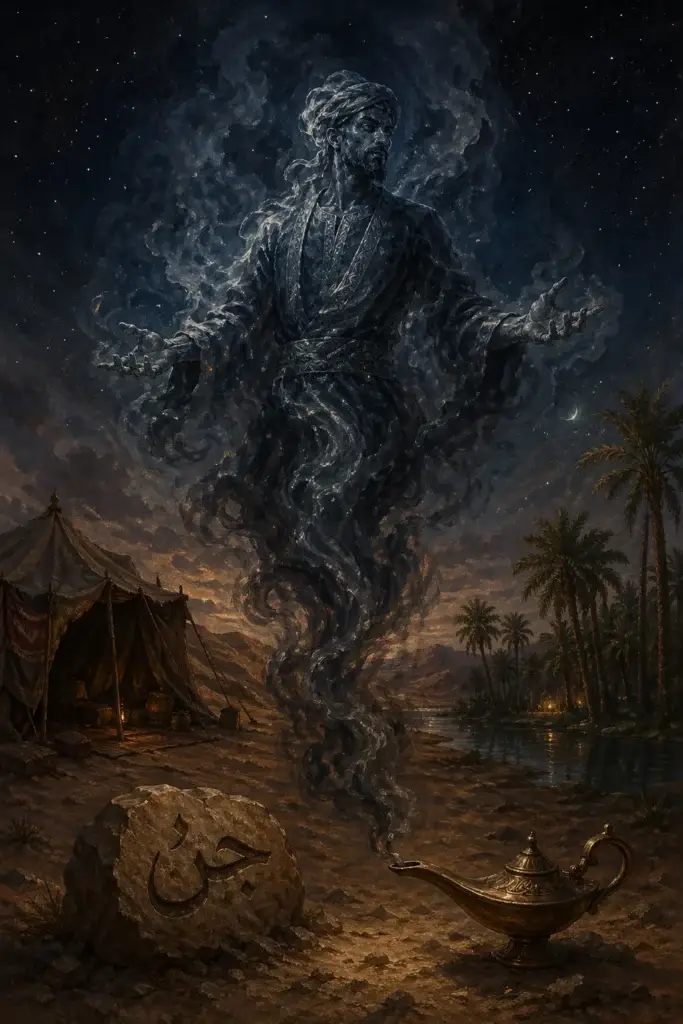
The whirlwind itself: a Djinn that travels within the sand column.

SpiritIslam

Table of Contents

Zauba'ah, the djinn in the sand whirl
Zauba'ah

The Zauba’ah is the sand-whirl Djinn of Arabic tradition: an evil spirit that travels within the towering column of dust. According to folk belief, whoever saw a whirlwind moving across the plain in Egypt or Arabia was not looking at a mere dust devil, but at a travelling Djinn.

Two strands of tradition must be distinguished here: the folk belief in whirlwinds, which Edward Lane documented in the 19th century, and the occult-astrological royal figure of the 14th-century Kitab al-Bulhan, in which the Zauba’ah appears as the enthroned demon king of Friday.

At a glance: Zauba'ah

Type: Djinn of the sand whirl, Djinn king in the occult tradition
Origin: Arab-Islamic folk belief and occultism
Texts: Lane, Kitab al-Bulhan
Period: 14th century (Bulhan) to the documented folk belief of the 19th century
Appearance: sand column or enthroned demon king

Source context

Period of the Texts

The occult-astrological tradition is attested in the 14th-century Kitab al-Bulhan, the folk belief in whirlwinds in Edward Lane in the 19th century.

Area of Diffusion

Egypt and Arabia: Lane documented belief in the Djinn within the sand whirl in the everyday life of modern Egypt.

Sources

Moderate source basis: Lane and the Kitab al-Bulhan provide solid evidence, whereas the finer detailed attributions from popular sources do not.

Name and variants

Arabic: zawba’a, whirlwind or cyclone, an undisputed meaning. A traditional epithet is Abu Hasan. The name thus refers to the weather phenomenon itself, which folk belief interpreted as the vehicle of the Djinn.

Appearance

Appearance

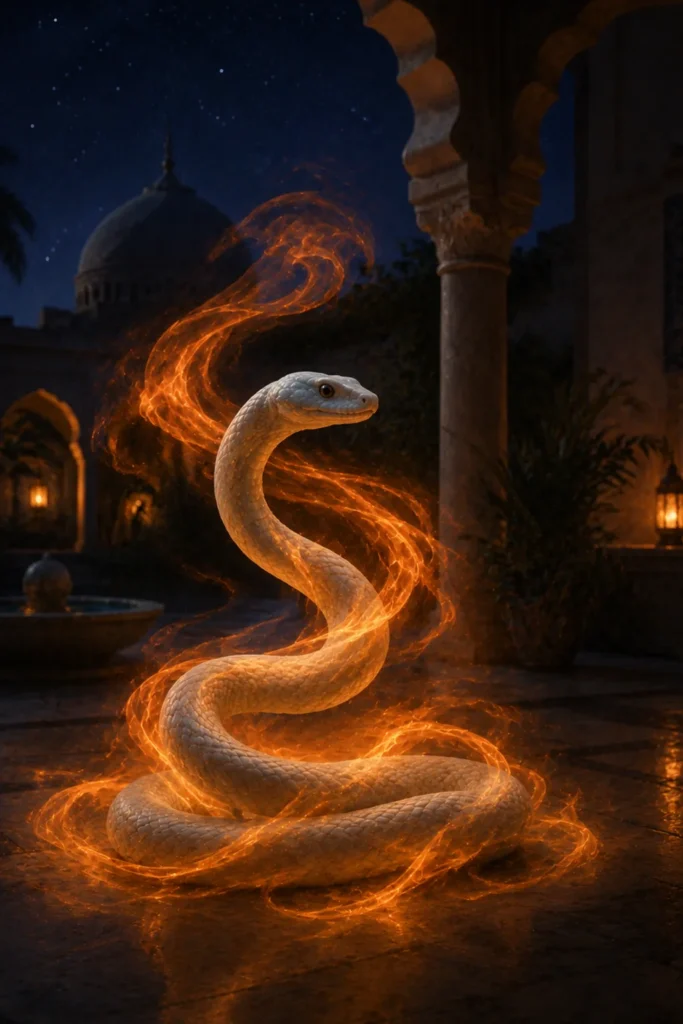
In folk belief, the Zauba’ah is the whirlwind itself: a towering column of sand and dust in which an evil Djinn travels. In the occult tradition, by contrast, it is an enthroned, multi-headed demon king of composite form.

Effect

The Zauba’ah causes sandstorms, dust devils and waterspouts. In the occult tradition, it is king of Friday and associated with the planet Venus. Detailed attributions such as four sub-names or colours stem from popular sources and are not academically confirmed.

Profile: Zauba'ah

The most important aspects of the whirlwind Djinn at a glance.

Tradition

Two-layered figure: generic folk belief in which every whirlwind is a djinn, and the named djinn king of the Bulhan tradition.

Object of Influence

Travellers who encountered the sand pillar on open ground; its approach was regarded as an encounter with an evil djinn.

Depiction

Towering column of sand and dust; in the Kitab al-Bulhan a throned, multi-headed demon king of mixed form.

Function

Causes sandstorms, dust devils and waterspouts; in occult astrology the king of Friday, associated with the planet Venus.

Approach

According to Lane, when the pillar approaches one calls out Hadid, Hadid, iron, iron, or Allahu akbar, since the djinn have great fear of iron.

Comparables

Ancient Mesopotamian wind demons such as Pazuzu; in the Bulhan system the seven djinn kings of the days of the week.

Two strands: folk belief and the Bulhan tradition

The word zawba’a means whirlwind or cyclone, there is no doubt about that; the epithet Abu Hasan is also recorded. On this linguistic basis two separate traditions developed. One is the popular whirlwind belief that Edward Lane documented in Egypt in the 19th century: every towering column of dust could be a travelling djinn.

The other is the occult-astrological tradition of the Kitab al-Bulhan from the 14th century. There the Zauba’ah is not an anonymous whirl but a named demon king: enthroned, multi-headed, king of Friday and associated with the planet Venus, one of the seven djinn kings of the days of the week. Both strands bear the same name but refer to different things.

Survival and interpretation

The Zauba’ah lives on in Egyptian and Arab folk belief surrounding sand whirls, and in the occult-astrological pictorial tradition of the Kitab al-Bulhan.

In religious studies the Zauba’ah is two-layered. Important clarifications: a distinction must be drawn between the generic folk belief, in which every whirlwind is a djinn, and the named occult djinn king of Friday; the equation of al-Abyad with Zauba’ah is inconsistent within the tradition itself; and the detailed systems are popular, not scholarly.

Iron, iron: the call against the whirl

Protection against the Zauba’ah is well documented and remarkably simple: according to Lane, when the sand pillar approaches one calls out Hadid, Hadid, iron, iron, or Allahu akbar, since the djinn have a great fear of iron. This is the classic iron apotropaism of desert tradition: no ritual implement, no book of spells, just the spoken word for the metal the djinn fear.

Wind demons and djinn kings

As a wind demon, the Zauba’ah stands in a line with ancient Mesopotamian wind demons such as Pazuzu, the winged lord of storm winds. In the Bulhan system, however, it belongs among the seven djinn kings of the days of the week and thus within the learned systematics of the Jinn world. Among the desert figures of Arabia, the Si’lat and the Hatif are its neighbours, which, like it, encounter the lone traveller.

Frequently asked questions about the Zauba'ah

What is the Zauba’ah?

The djinn of the Arabian sand whirl, which travels within the dust column.

How does one protect oneself?

According to Lane, by the call iron, iron, since the djinn fear iron.

Are there two interpretations?

Yes, the popular whirlwind belief and the occult king figure.

Further links

Recommended internal links:

  • Islam – all beings of the Islamic world of faith
  • Jinn – the fire beings to which the Zauba’ah belongs
  • Pazuzu – the Mesopotamian wind demon as a parallel
  • Si’lat, Hatif, Alu – further figures of the wilderness
  • Iron, Amulet, Holy Water – traditional protective means

Literature (selection)

A selection of key sources and studies:
  • Lane, Edward William: An Account of the Manners and Customs of the Modern Egyptians. London 1836.
  • Carboni, Stefano: The Book of Surprises, Kitab al-Bulhan of the Bodleian Library. In: La Trobe Journal 91, 2013.
  • Lebling, Robert: Legends of the Fire Spirits. London 2010.

Further standard works in the bibliography.

As a sand-whirl djinn, the Zauba’ah transforms an everyday weather phenomenon into an encounter with the invisible: where the sober eye sees only a dust devil, tradition saw a travelling spirit.

Classification & Protection

IIILEVEL
The Protection Compass assigns this being to influence level III, Burdensome influence.

Against its influence, cross-cultural tradition names these protective means:

Compare in the Protection Compass →

Recommended protective means

iWell Guard

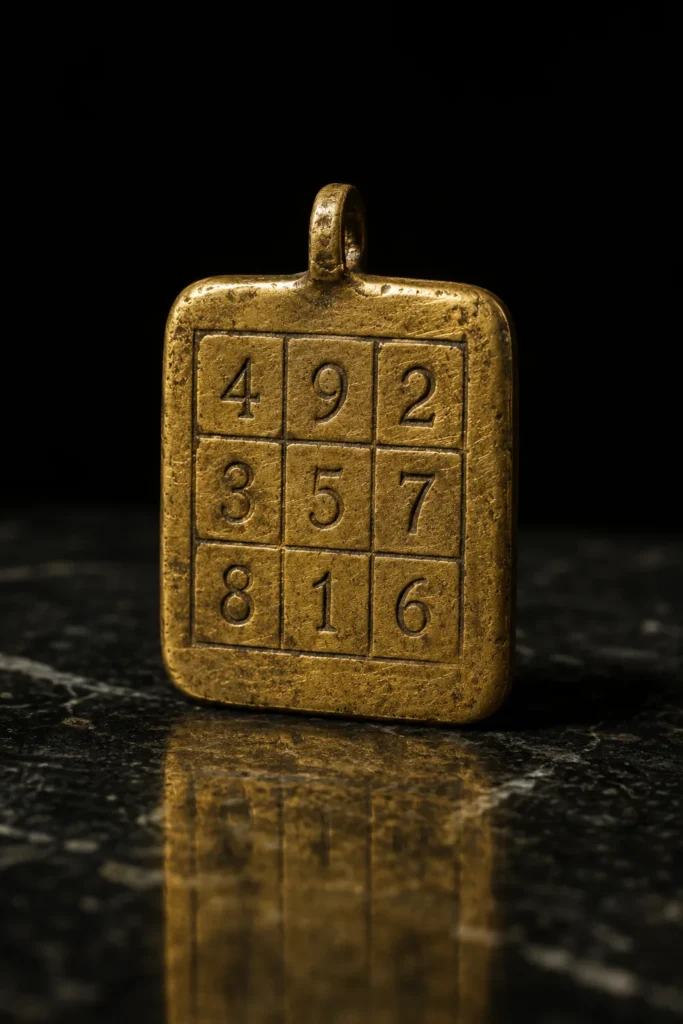
The simplest protective means in this collection: 41 layers of fine gold 999, platinum, silver and silicon, manufactured in Ruhla, Thuringia. It requires no activation, is bound to no person, and is effective within a radius of around 50 meters, even without being worn.

All protective means at a glance →