Abu Fanous, the wandering light of the dunes
By Ralf Ittermann · last reviewed on
Abu Fanous is a spirit of the Arabian tradition.
The father of the lantern, the light that lures travellers off the path. A wandering light said to drift across the dunes gave rise to this figure’s name.
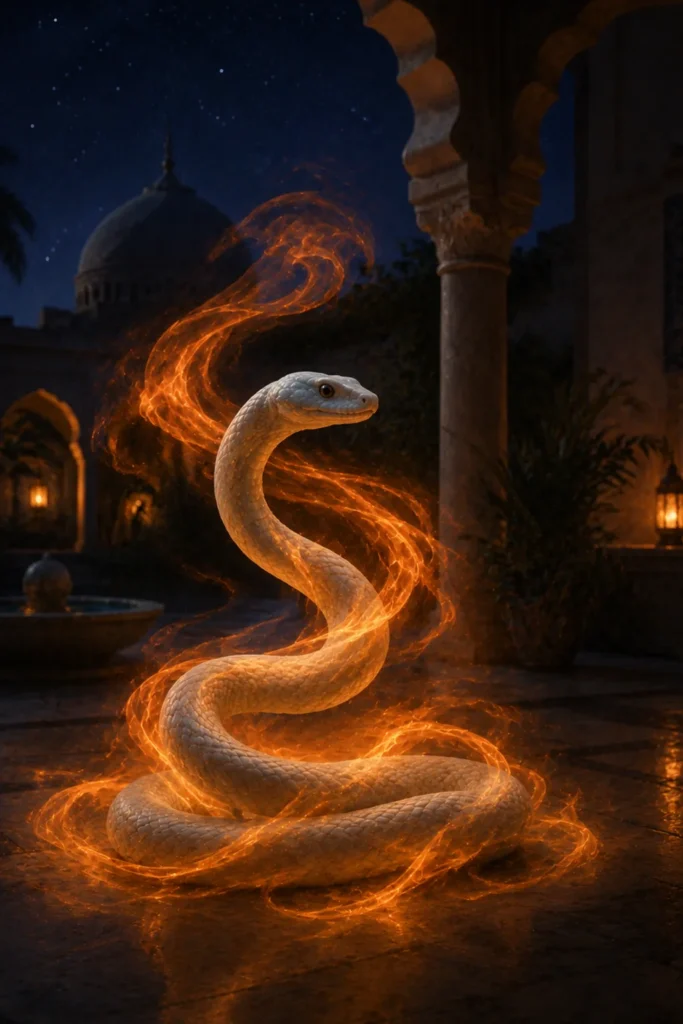
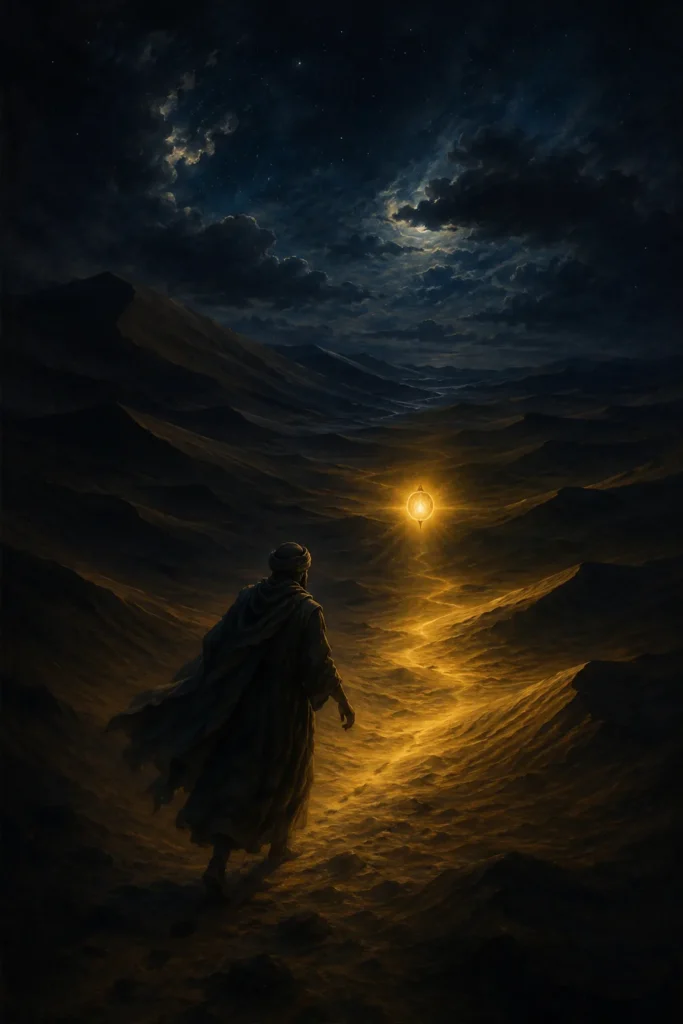
Abu Fanous, the father of the lantern, is a will-o’-the-wisp of the Arabian desert: a bodiless light phenomenon that wanders across the desert at night and lures travellers off their route until they lose their way.
Its focus lies on the Gulf and inner Arabia, and it remains a living oral desert tradition to this day. There is, however, no learned tradition behind it: the source base is thin and mostly popular, which must be kept in mind when classifying it.
Type: Will-o’-the-wisp and luring being, assigned to the djinn
Origin: Modern desert folk belief of the Gulf and inner Arabia
Texts: no classical attestations, oral narrative tradition and popular collections
Period: living contemporary folklore
Appearance: wandering light or ball of light, no body
Source context
Period of the Texts
Modern desert folk belief: no classical medieval textual basis, but oral narrative continuing into the present.
Area of Diffusion
Gulf and inner Arabia: the Eastern Province of Saudi Arabia, the Najd and the Rub al-Khali, along with Kuwait, Bahrain, Qatar and Oman.
Sources
Thin and mostly popular: narratives, press and social media rather than scholarly documentation; standard works on the world of djinn serve as context.
Name and variants
Arabic: Abu Fanous, father of the lantern, from fanus, lantern. Alternative names are Abu Siraj, father of the lamp, and Abu Nuwaira, father of the little flame. All three names denote the same thing: the deceptive light in the darkness.
Form and effect
Appearance
Abu Fanous has no body. It is a light phenomenon, a ball or a light that wanders unpredictably across the desert at night or at dawn.
Effect
Abu Fanous is a classic will-o’-the-wisp and luring type: it draws travellers off their route deeper into the desert and then vanishes, leaving the victims to lose their way and perish.
Profile: Abu Fanous
The desert light and its dangers at a glance.
Living desert folklore of the Gulf and inner Arabia; taxonomically assigned to the djinn, in part as a subtype of the Ghul.
Nocturnal travellers in the desert: whoever follows the light loses the route and gets lost in the vastness.
A ball of light or a wandering light without a body, moving about at night or at dawn, unpredictable in direction and pace.
Luring and misleading: it draws travellers off their route and then vanishes, leaving the lost behind alone.
Do not follow the light and do not approach it; instead recite the Throne Verse or the call to prayer, a general Islamic defence without a dedicated ritual.
The European will-o’-the-wisp, the Australian Min-Min light and the Marfa lights; within the world of djinn it belongs alongside the Ghul, of which it is in part regarded as a subtype.
A light without a body: the oral tradition of the Gulf
The name means father of the lantern, from fanus, lantern; alongside it stand the alternative names Abu Siraj, father of the lamp, and Abu Nuwaira, father of the little flame. Its focus lies on the Gulf and inner Arabia: in the Eastern Province of Saudi Arabia, in the Najd and in the Rub al-Khali, along with Kuwait, Bahrain, Qatar and Oman.
The figure is carried not by books but by living oral desert narrative continuing into the present. This is precisely where its character lies: Abu Fanous is the local personification of a genuinely experienced desert phenomenon, not a being with a classical pedigree.
Contemporary relevance and classification
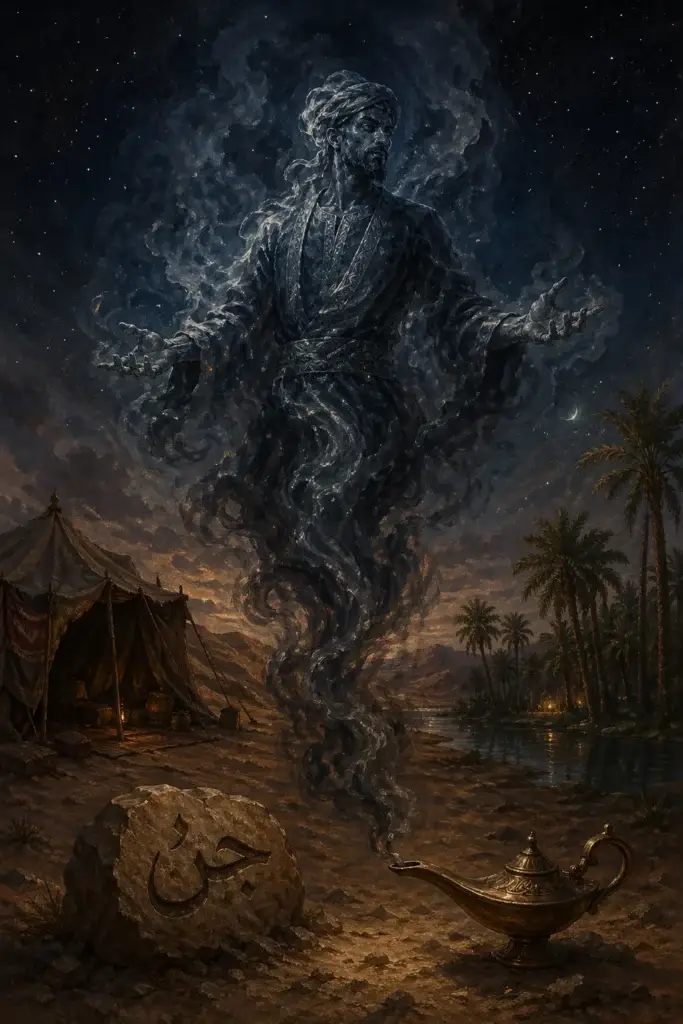
Abu Fanous is very much a figure of the present and popular: it appears in paintings, a computer game and numerous stories on social media.
From a religious-studies perspective, Abu Fanous is a will-o’-the-wisp being of desert folklore. Three clarifications are needed: the source base is thin and mostly popular and web-based, not scholarly. The phenomenon of the desert will-o’-the-wisp is real and regionally widespread, but the specific personification is folk and local. And it should not be inflated into a fixed canonical being.
Not following the light
The oral advice is simple: do not follow the light and do not approach it. Instead, the traveller should recite the Throne Verse or the call to prayer, a practice legitimised by a saying of the Prophet concerning Ghul-beings. It is thus the general Islamic defence, not a dedicated ritual; the best protection against the father of the lantern remains the discipline of staying on the route.
Will-o'-the-wisps worldwide
Abu Fanous is a pure will-o’-the-wisp type and thus related to the European will-o’-the-wisp, the Australian Min-Min light and the Marfa lights. Taxonomically, Gulf folklore assigns it to the Jinn, in part as a subtype of the Ghul. In the Arabian desert world it stands alongside the Hatif, a voice without a body, the whirlwind Zauba’ah and the Ghaddar.
Frequently asked questions about Abu Fanous
What is Abu Fanous?
A desert will-o’-the-wisp of Gulf folklore: a light without a body that wanders across the desert at night and lures travellers off their route until they lose their way.
How does one protect oneself?
By not following the light and not approaching it, but reciting the Throne Verse or the call to prayer. There is no dedicated ritual against Abu Fanous.
Is it well documented?
No. The source base is thin and mostly popular, sustained by oral narration and social media rather than scholarly documentation.
Further links
Further reading:
- Islam – all beings of the Islamic faith world
- Hatif – the bodiless voice as an acoustic counterpart
- Ghul, Zauba’ah, Ghaddar – further dangers of the desert routes
- Holy Water, Amulet, Salt – traditional protective means
- Protection Compass – protective means at a glance
Literature (selection)
Further standard works in the bibliography.
As a desert will-o’-the-wisp, the Father of the Lantern is a young face for an old experience: the light in the night that one is better off not following continues to be told along the Gulf to this day.