Polevik, the dwarf at the field's edge
By Ralf Ittermann · last reviewed on
The Polevik is a spirit of Slavic tradition.
The lord of the field, who grows and shrinks with the grain. The Polevik is the Slavic field figure, and the section below explains the beliefs associated with fieldwork.
The Polevik, the field spirit, is the lord of the field and the plain in East Slavic tradition. He appears at noon or at dusk on the border between field and forest, leads the drunk and the lazy astray, but protects the harvest and livestock of the diligent.
Like the house spirit Domovoi, the forest spirit Leshy and the water spirit Vodyanoy, he belongs to the place-bound lords of nature in Slavic folk belief.
Type: Place-bound field and border spirit, lord of the field
Origin: oral Russian and East Slavic peasant tradition
Texts: folkloric collections of the 19th and 20th centuries
Period: oral tradition until folkloric documentation
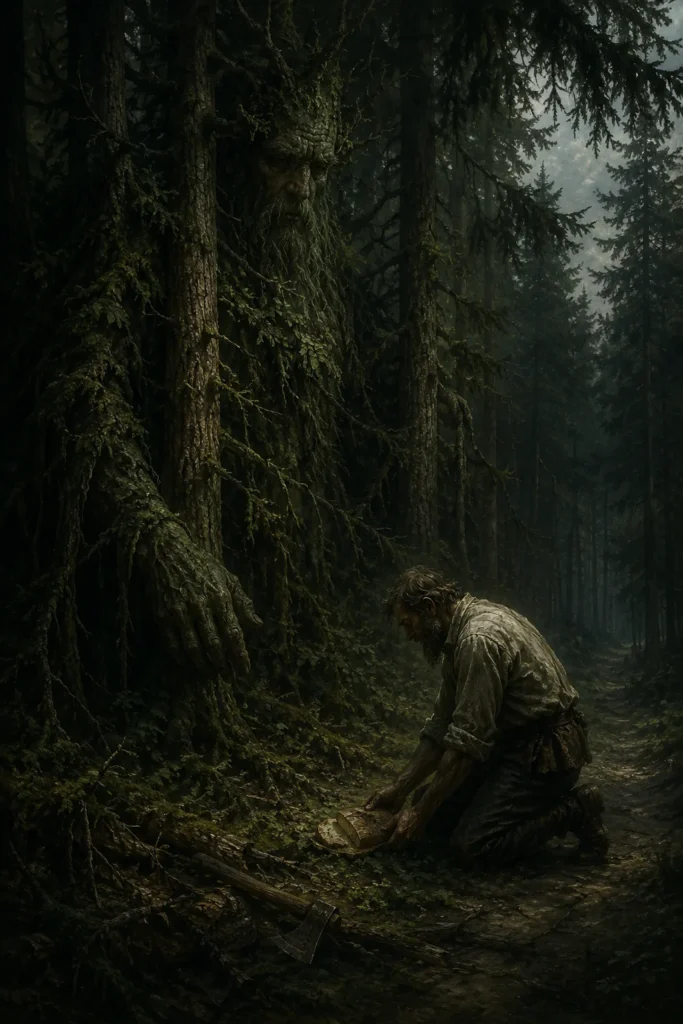
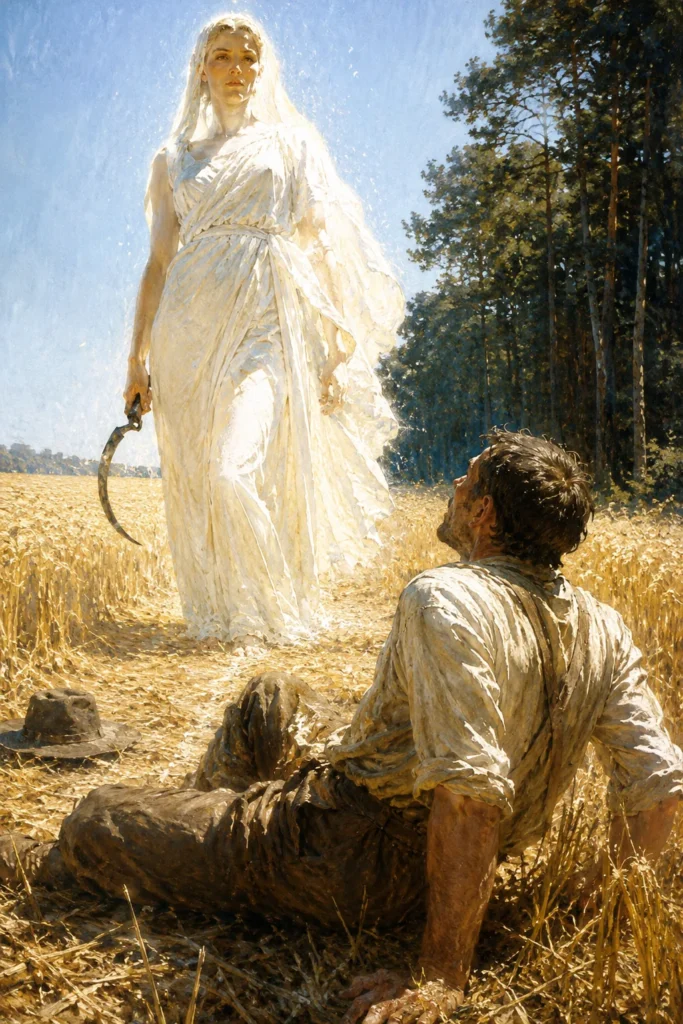
Appearance: misshapen dwarf with eyes of different colours and grass instead of hair, dressed in black or white

Historical Classification
Period of the Texts
The figure belongs to oral Russian and East Slavic peasant tradition and was documented in the 19th and 20th centuries.
Area of Diffusion
Russia and the East Slavic region. His place is the border between field and forest, his hours are noon and dusk.
Sources
Well documented: Máchal’s handbook of Slavic mythology and Ralston’s collection of Russian folk tradition treat the Polevik at length.
Name and variants
Russian: The name comes from pole, field, thus meaning ‘of the field’, also Polevoi. The Polevik is the lord of the field within the system of the place-bound Slavic lords of nature.
Description
Appearance
The Polevik appears as a misshapen dwarf with eyes of different colours and grass instead of hair, wearing black or white clothing. Grass or green hair, changing eye colour and a body size that fluctuates with the grain make him the embodiment of the field itself: he grows and shrinks with the crop, reaching stubble height at harvest time. Black or white clothing reflects his ambivalent nature, both protective and harmful.
Effect
Harmfully, the Polevik leads wanderers astray in the field, brings illness or rides over sleepers; anyone who falls asleep drunk while working can be killed by him. Beneficially, he protects harvest and livestock, watches herds for shepherds, guards treasures buried in the field, warns of bad weather and rewards diligent workers with gifts.
Profile: Polevik
The most important aspects of the field spirit at a glance.
A place-bound nature lord of Slavic folk belief, alongside Domovoi for the house, Leshy for the forest and Vodyanoy for the water.
Field workers, shepherds, drunkards and the lazy: anyone who works the field or enters it at the wrong hour encounters him.
Misshapen dwarf with grass instead of hair and eyes of different colours, wearing black or white clothing, growing and shrinking with the crop.
Leading astray, illness and death for the lazy and drunk; protection of harvest, livestock and herds, weather warnings and gifts for the diligent.
Gifts left at the edge of the field, classically two eggs and an old rooster, placed secretly in a ditch; along with the prohibition against sleeping drunk or lazy in the field.
Most closely related to the Poludnica, the female midday field spirit, along with the German Kornmuhme.
The lord of the field in the system of nature lords
The name Polevik comes from the Russian pole, field, meaning the one of the field, also Polevoi. The Polevik is the lord of the field and, like the house spirit Domovoi, the forest spirit Leshy and the water spirit Vodyanoy, belongs to the place-bound nature lords of Slavic folk belief; as a border-dweller between field and forest, he stands spatially close to the Leshy.
He is closely related to the Poludnica: both are field spirits of threshold times, but the Polevik is the male, place-bound lord of the field, while the Poludnica is the time-bound midday demon. He is a classic border-dweller with two faces, protective and harmful at once.
Folklore and classification
The Polevik is a firm part of Russian folklore and modern Slavic popular culture in fantasy and games and is widely listed in collections of Slavic mythology.
From a religious-studies perspective, the Polevik is a place-bound field and border spirit at the boundary of field and forest, an ambivalent wild guardian of the arable land, embodying the peasant experience that the field holds both yield and danger. Important is the distinction from the Poludnica: the Polevik is bound to the place, the field, while the midday woman is bound to the hour.
Two eggs and an old rooster: the gifts at the edge of the field
Well attested are gifts at the edge of the field, classically two eggs and an old rooster that no longer crows, secretly placed in a ditch at the field’s edge to keep the Polevik favourable. This also includes the prohibition against falling asleep drunk or lazy in the field, especially not at midday or dusk, the hours of the field spirit. Diligence and respect for the field secure his benevolent side; anyone who disregards both will see his other face.
Field spirits and nature lords compared
The Polevik is most closely related to the Poludnica, the female midday field spirit: he is the place-bound lord of the field, she the time-bound mistress of the midday hour. Typologically, the German Kornmuhme corresponds to him. Within the Slavic system of nature lords, Domovoi, Leshy and Vodyanoy stand beside him, each as lord of his own place; the West Slavic Leshy variant Borowy is his nearest neighbour beyond the field’s edge.
Frequently asked questions about the Polevik
Is the Polevik good or evil?
Both: he protects the diligent and the harvest, punishes the lazy and drunk. His black or white clothing reflects this dual nature.
When does he appear?
At midday or dusk, at the boundary between field and forest.
How is he appeased?
Through secret gifts of two eggs and an old rooster at the edge of the field, and through diligence and respect for the field.
Further links
Further reading:
- Slavic – all beings of Slavic tradition
- Poludnica – the midday woman, his female counterpart
- Leshy, Domovoi, Borowy – nature lords of the same system
- Smudging, Amulet, Protective circle – traditional protective means
- Protection Compass – protective means at a glance
Literature (selection)
Further standard works in the bibliography.
As a Slavic field spirit and lord of the field, the Polevik embodies the basic peasant experience that arable land holds both yield and danger at once: strict towards the lazy and drunk, generous towards those who treat the field with diligence and respect.