iWell Guard

Dvorovoi, the moody lord of the yard

The Dvorovoi is a spirit of Slavic tradition.

The moody guardian of yard, stable and livestock.

SpiritSlavic

Table of Contents

Dvorovoi, the yard spirit of the East Slavs
Dvorovoi

The Dvorovoi is the Eastern Slavic yard spirit, guardian of yard, stable and livestock. It is closely related to the Domovoi, but is considered considerably more moody and dangerous, since its domain is not the warm living room but the open yard.

It is documented in Russian folklore of the 19th and early 20th centuries. Its best-known trait is an aversion to animals with white fur: farmwomen therefore brought newborn white calves and lambs into the house.

At a glance: Dvorovoi

Type: Yard spirit, guardian of yard, stable and livestock
Origin: Eastern Slavic folk belief
Texts: Russian folklore of the 19th and early 20th centuries, such as Maksimov and Korinfski
Period: Attested in the 19th century
Appearance: small hairy old man, shape-shifting

Origin and sources

Period of the Texts

The Dvorovoi belongs to Eastern Slavic folk belief; the evidence comes from folkloric collections of the 19th and early 20th centuries.

Area of Diffusion

Russia, Belarus and Ukraine: the peasant homestead of the Eastern Slavs with yard, stable and outbuildings.

Sources

Well documented through Russian folklore, for instance by Maksimov and Korinfski, along with the overview works of Ivanits and Warner.

Name and variants

Russian: dvorovoi, from dvor, yard or homestead: the one belonging to the yard. In Ukrainian he is called Dvorovyk. Calling him Domovoi was, incidentally, considered a grave insult; tradition keeps the two spirits strictly apart.

Appearance and behaviour

Appearance

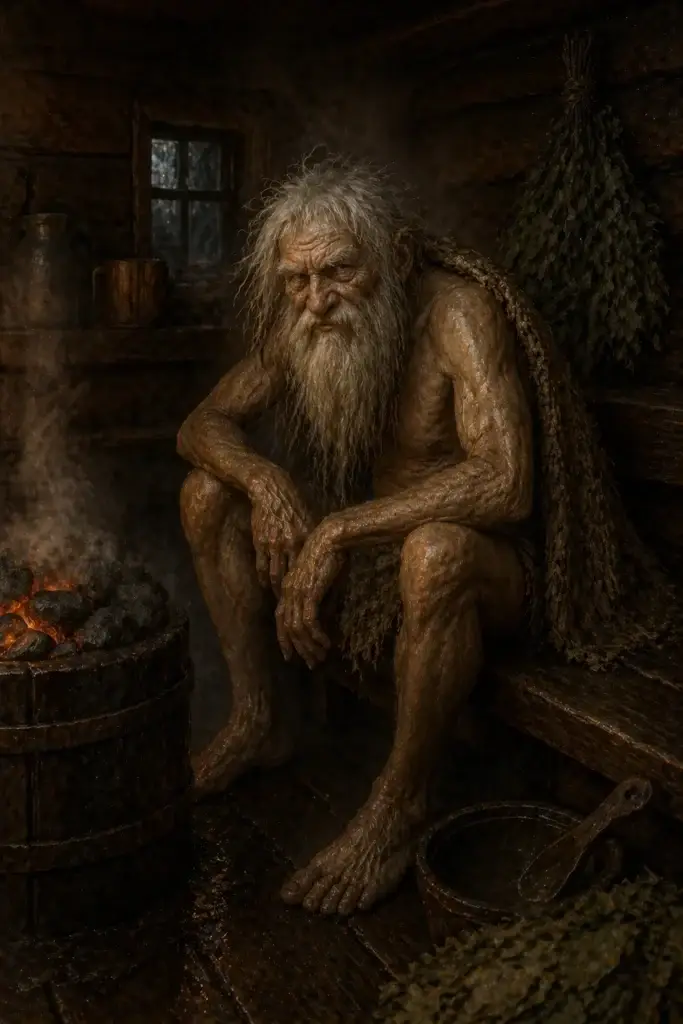
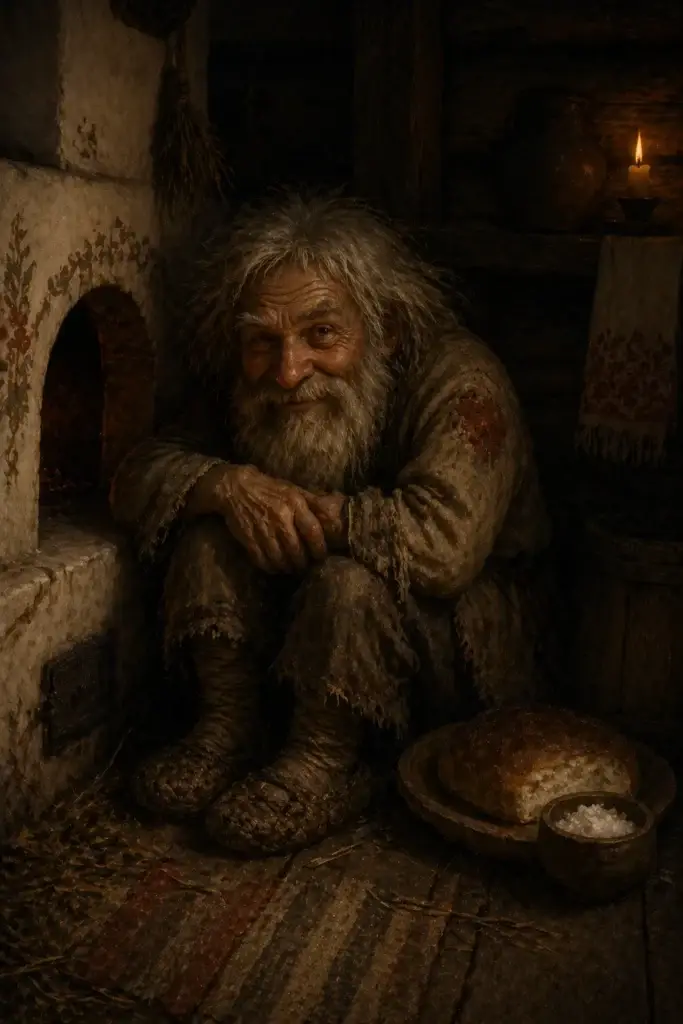
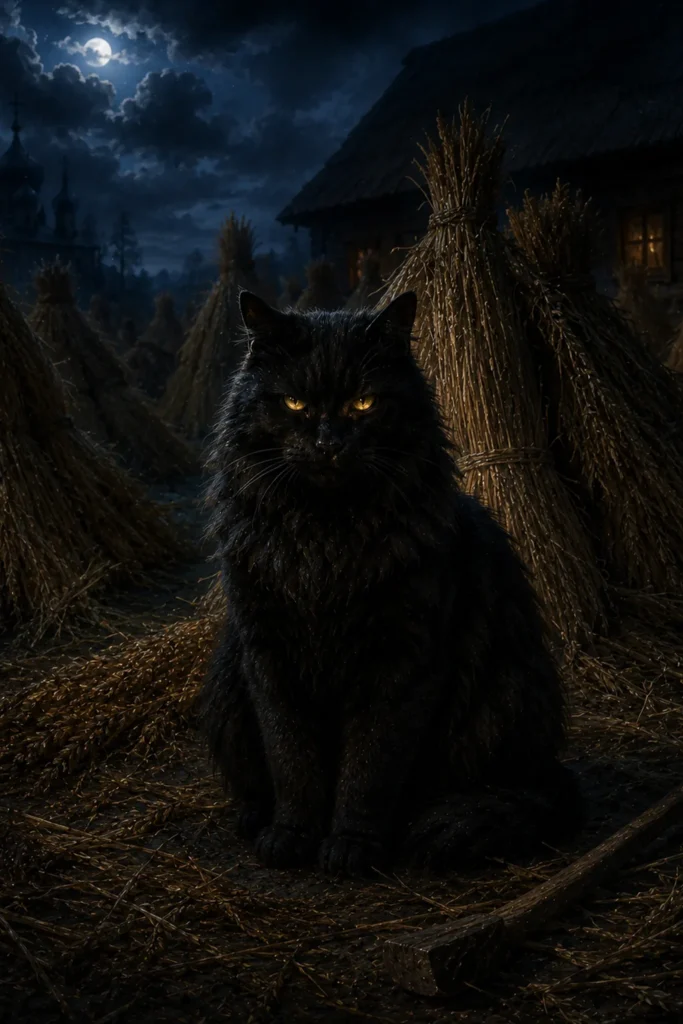
The Dvorovoi usually appears, like the Domovoi, as a small, hairy old man. He can take the form of the master of the house, a dog or a cat.

Effect

He guards the yard and livestock, but is less good-natured than the Domovoi. His central trait is an aversion to animals with white fur, which he may harm. If he likes an animal, he grooms and plaits its mane and tail; if he dislikes it, he rides it at night until it is exhausted.

Profile: Dvorovoi

The key aspects of the farm spirit at a glance.

Tradition

Eastern Slavic folk belief: The Dvorovoi is best understood as the yard aspect of the Domovoi, more moody and dangerous than the spirit of the living room.

Responsible for

Yard, stable and livestock: the open yard of the homestead, which lies outside the protective living room.

Depiction

Small, hairy old man; as a shapeshifter he can appear as the master of the house, a dog or a cat.

Sphere of Influence

Livestock care and livestock harm: he plaits mane and tail for beloved animals, while riding white and disliked animals at night until they are worn out.

Dealing with it

A pine or spruce branch in the yard as his dwelling, beer as an offering, good livestock keeping; a dead magpie on the fence in case of trouble.

Related beings

The Domovoi as the closest relative, along with the Tomte, the Nisse and the Lithuanian Kaukas.

The one belonging to the yard: name and tradition

The name comes from Russian dvor, yard or homestead: the one belonging to the yard. The Dvorovoi is rooted in Eastern Slavic folk belief, known in Ukrainian as Dvorovyk, and attested in Russian folklore of the 19th and early 20th centuries, for instance by Maksimov and Korinfski.

His place within the structure of house spirits is clearly defined: he is the spirit of the yard rather than of the living room. Because his domain is the open yard with stable and livestock, he shows rougher traits; tradition describes him as a moody guardian whose goodwill must be maintained through offerings and good livestock keeping.

Afterlife and classification

The Dvorovoi appears in modern Slavic fantasy and in Russian neopaganism, usually as a minor figure alongside the more popular Domovoi.

From a religious-studies perspective, he is a moody, sometimes dangerous yard spirit. Important clarifications: he is best understood as the yard aspect of the Domovoi, not its exact counterpart; the black tomcat belongs to the Ovinnik, not to him; and the widespread image of a snake with a rooster’s head is poorly attested.

Branch, beer and a dead magpie

The traditional way of dealing with the Dvorovoi is a relationship of exchange: a pine or spruce branch is hung in the yard, regarded as his dwelling, beer is offered to him, and the livestock is kept well. In case of trouble, hanging a dead magpie on the fence was considered a remedy, since the Dvorovoi loathes magpies. Newborn white young animals were brought into the house as a precaution, to keep them out of his reach.

Yard and farmstead spirits compared

As a yard and farmstead spirit, the Dvorovoi is related to the Scandinavian Tomte and Nisse and the Lithuanian Kaukas. Closest to him is the Domovoi, whose yard aspect he represents: he is more of a manifestation of the Domovoi than a wholly independent being. Tradition, however, keeps him clearly apart from the spirits of the farm outbuildings, such as the Ovinnik.

Frequently asked questions about the Dvorovoi

What is a Dvorovoi?

The Eastern Slavic yard spirit who guards the yard, stable and livestock. He is attested in Russian folklore of the 19th and early 20th centuries.

How does he differ from the Domovoi?

He is the spirit of the yard rather than of the living room and is considered more moody and dangerous. Calling him Domovoi was even regarded as a grave insult.

Why does he harm white animals?

Folk belief ascribes to him a strong aversion to white fur. Farmwomen therefore brought newborn white calves and lambs into the house.

Further links

Recommended internal links:

  • Slavic – all beings of Slavic mythology
  • Domovoi – the house spirit, whose yard aspect is the Dvorovoi
  • Ovinnik – the dangerous kiln-barn spirit of the farmstead
  • Salt, Iron, Amulet – traditional protective means
  • Protection Compass – protective means at a glance

Literature (selection)

A selection of key sources and studies:
  • Ivanits, Linda J.: Russian Folk Belief. Armonk 1989.
  • Warner, Elizabeth: Russian Myths. London 2002.
  • Máchal, Jan: Slavic Mythology. Boston 1918.

Further standard works in the bibliography.

As an East Slavic yard spirit and protector of livestock, the Dvorovoi embodies the harsher side of the farmstead: not a friend of the house like the Domovoi, but a moody guardian whose goodwill must be earned anew each day.

Classification & Protection

IIILEVEL
The Protection Compass assigns this being to influence level III, Burdensome influence.

Against its influence, cross-cultural tradition names these protective means:

Compare in the Protection Compass →

Recommended protective means

iWell Guard

The simplest protective means in this collection: 41 layers of fine gold 999, platinum, silver and silicon, manufactured in Ruhla, Thuringia. It requires no activation, is bound to no person, and is effective within a radius of around 50 meters, even without being worn.

All protective means at a glance →