Tomte, the secret farmhand of Swedish farms
By Ralf Ittermann · last reviewed on
The Tomte is a spirit of Swedish folk tradition.
The invisible helper who demands respect and Julbrei. Discreet work as a farmhand on Swedish farms earned the Tomte its quiet devotion.
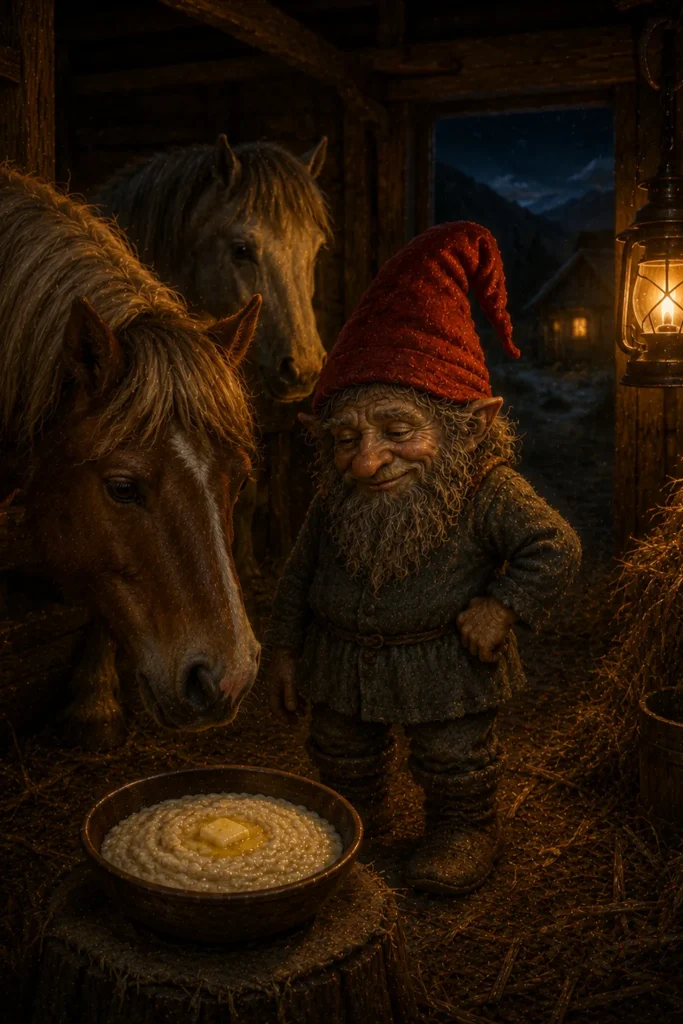
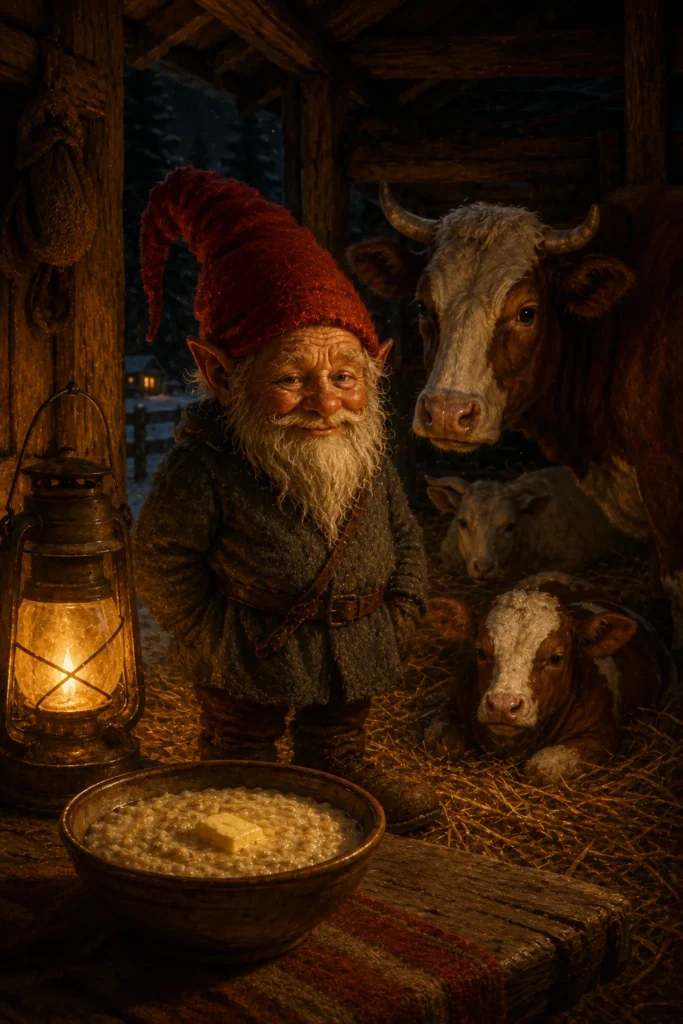
The Tomte, also called Tomtenisse or Gårdstomte, is the Swedish farm and house spirit: a small old man with a red pointed cap who protects the farm and livestock and secretly does the stable work at night.
His name comes from tomt, the building plot or homestead; in folk belief he is regarded as the spirit of a farm’s first settler. He demands respect and the Julbrei, the Christmas porridge with butter, and does not forget a slight.
Type: farm and house spirit
Origin: Sweden and eastern Norway
Texts: Old Swedish records from the 14th century, including the revelations of Saint Birgitta; Kvideland and Stokker
Period: 14th century to the present, in living custom
Appearance: a small old dwarf about sixty centimetres tall, with a red pointed cap
Textual history
Period of the Texts
The earliest evidence consists of two Old Swedish records from the 14th century concerning the tomta gudhane, the gods of the building plot; the custom lives on to this day.
Area of Diffusion
Sweden and eastern Norway: the Tomte belongs to the farmsteads, to whose homestead he is bound.
Sources
Well documented: the Old Swedish records, along with the collections of Kvideland and Stokker and the rich literary reception since Rydberg.
Name and variants
Swedish: tomte, from tomt, building plot or homestead, Old Norse tompt: literally the man of the homestead. In folk belief he is regarded as the spirit of a farm’s first settler, related to the ancestral spirit in the burial mound.
Being and effect
Appearance
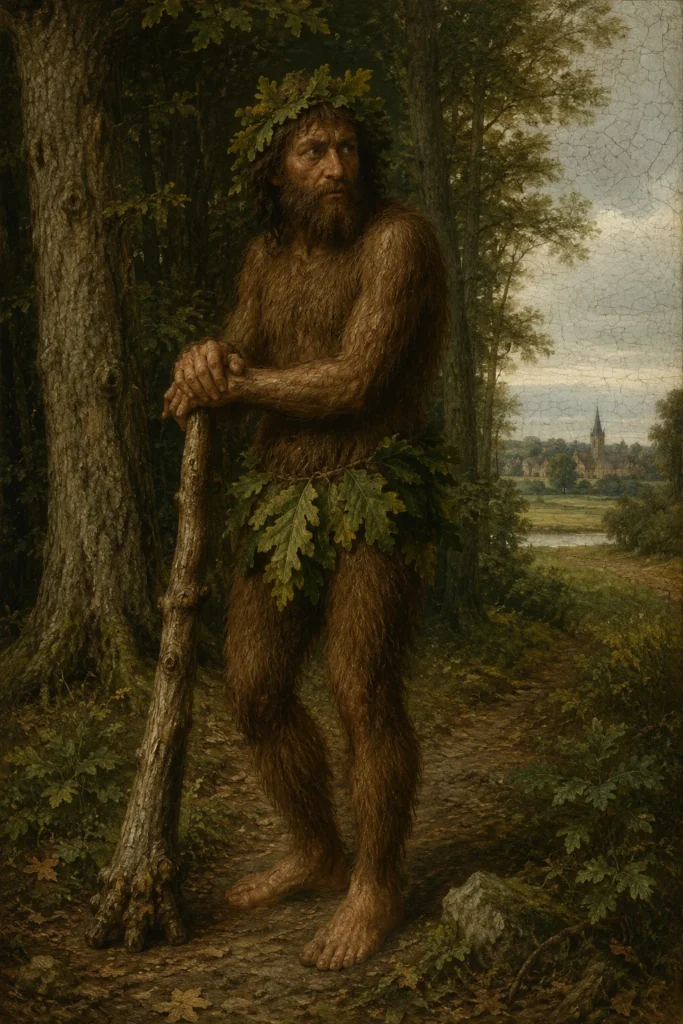
The Tomte is a small old dwarf about sixty centimetres tall, dressed in grey with a red pointed cap. The beard is a later addition; the old Tomte was considered beardless. In Swedish-speaking Finland he was thought to be one-eyed.
Effect
The Tomte protects the farm, livestock and children, secretly does the stable work at night and secures prosperity while remaining invisible himself. Disrespect he punishes with pranks, up to and including the killing of livestock.
Profile: Tomte
The key aspects of the farm spirit at a glance.
Swedish farm spirit, attested since the 14th century; in folk belief the spirit of a farm’s first settler, related to the ancestral spirit in the burial mound.
Farm, livestock and children: the Tomte watches over the homestead and its inhabitants and works at night without being seen.
A small old dwarf about sixty centimetres tall, dressed in grey, with a red pointed cap; originally beardless, in Swedish-speaking Finland thought to be one-eyed.
Secret stable work and the farm’s prosperity; disrespect brings pranks and punishments, and in the worst case the killing of livestock.
Not a defence, but the care of the relationship: the Julgröt with a dollop of butter, along with beer, cheese and bread, regionally mittens or shoes as a gift of clothing.
The Gods of the Building Site
The name leads into the early history of the farmstead itself: tomte comes from tomt, the building site or homestead, Old Norse tompt, literally the man of the homestead. In folk belief, the Tomte was regarded as the spirit of the first settler of a farm, related to the ancestral spirit in the burial mound.
The earliest evidence consists of two Old Swedish testimonies from the 14th century concerning the tomta gudhane, the gods of the building site. One of these appears in the Revelations of Saint Birgitta, where priests forbid offerings to the Tomte gods: the farm spirit was an early thorn in the Church’s side, but a familiar neighbour to the common people.
Rydberg, Nyström and the Jultomte
The Tomte became famous through Viktor Rydberg’s 1881 poem Tomten, Jenny Nyström’s image-defining illustrations, and Astrid Lindgren’s prose version. Under US influence, he transformed into the Jultomte, the Swedish Santa Claus.
From a religious-studies perspective, the Tomte is benevolent but moody and unforgiving. Important clarifications: he is not a garden gnome or Christmas elf, but a year-round farm spirit; the Jultomte is a later reinvention. The beard is a late addition. And the equation with Santa Claus is a commercial assimilation.
Julgröt, Butter and Respect
Well attested is the Julgröt, the Christmas porridge with a dollop of butter on top, along with beer, cheese and bread, and regionally mittens or shoes as a gift of clothing. Well known is the butter story: if the farmer hides the butter under the porridge, the Tomte finds none on top and, in anger, kills the cow; but if he then finds the butter at the bottom of the bowl, he repents and replaces the cow. The rules of conduct are respect, adherence to tradition, not swearing and not urinating in the stable.
The Tomte Among the House Spirits
The Tomte corresponds to the Norwegian-Danish Nisse, the Finnish Tonttu, the Scottish Brownie, the German Kobold and the Slavic Domovoi. Its shipboard offshoot is the Klabautermann, who takes on the same role aboard ship as the Tomte does on the farm.
Frequently Asked Questions About the Tomte
What is a Tomte?
The Swedish farm and house spirit, a small old man with a red pointed cap, who protects the farm and secretly performs the stable work at night.
What does he demand as an offering?
The Julgröt, the Christmas porridge with a dollop of butter on top; regionally also beer, cheese, bread or a gift of clothing.
Is the Tomte Santa Claus?
No. He is a year-round farm spirit; the Jultomte is a later assimilation to Santa Claus.
Further links
Further reading:
- Germanic – all beings of Germanic tradition
- Nisse, Tonttu – related farm spirits of the north
- Salt, Amulet, Protective Candle – traditional protective means
- Protection Compass – protective means at a glance
Literature (selection)
Further standard works in the bibliography.
As a Swedish farm spirit, the Tomte is far more than the pointed-cap gnome of Christmas cards: he is the man of the homestead, attested since the 14th century and still honoured today with a bowl of Julgröt.