Schrat, the Hairy One of the old glosses
By Ralf Ittermann · last reviewed on
The Schrat is a spirit of German tradition.
The shaggy forest fellow who by night becomes the oppressive Schrättel.
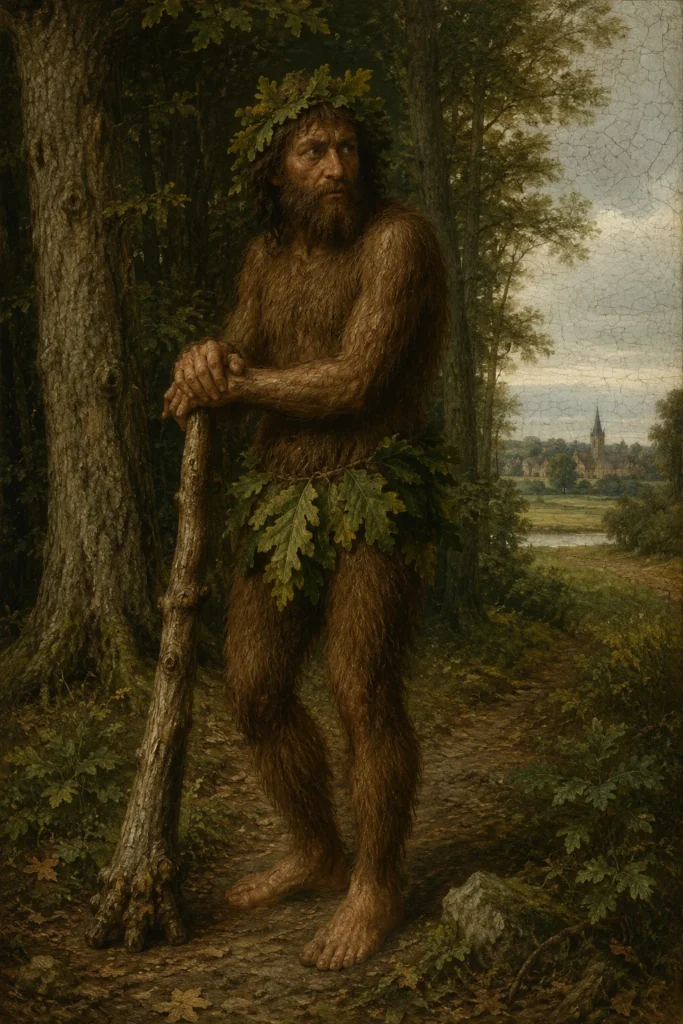
The Schrat is the hairy forest being of the German-speaking world. Old High German glosses render the Latin words pilosus (the hairy one) and satyrus with scrato and scraz; this attests the figure in writing since the early Middle Ages.
In later tradition the forest spirit turns into a house spirit and a nocturnal oppressor spirit, the Schrättel. The figure lives on to this day in the word Waldschrat.
Type: Hairy forest spirit, later also house spirit and nocturnal oppressor spirit (Schrättel)
Origin: German-speaking world, with loan forms in West Slavic and the Alpine region
Texts: Old High German glosses, Middle High German poetry, legend collections
Period: 10th and 11th centuries through to modern legend collections
Appearance: small to man-sized, strongly hairy forest dweller

Traditional context
Period of the Texts
The Schrat first becomes tangible in the glossaries of the 10th and 11th centuries; via Middle High German poetry the tradition reaches into modern legend collections.
Area of Diffusion
The German-speaking world with influence reaching into the Alpine region; the word was borrowed early into Slavic, as shown by Polish skrzat, Czech skřítek and Slovene škrat.
Sources
Good for a folk-belief being: glosses, Middle High German poetry, legend collections and the entry Schrat in the Handwörterbuch des deutschen Aberglaubens.
Name and variants
German: Old High German scrato and scraz, Middle High German schrat, schrate, schraz and the diminutive schretel; also Old Norse skratti for sorcerer or troll. The glossators chose scrato to render the pilosi of the Vulgate (Isaiah 13:21), hairy desert and forest demons, as well as the ancient satyrus; in doing so, learned scribes tied a native notion to biblical and ancient demonic figures.
Nature and effect
Appearance
The oldest testimonies emphasise a single trait: the hairiness, for pilosus simply means the hairy one. Legend descriptions depict the Schrat as a shaggy, unkempt fellow of small to man-sized build, half animal-like, with wild hair; occasionally joined eyebrows are mentioned. The Schrättel, by contrast, was imagined as small and light; it slips into the bedchamber through a knothole or keyhole.
Effect
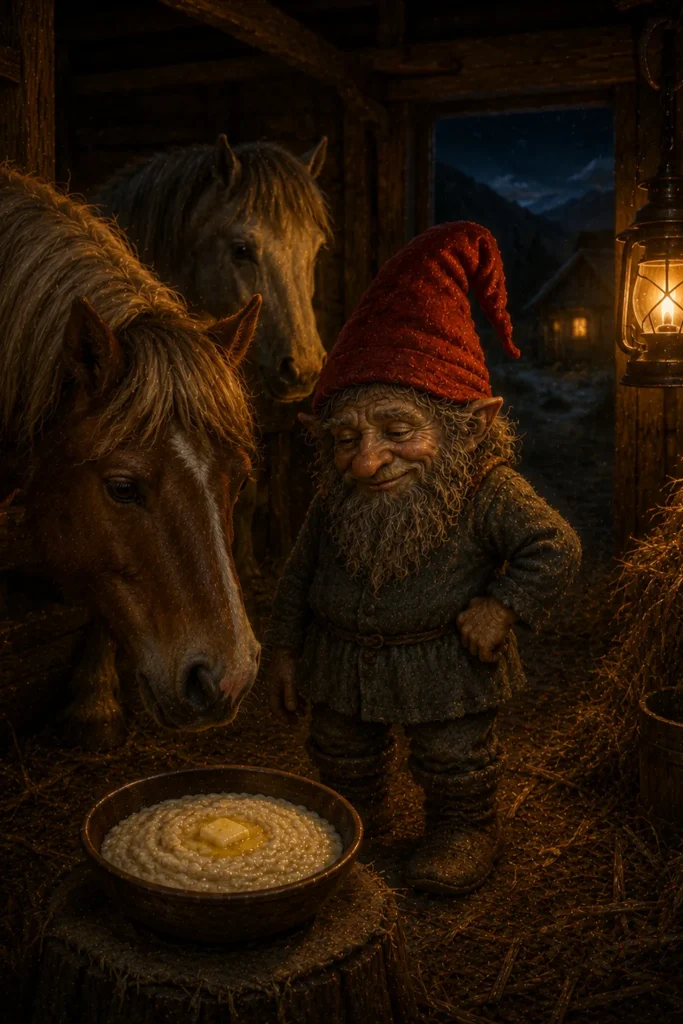
As a forest being the Schrat teases: he leads forest walkers astray, mimics calls, frightens and confuses, but is scarcely considered deadly. As a house spirit he behaves like a hobgoblin, makes noise, plagues the livestock and claims the farmstead for himself. The third role is that of the Schrättel in the southern German-Alpine region: an oppressor spirit that lies on sleepers at night and causes tightness of breath. Those who tolerate or host the being have peace or even benefit; those who mock it are plagued.
Profile: Schrat
The key aspects of the hairy forest spirit at a glance.
Attested since the Old High German glosses, treated by Jacob Grimm in 1835 as a forest spirit alongside wild men and hobgoblins; the word migrated early into West Slavic.
Forest walkers by day and dusk, farmers on the farmstead, and sleepers whom the Schrättel visits in the chamber at night.
Shaggy, unkempt fellow of small to man-sized build, half animal-like, with wild hair; the Schrättel small and light, slipping through knothole and keyhole.
Teasing and misleading in the forest, making noise and plaguing livestock in the house, nocturnal pressing as the Schrättel, functionally equivalent to the Alp and the Mare.
A Druden’s foot on the door or bedstead, shoes placed upside down, iron under the pillow, prayer and blessing signs; thresholds and knotholes were secured.
What distinguishes the Schrat from the Wild Man of pictorial art and the helpful Moss People is his mischievous, plaguing nature.
From the scrato of the glosses to the Schrättel of legend
The Schrat first becomes tangible in the glossaries of the 10th and 11th centuries: the glossators chose scrato to render the pilosi of the Vulgate and the ancient satyrus, thereby tying an evidently native notion to biblical and ancient demonic figures. Jacob Grimm treated the Schrat in 1835 in Deutsche Mythologie as a forest spirit alongside wild men and hobgoblins.
A Middle High German märe (around 1300) tells of the schretel that rules a farmstead by night, until a travelling bear-keeper’s bear beats it up; here the forest being has long since become a house-plaguing spirit. The beaten being asks the next morning whether the great cat is still in the house, and avoids the farmstead from then on. Claude Lecouteux described this path in 1985 as a sequence of demonisation, mythologisation and euphemisation. Modern legend landscapes from the Alpine region to Bohemia know Schratt and Schrättel as forest, house and oppressor spirit.
From legendary being to vocabulary
In colloquial usage, Waldschrat today denotes a crotchety loner, a shift in meaning that dictionaries have recorded since the 20th century. In fantasy fiction and role-playing games, by contrast, the Schrat has been reinterpreted as a tree-like forest being, quite removed from the hairy fellow of the glosses. The Slavic loan forms lead a life of their own: the Slovene škrat remains popular to this day as a mountain and house spirit, and in legend-rich places of the Alpine region field names and tales of the Schrattl preserve the older tradition.
From a religious-studies perspective, the Schrat is a case study in the source situation of vernacular spirit beings: he first becomes graspable not through narratives but through the translation decisions of glossators, who equated native beings with biblical pilosi and ancient satyrs and thereby demonised them. Lecouteux describes the counter-movement of folk tradition as euphemisation, recognisable in the diminutive Schrättel. Typologically, three layers overlap: the forest spirit of the Wild Men type, the productive and punishing house spirit, and the Alp-being of nocturnal fear. Continuity lies more in the word than in a uniform being; precisely here lies the figure’s value for the history of religion.
Druden's foot and upside-down shoes: the protection
Towards the forest being, tradition advised restraint: do not mock it, do not mimic it, do not roam the forest with shouting. Against the oppressive Schrättel, the Handwörterbuch des deutschen Aberglaubens names the means that were also customary against the Alp and the Drude: the Druden’s foot on the door or bedstead, shoes placed upside down before the bed, iron or steel under the pillow, along with prayer and blessing signs before sleep. Doorsteps and knotholes as points of entry were secured or plugged.
Forest lord, house spirit, night oppressor: the kinship
As lord of the forest, the Schrat corresponds to the Slavic Leshy, who shares with him the traits of misleading and mocking voices; the household-spirit side links him to the Domovoi of Russian folk belief. For the nocturnal oppressing function, the Alp, the Mahr and the Scandinavian Mara stand directly alongside the Schrättel. The scholarly equation with the Satyr and Faun of antiquity already appears in the medieval glosses, and with the Wild Man he shares membership in the complex of the Wild Folk. In the Baltic region, the Estonian old man of the forest Metsavana is a related type.
Frequently asked questions about the Schrat
Are Schrat and Waldschrat the same?
In essence, yes. Waldschrat is the younger, clarifying compound that took hold as the simple word Schrat began to fade. Today, Waldschrat is used mostly figuratively for people-shy loners, while the legendary figure is the same under both name forms.
What is a Schrättel?
The diminutive form of the Schrat, which became a figure in its own right in southern Germany, Switzerland and Austria: a nocturnal oppressing spirit of the same kind as the Alp and the Mahr. Where alpine legends speak of the Schrattl or Schrättele, it is this nocturnal being that is meant, not the forest spirit.
Is the Schrat dangerous?
Tradition portrays him as a nuisance, but rarely destructive. In the forest he teases and misleads, in the house he rattles and thumps, and as Schrättel he causes nocturnal oppression. Fatal attacks are not part of the fixed body of legends; the traditional countermeasures aim at keeping him away and staying calm, not at fighting him.
Further links
Further reading:
- Germanic – all beings of Germanic tradition
- Wild Man, Moss Folk, Wood Maiden – the wild folk of the German forest
- Iron, Horseshoe, Threshold protection, Amulet – traditional protective means against oppressing spirits
- Protection Compass – protective means at a glance
Literature (selection)
Further standard works in the bibliography.
Whether as Waldschrat in today’s usage or as Schrättel of the alpine legends: the Schrat shows how an old word changes its nature, from the hairy forest fellow of the glosses to the nocturnal spirit of the bedchamber.