Tonttu, Guardian of House, Sauna and Mill
By Ralf Ittermann · last reviewed on
The Tonttu is a spirit of Finnish tradition.
The place-bound guardian who demands order and respect.
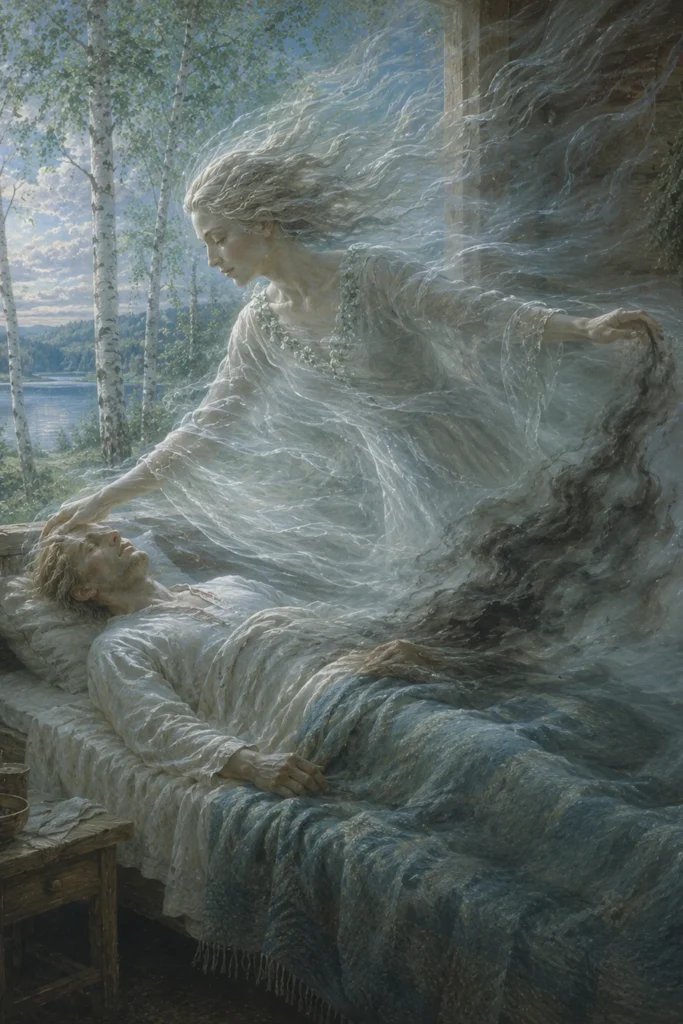
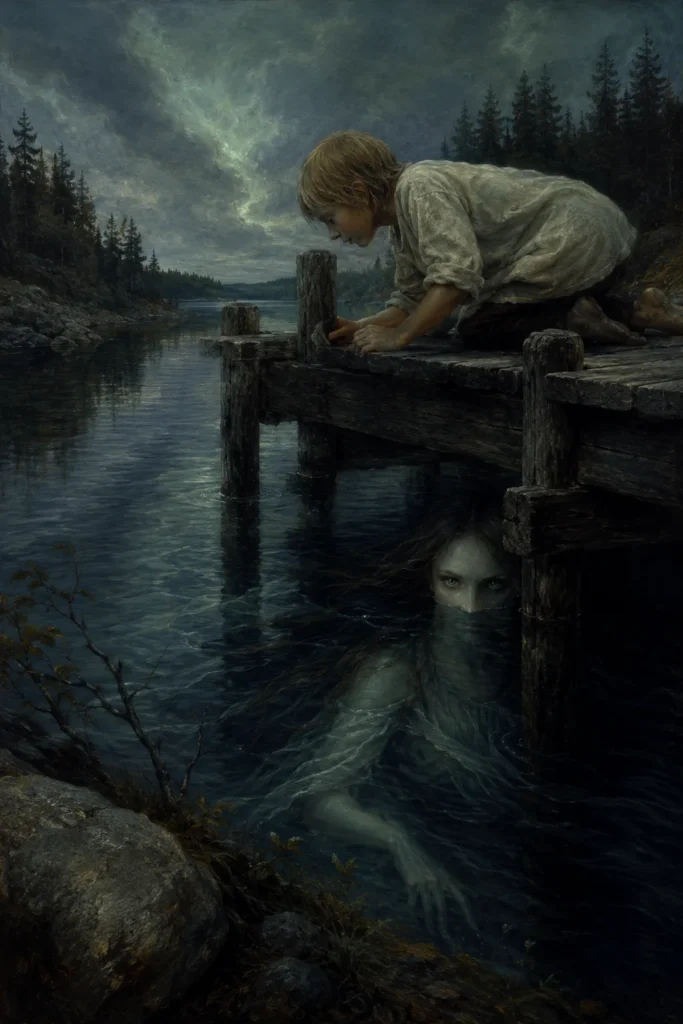
The Tonttu, also known as Kotitonttu or Saunatonttu, is the Finnish house spirit: a protective spirit of house, farm and sauna. He is more strongly place-bound than the general Haltija, of which he is a subtype, and demands order, respect and offerings.
The earliest attestation in the mythological material is Christfrid Ganander’s Mythologia Fennica of 1789, where the Tonttu appears as a benevolent protective spirit and guardian of the property. To this day, Finnish sauna etiquette is grounded in the Saunatonttu.
Type: House, farm and sauna spirit, subtype of the Haltija concept
Origin: Finland; the word is a loanword from Swedish
Texts: Ganander, Mythologia Fennica (1789); Pulkkinen
Period: Finnish folk belief, first attested 1789, alive as a custom
Appearance: small, often bearded wight

Context of tradition
Period of the Texts
Finnish folk belief: the earliest attestation in the mythological material is Ganander’s Mythologia Fennica of 1789; as a custom, the Tonttu lives on into the present.
Area of Diffusion
Finland: the Tonttu belongs to house, farm, sauna and mill and is firmly bound to its property.
Sources
Well documented: Ganander as the earliest attestation, along with the modern treatment by Pulkkinen and Lindfors.
Name and variants
Finnish: tonttu, a loanword from Swedish; like tomte and Finnish tontti, it derives from Swedish tomt, building site. The Tonttu is a subtype of the Haltija concept, specifically the maanhaltija of the farm.
Form and effect
Appearance
The Tonttu is a small, often bearded wight, more strongly place-bound than the general Haltija. Subtypes are the Kotitonttu of the house, the Saunatonttu of the sauna and the Myllytonttu of the mill; the stable spirit could appear as a cat.
Effect
The Tonttu protects house, sauna and mill. The Saunatonttu watches over good behaviour in the sauna and punishes misconduct; otherwise, disrespect mainly risks the withdrawal of luck.
Profile: Tonttu
The key aspects of the house spirit at a glance.
Finnish folk belief: the Tonttu is the place-bound subtype of the Haltija concept, first mythologically attested by Ganander in 1789.
House, farm, sauna and mill: as Kotitonttu, Saunatonttu and Myllytonttu, he watches over the buildings of his property.
Small, often bearded wight; the stable spirit could appear as a cat. Firmly bound to its place.
Protection of the property and its buildings; the Saunatonttu watches over behaviour in the sauna and punishes misconduct.
Sauna etiquette, regionally a porridge offering at Christmas; when building a house, offerings of water, bread, money and charcoal to the maanhaltija.
From Building-Site Spirit to Saunatonttu
The word tonttu is a loanword from Swedish and, like tomte and Finnish tontti, goes back to Swedish tomt, building plot. Within Finnish folk belief, the Tonttu is a subtype of the Haltija concept, specifically the maanhaltija of the farmstead.
The earliest attestation in the mythological material is Christfrid Ganander’s Mythologia Fennica of 1789, where the Tonttu is a benevolent guardian spirit and keeper of the property. The interpretation as a remnant of an ancestor cult is uncertain; the Tonttu is chiefly documented as a guardian of buildings, above all the sauna.
From Guardian Spirit to Christmas Elf
In modern reception, the Joulutonttu is the Finnish Christmas elf and helper of Joulupukki, a shift from guardian spirit to Christmas elf.
From a religious-studies perspective, the Tonttu is benevolent; danger exists only as a withdrawal of luck or as a minor punishment for disrespect. Important clarifications: the Tonttu should not be equated with the Haltija, but is only a place-bound subtype. And it is not an elf in the fantasy sense, that comes through Christmas pop culture.
Sauna Etiquette and Porridge Offerings
Well attested by sources is the sauna etiquette, which is still justified today with reference to the Saunatonttu: do not be loud, do not swear or argue, do not eat or drink, do not urinate and do not stay too long. As a porridge offering, some families place a bowl of porridge in the sauna at Christmas; this is documented, though the details vary regionally. When building a house, offerings of water, bread, money and charcoal were made to the maanhaltija.
Tonttu, Tomte and Relatives
Frequently Asked Questions about the Tonttu
What is a Tonttu?
The Finnish house spirit, a guardian spirit of house, farmstead and sauna, a place-bound subtype of the Haltija concept.
What is sauna etiquette?
The rules of the Saunatonttu: do not be loud, do not swear, do not urinate and do not stay too long.
Is the Tonttu the same as the Haltija?
No. The Tonttu is only a place-bound subtype of the Haltija concept.
Further links
Further reading:
- Haltija – the Finnish guardian spirit concept of which the Tonttu is a subtype
- Tomte, Nisse – the Scandinavian counterparts
- Salt, Amulet, Smoke Cleansing – traditional protective means
- Protection Compass – protective means at a glance
Literature (selection)
Further standard works in the bibliography.
As the Finnish house spirit and guardian spirit of house and sauna, the Tonttu shows how closely everyday life and belief in spirits remained connected in Finland: even today’s sauna etiquette bears its mark.