Haltija, the Genius Loci of the North
By Ralf Ittermann · last reviewed on
The Haltija is a spirit of Finnish tradition.
Every place, every being, every thing has its Haltija. Guardian spirits of the North, the Haltija are bound to a single place each.
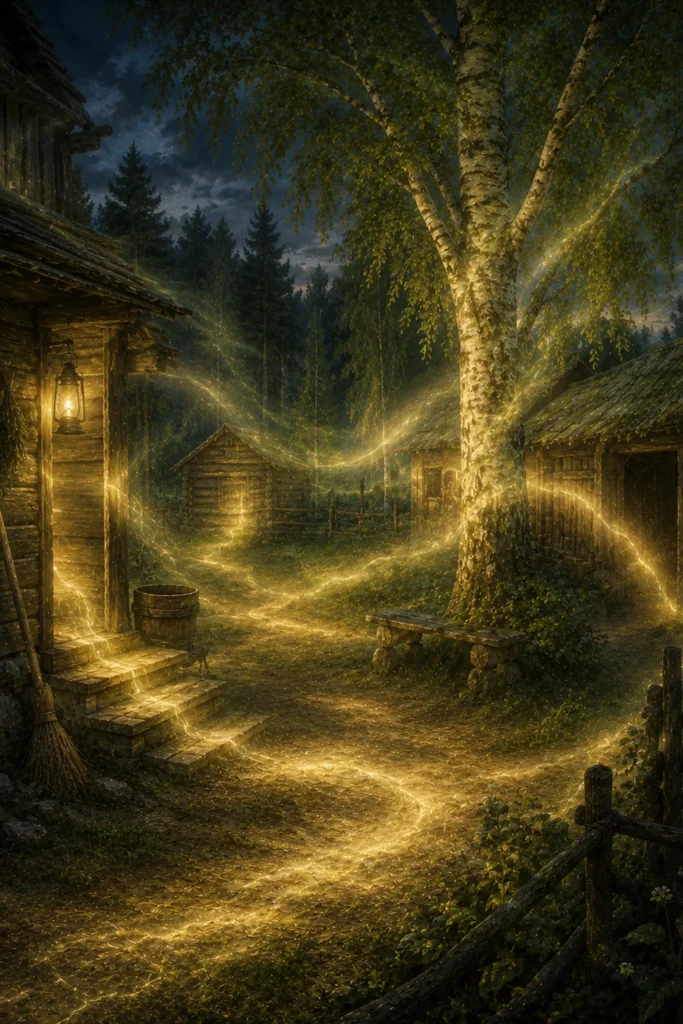
In Finnish folk belief, Haltija is a guardian spirit concept, not a single being: every place, every animal, every person and every thing has a Haltija, a genius loci. The Kotihaltija is the house spirit, the Maanhaltija the farmstead spirit.
The word is probably a Germanic loanword in Proto-Finnic and belongs to Balto-Finnic animistic folk belief. Attestations range from Ganander’s Mythologia Fennica through Krohn to the Rune Song Archive.
Type: guardian spirit concept, protective and ruling instance of a domain
Origin: Finland and the Balto-Finnic area
Texts: Ganander (1789), Krohn (1915), Rune Song Archive
Period: Balto-Finnic folk belief
Appearance: not necessarily anthropomorphic, more of an acting presence
Source context
Period of the Texts
Balto-Finnic folk belief: the written attestations begin with Ganander in 1789 and continue through Krohn in 1915 to the Rune Song Archive.
Area of Diffusion
Finland and the Balto-Finnic area, with related words in Karelian and Votic.
Sources
Well documented: Ganander, Krohn and the Rune Song Archive, along with modern research by Pulkkinen and Sarmela.
Name and variants
Finnish: haltija, probably a Germanic loanword in Proto-Finnic, from Proto-Norse halten; alternatively from Finnish hallita, to rule. The etymology is not certain. In modern usage, Haltija also means holder, owner or possessor.
Description
Appearance
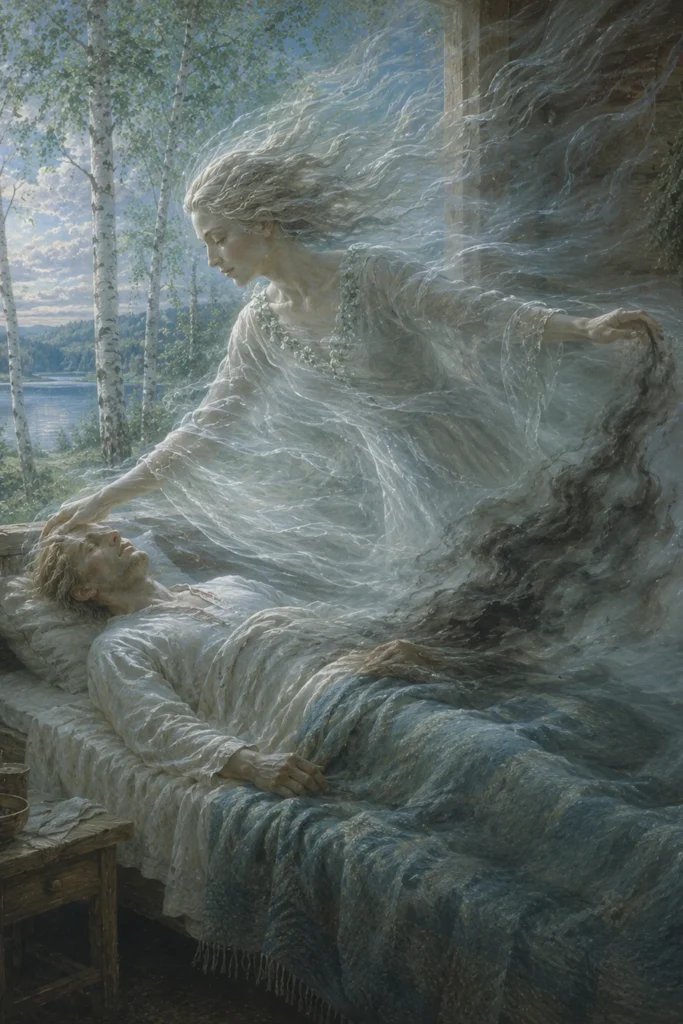
The Haltija is a supernatural protective and ruling instance of a domain and is not necessarily anthropomorphic, more of an acting presence than a figure. For distinction: the jumala, god, rules over a wide field, the Haltija over a specific small domain.
Effect
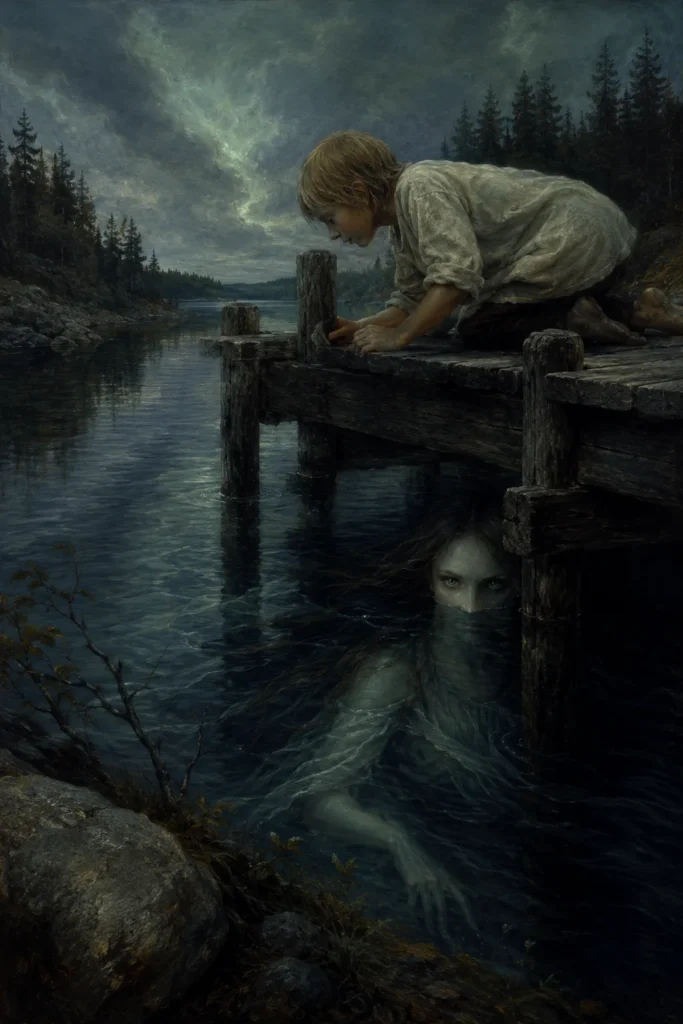
The Haltija protects its domain; it brings luck when respected and misfortune when disregarded. Types include the maanhaltija of the farmstead, the kotihaltija of the house, the vedenhaltija of the water and the metsänhaltija of the forest. In addition there is the personal Haltija soul, the haltijasielu, in Finno-Ugric soul belief.
Profile: Haltija
The key aspects of the guardian spirit concept at a glance.
Balto-Finnic animistic folk belief with related words in Karelian and Votic; attested since Ganander in 1789.
Every place, every animal, every person and every thing: the Haltija is the protective and ruling instance of its respective domain.
Not necessarily anthropomorphic: more of an acting presence than a clearly shaped figure.
Luck when respected, misfortune when disregarded; the types range from the maanhaltija of the farmstead to the metsänhaltija of the forest.
Respect for the place as a basis; offerings of water, bread, money and charcoal when building a house, gifts to the farmstead tree, good treatment of the barn cat.
A Word Between Holding and Ruling
Haltija is probably a Germanic loanword in Proto-Finnic, from Proto-Norse halten; the alternative derivation leads to Finnish hallita, to rule. The etymology is not certain, yet both traces reach the same core: the Haltija holds and rules its domain. In modern usage, the word also means holder, owner or possessor.
The concept belongs to Balto-Finnic animistic folk belief with related words in Karelian and Votic. Attestations include Ganander in 1789, Krohn in 1915 and the Rune Song Archive; there is also the personal Haltija soul, the haltijasielu, in Finno-Ugric soul belief.
From Guardian Spirit to Fantasy Elf
In its reception, a major semantic shift took place: haltia today denotes the elf of fantasy literature in modern Finnish, such as Tolkien’s Elves, established by the translator Kersti Juva. Since 2013, haltia and haltija have been treated as equivalent for the fairy-tale being.
From a religious-studies perspective, the Haltija is a benevolent guardian spirit concept. Important clarifications: it is not a single being, but a category. The three layers of meaning, mythological guardian spirit, modern holder or owner, and fantasy elf, should not be conflated. The etymology is not established. And the Tonttu is only a subtype.
Place respect and building offerings
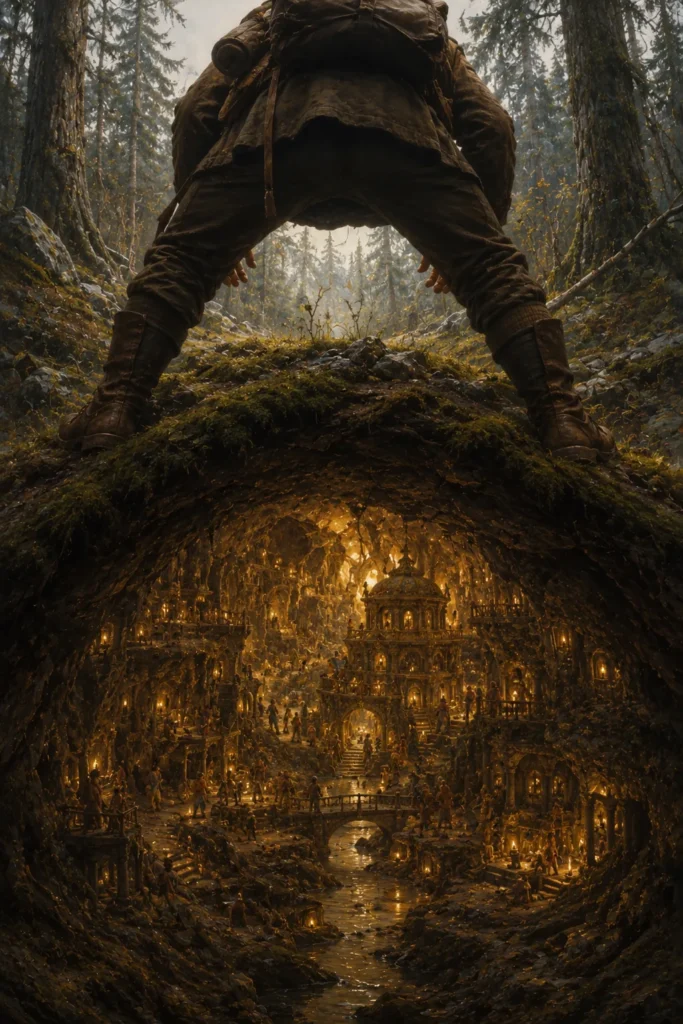
The basis of dealing with the Haltija is place respect: whoever enters or uses an area honours its invisible lord. When building a house, offerings of water, bread, money and charcoal were made to the maanhaltija; further gifts were given to the farm tree, and good treatment of the barn cat was part of this. It is a cult of small gestures meant to secure the fortune of the place.
Genius loci, rå and haldjas
Frequently asked questions about the Haltija
What is a Haltija?
A Finnish protective-spirit concept, a genius loci that every place, being and thing has.
Is the Haltija a single being?
No. It is a category of place-protecting spirits; the house spirit Kotihaltija is just one manifestation.
Why is the fantasy elf called haltia?
Through a semantic shift established in Kersti Juva’s Tolkien translation; since 2013 both spellings have been considered equally valid for the fairy-tale being.
Further links
Further reading:
- Tonttu – the place-bound house sub-type of the Haltija concept
- Haldjas – the Estonian counterpart with the same root
- Domovoi – the Slavic house spirit as a functional parallel
- Salt, Smoke cleansing, Amulet – traditional protective means
- Protection Compass – protective means at a glance
Literature (selection)
Further standard works in the bibliography.
As a Finnish protective spirit, the Haltija is less a figure than a way of relating to the world: every place has its guardian, and respect for it orders daily life. That is precisely what makes it the genius loci of the Finns.