Haldjas, the silent steward of the place
By Ralf Ittermann · last reviewed on
The Haldjas is a spirit of Estonian tradition.
The guardian who watches over house, tree, forest and water. A silent steward unseen yet ever present, the Haldjas watches over house, tree and water.
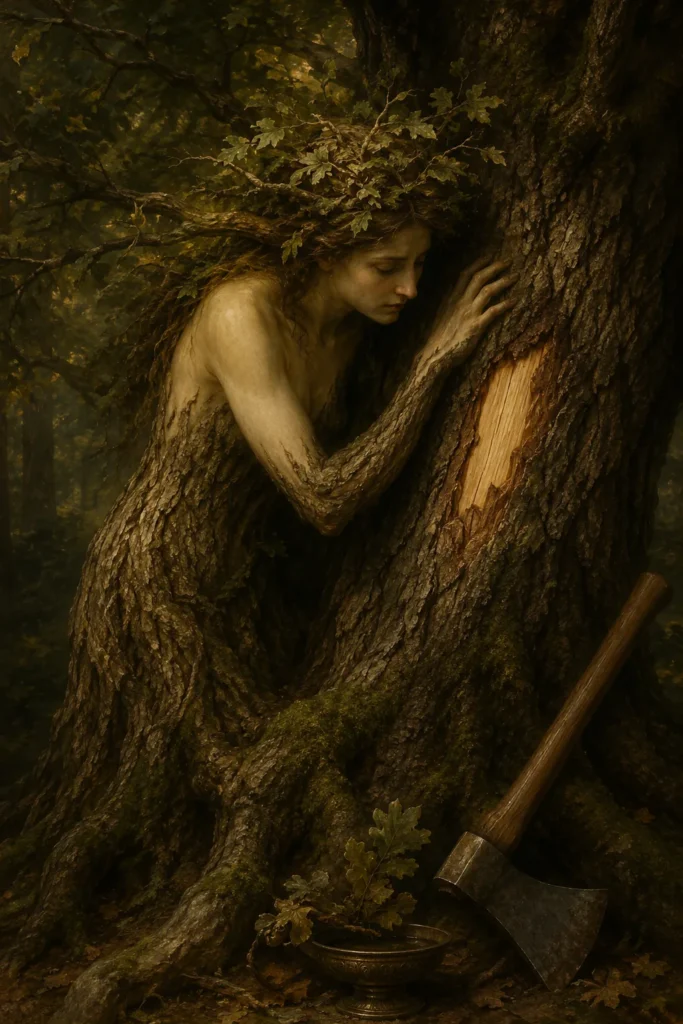
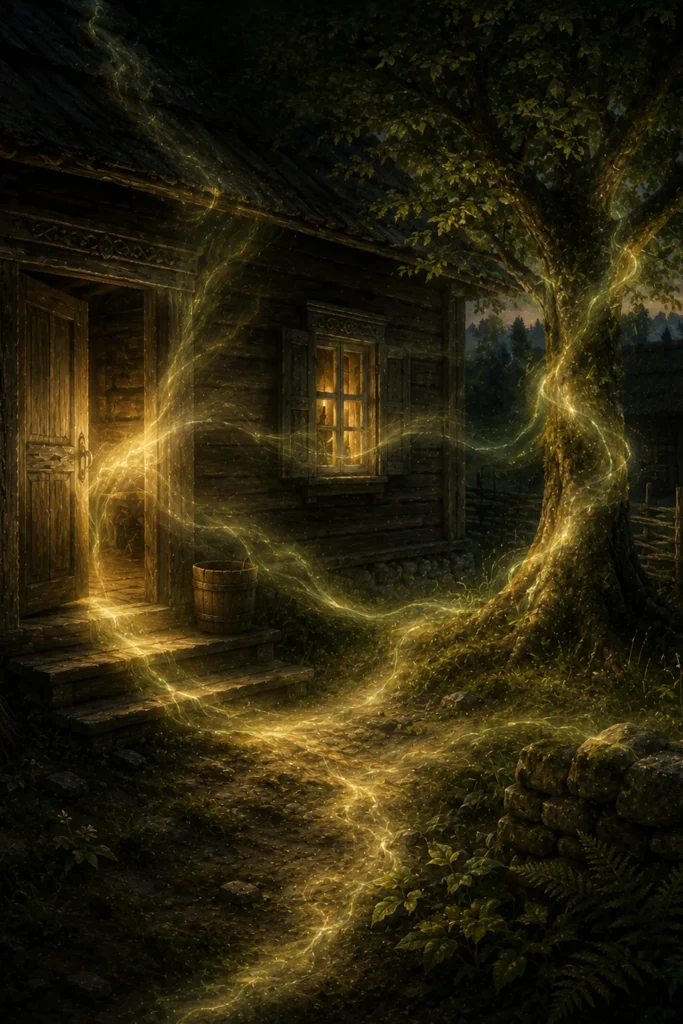
In Estonian folk belief, the Haldjas is a protective spirit of a specific place, being or object, with tree, forest, water and house haldjad. The Majahaldjas is the house spirit who watches over the house and household.
The word has the same root as the Finnish haltija, a Germanic loanword meaning holder, steward or lord. The Haldjas is attested through the Estonian folklore archives in Tartu; the most important scholar is Oskar Loorits.
Type: place and house protective spirit
Origin: Estonia and the Balto-Finnic region
Texts: Estonian folklore archives in Tartu; Loorits, Eisen
Period: Estonian folk belief
Appearance: fairy- or elf-like protective spirit without a fixed form
Historical Classification
Period of the Texts
Estonian folk belief: the evidence is held in the Estonian folklore archives in Tartu; the material was canonised by Loorits and Eisen.
Area of Diffusion
Estonia and the Balto-Finnic region: haldjad belong to house, tree, forest and water.
Sources
Well documented in principle through the folklore archives in Tartu; only the concrete ritual level remains unclear in the accessible sources.
Name and variants
Estonian: haldjas has the same root as Finnish haltija, a Germanic loanword of Proto-Norse origin meaning holder, steward or lord; related is Estonian haldaja, steward. Maja means house: the Majahaldjas is the house spirit or house guardian.
Appearance
Appearance
The Haldjas is a place-bound, fairy- or elf-like protective spirit without a fixed iconography, more an active presence than a clearly shaped figure.
Effect
The Majahaldjas watches over the house and household, wards off misfortune and secures prosperity, as long as the order of the place is respected. Disregard for it is said to bring misfortune.
Profile: Haldjas
The key aspects of the place-protecting spirit at a glance.
Estonian folk belief of the Balto-Finnic region, preserved in the folklore archives in Tartu and studied by Oskar Loorits.
House, tree, forest and water: every specific place and being can have its own Haldjas; the Majahaldjas is that of the house.
Fairy- or elf-like, without a fixed iconography: more an active presence than a clearly outlined figure.
Protection of the house and household, warding off misfortune and securing prosperity, as long as the order of the place is upheld.
The general Balto-Finnic pattern of place respect and small offerings; rites closely bound to the Majahaldjas are less thoroughly documented.
Tartu, Loorits and the order of the spirit world
The word haldjas has the same root as Finnish haltija: a Germanic loanword of Proto-Norse origin meaning holder, steward or lord, related to Estonian haldaja, steward. With maja, house, this gives the Majahaldjas, the house spirit or house guardian.
The Haldjas is attested through the Estonian folklore archives in Tartu. The most important scholar is Oskar Loorits, who also warned against speculative, literarily constructed pantheons: the Haldjas is a figure of documented folk belief, not of a subsequently invented world of gods.
Folklore studies and classification
The Haldjas is a firm part of Estonian folklore studies, canonised by Loorits and Eisen, and present in the nature religion Maausk.
From a religious-studies perspective, the Haldjas is well documented and has a clear etymology; only the concrete ritual level is somewhat unclear. Important clarifications: it is not a single god but a class of place-protecting spirits, the Majahaldjas being only the house manifestation. It is not an elf or fairy in the Western European sense; the word means steward or lord. And it is not an ancestral ghost.
Place respect and small offerings
Dealing with the Haldjas follows the general Balto-Finnic pattern of place respect and small offerings. To be honest, concrete offering rites closely tied to the Majahaldjas are less thoroughly documented than for the Finnish Haltija and Tonttu; the principle is well attested, but the exact ritual form remains unclear in the accessible sources.
The Haldjas within the Balto-Finnic framework
Frequently asked questions about the Haldjas
What is a Haldjas?
An Estonian protective spirit of a specific place or being; the Majahaldjas is the house spirit.
Is the Haldjas a single god?
No. It is a class of place-protecting spirits; the Majahaldjas is only the house form.
Is it an elf?
No. The word means administrator or lord, not elf in the Western European sense.
Further links
Further reading:
- Haltija – the Finnish counterpart with the same root
- Tonttu – the Finnish house spirit as a close relative
- Domovoi – the Slavic house spirit as a functional parallel
- Salt, Smoke Cleansing, Amulet – traditional protective means
- Protection Compass – protective means at a glance
Literature (selection)
Further standard works in the bibliography.
As an Estonian house spirit and protective spirit of the place, the Haldjas represents the fundamental Balto-Finnic conviction that no place is without a guardian: whoever respects the order of a place has the administrator of the house on their side.