Moryana, the sea wind of the Volga estuary
By Ralf Ittermann · last reviewed on
Moryana is a female spirit of Slavic tradition.
The sea wind of the Volga and the Caspian Sea, embellished into a goddess. Moryana is counted among the sea and storm spirits recognized by the Slavs.
Moryana is a female sea and storm spirit in East Slavic folk belief, the personification of the sea wind. To classify her honestly: a real core as a weather term is attested, whereas the elaborate image of a goddess and daughter of the sea king stems mainly from literature.
Vladimir Dahl records morjána as a genuine weather term: the sharp, cold wind that blows landward from the sea at the Volga and the Caspian Sea. It was only the authored literature of the nineteenth and twentieth centuries that turned this word into a figure with a face and a story.
Type: Female sea and storm spirit, personification of the sea wind
Origin: East Slavic folk belief and literature
Texts: Dahl’s dictionary as evidence of the weather term, authored literature such as in Remizov
Period: 19th and 20th centuries
Appearance: mermaid or stern giantess dressed in white

Textual history
Period of the Texts
The attestations belong to East Slavic folk belief and to the literature of the nineteenth and twentieth centuries; the weather term is older than the figure.
Area of Diffusion
Russia, especially the Volga estuary and the Caspian Sea: the region where the morjána wind blows and where fishermen fear it.
Sources
Weak: the weather term is attested in Dahl; the goddess image rests on belletristic fiction, such as in Remizov, and nineteenth-century speculation.
Name and variants
Russian: morjána, from Proto-Slavic more, sea: she who belongs to the sea. Importantly, for the sake of distinction: Moryana is not related to Morana or Marena, the goddess of death and winter with the root mor-, dying; the equation is a homophony-based error.
Appearance
Appearance
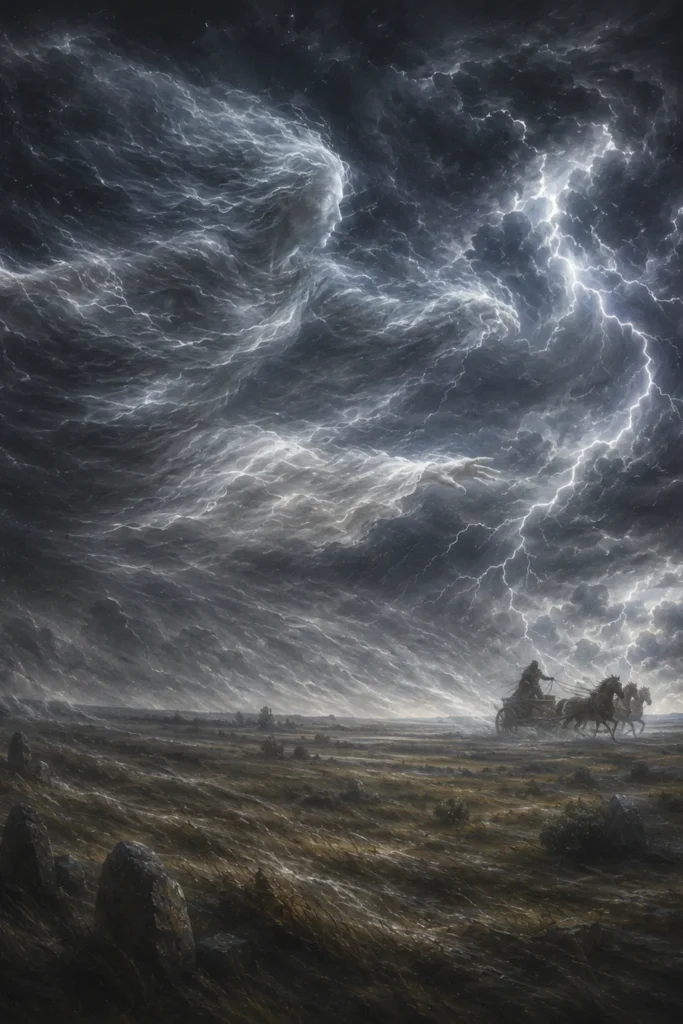
The appearance is inconsistent: sometimes a beautiful mermaid with hair like sea foam, sometimes a stern giantess dressed in white who commands the winds at the Volga estuary.
Effect
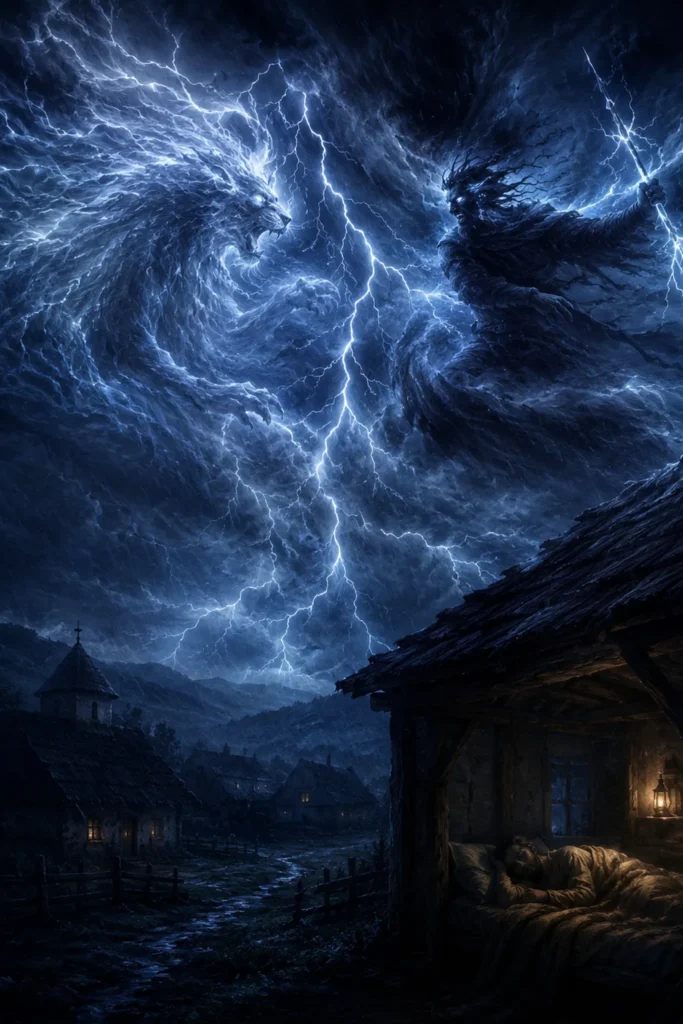
Moryana is the personification of the sea wind; she triggers storms or calms them. As a variant of the Rusalka, she rocks ships until they capsize and pulls people beneath the water.
Profile: Moryana
The key aspects of the sea wind spirit at a glance.
East Slavic folk belief with a literary superstructure: the weather term is genuine, the goddess is a product of authored literature.
Fishermen and boatmen on the Volga and the Caspian Sea: the sea wind brings them storms, capsizing, and the pull into the depths.
A beautiful mermaid with hair like sea foam, or a stern giantess dressed in white who commands the winds at the Volga estuary.
Storms over the sea: Moryana triggers or calms them; in the Rusalka variant, she pulls people beneath the water.
No attested cult exists. The only recorded means of protection, found in a tale, is tearing out Moryana’s foam-like hair, a narrative motif, not a ritual practice.
The Rusalki and Vodyanitsy; Russian tradition names the Moryany as the East Slavic counterpart of the Greek Nereids.
From weather word to daughter of the sea king
Proto-Slavic more, sea, yields she who belongs to the sea. Two layers of tradition must be kept clearly apart: Vladimir Dahl attests morjána as a genuine weather term, the sharp, cold wind blowing landward from the sea at the Volga and the Caspian Sea. The elaborate goddess image, by contrast, stems from authored literature, such as that of Aleksey Remizov, and from nineteenth-century speculation.
Also important is the distinction in the name: Moryana is not related to Morana or Marena, the goddess of death and winter with the root mor-, dying. The equation of the two figures is a homophony-based error that nonetheless keeps recurring in popular bestiaries.
Reception between opera and bestiary
Moryana is popular in Slavic neopagan and internet bestiaries, which carry forward the literary goddess elaboration uncritically. More firmly rooted in culture is the sea king himself, for instance in the opera Sadko.
From a religious-studies perspective, Moryana shows how a weather term, the sea wind, was literarily elevated into a goddess. Three clarifications: she is not an attested goddess but a Romantic literary elevation. She is not identical with Marena or Morana. And the named daughter of the sea king in the Sadko material is called Chernava, not Moryana.
Protection: a narrative motif, not a ritual
No documented cult exists; that is to be stated honestly. The only tradition of protection recorded in a narrative is tearing out Moryana’s foam-like hair. This is a narrative motif, not a documented ritual practice. The classical protective means of seafaring, salt and iron, belong to general folk belief, not to a specific Moryana cult.
Rusalki, Nereids and the false sister
Moryana is closely related to the Rusalki and Vodyanitsy; Russian tradition names the Moryany as the East Slavic counterpart of the Greek Nereids. She is explicitly not to be confused with Marena or Morana, the goddess of death and winter. As a harmful storm spirit of the wind, she is comparable to the Polish Wietrzyca.
Frequently asked questions about Moryana
What is Moryana?
A female sea and storm spirit, the personification of the sea wind on the Volga and the Caspian Sea.
Is Moryana a goddess?
No. A weather term is documented; the image of a goddess is a literary-romantic embellishment.
Is Moryana the same as Morana?
No. Morana is the goddess of death and winter; the similarity is a case of mistaken resemblance in name.
Further links
Literature (selection)
Further standard works in the bibliography. Note: the weather term is documented in Dahl; the goddess image is based on fiction and is not a folkloristic primary source.
As a Slavic sea spirit, Moryana embodies the storm over the sea on the Volga and the Caspian Sea: a genuine weather term used by fishermen, which literature alone turned into the white-clad mistress of the winds.