Patupaiarehe, the flute folk of the misty peaks
By Ralf Ittermann · last reviewed on
The Patupaiarehe are spirits of Maori tradition.
The fair fairy folk who lure people into the mist with flutes.
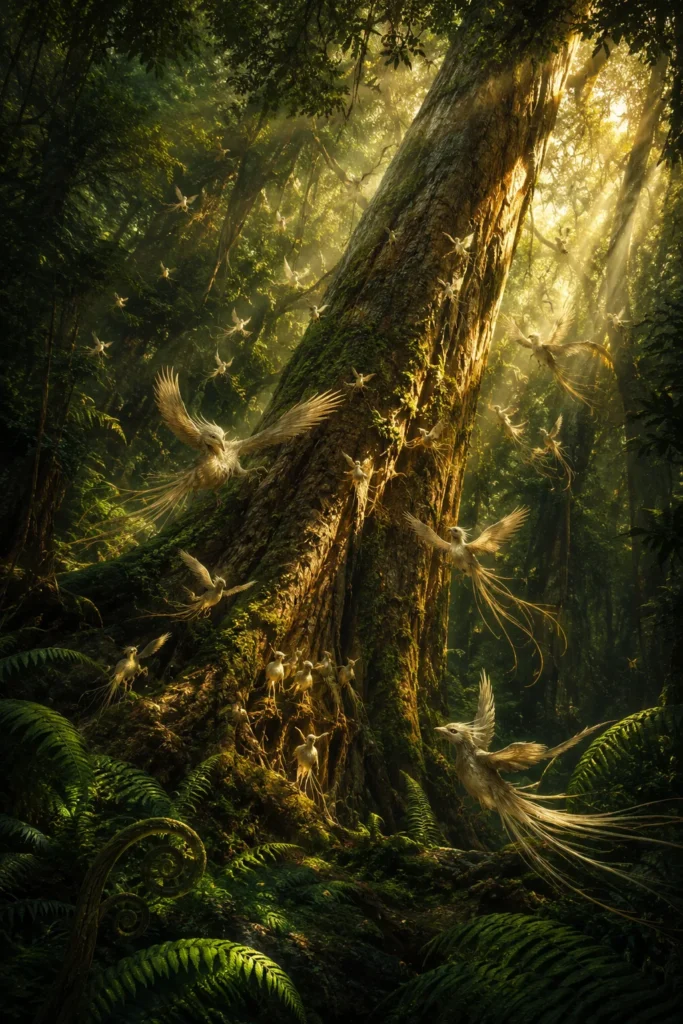
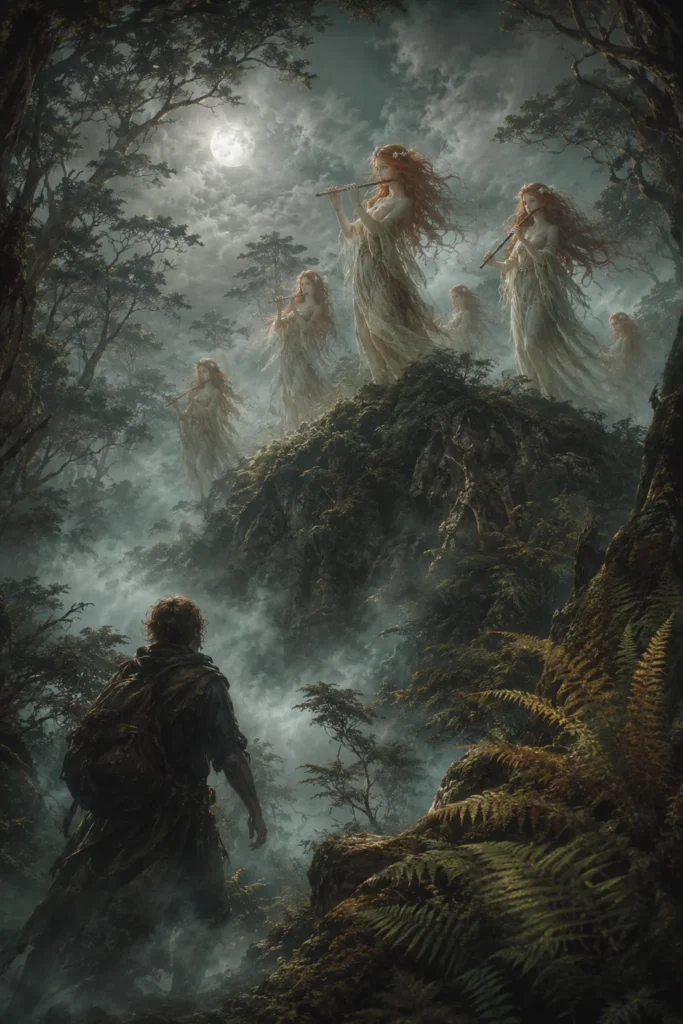
Patupaiarehe are the fair, fairy-like forest folk of the Maori who live in the forests and on the misty peaks of New Zealand. With fair skin and red or blond hair, they love music and beguile and abduct people, especially women.
They avoid daylight, fire and cooked food; mist is their element, and they draw it towards themselves. According to tradition, anyone who hears distant flute music in the mountains is close to them.
Type: Fairy-like forest folk, a he iwi atua
Origin: Well-documented classical Maori tradition
Texts: Best, Orbell and Te Ara
Period: from classical tradition to the present
Appearance: fair skin, red or blond hair, usually of human size, never tattooed
Historical Classification
Period of the Texts
Well-documented classical Maori tradition, recorded by Best, Orbell and in the Te Ara encyclopedia.
Area of Diffusion
New Zealand: the deep forests and misty peaks, retreats of the spirit folk bound to mist and haze.
Sources
Good: Best’s forest lore and religious study of the Maori, as well as Orbell’s encyclopedia.
Name and variants
Maori: patupaiarehe. They are regarded as he iwi atua, a nocturnal spirit folk bound to mist and haze.
Appearance and behaviour
Appearance
The Patupaiarehe have fair skin and red or blond hair, are usually of normal human size and never bear a moko, no tattoo. Fair skin, red hair, mist and flute music embody the other, the seductive and the supernatural, in contrast to the human, tattooed order; mist is their element.
Effect
The Patupaiarehe lure people from safe paths with the sound of their flutes, beguile and abduct especially women, and possess magical powers and special knowledge. They draw the mist towards themselves.
Profile: Patupaiarehe
The most important aspects of the fairy folk at a glance.
A he iwi atua of the Maori spirit world; some traditions regard red-haired Maori as their descendants.
People, especially women, and travellers in misty and mountainous areas, whom the sound of flutes lures from safe paths.
Fair-skinned, red- or blond-haired figures of human size, never tattooed, at home in forests and on misty peaks.
Beguilement and abduction through flute music, along with magical powers and special knowledge; the mist follows them.
Kokowai, red ochre mixed with shark oil, applied to houses; cooked food, cooking steam, fire and daylight keep them away.
The spirit folk of the mist
The Patupaiarehe are regarded as he iwi atua, a supernatural people and spirit folk that is nocturnal, or rather bound to mist and haze. They are part of the Maori spirit world; some traditions regard red-haired Maori as their descendants.
Their features draw the picture of the other: fair skin and red or blond hair, never a moko, the tattoo of the human order. Where people live by day and fire, the Patupaiarehe belong to the night, the haze and the peaks; their flutes carry the sound of this other world to the edges of the villages.
Reception and classification
The Patupaiarehe are firmly anchored in Maori culture and storytelling and are present in New Zealand’s literature, media and educational materials; the link to red-haired Maori descendants is a well-known motif.
From a religious-studies perspective, the Patupaiarehe are a fairy-folk motif: a supernatural forest people, an iwi atua, with a seductive and abducting function. The tapu rules are treated with restraint here, as this is a living tradition.
Red ochre and cooking steam
Well documented is the application of kokowai, red ochre mixed with shark oil, to houses when Patupaiarehe are near, as this smell repels them. Cooked food and cooking steam keep them away, as do fire, warmth and daylight, which they avoid. The protection thus draws on exactly what distinguishes the fairy folk from humans: the world of the hearth, of fire and of bright day.
Fairy folk in comparison
The Patupaiarehe correspond to the European elves and fairies, the Irish Aos Sí, the good folk, and the Scandinavian Huldra, the seductive forest being: a classic fairy-folk motif of beguilement, abduction and the avoidance of certain stimuli. Within the Maori world, the wild, dark-haired Maero are the counterpart to the fair fairy folk, while the Hakuturi, as forest guardians, neither beguile nor abduct.
Frequently asked questions about the Patupaiarehe
How do you protect yourself?
With red ochre, kokowai, and the smell of cooked food; they also avoid daylight and fire.
What do they look like?
Fair-skinned, red- or blond-haired, usually of human size, without tattoos.
What do they want?
To beguile and abduct people, especially women, with flute music.
Further links
Further reading:
- Aos Sí – the good folk of Ireland as a counterpart
- Huldra – the seductive forest being of Scandinavia
- Hakuturi, Maero – the other forest folk of the Maori
- Protective candle, Amulet, Iron – traditional protective means
- Protection Compass – protective means at a glance
Literature (selection)
Further standard works in the bibliography.
As Maori fairy folk, the Patupaiarehe are fair forest beings of misty peaks: a people on the edge of the human order, whose flute music remains among the most vivid motifs of Maori storytelling to this day.