iWell Guard

Meža māte, the mistress of the Latvian forest

Meža māte is a goddess of Latvian tradition.

The mother of the forest opens and closes its stores.

GoddessBaltic region

Table of Contents

Meža māte, goddess of Baltic tradition
Meža māte

Meža māte, the mother of the forest, is one of the firmly established figures of Latvian folk religion. She is regarded as mistress over trees, wild animals and everything the forest produces, and decides whether hunting and gathering succeed.

She is documented chiefly in the Dainas, the short four-line folk songs of Latvia. Within the large family of Latvian mother deities, the Mātes, she ranks among the best-attested figures by frequency of mention.

Overview: Meža māte

Type: mother deity of the forest, mistress over wild animals and forest use
Origin: Latvia, a pre-Christian layer is assumed
Texts: Dainas (Latvju dainas), church and visitation reports of the 17th and 18th centuries
Period: written secondary evidence from the 17th century onward, main source folk songs of the 19th century
Appearance: dignified female figure in green, mistress of the forest

Textual history

Period of the Texts

Research assumes the roots lie in pre-Christian times; written secondary evidence begins in the 17th century, the main source being the Dainas published by Krišjānis Barons between 1894 and 1915.

Area of Diffusion

Latvia. The forest mother belongs to the country’s peasant religiosity and appears wherever the forest was used.

Sources

Densely attested in the Dainas, but without medieval narrative texts; church and visitation reports mention offering customs at trees, though they rarely name the forest mother directly.

Name and variants

Latvian: Meža māte, mother of the forest. The name belongs to the system of the Mātes, the Latvian mother deities, of whom, depending on the count, somewhere between around fifty and well over a hundred are attested; each presides over her own domain, for example Jūras māte over the sea, Zemes māte over the earth, or Veļu māte over the realm of the dead.

Appearance and behaviour

Appearance

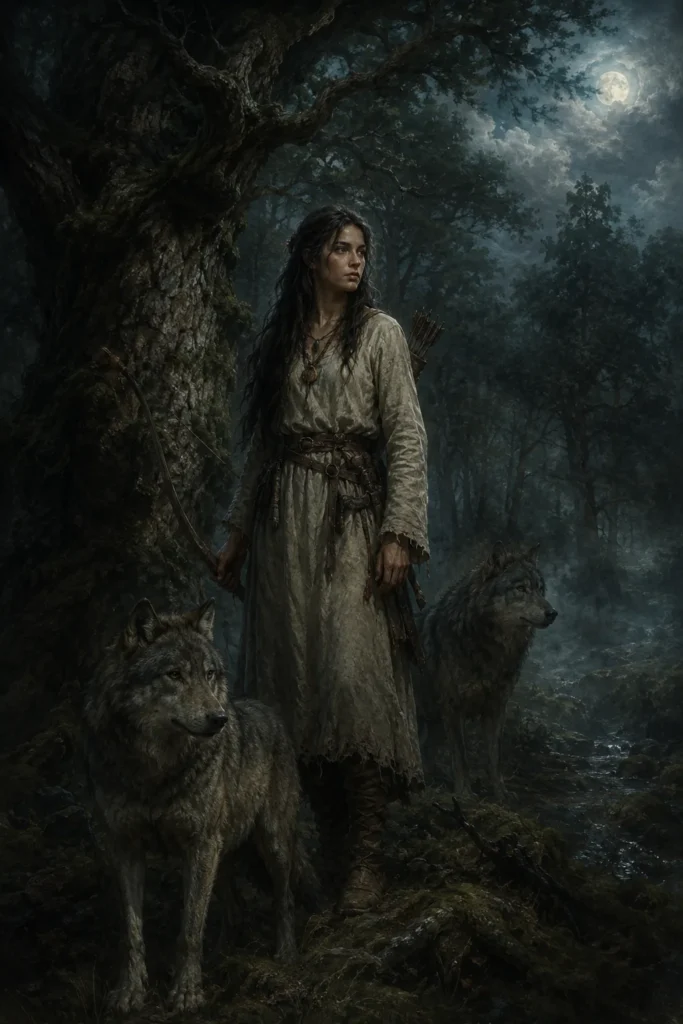
The songs portray Meža māte as a dignified, motherly female figure, often as mistress or lady of the house of the forest, who disposes over its stores. She appears in green clothing, associated with branches, moss or a wreath; fixed attributes or animal companions did not develop, since the tradition managed without visual art.

Effect

She grants hunting luck or withholds it, lets berry and mushroom grounds be found or hides them, protects livestock on the forest pasture and watches over bird broods. Whoever wilfully damages young trees, digs out nests or takes more than they need returns home empty-handed or gets lost. Conversely, the songs also tell of her generosity towards orphans and the poor.

Profile: Meža māte

The key aspects of the forest mother at a glance.

Tradition

Part of the Latvian Mātes system, a functionally differentiated polytheism on a peasant basis; preserved in the Dainas.

Relates To

Hunters, gatherers, woodcutters and herders: whoever enters the forest enters her house and must behave as a guest.

Depiction

Dignified female figure in green clothing, with branches, moss or a wreath; the tradition managed without visual art, fixed attributes are absent.

Function

She opens or closes the forest’s store, wild animals, berries and wood, and oversees the balance between use and conservation.

Practice

A word of request and a small gift before entering the forest, a share of the catch after the hunt, along with rules of conduct such as sparing young trees and giving thanks upon leaving.

Distinctions

The Lithuanian Medeina occupies the same domain as a hunting maiden; the forest mother, by contrast, is the caring mistress of the forest.

The forest mother within the system of the Mātes

Latvian tradition knows a large family of mother deities, the Mātes. By frequency of mention, Meža māte ranks among the best-attested figures of this system. The most important source is the Dainas, short four-line folk songs which Krišjānis Barons published between 1894 and 1915 in the collection Latvju dainas. They preserve a peasant religiosity whose roots research assumes lie in pre-Christian times, though it was only recorded late.

Older evidence is sparse: church and visitation reports of the 17th and 18th centuries mention offering customs at trees and in groves, but rarely name the forest mother directly. The scholarly treatment was carried out chiefly by Pēteris Šmits and later Haralds Biezais, who investigated whether the many Mātes are independent goddesses or epithets of fewer major figures. In favour of Meža māte, the density of the evidence suggests that she was perceived in folk belief as a distinct entity.

Reception and classification

In Latvian national romanticism of the 19th century, Meža māte became a symbol of the forest-rich homeland. The neopagan movement Dievturība, founded in the 1920s, incorporated the Mātes into its system of gods, and folklore ensembles still keep the relevant Dainas in their repertoire today; in Latvia the name appears in literature, children’s books and nature education. She has not made an international career in popular culture.

In religious studies, Meža māte belongs to the type of the mistress of animals, or the deity responsible for an economic domain. Important clarifications: it is disputed how old the individual Mātes are and to what extent the late recording of the Dainas reflects poetic condensation rather than lived cult practice. Haralds Biezais assessed the forest mother as a clearly defined figure of folk religion, while older research regarded some Mātes as mere personifications. What is undisputed is the social function: the figure ties forest use to rules.

Request, gift and measure

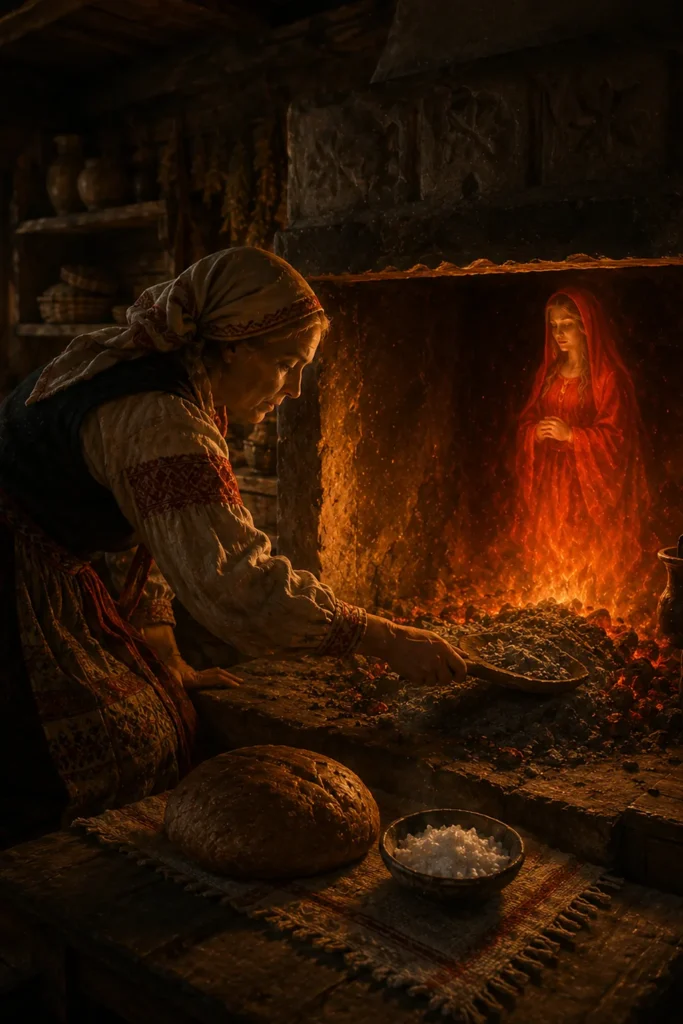
Folklore records above all customs of gift-giving and petition. Hunters and gatherers addressed a brief plea to the forest mother before entering the woods and left a small offering behind, such as bread or part of the first find; after a successful hunt, a share of the catch belonged to her. In addition, certain rules of conduct applied: no unnecessary noise, no damage to young trees, no raiding of nests, and thanks upon leaving the forest. No protective means against her are recorded, since she was not regarded as a hostile being. Those who nonetheless lost their way turned a piece of clothing inside out, following a North-East European custom widely used against being misled by forest beings.

Forest mistresses and forest lords compared

The type of the forest mistress is widespread. Closest to her is the Lithuanian Medeina, attested as a goddess of the forests as early as the 13th century, who occupies the same domain but as a virgin rather than a mother figure. The Slavic Leshy shares the role of forest guardian but leans more towards the uncanny. As mistress of the animals, Meža māte touches on Artemis and Diana, and as personified forest, on the Māori forest god Tane Mahuta. South Slavic nature spirits such as the Wila show how fluid the boundary between goddess and spirit can be in such traditions.

Frequently asked questions about Meža māte

Is Meža māte a goddess or a nature spirit?

The tradition does not draw a sharp line here. In the Dainas she holds the rank of a mother deity with her own domain of authority, yet behaves like a place-bound guardian spirit. Scholarship treats her as a deity of folk religion, ranking below the great figures such as Dievs and Saule.

How did one properly approach Meža māte?

With request, gift and moderation. Before a hunt or gathering trip, people spoke a request and left something small behind; after success, a share belonged to her. Those who treated the forest with care had nothing to fear.

Is she still venerated today?

Yes, on a small scale. The neo-pagan Dievturība movement includes the Mātes in its celebrations, and the forest mother remains present in Latvian folk song. As far as is known, there was never an organised cult with sanctuaries.

Further links

Recommended internal links:

Literature (selection)

A selection of key sources and studies:
  • Barons, Krišjānis: Latvju dainas. 6 volumes, Jelgava/St. Petersburg 1894–1915.
  • Biezais, Haralds: Die Hauptgöttinnen der alten Letten. Uppsala 1955.
  • Šmits, Pēteris: Latviešu mitoloģija. Riga 1926.

Further standard works in the bibliography.

As the Latvian mother of the forest, Meža māte embodies care and boundary alike. In the Dainas she has remained the forest deity of Latvia par excellence: the mistress who opens or closes access to game, berries and timber.

Classification & Protection

IILEVEL
The Protection Compass assigns this being to influence level II, Noticeable influence.

Against its influence, cross-cultural tradition names these protective means:

Compare in the Protection Compass →

Recommended protective means

iWell Guard

The simplest protective means in this collection: 41 layers of fine gold 999, platinum, silver and silicon, manufactured in Ruhla, Thuringia. It requires no activation, is bound to no person, and is effective within a radius of around 50 meters, even without being worn.

All protective means at a glance →