iWell Guard

Jagaubis, the fire spirit of the grain-drying kiln

Jagaubis is a spirit of Baltic tradition.

The silent guardian of the drying-kiln fire in the grain-drying kiln.

SpiritBaltic region

Table of Contents

Jagaubis, the Lithuanian spirit of the drying-kiln fire
Jagaubis

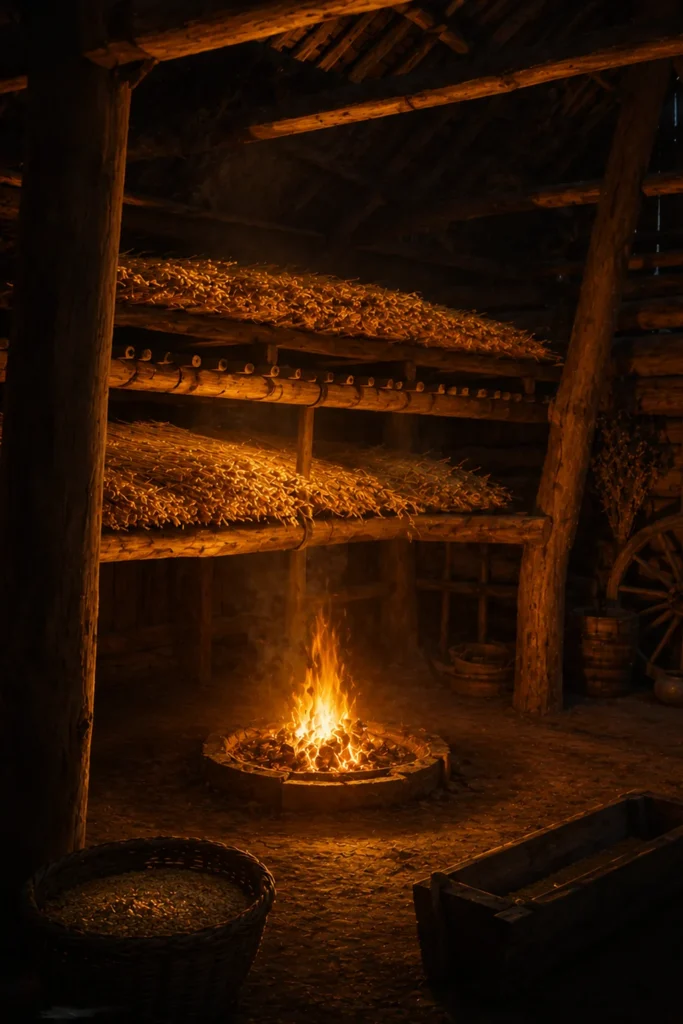
Jagaubis is a very weakly attested Lithuanian fire spirit connected with the drying-kiln fire in the grain-drying kiln, the jauja. There, grain was dried over open fire, work that carried a real risk of fire.

Jagaubis is attested almost solely as a dictionary lemma: the primary records appear with the Prussian-Lithuanian lexicographers of the 18th century, there as another name for the drying-kiln fire spirit Gabjaujis. No separate myth or cult is attested.

At a glance: Jagaubis

Type: Fire spirit of the grain-drying kiln
Origin: Prussian Lithuania, Lithuania Minor
Texts: dictionaries of Ruigys and Brodowskis, 18th century
Period: lexically attested in the 18th century
Appearance: not recorded

Historical Classification

Period of the Texts

The attestation is purely lexical: the primary records appear with the lexicographers Ruigys and Brodowskis in the 18th century.

Area of Diffusion

Prussian Lithuania and Lithuania Minor, the milieu of the local dictionary writers of the 18th century.

Sources

Very sparse: almost only a dictionary lemma. No dedicated monograph on Jagaubis exists.

Name and variants

Lithuanian: Jagaũbis, listed in the dictionary of the Lithuanian language as a mythological fire god, probably with reference to jauja, the grain-drying kiln, in which grain was dried over open fire.

Description

Appearance

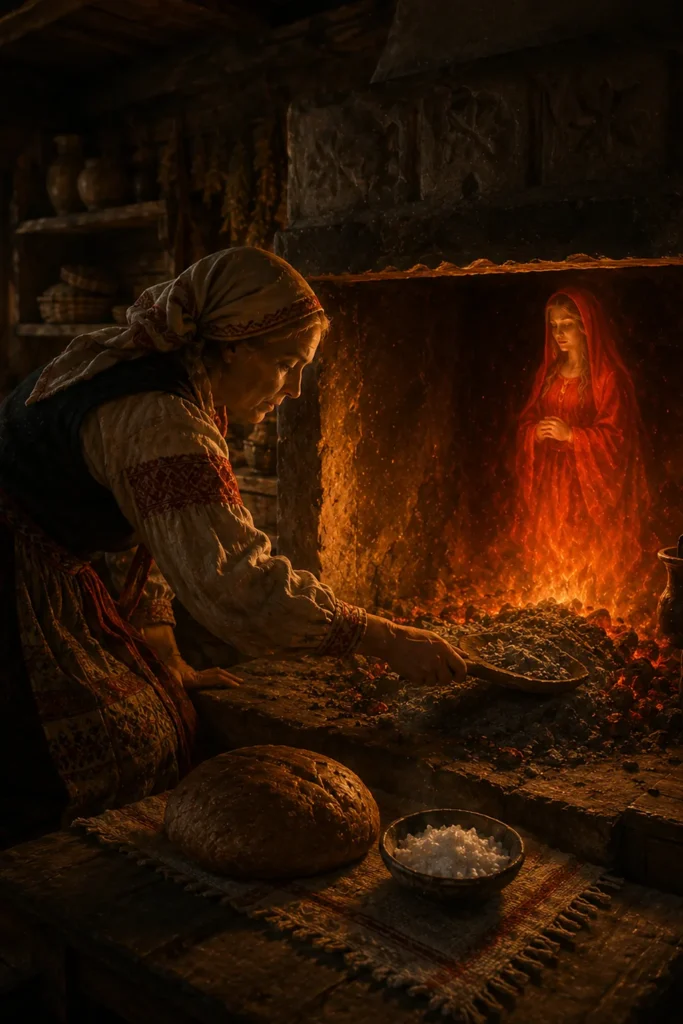
No appearance is recorded. His only fixed characteristic is the bond with the fire of the grain-drying kiln; anyone who depicts him pictorially fills a gap in the tradition.

Effect

Jagaubis is the spirit of the drying-kiln fire and patron of the agricultural drying fire, which carried a real risk of fire. He stands in a functional grouping with Gabjaujis and the grain-protecting figure Javinė.

Profile: Jagaubis

The key aspects of the drying-kiln fire spirit at a glance.

Tradition

Lithuanian fire spirit from the drying-kiln and harvest complex, attested only in the dictionaries of Prussian Lithuania.

Object of Influence

The drying-kiln fire of the jauja, the grain-drying kiln, in which grain was dried over open fire.

Depiction

No recorded form; his only fixed characteristic is the bond with the fire of the grain-drying kiln.

Function

Patron of the agricultural drying fire; in functional grouping with Gabjaujis and the grain-protecting figure Javinė.

Cult

No independent cult is attested; what circulates has been transferred from general fire customs and the Gabija tradition.

Related

Within the Baltic sphere, the hearth goddess Gabija and the drying-kiln fire spirit Gabjaujis; typologically Agni and Vesta.

A name from the dictionaries of Prussian Lithuania

The name Jagaũbis is listed in the dictionary of the Lithuanian language as a mythological fire god, probably with reference to jauja, the grain-drying kiln. The primary records appear with the Prussian-Lithuanian lexicographers Pilypas Ruigys and Jokūbas Brodowskis in the 18th century, there as another name for Gabjaujis.

Two points are important for source criticism: Jagaubis does not appear in Lasicius, and he is not an invention of Narbutt; his attestation is purely lexical. He thus belongs to those figures whose name is secure but whose elaboration is almost entirely missing from tradition.

Marginal figure in research

Jagaubis is very little known and lives on almost only in list-encyclopaedias and their offshoots; there is scarcely any independent reception.

From a religious-studies perspective, Jagaubis is an example of a lexically attested marginal figure without myth or cult. The best classification is as a masculine variant or byname within the drying-kiln complex Gabjauja, not as an independent, richly elaborated deity. Where more is claimed about him, it is a matter of reconstruction.

Fire customs without a cult of their own

An independent Jagaubis cult is not attested. What circulates has been carried over from general fire customs and the Gabija tradition: the tending and keeping clean of the fire and the avoidance of contamination. No concrete offerings addressed by name to Jagaubis have been recorded; whoever tended the drying-kiln fire followed the general rules of Baltic fire practice.

Jagaubis in the drying-kiln fire complex

Within the Baltic sphere, Jagaubis stands closest to Gabija and Gabjaujis, the drying-kiln and harvest complex, of which he is regarded as the masculine variant or alternative name. What separates him from Gabija is the location: she is the goddess of the household hearth, he the spirit of the working fire in the drying kiln. Typologically, though not historically, he can be compared with hearth and sacrificial-fire figures such as Agni and Vesta.

Frequently asked questions about Jagaubis

Is Jagaubis well documented?

No. He is attested almost solely as a dictionary lemma, without myth, image or a cult of his own.

What is a jauja?

The grain drying kiln, an outbuilding in which grain was dried over an open fire; Jagaubis is the spirit of its fire.

How does he relate to Gabjaujis?

He is regarded as an alternative name or masculine variant of the drying-kiln spirit Gabjaujis.

Further links

Recommended internal links:

Literature (selection)

A selection of key sources and studies:
  • Lietuvių kalbos žodynas (Dictionary of the Lithuanian Language), entry jagaũbis.
  • Greimas, Algirdas Julien: Of Gods and Men. Studies in Lithuanian Mythology. Bloomington 1992.

Further standard works in the bibliography.

As a Lithuanian fire spirit and spirit of the drying-kiln fire, Jagaubis is little more than a name in old dictionaries, and it is precisely in this that his value lies: he shows how closely Baltic tradition linked even the working fire of the drying kiln to a guardian of its own.

Classification & Protection

IILEVEL
The Protection Compass assigns this being to influence level II, Noticeable influence.

Against its influence, cross-cultural tradition names these protective means:

Compare in the Protection Compass →

Recommended protective means

iWell Guard

The simplest protective means in this collection: 41 layers of fine gold 999, platinum, silver and silicon, manufactured in Ruhla, Thuringia. It requires no activation, is bound to no person, and is effective within a radius of around 50 meters, even without being worn.

All protective means at a glance →