Aitvaras, the fiery bringer of stolen goods
By Ralf Ittermann · last reviewed on
The Aitvaras is a spirit of Baltic tradition.
The fire dragon that brings stolen goods into the house. Folklore casts the Aitvaras as a fiery bringer of wealth stolen from neighbouring farms.
The Aitvaras is the fiery wealth household spirit of the Lithuanians: a flying fire dragon that brings its owner grain, milk and money, all stolen from the neighbours. It is morally ambivalent and often bound to a price paid with a soul.
It is first mentioned in 1547 in the catechism of Martynas Mažvydas, the first printed Lithuanian book; the sources range from the 16th to the 20th century. Outdoors it moves as a fire serpent with a fiery tail across the sky like a meteor, while in the house it usually appears as a black rooster.
Type: Fiery wealth household spirit with a price paid in a soul
Origin: Baltic folk belief, attested from 1547
Texts: Catechism of Mažvydas, folklore records into the 20th century
Period: 16th to 20th century
Appearance: flying fire dragon, in the house a black or white rooster

Origin and sources
Period of the Texts
Baltic folk belief with first attestation in 1547 by Mažvydas; the tradition is documented from the 16th to the 20th century.
Area of Diffusion
Lithuania, Latvia and Old Prussia: the Baltic cultural area where the fiery household spirit was sighted above farmsteads.
Sources
Well documented: from the catechism of Mažvydas of 1547 onward, along with the studies by Greimas, Vėlius and Gimbutas.
Name and variants
Lithuanian: aitvaras. The etymology is disputed; discussed are a connection to fast movement, an Iranian loanword and a derivation from Polish poczwara, nightmare. There is no certain interpretation of the name.
Appearance and behaviour
Appearance
The Aitvaras is shapeshifting. Outdoors it flies as a fiery dragon or fire serpent with a fiery tail through the sky like a meteor; in the house it usually appears as a black or white rooster. When it dies, it disintegrates into a spark.
Effect
It brings grain, flax, milk, money, gold and silver, which it steals from rich or miserly neighbours. It tends to favour non-greedy people, but can also punish, start fires and destroy harvests as a whirlwind.
Profile: Aitvaras
The key aspects of the fire dragon at a glance.
Fiery wealth spirit of Baltic folk belief, attested from 1547 and increasingly demonised after Christianisation.
The keeper and their household: the Aitvaras carries in grain, milk and money, all at the neighbours’ expense.
In the sky a fiery dragon with a meteor-like tail, in the house a black or white rooster; in death a disintegrating spark.
Wealth through theft, but also punishment: it can start fires and destroy entire harvests as a whirlwind.
Fed with scrambled eggs, milk and honey; it can hardly be got rid of, though killing and ritually passing it on are recorded.
Practically identical to the Latvian pūkis, related to the Drak, Škriatok and kratt; unlike the benevolent Kaukas, it is ambivalent and thievish.
From the rooster's egg to the price of a soul
The origin of the name remains unresolved: discussed are a connection to fast movement, an Iranian loanword and a derivation from Polish poczwara, nightmare. The Aitvaras becomes traceable in 1547 in the catechism of Martynas Mažvydas, the first printed Lithuanian book, and the sources extend from there into the 20th century.
Central is the manner of acquisition: one hatches the egg of a very old rooster under the armpit, or one buys the Aitvaras from the devil, in exchange for one’s own soul. This makes the prosperity it brings doubly burdened: it is stolen, and it carries a price that extends beyond life.
National symbol and classification
The Aitvaras is a national symbol of Lithuanian folklore and namesake for clubs, teams and brands; it is also present in Baltic neopaganism.
In religious studies, it is a fiery, ambivalent wealth spirit tied to a price paid with a soul. Three clarifications are important. After Christianisation it was increasingly demonised. The core Lithuanian sources speak of the egg of an old rooster, not a black hen; the hen motif belongs to the Hungarian lidérc. And its etymology remains unresolved.
Feeding, warding off and the coattail trick
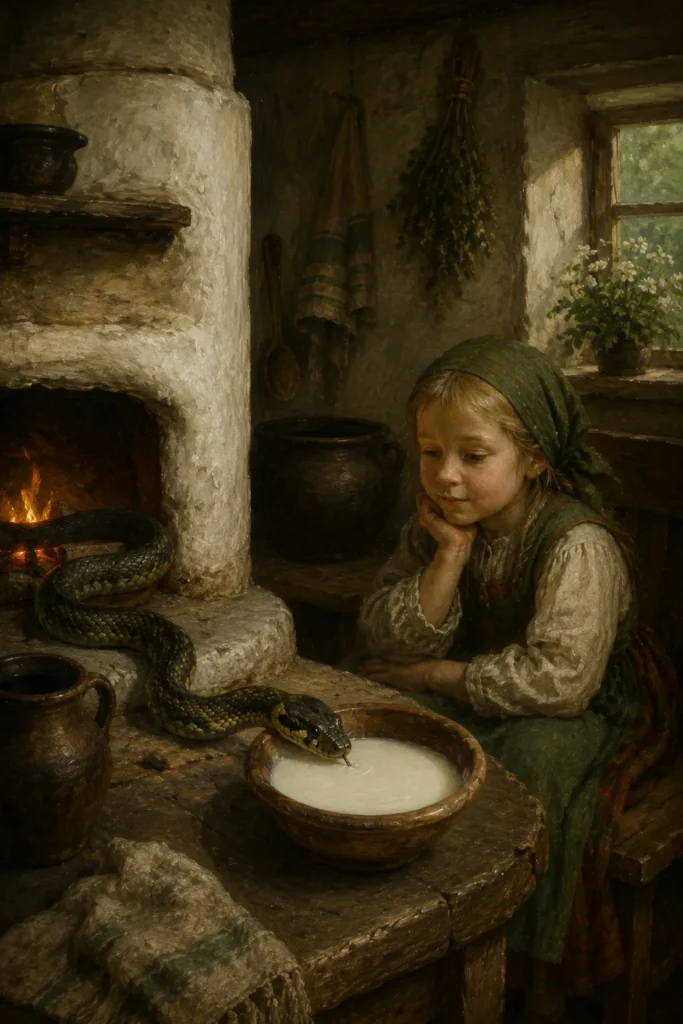
The Aitvaras must be fed and prefers scrambled eggs, besides milk and honey. Getting rid of it is difficult, as it refuses to leave; recorded are killing it and ritually passing it on to a new keeper. According to the tale, whoever wants to seize its stolen goods must pin their coattail to the ground behind their back with a knife, without looking around.
Fiery relatives in East and West
The Aitvaras is practically identical to the Latvian pūkis, which receives the first bite of every meal, and is related to the German Drak, the Slovak Škriatok and the Estonian kratt. Within Lithuania it forms the counterpart to the benevolent Kaukas: one is airy, fiery and thievish, the other chthonic and mild. The sacred house serpent Žaltys also belongs among the Baltic bringers of household blessing.
Frequently asked questions about the Aitvaras
What is an Aitvaras?
The fiery wealth household spirit of the Lithuanians: a flying fire dragon that brings its keeper stolen goods, from grain to money.
How is it acquired?
By hatching the egg of a very old rooster under the armpit, or by buying it from the devil, in exchange for one’s own soul.
Is it benevolent?
No. It is ambivalent and thievish, capable of punishing, starting fires and destroying harvests, unlike the consistently benevolent Kaukas.
Further links
Literature (selection)
Further standard works in the bibliography.
As a Lithuanian wealth spirit and fire dragon in one, the Aitvaras embodies the dark side of household blessing: prosperity that is stolen, and a pact paid for with one’s own soul.