Aïsha Qandisha, the seductress with the goat hooves
By Ralf Ittermann · last reviewed on
Aïsha Qandisha is a demoness of Moroccan tradition.
The beautiful seductress who drives men to madness.
Aïsha Qandisha is a seductive female djinn of Moroccan folk religion: a beautiful woman with the feet of a hoofed animal, who seduces young men and drives them to madness or death.
Her most important role is as the patron spirit of the Hamadsha cult, a Moroccan Sufi brotherhood whose nocturnal trance ceremonies serve to appease this most feared figure. Ethnographically, she has been well documented since Westermarck in 1926 and through Crapanzano’s studies.
Type: Seductive djinniya with a proper name and distinct character
Origin: Northern Morocco, folk Islam and maraboutism
Texts: Westermarck 1926, Crapanzano (Hamadsha study and Tuhami)
Period: ethnographically documented since the early 20th century
Appearance: beautiful woman with goat or camel feet
Region of origin and sources
Period of the Texts
Ethnographically documented since the early 20th century: Westermarck described her in 1926, and Crapanzano devoted his major Hamadsha study to her cult in the 1970s.
Area of Diffusion
Morocco, especially the north. Aïsha Qandisha is situated within folk Islam and maraboutism and is closely linked with the cults of the Hamadsha, Gnawa and Zar.
Sources
Well documented: the standard ethnographic works by Westermarck and Crapanzano record belief, rituals and cases of possession at first hand.
Name and variants
Arabic/Moroccan: Aïsha is a common female name; the second part of the name, Qandisha, remains unresolved. Four interpretations compete, ranging from a Semitic root meaning holy or consecrated, through a derivation from Comtesse, to a Carthaginian origin; none of them is confirmed.
Appearance and behaviour
Appearance
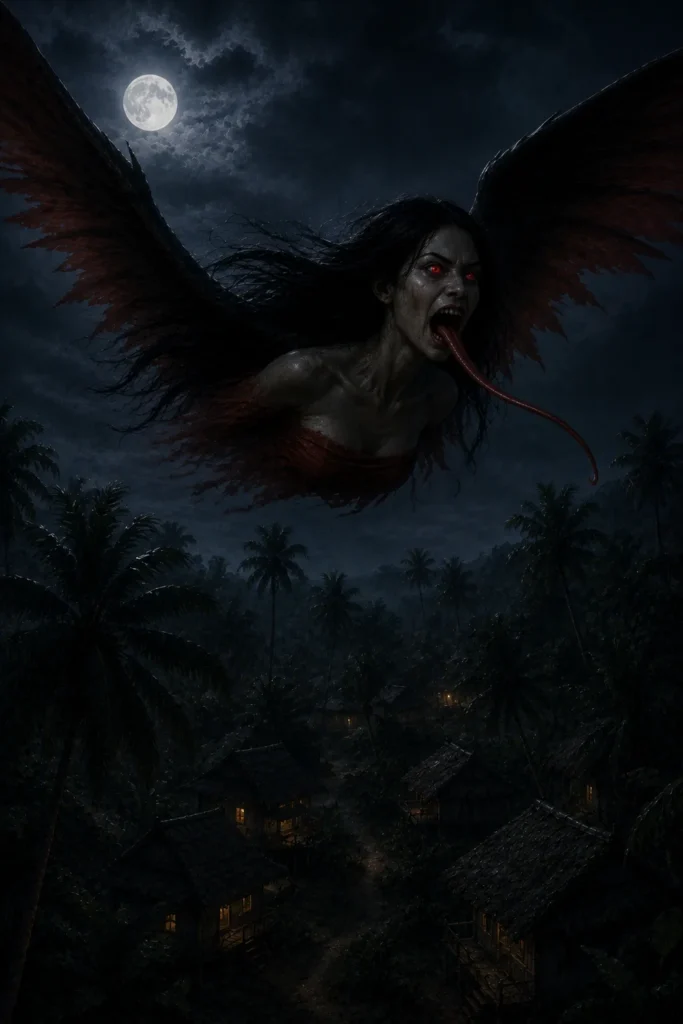
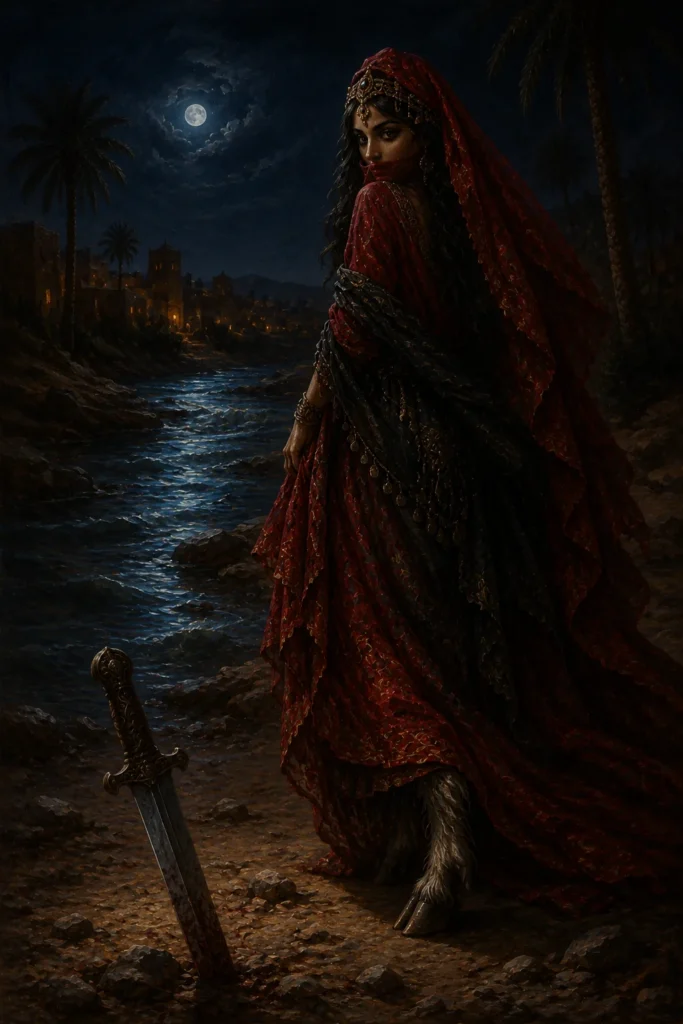
Aïsha Qandisha appears as a beautiful young woman with the lower body of a hoofed animal: usually goat hooves, in the Buffi tradition camel feet, hidden beneath long clothing. Her colours are red and black, and she shows herself by the water; at times she also appears as a hag.
Effect
She seduces young men through her beauty or by posing as their wife, driving them to madness or death. According to Crapanzano, a man gains control over her if he recognises her and drives a steel blade into the ground; if he sleeps with her, he is married to her and must thereafter obey her demands.
Profile: Aïsha Qandisha
The key aspects of the Moroccan djinniya at a glance.
Northern Moroccan folk Islam and maraboutism; closely linked with the possession cults of the Hamadsha, Gnawa and Zar.
Young men: she seduces them through her beauty or in the guise of their own wife, and binds them to her demands through spirit marriage.
A beautiful woman with goat or camel feet hidden beneath long clothing, in the colours red and black, appearing by the water; sometimes as a hag.
Seduction, possession, madness and death; as patron spirit of the Hamadsha, she is also the centre of an organised cult of appeasement.
Trance ceremonies of the Hamadsha for appeasement; iron and steel as protection, the blade in the ground as a ritual of control; offerings include incense, red-black items and black chickens.
The Arabian Si’lat and Umm al-Duwais; alongside these, notions circulate of several Aishas as aspects or as distinct beings.
From an unresolved name to the patron spirit of the Hamadsha
The name poses a puzzle: Aïsha is a common female name, but the second part of the name remains unresolved. Four interpretations compete, ranging from a Semitic root meaning holy or consecrated, through a derivation from Comtesse, to a Carthaginian origin, and none is confirmed.
Aïsha Qandisha is situated in Northern Morocco, within folk Islam and maraboutism, closely linked with the cults of the Hamadsha, Gnawa and Zar. She has been ethnographically documented since Westermarck in 1926; her description, still authoritative today, is owed to Crapanzano’s study of the Hamadsha, of which she is the most important and most feared patron spirit.
Legacy and classification
Aïsha Qandisha has a rich afterlife: she appears as an anti-colonial figure of resistance, as a feminist figure of revenge, in the 2020 film Kandisha and in the Gnawa piece Lalla Aicha.
In religious studies, she is a patron spirit in need of appeasement. Three clarifications are important: the trance and self-cutting rituals, the iron apotropaic device and the red-black symbolism are all solidly documented. The derivation from Astarte or Qadesha is a speculation by Westermarck from 1926 based on discredited premises, not an established fact. And the Comtesse legend is modern national folklore.
The Hamadsha cult and warding off with iron
The Hamadsha are a Moroccan Sufi brotherhood whose most important and most feared spirit patroness is Aïsha. In nocturnal trance ceremonies with drums and hymns, the possessed slash their heads, since Aïsha is drawn to blood; the aim is appeasement, not exorcism. Iron and steel are also considered protective, and thrusting a blade into the ground serves as a control ritual; offerings include incense, the colours red and black, and black chickens.
Djinniya with proper names: related figures
Aïsha is a djinniya with a distinct character and a proper name; some therefore do not treat her as an ordinary jinn. She is related to the Arabian Si’lat and Umm al-Duwais, and there are notions of several Aïshas as aspects or as separate beings. Bordering the Sahara are the Kel Essuf of the Tuareg, whose possession cult is typologically related to that of the Hamadsha.
Frequently asked questions about Aïsha Qandisha
Who is Aïsha Qandisha?
A seductive djinniya of Moroccan folk religion. She appears as a beautiful woman with hoofed feet and drives men to madness or death.
What protects against her?
Iron and steel; a blade thrust into the ground is regarded as a control ritual. The Hamadsha cult also relies on appeasement through trance ceremonies.
Does she descend from an ancient goddess?
This derivation from Astarte is a speculation put forward by Westermarck in 1926 based on premises that have since been refuted, not an established fact.
Further links
Further reading:
- Jinn – the class of beings to which the djinniya is assigned
- Umm al-Duwais, Si’lat, Kel Essuf – related figures from the region
- Iron, Amulet, Holy Water – traditional protective means
- Protection Compass – protective means at a glance
Literature (selection)
Further standard works in the bibliography.
As both a Moroccan demoness and a Hamadsha spirit, Aïsha Qandisha represents a particular way of dealing with the uncanny: she is not exorcised but appeased through trance and ritual.