Silver as Protection Against Werewolf and Demon
By Ralf Ittermann · last reviewed on
Silver occupies a special position among the protective metals. Where iron protects by setting up a barrier, silver is regarded in tradition as an active means of defense: it wounds, banishes and kills what resists other means.
In European werewolf tradition in particular, silver is known as the only material that can directly strike werewolves; in vampire tradition it plays a lesser role.
Yet the protective function of silver extends far beyond this popular connection: as a lunar metal it is regarded in numerous cultures as a carrier of the power of purity and of cosmic order, which stands against darkness and chaos.
As part of the protective substances and protective plants, silver is the only metal in this group besides iron that is expressly described in tradition as harmful to supernatural beings, not merely as a barrier. The entry describes silver as protection against werewolf and Demon, a rare substance held to harm supernatural beings directly.
Quick Overview
In tradition, silver is regarded as the most effective means against werewolves and lycanthropes, as a less central means against vampires and other undead beings, and as a means against demons that react sensitively to light and purity.
Silver bullets, silver needles, silver amulets and objects plated with silver are the most commonly recorded forms of application. As a lunar metal, silver carries in many cultures the connotation of purity, of the female protective deity and of cosmic order.
Origin and Tradition
The association of silver with lunar deities is cross-cultural. In Greek mythology, silver is linked with Artemis, the moon goddess and protectress of the hunt. In Roman tradition it belongs to Diana.
It is no coincidence that these moon goddesses are also protective goddesses against the dangers of the night: the lunar deity watches over what threatens in the dark, and her metal carries this protective function further.
In European werewolf tradition, silver is regarded as the only material effective against shapeshifters.
The silver bullet against werewolves is attested only later, for example in the case of the Beast of Gévaudan in the 18th century, and in literature in the 19th century.
For protection against vampires, wood, garlic and salt play the main role alongside silver. Silver appears in Eastern European vampire ethnography, but it is less dominant than in werewolf tradition.
In some regions, silver coins were placed on the eyes or mouth of the deceased, partly as a funerary rite, partly as a measure against a possible return as a vampire.
In Jewish folk tradition, silver is regarded as a protective material against demons. Silver mezuzot, amulets and inscribed silver plaques appear in the popular religiosity of the early modern period and are attested in Jewish ethnographies of the 18th and 19th centuries.
In the Islamic folk tradition of North Africa and the Middle East, silver amulets, silver hand figures and silver chains are worn as protection against jinn and the evil eye. The silver Hamsa is the best-known example.
Principle of Action According to Tradition
Tradition traces the protective effect of silver back to various complementary explanations.
The lunar-metal theory is the most cosmologically comprehensive. Silver reflects the light of the sun, as the moon does, without shining itself. This property was interpreted as the ability to carry light into the darkness without being absorbed by it. Beings that need darkness cannot withstand this reflecting power of light.
In Christian-influenced tradition, silver carries the association of purity and holiness. Ecclesiastical vessels of silver, chalices, monstrances, altar implements, were considered especially suited to the sacred. The use of silver in protective amulets and against demonic beings follows the same logic: the pure metal works against the impure.
The indestructibility of silver also plays a role. Silver does not rust, and despite tarnishing its surface remains metallic and closed. In the material logic of folklore this means an enduring protective effect that is not lost through aging, unlike with plant-based means of protection.
Cross-Cultural Distribution
Silver as a protective metal is attested worldwide, although with different emphases.
In Europe, the connection of silver, lunar metal and protection from spirit beings is continuously documented from antiquity into the 20th century. Werewolf tradition makes the silver bullet a cultural symbol that has passed beyond folklore studies into literature and film.
In the Middle East and North Africa, the craft of silver protective jewelry-amulets is one of the oldest and, to this day, most living protective traditions. Silver Hamsa amulets, eye pendants and inscribed silver plates against the evil eye and jinn are attested in nearly every culture of this region.
In South and Central Asia, silver is regarded in Hindu and Buddhist folk-belief contexts as a pure metal that resists demonic defilement. Silver amulets for children and for women after childbirth are widespread.
In East Asia, silver has a less central protective function than in other cultures, but it appears in some Daoist ritual contexts as a metal of purity.
What It Is Used Against
According to tradition, silver is especially effective against:
Against werewolves and shapeshifters: this is the best-known area. In European tradition, silver is regarded as the only material that wounds or kills a werewolf. Silver bullets, silver blades and silver nails are the means described.
Against vampires and undead beings: silver is described in Eastern and Western European vampire tradition as one of the effective means of defense, although less central than with werewolves.
Against demons and demonic influence: as a pure lunar metal, silver is regarded in several cultures as a direct countermeasure against demonic presence.
Against the evil eye and Nazar: silver amulets, especially in the form of eyes, hands and protective symbols, are regarded in Mediterranean and Middle Eastern cultures as effective protection against the evil eye.
Application and Limits
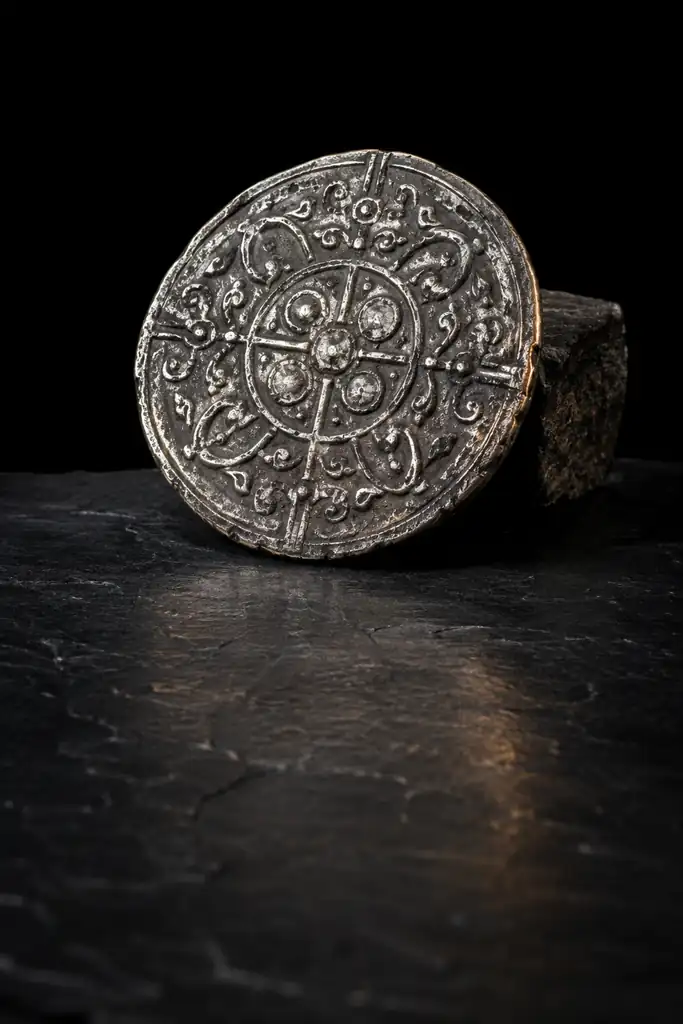
Silver amulets and pendants are the most widespread form of personal protection. Silver coins in pouches or sewn into clothing have a long tradition in folklore. For warding off werewolves, tradition describes silver bullets or a silver blade edge as necessary.
Silver tarnishes, taking on a dark layer that is judged differently in folk tradition: some see tarnishing as a sign that the silver “has worked” and has absorbed harmful influences; other traditions call for regular polishing in order to preserve the metal’s power of light.
None of the recorded applications constitutes a proven guarantee of protection. The contents presented here render the folkloric tradition.
Literature (Selection)
Related key terms: silver protection werewolf spirits protective metal.
iWell Guard and Protective Traditions
In tradition, silver stands for a protection that is active and enduring. As a lunar metal it connects the wearer with cosmic principles of protection that many cultures have recognized independently of one another.
The iWell Guard takes up these strands of tradition and brings together the protective traditions of various cultures in a wearable protective object.
Personal experiences may vary. Not a medical device. No promise of healing.