Tiyanak, the crying that lures from the forest
By Ralf Ittermann · last reviewed on
Tiyanak is a demon of Philippine tradition.
A crying baby as disguise, then teeth and claws.
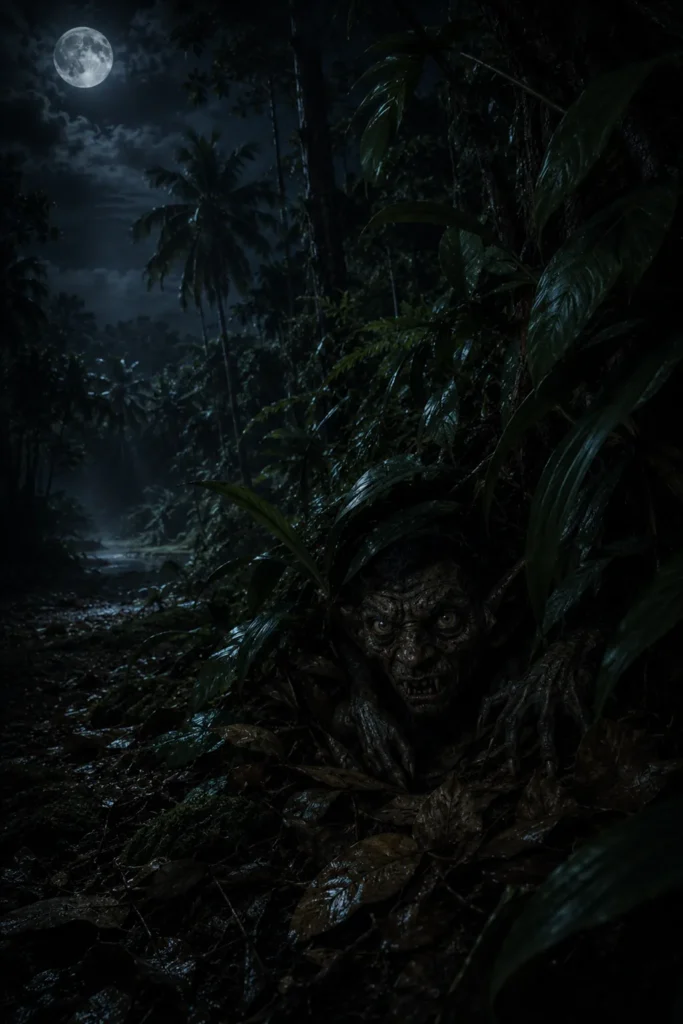
The Tiyanak is the spirit of an unborn or dead child in the Philippines. It disguises itself as a helpless, crying baby to lure compassionate travellers, then reveals a demonic form with sharp teeth and claws as they approach.
In pre-colonial belief the Tiyanak was regarded as the spirit of an unborn or dead child caught between worlds; under Spanish rule it was reshaped into the vengeful soul of an unbaptised or aborted child denied entry to heaven. The source material is considered good, and the figure is feared nationwide, particularly at forest edges and on lonely country roads.
Type: Spirit of an unborn or dead child, turned demonic
Origin: Pre-colonial animist root, reinterpreted in Catholic terms in the 16th century
Texts: Ramos, on lower mythology and the Aswang complex of the Philippines
Period: pre-colonial to the present, good source material
Appearance: crying infant as disguise, then a monstrous form with teeth and claws
Source context
Period of the Texts
Pre-colonial to the present: the animist root reaches back to before Spanish colonisation and was reinterpreted in Catholic terms in the 16th century.
Area of Diffusion
Widespread across the country, particularly in the forest and country-road folklore of the Philippines.
Sources
Good: Ramos treats the Tiyanak both in his work on lower mythology and in his article on the Aswang complex of Philippine folklore.
Name and variants
Philippine: The derivation is discussed in relation to the Malay Pontianak or Mantianak; what matters is the distinction that the Pontianak refers to the mother, whereas the Tiyanak refers to the spirit of the child.
Appearance and behaviour
Appearance
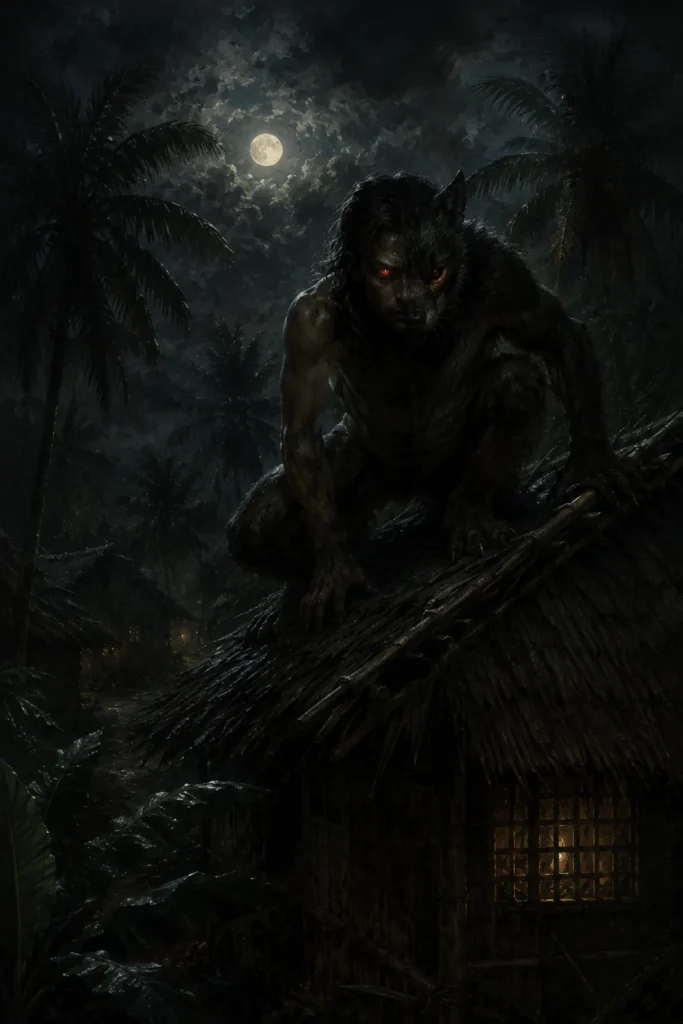
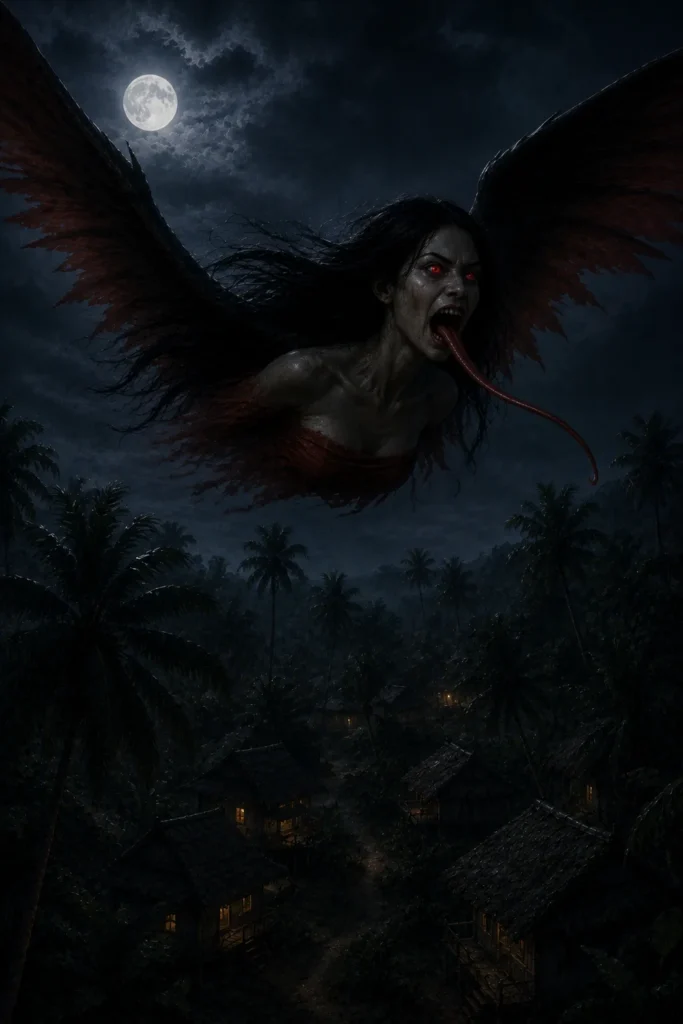
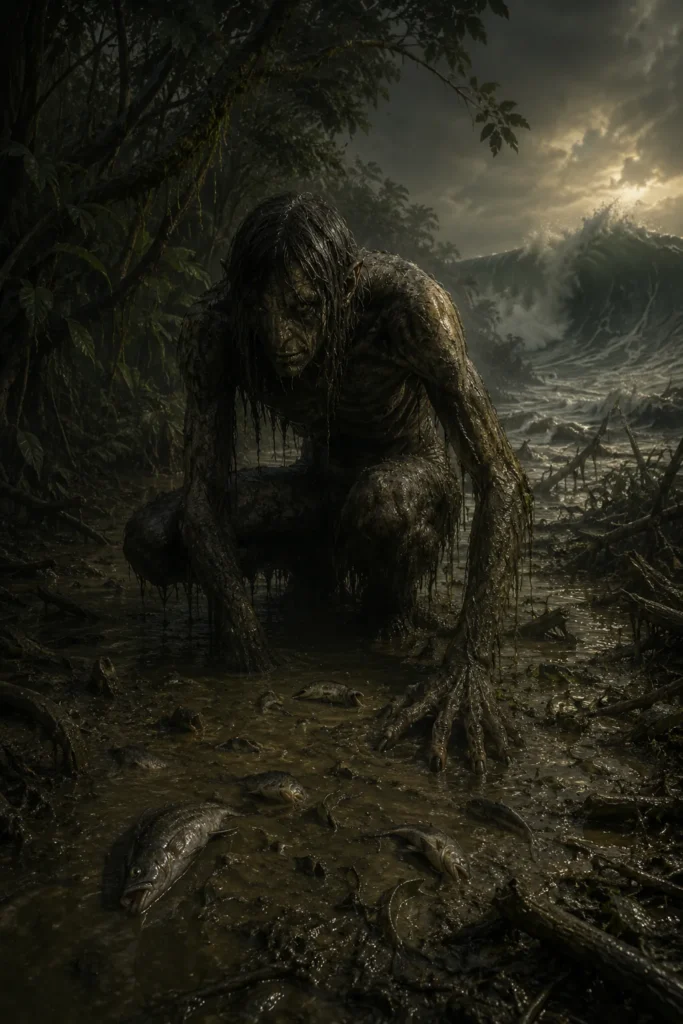
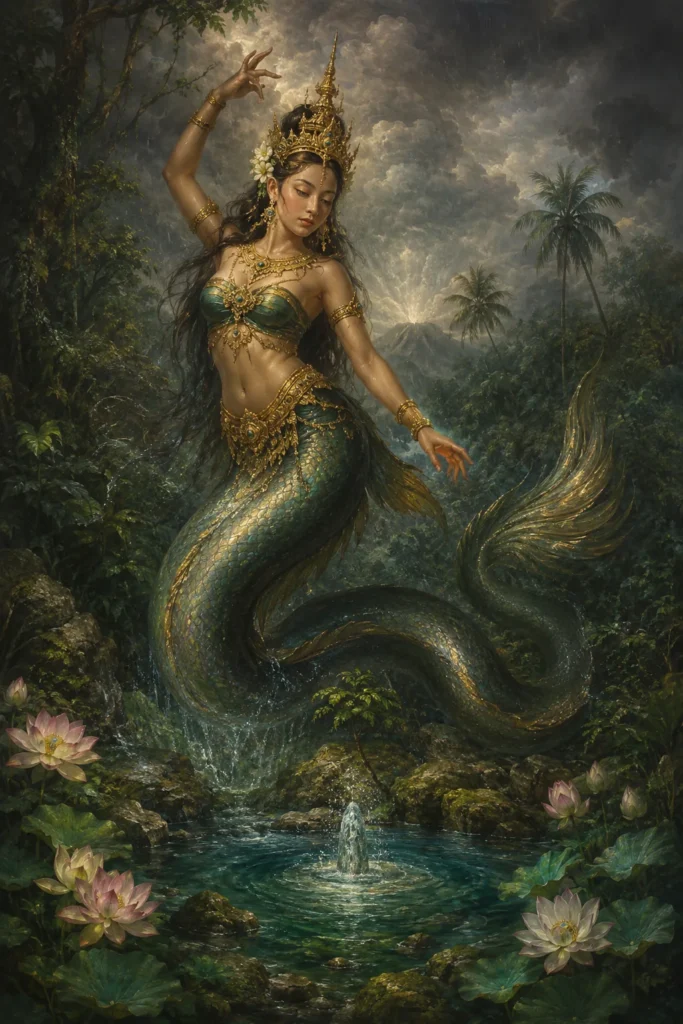
The Tiyanak disguises itself as a helpless, crying baby and reveals a demonic form with sharp teeth and claws as one approaches. It symbolises unbaptised and lost children and the Catholic fear of denied salvation.
Effect
The Tiyanak lures with baby cries from the darkness of the forest or from lonely roads. If the victim approaches, it attacks and feeds on flesh or blood. It also leads travellers astray and makes them lose their way.
Profile: Tiyanak
The key aspects of the spirit child at a glance.
Pre-colonial Philippine belief in the spirit child, reinterpreted under Spanish mission as the vengeful soul of the unbaptised child.
Travellers, forest-goers and compassionate passers-by lured by the baby’s cries from the darkness.
Crying infant as disguise, which reveals sharp teeth and claws as one approaches.
Lures with baby crying, attacks and feeds on flesh or blood, or simply leads travellers astray.
Baptism as the central countermeasure, along with wearing clothing inside out to break the spell.
From spirit child between worlds to unbaptised soul
The derivation is discussed in relation to the Malay Pontianak or Mantianak; what matters is the distinction that the Pontianak refers to the mother, whereas the Tiyanak refers to the spirit of the child. In pre-colonial belief the Tiyanak was the spirit of an unborn or dead child caught between worlds.
Under Spanish rule it was reshaped into the vengeful soul of an unbaptised or aborted child denied entry to heaven. Ramos places it among the lower mythology of the Philippines.
From forest path to Philippine horror film
The Tiyanak is a recurring figure in Philippine horror films, including several adaptations under its own name, as well as in comics and around Halloween.
From a religious-studies perspective, the Tiyanak links the pre-colonial belief in the spirit child between worlds with the Catholic notion of the unbaptised child denied heaven. It is an example of how the Spanish mission reinterpreted indigenous beliefs.
Baptism and the inside-out clothing
The central countermeasure is baptism, which binds the child’s name to the world and strips the spirit of its disguise. Anyone who has lost their way breaks the spell by wearing their clothes inside out, which the Tiyanak finds so amusing that it releases the victim. Generally, consecrated objects and prayer, along with holy water, a worn amulet and salt, are considered traditional protective means.
Spirit children from Malaysia to Mapuche land
The Tiyanak is related to the Malay Toyol, a child-shaped being created from a dead foetus, and is derived from the Pontianak child, while the deceased mother becomes the Pontianak. As a spirit child of unbaptised or deceased children, it is also close to the Caribbean Douen and the Mapuche spirit Anchimayen, both of which likewise arise from dead children, as well as the Scandinavian Myling.
Frequently asked questions about the Tiyanak
Why a baby?
The disguise as a helpless infant uses travellers’ sympathy as a trap.
How do you escape?
By putting your clothes on inside out, which breaks the spell of misdirection.
Where does the being come from?
Probably from the Malay Pontianak child, reinterpreted in Catholic terms as an unbaptised or aborted child.
Further links
Further reading:
- Aswang – the Philippine complex of frightening beings
- Toyol – the Malay child spirit in the service of a master
- Douen, Myling, Anchimayen – further spirits of dead children
- Holy water, amulet, salt – traditional protective means
Literature (selection)
Further standard works in the bibliography.
As a Philippine spirit child, the Tiyanak remains a crying baby only until someone sympathetic approaches: then, behind the disguise, the rejected, vengeful soul of an unbaptised child reveals itself.