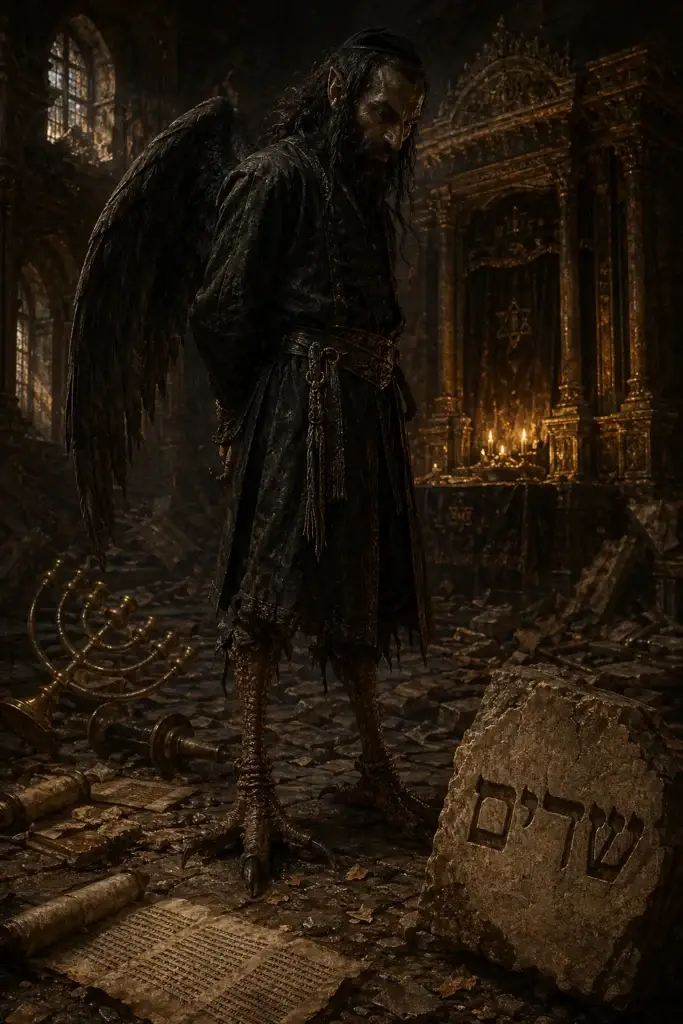
Se'irim, the Goat Demons of the Desert
By Ralf Ittermann · last reviewed on
The Se’irim are demons of Jewish tradition.
Goat-shaped inhabitants of desert, field and ruin.
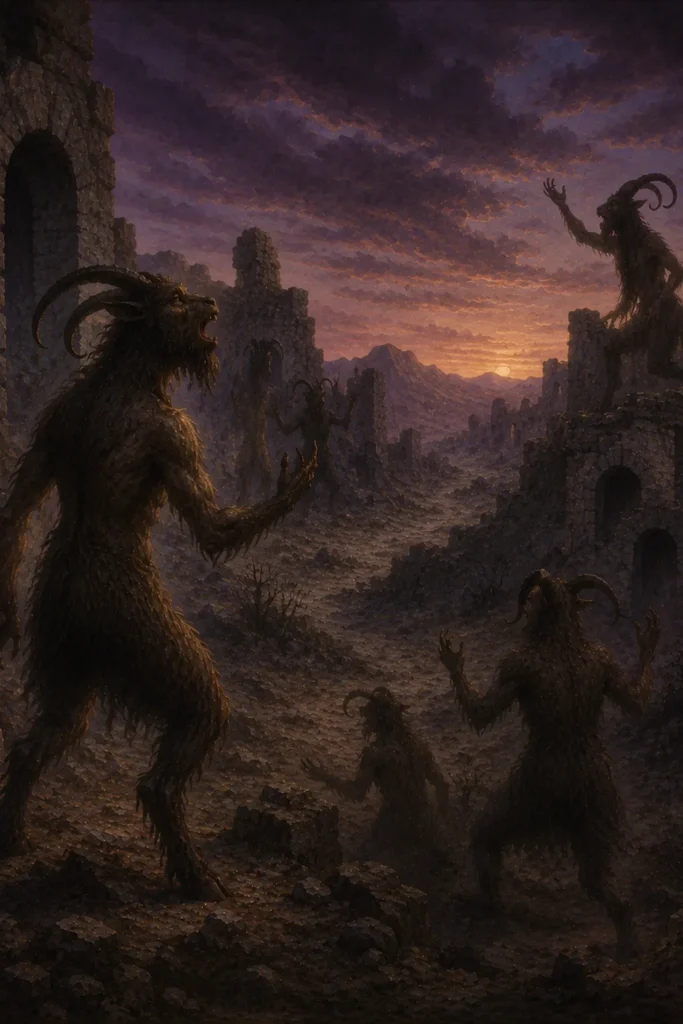
The Se’irim are hairy, goat-shaped demons of the Hebrew Bible. They inhabit deserts, open fields and desolate ruins, the space of chaos beyond human order.
For a time they were the object of a field cult that biblical law sharply rejected: Leviticus 17:7 forbids offering them sacrifices any longer. In prophecy, they become literary ciphers for the collapse of civilisation into wilderness.
Type: Goat-shaped field and desert demons
Origin: Hebrew Bible, various textual layers
Texts: Holiness Code (Leviticus), Chronicler’s work, Isaiah 13 and 34
Period: biblical eras through to the history of reception
Appearance: hairy, goat-shaped
Biblical Context
Period of the Texts
The references are distributed across various layers of the Hebrew Bible: the Holiness Code, the Chronicler’s work and prophecy.
Area of Diffusion
Ancient Israel and the Levant; desert, open field and desolate ruin sites are considered the dwelling places of the Se’irim.
Sources
Well documented: the biblical references themselves as well as the specialist reference works, above all the Dictionary of Deities and Demons in the Bible.
Name and variants
Hebrew: singular sa’ir, from the root sa’ar, to be shaggy or hairy. The word carries a threefold meaning: the adjective hairy, the standard word for goat, and the meaning satyr or goat demon. This threefold ambiguity is the root of all translation problems.
Appearance and Habitat
Appearance
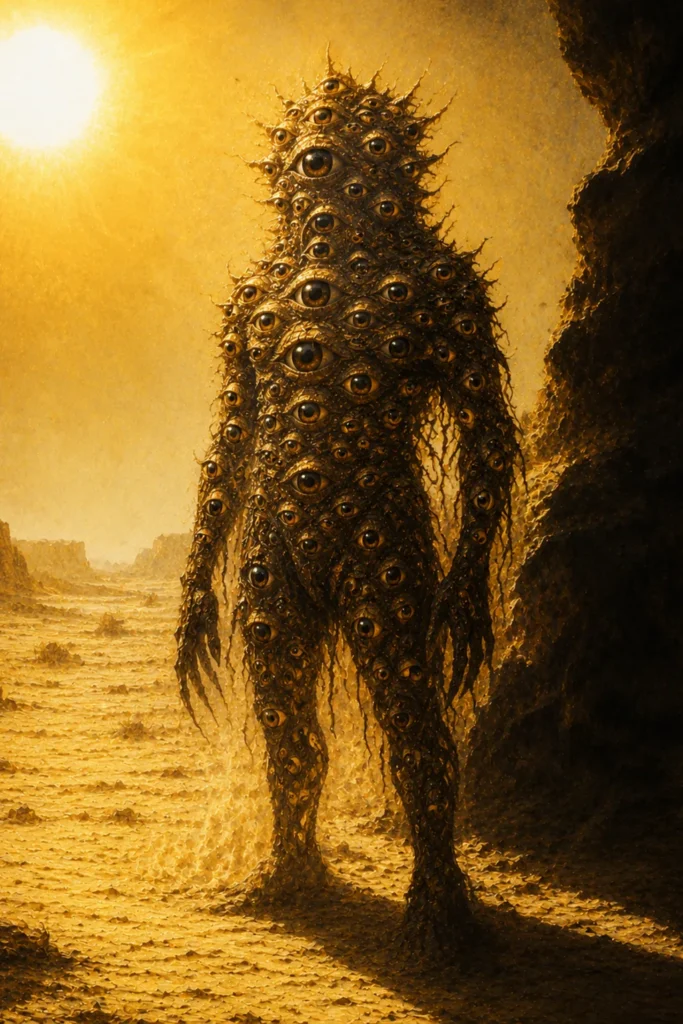
The Se’irim are goat-shaped, hairy beings. They inhabit deserts, open fields and desolate ruins, the space of chaos beyond order; they call to one another and dance. It remains disputed whether real wild goats or supernatural beings are meant.
Effect
In Leviticus 17:7 and in Chronicles, the Se’irim are the recipients of cultic sacrifices, not mere animals. In Isaiah 13 and 34, they are literary ciphers for the collapse of civilisation into wilderness.
Profile: Se'irim
The most important aspects of the goat demons at a glance.
Demons of the Hebrew Bible with an afterlife in translation and reception, from the field cult to the satyr interpretation.
The field cult of the rural population and the places of decay: deserts, open fields and desolate ruin sites.
Hairy, goat-shaped apparitions that call to one another and dance among the ruins.
Recipients of forbidden sacrifices in the field cult; prophetically a symbol of the city decaying into wilderness.
Leviticus 17:7 forbids the sacrificial cult as an eternal statute and brands it as spiritual adultery; Chronicles mentions Jeroboam’s own priests.
The Greek satyrs and Pan as a translational adaptation; in Isaiah 34:14 the Se’irim stand alongside Lilith.
From Leviticus to Isaiah: the Biblical References
The singular sa’ir comes from the root sa’ar, to be shaggy or hairy, and carries a threefold meaning: hairy, goat, goat demon. The references stem from various textual layers: the Holiness Code, the Chronicler’s work and prophecy.
Leviticus 17:7 forbids offering further sacrifices to the Se’irim, after whom they whore, as an eternal statute, and brands the cult as spiritual adultery. Chronicles reports that Jeroboam appointed priests for the high places and the Se’irim. Finally, in Isaiah 13 and 34, the Se’irim populate the destroyed cities of Babylon and Edom: where civilisation ends, their realm begins.
Translation History and Classification
No major translation is consistent in itself: in the cultic context, translators tend towards demon or devil, in the desert context towards hairy or satyr. The Septuagint renders Leviticus 17:7 as vain things, the King James Bible uses satyrs, Luther field devils and field spirits.
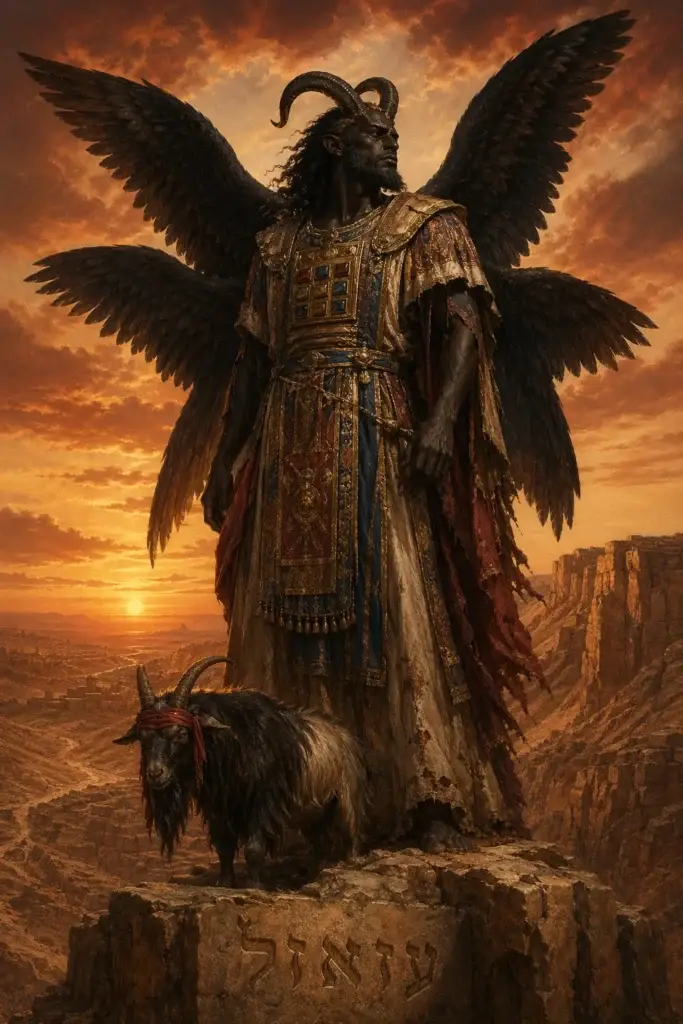
From a religious-studies perspective, the Se’irim are goat-shaped field and desert demons. Three clarifications: their interpretation as lustful Greek satyrs is a matter of reception history, not an ancient Near Eastern finding. The word is ambiguous, not clearly meaning demon. And equating them with Azazel is not a scholarly consensus.
The Ban on the Cult and Its Consequences
Dealing with the Se’irim in the Bible is not a protective ritual but a prohibition: Leviticus 17:7 forbids offering them sacrifices as an eternal statute and interprets the field cult as spiritual adultery. The fact that Chronicles specifically reports that Jeroboam appointed priests for the high places and the Se’irim shows how real this cult appeared to the biblical authors. Warding off the goat demons was thus a matter of cultic purity, not magic.
Goats, Satyrs and Lilith: Parallels
The two goats of the Day of Atonement are also called Se’irim, which invites equation with Azazel; however, more recent research separates the two, since Azazel does not receive a sacrifice. Via the goat form, the translational adaptation to the Greek satyrs and Pan arose. And in Isaiah 34:14 the Se’irim stand alongside Lilith, the best-known nocturnal figure of Jewish tradition. Separate articles cover Ketev Meriri and Agrat bat Mahlat.
Frequently Asked Questions about the Se'irim
What are the Se’irim?
Hairy, goat-shaped desert and field demons of the Hebrew Bible that inhabit deserts, fields and ruins, and for a time received their own sacrificial cult.
Why were they translated as satyrs?
Because of the goat form. This adaptation belongs to reception history, not a finding of the ancient Near Eastern sources themselves.
Are they the same as Azazel?
No. More recent research separates the two, since Azazel does not receive a sacrifice; the shared name of the Day of Atonement goats is misleading.
Further links
Further reading:
- Judaism – all beings of Jewish tradition
- Lilith – the nocturnal figure from Isaiah 34
- Azazel – the desert demon of the Day of Atonement
- Holy water, amulet, salt – traditional protective means
- Ketev Meriri, Agrat bat Mahlat – further demons of Jewish tradition
Literature (selection)
Further standard works in the bibliography.
As both biblical desert demons and goat demons, the Se’irim mark the boundary where the ordered world of the Bible passes into the wilderness, and it is precisely there that tradition has placed them.