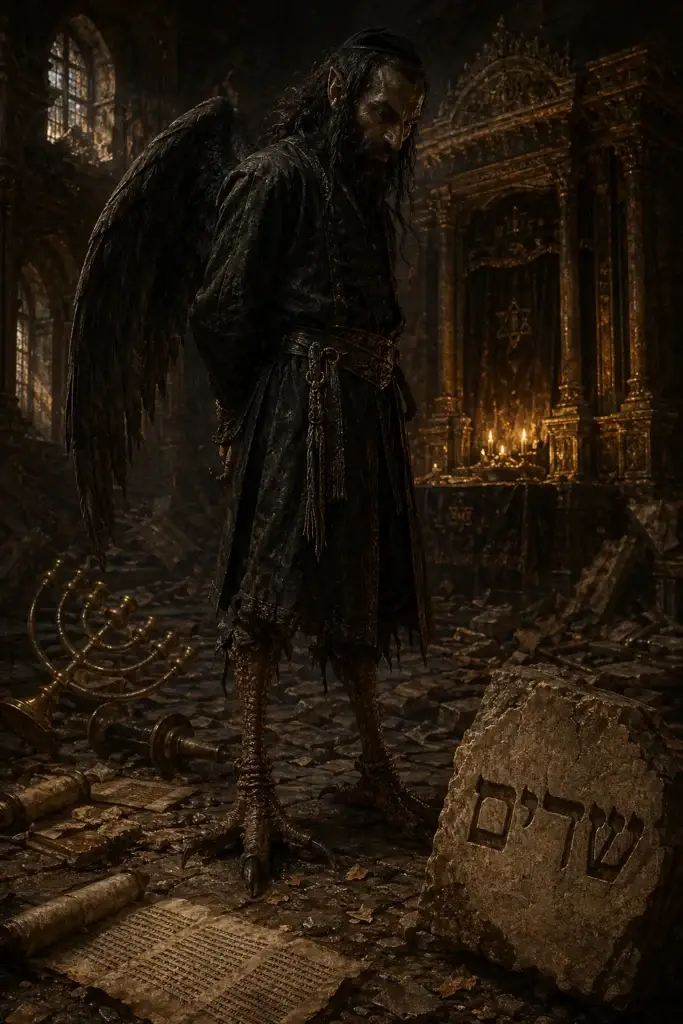
Ketev Meriri, the bitter ruin of the hot hours
By Ralf Ittermann · last reviewed on
Ketev Meriri is a demon of Jewish tradition.
The bitter ruin that kills at midday with a glance. The danger of this demon is said to peak during the hot hours around midday.
Ketev Meriri, the bitter ruin, is a Jewish demon of midday heat and plague. He personifies the overwhelming glare of the sun and kills with his glance whoever sees him during the most dangerous time of day.
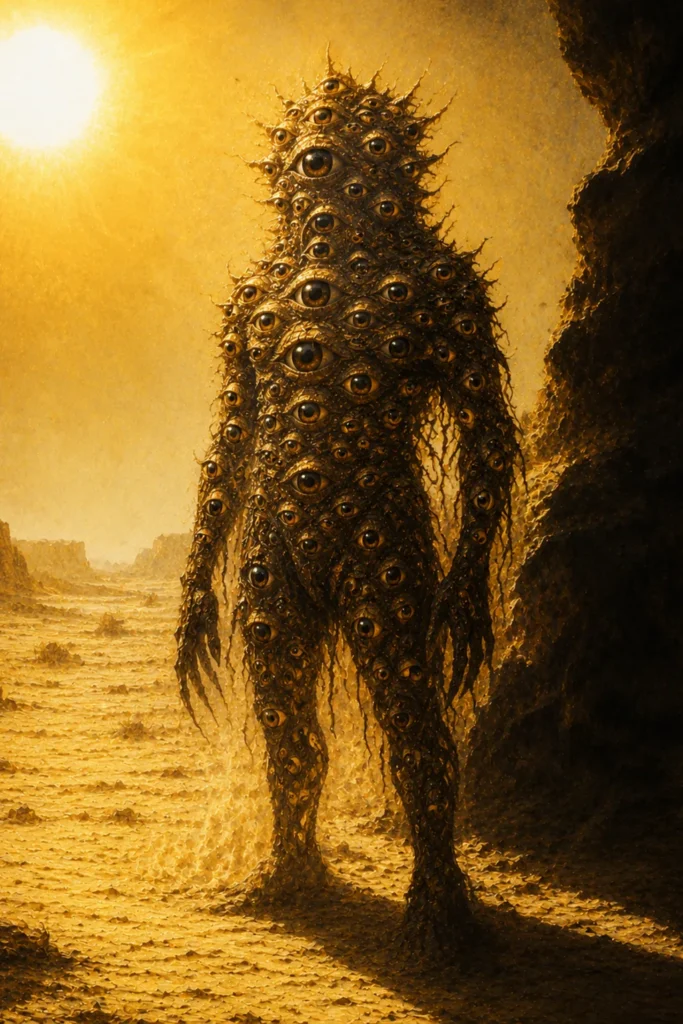
In biblical Hebrew, Ketev is initially an abstraction for ruin or plague, not a proper name; only rabbinic and medieval reception turned it into a demonic figure. The famous description of terror is given by Midrash Numbers Rabbah: a being made of scales, hair and eyes.
Type: demon of midday heat and plague
Origin: Hebrew Bible, rabbinic reception
Texts: Deuteronomy 32:24, Psalm 91:6, Pesachim 111b, Numbers Rabbah 12:3
Period: biblical eras through to the Midrash
Appearance: scaly, hairy, made entirely of eyes
Region of origin and sources
Period of the Texts
The evidence ranges from the Hebrew Bible through the Talmud to the Midrash; the personification into a demon is a process of rabbinic and medieval reception.
Area of Diffusion
Jewish tradition; the demon is imagined in the blaze of high summer, in the transitional zones between sun and shadow.
Sources
Well attested: the biblical Ketev passages, Pesachim 111b and Numbers Rabbah 12:3, along with the scholarly literature from Blair to Bohak.
Name and variants
Hebrew: ketev, ruin or plague, in biblical Hebrew an abstraction, not a proper name; meriri means bitter. Full form Ketev Meriri (bitter ruin) only Deuteronomy 32:24; further passages Isaiah 28, Hosea 13, Psalm 91:6.
Nature and effect
Appearance
The famous description of terror appears in Numbers Rabbah 12:3: Ketev Meriri is made entirely of scales, hair and eyes; one eye sits in his heart, and whoever sees it, human or animal, falls and dies. The Talmud in Pesachim 111b, by contrast, makes him a morning demon.
Effect
Ketev Meriri personifies the overwhelming midday heat and the plague associated with it. According to Numbers Rabbah, he is active daily between the fourth and ninth hour, and calendrically during the midsummer Three Weeks; his deadly gaze strikes in the transitional zones between sun and shadow.
Profile: Ketev Meriri
The key aspects of the demon of midday heat at a glance.
Biblical abstraction for destruction and plague, which rabbinic and medieval reception personified into a demonic figure.
People in the midday heat, especially during the midsummer Three Weeks; animals also fall victim to his gaze.
According to Numbers Rabbah, a being made of scales, hair and eyes, with one eye in his heart, whose sight kills.
Personification of scorching sun and plague; active between the fourth and ninth hour, in the zones between sun and shadow.
Avoiding the midday hours in midsummer, sparing children during the Three Weeks, and Psalm 91 as the song against the tormenting spirits.
The Christian monastic noonday demon as a bridge in translation history; within the cluster of plague powers, Reshef and Deber stand alongside him.
From abstraction to demon: the Ketev passages
At the beginning stands a word, not a being: ketev denotes destruction or plague in biblical Hebrew. The full form Ketev Meriri, bitter destruction, appears only in Deuteronomy 32:24; further Ketev passages are Isaiah 28, Hosea 13 and Psalm 91:6. It was only rabbinic and medieval reception that turned the abstraction into a demonic figure.
This reception is not uniform. Numbers Rabbah 12:3 equips the demon with the well-known terrifying form and sets his active time to the hours between the fourth and the ninth, as well as to the midsummer Three Weeks. The Talmud in Pesachim 111b diverges from this and makes Ketev Meriri a morning demon. Whoever speaks of him as a noonday demon is therefore describing only one of several lines of tradition.
From biblical word to noonday demon
The most consequential station of this reception is Psalm 91:6: the destruction that lays waste at noon becomes a noonday demon in the Septuagint and Vulgate, while the Masoretic text refers to a plague that is most dangerous at midday. From this translation, the bridge leads to the Christian monastic noonday demon.
In terms of religious studies, Ketev Meriri is a noonday and plague demon. Important clarifications: the full form appears only in Deuteronomy 32:24, and the Talmud even makes him a morning demon. The eye and scale iconography stems from Numbers Rabbah, not the Talmud. And the noonday demon is a product of the Septuagint and Vulgate translations.
Avoiding the midday hours and Psalm 91
The traditional protection is practical: the midday hours in midsummer are avoided. Numbers Rabbah records that Rabbi Yochanan instructed that children not be struck during these days, and that a sage dismissed children from lessons after four hours to avoid the most dangerous time. Psalm 91 is regarded as the ritual defence, the song against the tormenting spirits.
Noonday demons and plague powers compared
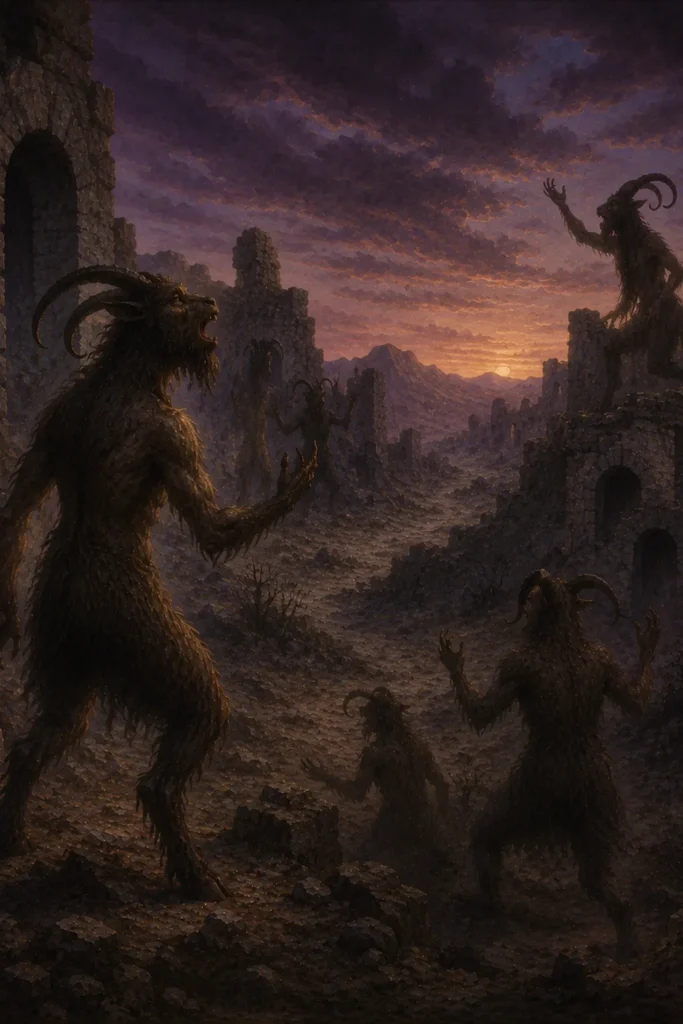
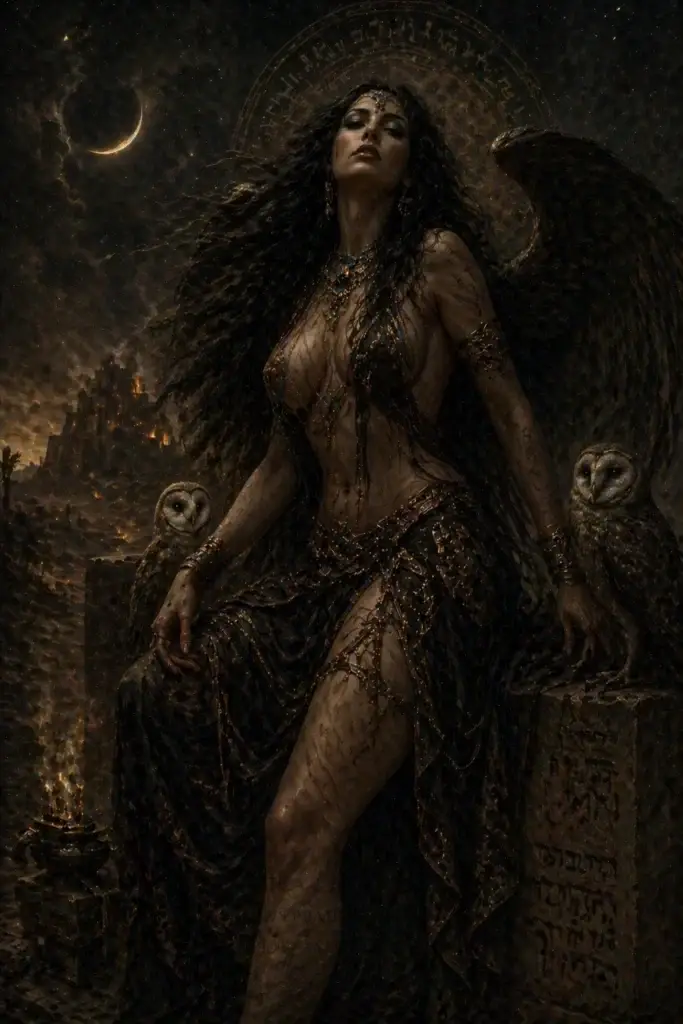
Through the translation history of Psalm 91, Ketev Meriri is directly connected to the Christian monastic noonday demon; within the cluster of personified plague and death powers, he stands alongside Reshef and Deber. Within the Jewish demonic world, the Se’irim of the desert and the night queen Agrat bat Mahlat form his spatial and temporal counterpart, as does Lilith as a figure of the night.
Frequently asked questions about Ketev Meriri
What is Ketev Meriri?
A Jewish demon of midday heat and plague with a deadly gaze. The name means bitter destruction.
When is he dangerous?
In the midday heat of the midsummer Three Weeks, daily between the fourth and ninth hour; the Talmud names the morning instead.
Is he really the noonday demon of Psalm 91?
The noonday demon is a product of the Septuagint and Vulgate translations; the Masoretic text refers to a plague. The full form Ketev Meriri appears only in Deuteronomy 32.
Further links
Further reading:
- Judaism – all beings of the Jewish tradition
- Se’irim – the goat demons of the desert
- Agrat bat Mahlat – the night queen as counterpart to the day demon
- Holy water, amulet, salt – traditional protective means
- Protection Compass – protective means at a glance
Literature (selection)
Further standard works in the bibliography.
Ketev Meriri became famous as a noonday demon only through the translations; as a plague demon of the Hebrew texts, he stands for a danger that comes not from darkness, but from the harshest light of day.