Lilu and Lilitu, demoness of the Mesopotamian tradition
By Ralf Ittermann · last reviewed on
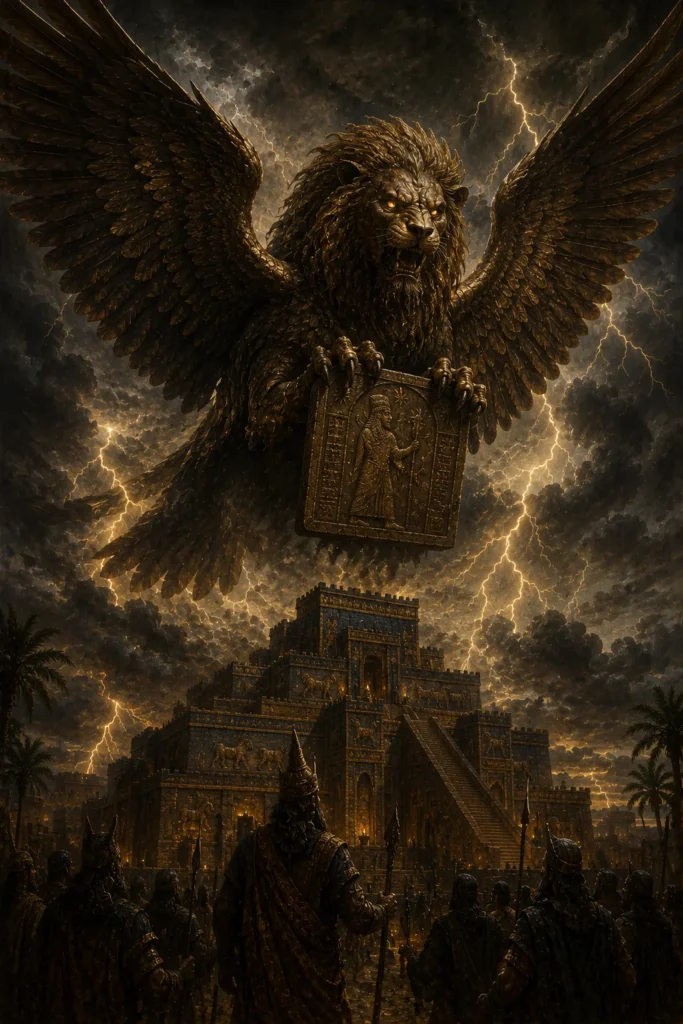
Lilu and Lilitu is a demoness of the Mesopotamian tradition.
A being of night and wind, moving between sleep, the desert and seduction. The profile places Lilu and Lilitu in the Mesopotamian world of ideas of night, desert and seduction.
Lilû and Lilītu
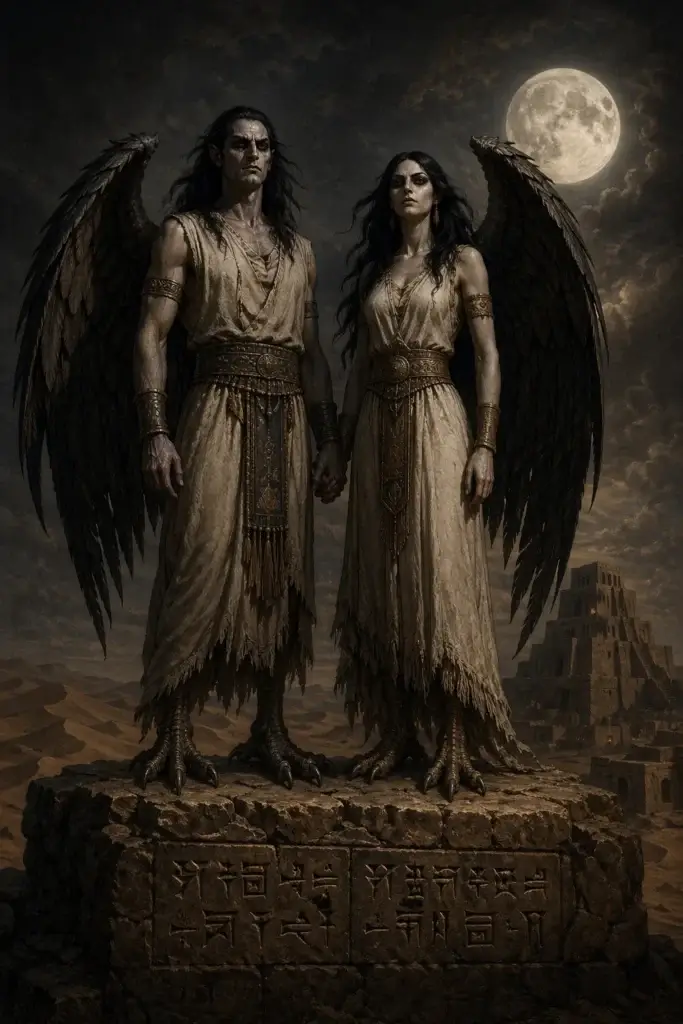
Lilû (male) and Lilītu (female) form an Akkadian pair of demons closely associated with wind, night and unblessed sexuality. The Sumerian etymon líl originally denotes moving air; from it develop, in Akkadian, beings that dwell in that space, incorporeal, intangible and dangerous to sleepers.
From this same layer also comes the younger female variant ardat-lilî, which threatens above all young men and women in childbed.
At a glance: Lilu and Lilitu
Type: pair of wind and night demons (Akkadian)
Origin: Sumerian líl → Akkadian lilû (m.) and lilītu (f.); ardat-lilî as the child-endangering variant
Function: nocturnal seduction, disturbance of sleep, sexual threat; ardat-lilî additionally a threat to women in childbed and to infants
Invocation: incantation tablets (Maqlû series), protective amulets
Central sources: Akkadian incantation texts, lexical lists, Gilgamesh
Context
Period of the texts
The first attestations are found in Sumerian-Akkadian texts of the 2nd millennium BCE. The group remains present throughout the 1st millennium. It had a considerable afterlife in Aramaic incantation bowls of late antiquity and in the Jewish tradition around Lilith.
Area of distribution
The core area is Mesopotamia. From there, motifs and names travel via the Levant into Aramaic, Hebrew and later into Christian folk traditions. The connection to Jewish incantations and protective amulets from Babylonia and Palestine is especially close.
State of the sources
Central are the Akkadian incantation texts against Lilû, Lilītu and ardat-lilî, which appear in the great incantation series Maqlû and Šurpu. Alongside them are individual mentions in lexical lists, in the collection Utukkū lemnūtu (“Evil Demons”) and in Late Babylonian school texts.
The most important edition is by M.J. Geller (2007 Helsinki, 2016 De Gruyter); earlier preparatory work was done by R. Borger and F.A.M. Wiggermann.
Name and variants
Sumerian: líl (wind/moving air) → líl-lá (wind being). Akkadian: lilû (m.), lilītu (f.), ardat-lilî (“young woman-lilî”, a female form with a child-endangering component). The phonetic similarity to Hebrew laylah (night) is secondary; the folk-etymological link with “night” is first attestable in Aramaic-rabbinic writings and shapes the later image of Lilith.
Characteristics
Appearance
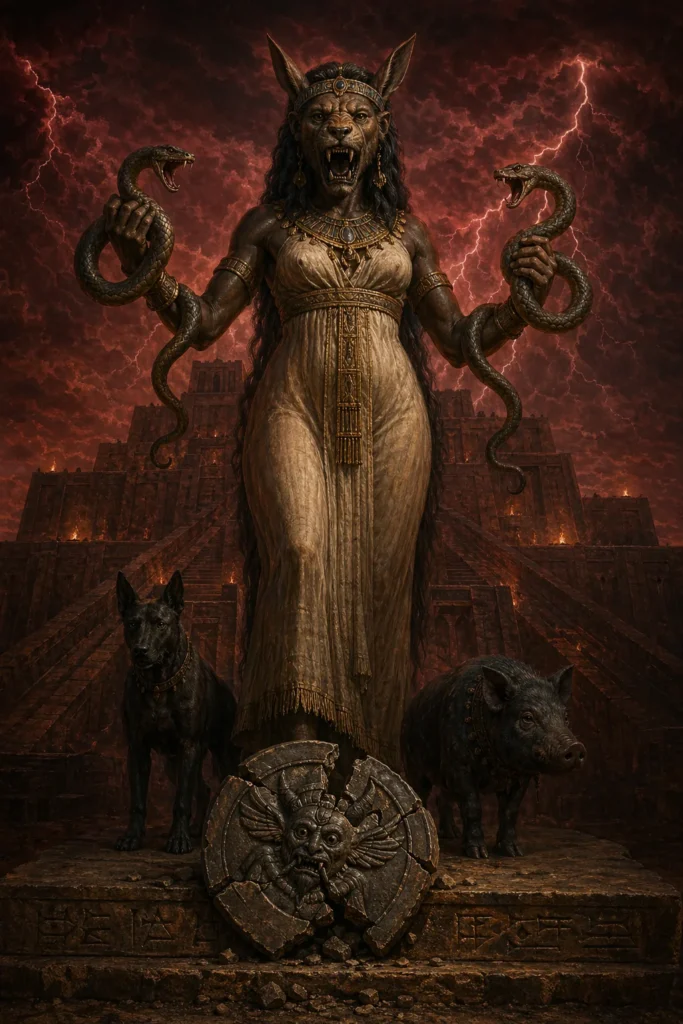
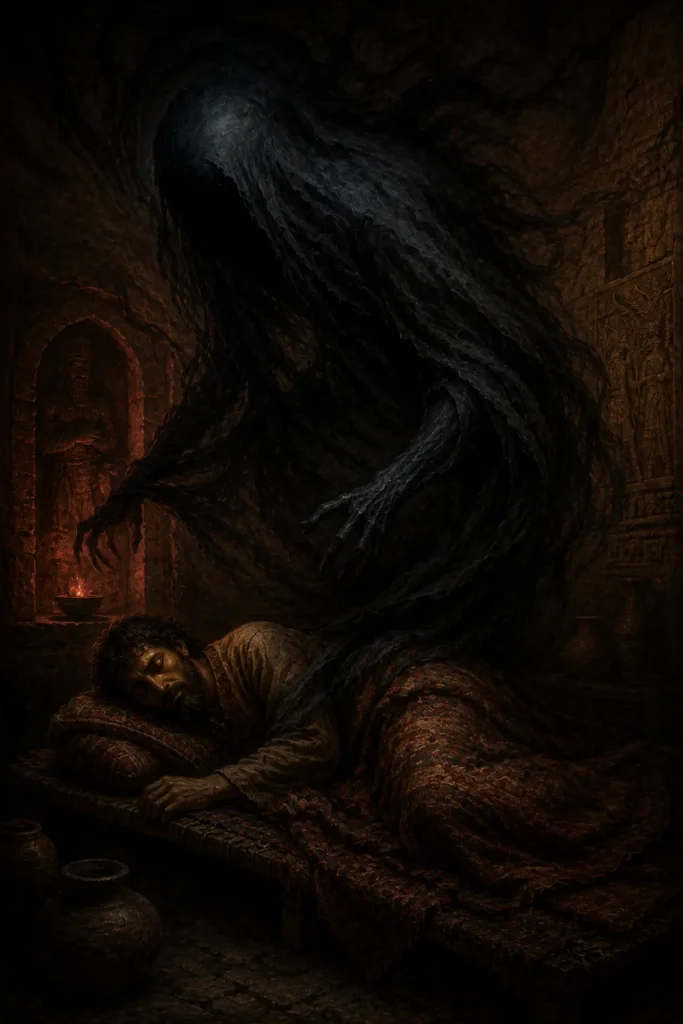
Lilû and Lilītu have no fixed iconographic programme. They are wind beings, incorporeal, sometimes experienced as nocturnal shadows or dreams. The ardat-lilî can appear youthful and female, often as a seductive figure who comes to sleeping men. Pictorial representations are rare and not unambiguous.
Behaviour
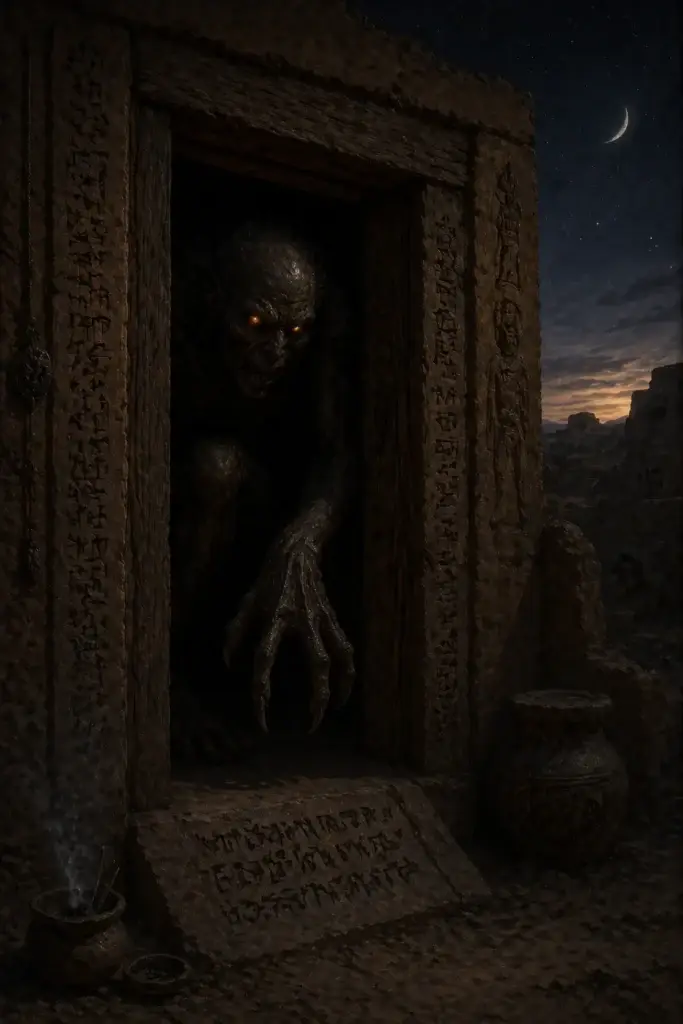
They come in the night, enter houses and bedchambers, and afflict sleepers. Lilû seduces women, Lilītu men. Ardat-lilî threatens bachelors, women in childbed and infants. They vanish with the morning but leave behind illness, nightmares or unwanted sexual experiences.
Sphere of effect
Sleep disturbances, nightmares, sleep paralysis, sexual dreams, unexplained pregnancy losses, infertility. In a rural-archaic understanding, also infertile land and disturbed animal births. The sphere of effect partly overlaps with that of Lamashtu, but is more strongly centred on sleep.
Profile: Lilu and Lilitu
The most important aspects of Lilû and Lilītu at a glance. The detailed treatment of name, description, defence and parallels can be found in the following sections.
Sumerian-Akkadian etymology: from líl (moving air, wind, breath) develops the category of incorporeal wind beings. Lilû is the male, Lilītu the female representative of this class. The ardat-lilî develops as a specific younger variant with a pronounced sexual and child-endangering component.
Sleepers, especially the unmarried and the childless. Travellers in desert and wasteland. Places where the social space of protection is thin.
No fixed iconographic programme. Lilû and Lilītu are mostly described as wind or nocturnal shadow. The ardat-lilî occasionally appears in incantation texts as an attractive young woman with long hair.
Pictorial representations are very rare; some clay plaques of the Old Babylonian period (the so-called “Burney Relief“) are sometimes associated with Lilītu, but the identification is disputed.
Nightmares, sleep paralysis, nocturnal sexual experiences, melancholy, infertility. An explanatory figure for what happens in the night and at the edge of the social space.
Incantations, protective amulets with inscriptions, ritual protective measures for the sleeping space. In later tradition: incantation bowls with protective formulae against Lilith.
Direct successors: Lilith (Jewish-rabbinic tradition, Middle Ages). Functionally related: Lamia and Empusa (Greece), succubus and incubus (medieval Christian), Yūrei in the Japanese tradition as restless nocturnal apparitions. Mahr (Germanic) and Kikimora (Slavic) also share the motif of the nocturnal intruder in the sleeping space.
Practical defence
Rituals of defence
The incantation series Maqlû (“Burning”) and Šurpu (“Burning”) contain detailed ritual instructions against Lilû, Lilītu and ardat-lilî. Typical is the combination of orally recited incantation formulae with incense offerings (juniper, cedar wood), protective amulets at the bed or above the door, and symbolic acts of destruction (burning clay figures that represent the being).
The sleeping place itself is secured by protective circles and apotropaic inscriptions.
Lilu and Lilitu, parallels in other cultures
Jewish tradition: Lilith is the direct successor of the Akkadian Lilītu/ardat-lilî. First mentioned in Isaiah 34:14 as a desert demoness; elaborated in the Babylonian Talmud (b. Eruvin 100b, Niddah 24b), and then comprehensively in the medieval Alphabet of Ben Sira (10th c.).
The Alphabet of Ben Sira makes her Adam’s first wife, who leaves him and ever after threatens infants. Protective amulets bearing the archangels Sanvi, Sansanvi and Semangelaf remained in use into modern times.
Greek-Roman world: Lamia and Empusa take up the motif of the nocturnal female demoness. Both are originally single figures, but in late antiquity they become generic designations. The Roman striga and the gello serve the same complex.
Middle Ages and modern period: succubus and incubus become, in scholastic theology, independent categories of sexually active demons.
The witch trials of the early modern period take up the complex and connect it with the accusation of carnal commerce with the devil. In folk belief, the “Mahr” as a pressing spirit remains alive in the German-speaking area into the 19th century.
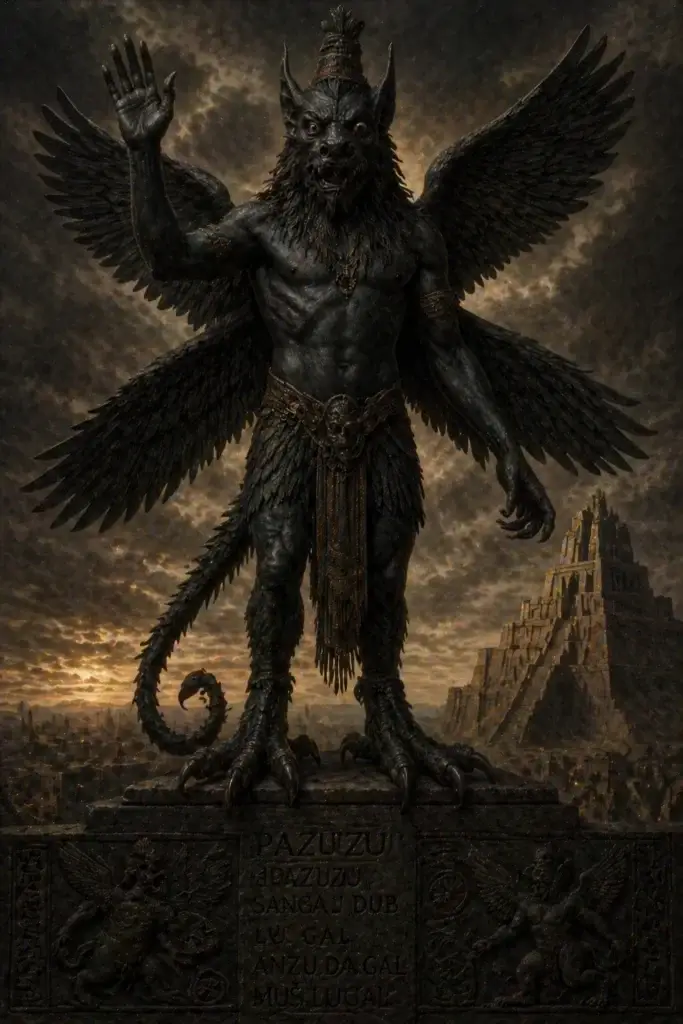
Modern reception: In the 20th century the figure of Lilith was rediscovered especially in feminist theology and in Jewish-American literature (Lilith Magazine, Judith Plaskow), and read as a counter-figure to the subordinate Eve. The Pazuzu-Lamashtu-Lilû complex enjoys broad pop-cultural uptake in modern horror and fantasy literature.
The incantation series Maqlû and its place within it
The most important cuneiform source on the nocturnal demons of the lilû and lilītu type is not a single myth, but a whole collection of ritual texts.
Especially rich is the Neo-Assyrian incantation series Maqlû (“Burning”), preserved on eight tablets plus a ritual tablet and made accessible by Tzvi Abusch in a critical edition. Maqlû is primarily directed against sorcery, but it repeatedly names the lilû beings in lists of harmful powers from which the incantation priest protects the patient.
Alongside it stands the great series of medical-magical diagnostic texts. In the so-called Sakikkû series and in relevant incantations against childhood illnesses, the lilītu appears as a being that threatens infants and women in childbed.
Closely related is the figure of the ardat lilî, the “Lilû maid”, a demoness imagined as having died unmarried and childless and who therefore envies the living what was denied to her.
Walter Farber edited and commented on the incantations for the protection of mother and child, including the series Lamaštu; the lilītu also belongs to this milieu.
Methodologically it is important that these texts offer no narrative mythology. They describe the demons functionally, through their effect and through the act of defence. What we know about the appearance, origin and behaviour of the lilû beings is therefore derived almost entirely from ritual contexts, not from divine epics.
This state of the sources explains why the figure of the lilītu remains blurred in the cuneiform sources, and why only the later Jewish transmission condensed her into a named single figure.
Anyone reading the Mesopotamian attestations should always keep in mind the difference between a class of demons and the later Lilith of the rabbinic texts.
From a collective of demons to a single figure: the history of reception
The development from the Mesopotamian class of demons to the single Jewish figure can be traced in stages. In the Babylonian sources of the second and first millennia BCE, lilû, lilītu and ardat lilî are three related but not identical beings without a biography of their own.
The biblical attestation in Isaiah 34:14, where the word līlīt appears among the desert animals and figures of doom at the devastated Edom, is an isolated mention; translations waver between “night ghost“, “Lilith” and concrete animal names, which illustrates the uncertainty of scholarship well.
Only the rabbinic literature and the Aramaic incantation bowls from late-antique Mesopotamia give the figure contour. The bowls, of which several hundred have been published and which were studied by Joseph Naveh and Shaul Shaked among others, and later by Dan Levene and Christa Müller-Kessler, name Lilith as a threat to marriage, pregnancy and infants.
Here she is already an addressable power that can be banished by name, often conceived in the plural as a whole family of Lilin.
The medieval stage is marked by the pseudepigraphic Alphabet of Ben Sira, which introduces Lilith as Adam’s first wife, who refuses subordination. This text, whose dating and character (whether meant seriously or satirically) remain disputed to this day, supplied the narrative framework on which the later Kabbalah and the modern reception oriented themselves.
From there a long line leads through Romanticism to the feminist reappropriation of the twentieth century. For a religious-studies understanding it is decisive to keep these layers apart: the Mesopotamian lilû beings are the starting point, not the finished image.
Etymology and the connection to the wind
The older folk-etymological interpretation derived lilītu from Hebrew laylah (“night”) and saw in these beings pure night demons. This explanation is linguistically untenable, even though it strongly shaped the later conception.
The derivation prevailing today in Assyriology connects lilû with the Sumerian lil, a term from the semantic field of “wind”, “air”, “breath”, “storm”. The lilû beings would accordingly originally be wind and storm demons, incorporeal powers that travel through the air.
This etymology fits several features of the transmission. The lilû are regarded as restless, without a fixed place; they enter through windows and crevices; they have no human partner and no offspring in the ordinary sense.
The wind as an image of the homeless, unsettled and intangible is an obvious fit. The later attachment to “night” would then be a secondary reinterpretation, favoured by the phonetic echo and by the fact that many of these demons were indeed imagined as nocturnally active.
Scholarship continues to debate how close the connection is with the Sumerian deity Enlil, whose name contains the same element lil, without a direct kinship following from this. Certain only is that the word field is ancient and reaches deep back into the Sumerian linguistic layer.
For the history of the designation this means: the name carries with it a conception older than any narrated figure. Before the lilītu acquired a face, she was a breath.
The ardat lilî and the logic of an unfulfilled life
Among the three related beings, the ardat lilî deserves particular attention, because the inner logic of the entire group of demons becomes visible in her. Ardatu denotes in Akkadian the marriageable young woman who is not yet a mother.
The ardat lilî is the demonisation of precisely this state when it failed to reach its conclusion: a girl who died before marriage and motherhood, or who never found a husband.
The incantation texts describe her as a being to whom the normal female stages of life were denied. She has no breasts that give milk, she knows no husband, she was never defloured.
From this lack her dangerousness draws its strength: she seeks out young men at night to make up on them for what she lacked in life, and she at the same time threatens the pregnant women and women in childbed whose fulfilled life she herself never had.
Envy of the successful life is the driving motif.
This construction is illuminating from a religious-studies perspective, because it shows how a society translates its own social fault lines into demons.
The early death of a young woman, childlessness, the refused or missed happiness of marriage: these were real fears, and the belief in the ardat lilî gave them a manageable form. One could perform a ritual against the demon, while one was powerless against social fate itself.
The same logic carries the later conception of Lilith, which carried on for centuries the motif of the dead or rejected woman who takes revenge on children.
Related mechanisms are found in the figure of Lamaštu, who likewise threatens mother and child, but there as a god-born power and not as a failed human being.
Further links
Further reading:
- Mesopotamia (parent culture page)
- Lilith (the later Jewish successor)
- Night beings and sleep paralysis (modern classification)
- Incubus and succubus (Christian-medieval parallels)
Sources and literature
A compact selection of central works on Lilû, Lilītu and the wider context of nocturnal demons:
- Wiggermann, Frans A. M.: Mesopotamian Protective Spirits. The Ritual Texts (Cuneiform Monographs 1). Groningen 1992.
- Hutter, Manfred: “Lilith”, in: Dictionary of Deities and Demons in the Bible. 2nd ed. Leiden 1999.
- Naveh, Joseph / Shaked, Shaul: Amulets and Magic Bowls. Aramaic Incantations of Late Antiquity. Jerusalem 1985.
- Black, Jeremy / Green, Anthony: Gods, Demons and Symbols of Ancient Mesopotamia. An Illustrated Dictionary. London 1992.
- Stol, Marten: Birth in Babylonia and the Bible. Groningen 2000.
The protective practice described here is a religious-studies classification of historical traditions. iWell Guard ties in with this cultural-historical line of wearable protective objects and represents a contemporary form of it. More about the iWell Guard →
Lilû and Lilītu are among the earliest figures of Mesopotamian demonology that are tangible by name, and they are attested in Akkadian incantations from the second millennium before our era.