La Patasola, mistress of the forest with the one leg
By Ralf Ittermann · last reviewed on
La Patasola is a demoness of Colombian tradition.
Beautiful seductress, deadly beast with only one leg. The article calls La Patasola the mistress of the forest, a beautiful seductress who reveals herself as a deadly beast with one leg.
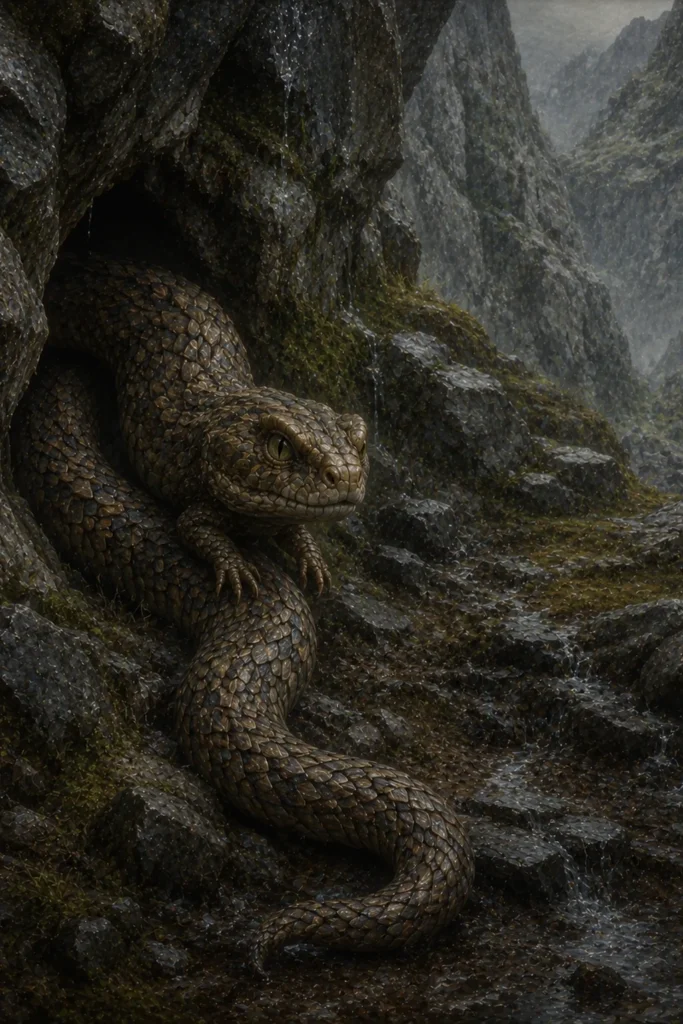
La Patasola, the One-Legged, is a female forest spirit of Colombia. As a beautiful woman she lures woodcutters and hunters deep into the forest, where she transforms into a one-legged beast with fangs and claws and drains their blood or devours them.
The legend is widespread in the Andean and Pacific regions of Colombia, with offshoots as far south as Ecuador, and survives above all as oral tradition with pre-Columbian roots. Both seductress and guardian, she punishes those who enter the forest with bad intentions.
Type: One-legged forest and mountain demon, seduces and kills lone men
Origin: Colombian folk belief with pre-Columbian roots
Texts: orally transmitted folklore compendiums, no fixed reference text
Period: from pre-colonial times to the present
Appearance: first a beautiful woman, then a one-legged beast with fangs and claws

Context of tradition
Period of the Texts
Pre-colonial to today: the legend weaves pre-Columbian notions of forest guardian spirits together with colonial fears and continues to be passed down orally to the present.
Area of Diffusion
The Andean and Pacific regions of Colombia, with offshoots as far south as Ecuador.
Sources
Thin: there is no single undisputed reference work specifically on the Patasola; the source material relies predominantly on popular, orally transmitted compendiums of Colombian folklore.
Name and variants
Spanish: pata means leg or foot, sola single or lone: La Patasola literally means the One-Legged. The name names precisely the core motif of mutilation, which the myth interprets as punishment.
Form and effect
Appearance
The single leg is the core motif of La Patasola, a mutilation that the myth interprets as punishment. At first she appears as a beautiful woman; only in the forest does the one-legged beast with fangs and claws reveal itself. This shift from beauty to beast embodies the deceptive allure.
Effect
As a desirable woman she lures the lone man away from the group, deep into the forest. There she reveals her true form and kills, draining or devouring her victim. At the same time she acts as a guardian: whoever enters the forest with bad intentions is punished by her.
Profile: La Patasola
The key aspects of the one-legged forest beast at a glance.
Colombian forest myth with pre-Columbian roots, interwoven with colonial fears about morality and sexuality.
Men alone in the forest, especially woodcutters and hunters.
First a beautiful woman, then a one-legged beast with fangs and claws.
Seduction, isolation and killing of the victim, and at the same time punishment for intruders into the forest.
Dogs and other blessed animals, as well as the presence of fire, light and community.
La Llorona and Siguanaba as further seductive death-women of Latin America, along with the Venezuelan La Sayona.
From forest guardian to colonial-era cautionary figure
The name is Spanish: pata means leg or foot, sola single or lone, together meaning the One-Legged. Two layers are woven together in the legend: pre-Columbian notions of forest guardian spirits who watch over groves and punish hunters for breaking taboos, and colonial fears of sudden death and forbidden liaisons.
Several origin variants explain the figure differently: one names a mother who killed her child and was banished into the forest as punishment; another an unfaithful woman whom the jealous husband killed along with her lover, cutting off one of her legs. Both variants converge on the same image, the woman with one leg who has since roamed the forest.
Between folk legend and modern horror
La Patasola is a firmly established part of Colombian folklore and popular legend representations; she is also present in horror blogs, podcasts and modern retellings.
From a religious-studies perspective, La Patasola links the seductive death-woman with the indigenous forest guardian spirit, merging pre-Columbian nature taboos with colonial fears about morality and sexuality. She serves as a cautionary tale against greed towards nature and against male desire.
Dogs, fire and the light of community
Most often mentioned are dogs and other domesticated animals: they are regarded as blessed animals whose mere presence protects. In the tales, the Patasola also cannot follow a man into the light of a protective candle or into the company of other men; fire, light and community keep her away. Salt and consecrated signs are likewise regarded in folk belief as protection against the forest spirit, and a worn amulet accompanies the traveller on the way through the lonely forest.
Seductive death women and forest spirits of Latin America
La Patasola corresponds to the Mexican La Llorona and the Central American Siguanaba, seductive death women who lure men before revealing their true form; also closely related is the Venezuelan La Sayona. As a forest guardian spirit, she is furthermore close to the Colombian Madremonte and the Brazilian Curupira and Mapinguari.
Frequently asked questions about La Patasola
Why does La Patasola have only one leg?
According to the myth, as punishment: depending on the variant of origin, her leg was cut off either as punishment for infanticide or by her jealous husband.
How does one protect oneself against her?
Through dogs and other domesticated animals, and through the presence of fire, light and community, which the Patasola cannot follow.
Is La Patasola evil or a protector?
Both at once: deadly for lone men in the forest, and at the same time a guardian who defends the forest against intruders with bad intentions.
Further links
Further reading:
- La Llorona, Siguanaba – related death women of Latin America
- La Sayona – the Venezuelan relative
- Protective candle, salt, amulet – traditional protective means
- Protection Compass – protective means at a glance
Literature (selection)
Further standard works in the bibliography.
As a Colombian forest spirit, La Patasola remains above all the one-legged woman: a figure who lures with the image of beauty and punishes with the beast, deadly for the lone man and at the same time guardian of the forest she defends.