La Sayona is a spirit of Venezuelan tradition.
Beautiful in the moonlight, deadly at the moment of infidelity.
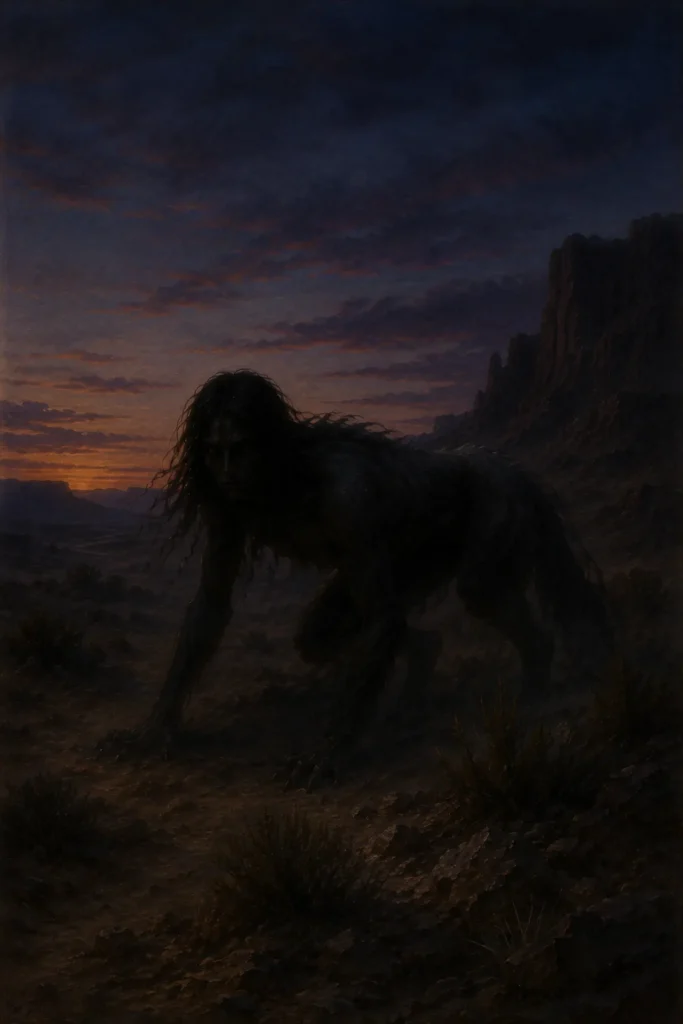
La Sayona is the avenging female spirit of Venezuela, who appears at night to unfaithful men as a beautiful woman in white. Only once the man decides to commit adultery does she reveal her skeletal face with glowing red eyes.
She is the spirit of a young woman who, believing her husband was having an affair with her own mother, burned down her house, husband and child out of jealousy and killed her mother. As she lay dying, the mother cursed her to avenge all women from then on by killing their unfaithful husbands.
Type: Avenging female spirit, punishes unfaithful men
Origin: Oral tradition of the Venezuelan Llanos, shaped by the colonial era
Texts: folkloric collections of legends, no fixed single reference text
Period: shaped in the colonial era, still orally alive today
Appearance: at first a beautiful woman in a white gown, then a skeletal face with red eyes
Shaped by the colonial era: The oral tradition of the Venezuelan Llanos dates back to colonial times and continues to be passed down orally today.
Venezuela, above all the Llanos plains, with extensions into Colombia.
Moderate: The source material rests on folkloric collections of legends from the Llanos; a reliably verified single reference volume specifically on the Sayona is lacking, while the comparative literature on La Llorona is more extensive.
Spanish: The name refers to the saya, the long, white, shirt-like gown in which the apparition appears. The origin legend names a young woman called Casilda, who is led to believe that her husband is having an affair with her own mother.
Appearance
The white feigns purity and serves as bait: a beautiful woman in a long white gown, the saya. The revealed skeleton with glowing red eyes is the horrific truth behind it. La Sayona thus embodies betrayal, revenge and eternal punishment in a single figure.
Effect
She appears as a seductive beauty and reveals her skeletal justice only once the man has decided to commit adultery. Men travelling alone at night are especially at risk, for instance during fieldwork or on the way home.
The key aspects of the avenging female spirit at a glance.
A moral figure shaped by the colonial era in the Venezuelan Llanos, enforcing marital fidelity through the means of a cautionary tale.
Unfaithful and adulterous men who decide to betray their partner.
At first a beautiful woman in a white gown, then a skeletal face with glowing red eyes.
Seduction and punishment: she lures and kills only at the moment when the man actually decides to commit adultery.
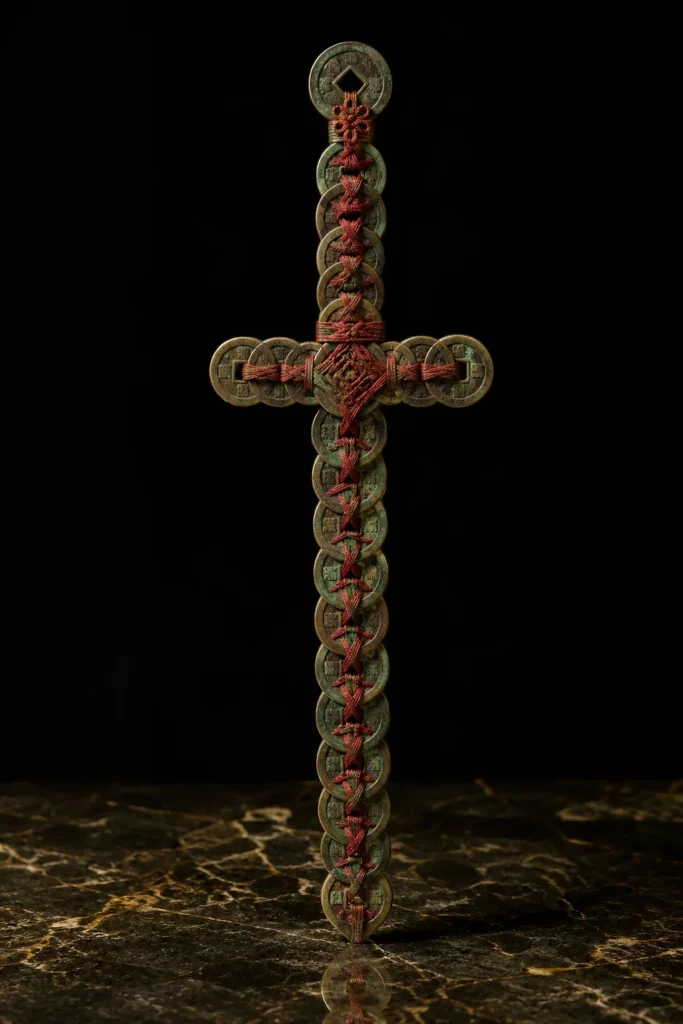
The surest protection is fidelity itself; ritualised protective objects are not reliably documented for her.
The Mexican La Llorona is her best-known sister; also related are La Patasola and La Diablesse.
The name La Sayona refers to the saya, the long, white, shirt-like gown in which the apparition appears. The origin legend tells of a young woman called Casilda, who is led to believe that her husband is having an affair with her own mother. Blind with rage, she burns down her house, husband and child and kills her mother.
In her final hour, the dying mother curses Casilda: from now on she is to avenge all women by killing their unfaithful husbands. From this colonially shaped narrative, La Sayona becomes a punishing moral figure who enforces marital fidelity through the means of fear.
La Sayona is a prominent figure in Venezuelan folklore and part of the wave of Venezuelan horror narratives; a documented instance includes a television episode of the series Archivos del más allá from 2004.
In religious studies terms, La Sayona combines the curse for breaking taboo, adultery, with the seductive woman of death. She is a cultural instrument for enforcing fidelity, respect and morality in relationships.
The only firmly documented protection is faithfulness: whoever is not, or does not wish to be, unfaithful is spared the Sayona’s revenge. This is a moral-preventive form of protection; ritualised warding objects are not reliably attested for her. Where protection is mentioned nonetheless, it refers to general Christian signs drawn from encounters with the apparition: blessed holy water, the light of a protective candle kept watch on the nocturnal path, and a worn amulet. No dedicated ritual complex directed against her has come down to us.
La Sayona corresponds to the Mexican La Llorona, the weeping woman, and the Central American Siguanaba, who lures men away and reveals a terrifying face. What they share is the type of the seductive, vengeful death woman of the colonial narrative tradition. Also related is the Colombian La Patasola, and as a luring seductress the Caribbean La Diablesse is close to her.
Who does the Sayona seek out?
Unfaithful men, especially at night outdoors or while working in the fields.
How does one protect oneself against her?
Through fidelity, the only form of protection that is firmly documented.
Why does she wear a white gown?
The name derives from the saya, the white gown; it feigns purity and contrasts with the later skeletal revelation.
Recommended internal links:
Further standard works in the bibliography.
As a vengeful female spirit of Venezuela and a woman in white, La Sayona remains a warning with two faces: seductively beautiful to the faithful gaze, deathly skeletal to the man who decides to betray.
Against its influence, cross-cultural tradition names these protective means:
Compare in the Protection Compass →Recommended protective means
The simplest protective means in this collection: 41 layers of fine gold 999, platinum, silver and silicon, manufactured in Ruhla, Thuringia. It requires no activation, is bound to no person, and is effective within a radius of around 50 meters, even without being worn.
Related Beings

The Obolus fee, his origins, appearance and role in guiding the dead, with parallels in other cul...

The written record of Baphomet reaches back several centuries into the past, very probably restin...

Manjushri, bodhisattva of wisdom. Flaming sword, sutra book, lion and prajna veneration in Tibeta...

The Skrzat, the Polish house and farm spirit. Origin between protective spirit and wealth spirit,...

Pesta, the Norwegian embodiment of the plague. Origin, the rake and the broom as signs over life ...

Bes, Egyptian protective deity of house, birth, and sleep. The friendly grotesque face of popular...