Yee Naaldlooshii, the witch in animal form
By Ralf Ittermann · last reviewed on
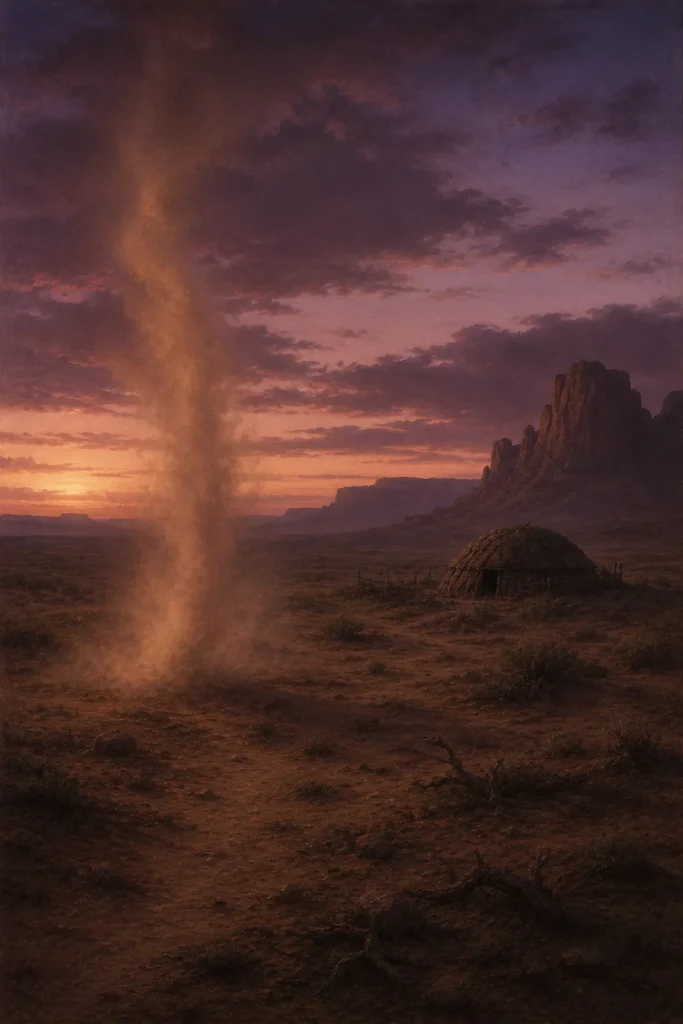
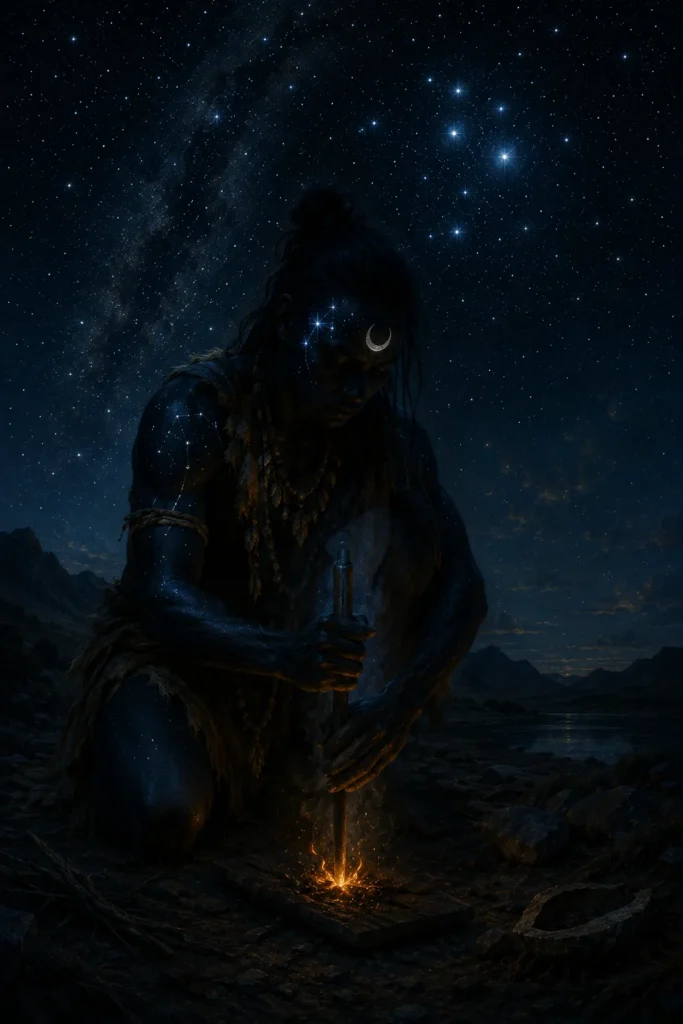
The Yee Naaldlooshii is a witch figure of Navajo tradition.
The human witch who takes on animal form.
Yee Naaldlooshii is a malevolent skin-walker of the Diné, a human witch who can take on animal form. It is a type within the category of witches and belongs exclusively to Diné tradition; the English term skinwalker is a loose translation.
Death and witchcraft are strictly taboo in Diné culture. This page therefore deliberately maintains a distanced stance and does not reproduce any traditional transformation techniques.
Type: Malevolent human witch with the ability to take animal form
Origin: Diné belief complex, part of the category of witches
Texts: ethnographic documentation from the 1920s onward, above all Kluckhohn
Period: rooted in Diné tradition, ethnographically from the 1920s onward
Appearance: human in animal form, often coyote, wolf, owl, fox or crow
Textual history
Period of the Texts
The belief complex belongs exclusively to Diné tradition and was documented through Clyde Kluckhohn’s fieldwork from the 1920s onward.
Area of Diffusion
The Navajo Nation in the south-western United States.
Sources
Well documented through Kluckhohn’s fieldwork, along with Brady on children’s narratives and Reichard on Diné religion. Popular sources are not a reliable basis.
Name and variants
Navajo (Diné Bizaad): yee naaldlooshii, from yee, by means of it, and naaldlooshii, one that goes on all fours, literally roughly ‘with it he goes on all fours’, a reference to animal-like movement. The English term skinwalker is a loose translation.
Nature and effect
Appearance
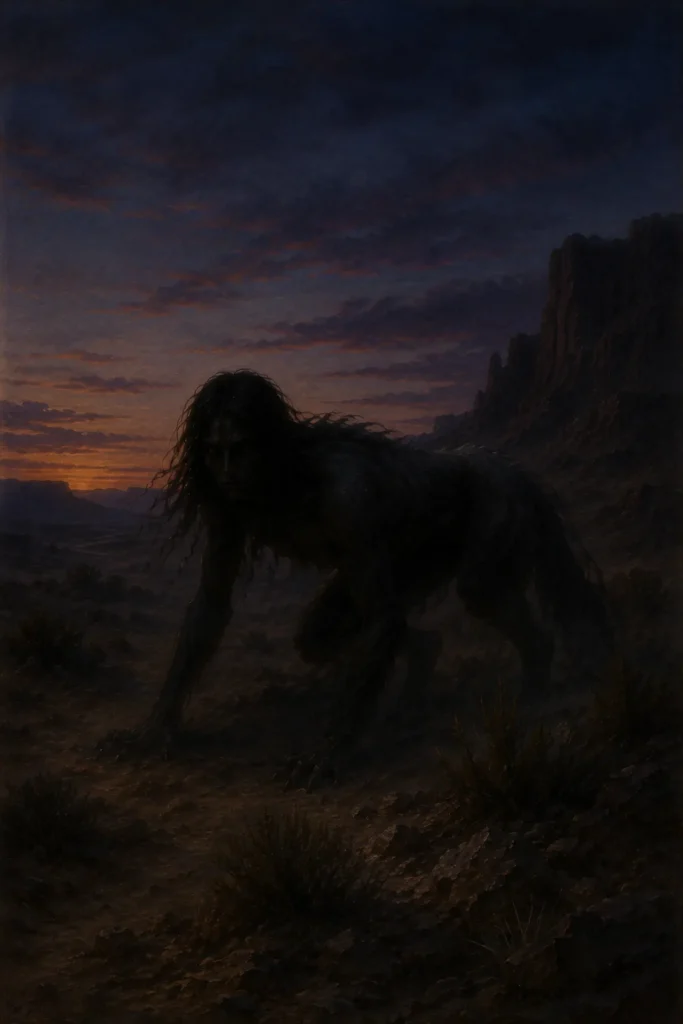
The Yee Naaldlooshii is a malevolent human witch with the ability to take animal form, often coyote, wolf, owl, fox or crow. It is characteristic that he acts wilfully and retains the malicious intent; he is not an unwilling curse-bearer.
Effect
The Yee Naaldlooshii belongs to Navajo witchcraft; Kluckhohn classifies the animal-form shapeshifters within the Witchery Way. The attributed effect is consistently harmful, illness, misfortune and death, and is regarded as an inversion of the healing ceremonies that restore harmony. Requirements and substances of the harmful practice are deliberately omitted here.
Profile: Yee Naaldlooshii
The key aspects of the skin-walker at a glance.
A type within the witch category of the Diné, native exclusively to this tradition; ethnographically documented from the 1920s onward.
The community: the attributed harmful effect strikes the health, happiness and life of others.
A human in animal form, often coyote, wolf, owl, fox or crow; acting wilfully, with the malicious intent preserved.
Illness, misfortune and death through witchcraft; in Diné thought, the inversion of the healing ceremonies.
The greatest restraint in speaking about it; out of respect, defensive techniques are not presented here as a recipe.
Not a Chindi: the spirit of the dead must be clearly distinguished from the living witch; werewolf and nagual likewise follow different rules.
A witch type of the Diné tradition
Navajo yee naaldlooshii is composed of yee, by means of it, and naaldlooshii, one that goes on all fours, literally something like ‘with it he goes on all fours’, a reference to the animal-like locomotion. The Yee Naaldlooshii is a type within the witch category of the Diné and is native exclusively to this tradition; the complex was documented through Kluckhohn’s fieldwork from the 1920s onward.
Traditional Diné speak of it with the greatest restraint: out of concern that talking about it attracts attention and danger, because of its connection to death and harm to the community, and because of the gravity of any accusation of witchcraft. This restraint is itself part of the subject and is respected here.
Pop culture, appropriation and classification
Tradition and pop culture must be clearly distinguished: modern skinwalker pop culture surrounding the Skinwalker Ranch, TV formats and internet narratives merges originally separate material, turns the being into an interchangeable monster antagonist and detaches it from its context; indigenous voices consider this cultural appropriation.
From a religious-studies perspective, the Yee Naaldlooshii is ethnographically a witchcraft complex with a social function. Important clarifications: reducing it to a monster or UFO being is misleading. The silence of the Diné is primarily a matter of cultural boundary-setting and self-protection, not proof of anything supernatural. And today’s pop culture is far removed from the tradition.
Why the Diné remain silent
Traditional Diné speak of the Yee Naaldlooshii with the greatest restraint, out of concern that talking about it attracts attention and danger, because of its connection to death and harm to the community, and because of the gravity of any accusation of witchcraft. Out of respect, no defensive techniques are presented here as a recipe; anyone wishing to engage with the tradition is best served by consulting the published ethnography.
Werewolf, nagual and the crucial differences
Shapeshifter motifs exist worldwide, yet the differences are crucial: the European werewolf is often a curse or an unwilling fate, the Mesoamerican nagual has its own framework, whereas the Yee Naaldlooshii is a wilful, deeply reprehensible choice within the Diné worldview. Within the culture, it is clearly distinguished from the spirit of the dead, the Chindi.
Frequently asked questions about the Yee Naaldlooshii
What is a Yee Naaldlooshii?
A malevolent skin-walker of the Diné, a human witch who takes animal form, often coyote, wolf, owl, fox or crow.
Is it the same as the Chindi?
No, the Chindi is a spirit of the dead; the Yee Naaldlooshii is a living witch.
Is skinwalker pop culture authentic?
No, it is far removed from the tradition, merges separate material and detaches the being from its Diné context; indigenous voices consider this cultural appropriation.
Further links
Further reading:
- Chindi – the spirit of the dead of the Diné, clearly distinguished from the witch
- Tahquitz – the soul-stealer of the Cahuilla
- Amulet, Smoke cleansing, Salt – traditional protective means
- Protection Compass – an overview of protective means
Literature (selection)
Further standard works in the bibliography.
As a Navajo skin-walker, the Yee Naaldlooshii has reached pop culture; within Diné tradition itself, it belongs to the context of witchcraft and thus to the things one speaks of only with great restraint, and for good reason.