iWell Guard

Siguanaba and the face that steals the mind

Siguanaba is a spirit of Salvadoran tradition.

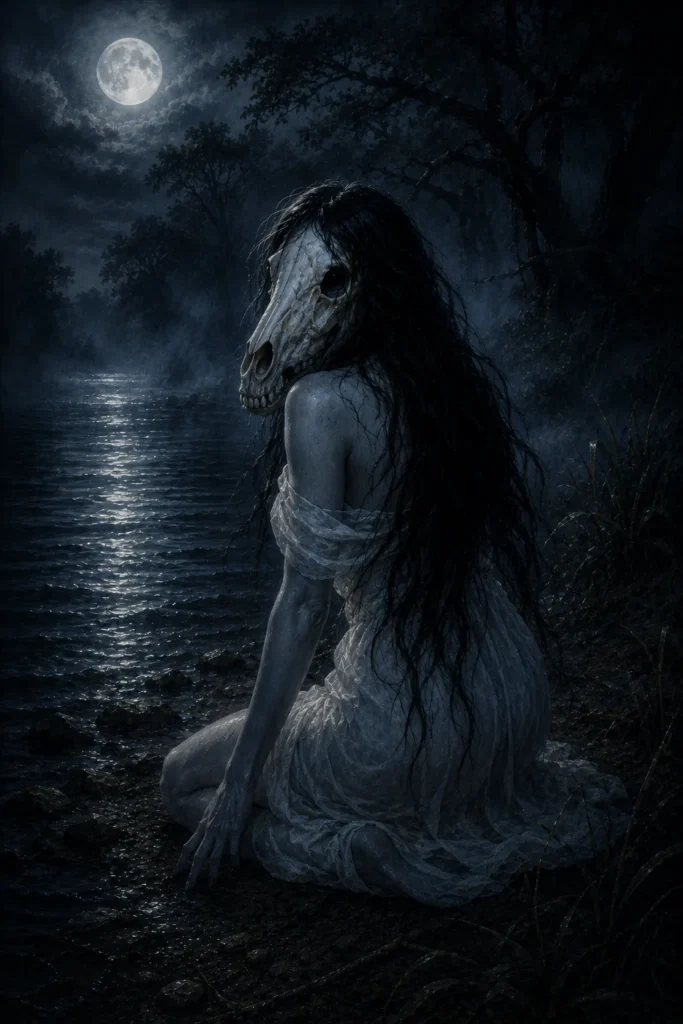
Beautiful by the water, terrifying in the revealed face.

SpiritCentral America

Table of Contents

Siguanaba, spirit of Central American tradition
Siguanaba

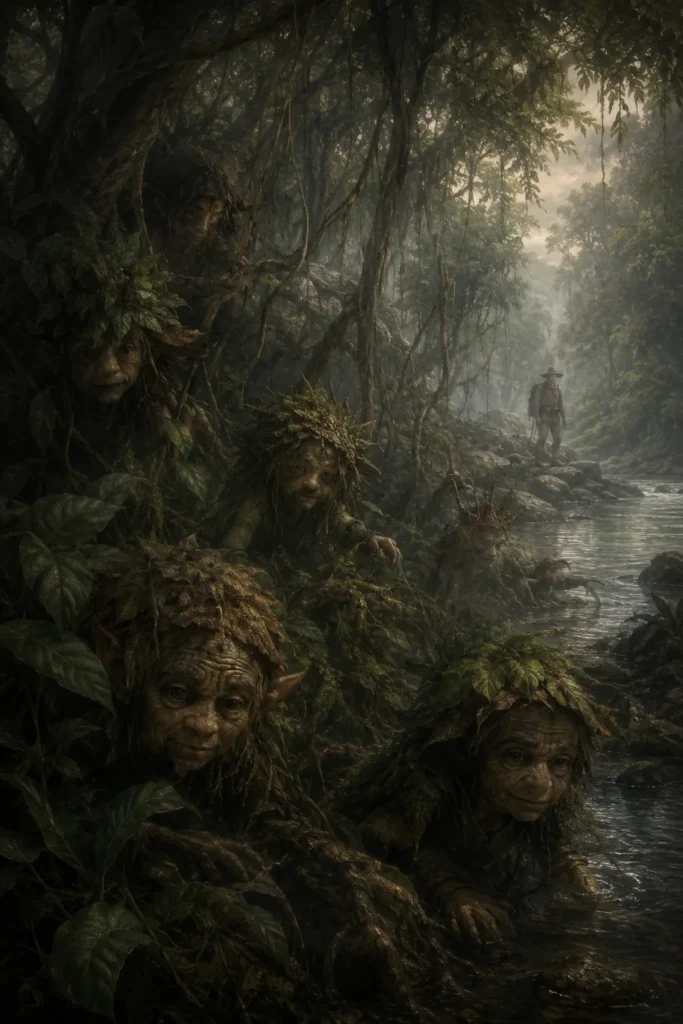
Siguanaba is a seductive spirit woman of Central America who lures men to rivers and ravines at night. By the water she appears as a beautiful, long-haired woman, and only when a man approaches does she reveal her horse’s or death’s-head face, causing her victims to lose their minds or plunge into deadly chasms.

The legend is widespread in El Salvador, Guatemala, Honduras, Nicaragua and Costa Rica, and combines pre-colonial shapeshifter and water-spirit motifs of the Nahua with Christian moral teaching. In the Pipil myth of El Salvador she was originally Sihuehuet, a beautiful woman whom the rain god Tlaloc transformed into this terrible form as punishment for infidelity and neglected motherhood.

Overview: Siguanaba

Type: Seductive spirit woman who punishes unfaithful and nocturnal men
Origin: Central American legend with pre-colonial Nahua roots, reshaped under colonial influence
Texts: oral tradition of El Salvador and Guatemala, no fixed reference work
Period: pre-colonial to the present
Appearance: initially a beautiful long-haired woman by the water, then a horse’s or death’s-head face

Historical Classification

Period of the Texts

A Central American legend with pre-colonial roots, passed down orally from the Spanish colonial period to the present day.

Area of Diffusion

El Salvador, Guatemala, Honduras, Nicaragua and Costa Rica, that is, the entire Central American cultural region.

Sources

Moderate: a canonical scholarly monograph is lacking; the most reliable anchors are etymology and the origin myth.

Name and variants

Nahuat: The name presumably combines cihuatl, woman, with an element meaning ghost or shapeshifter, together meaning spirit woman. She was originally called Sihuehuet, beautiful woman. The spelling Ciguanaba is also common.

Form and effect

Appearance

The double face, the beautiful woman and the revealed horse’s or skull face, is the core of the Siguanaba: beauty as a trap, horror as the image of deadly seduction. Water is a boundary and place of purification, long hair a means of seduction, and a golden gourd bowl a lure.

Effect

She appears beautiful while washing; when the man approaches, she reveals her monstrous face and laughs. Her victims lose their minds, get lost in ravines, fall to their deaths, or suffer mental illness. She is a distinct instrument of punishment against adulterers and nocturnal libertines.

Profile: Siguanaba

The most important aspects of the spirit woman by the water at a glance.

Tradition

Central American legend with roots in the Pipil myth of El Salvador, reshaped under colonial influence by Christian moral teaching.

Object of Influence

Men, especially unfaithful husbands and nocturnal wanderers by rivers and ravines.

Depiction

Initially a beautiful long-haired woman washing herself, then a revealed horse’s or death’s-head face.

Sphere of Influence

Madness, falling into ravines, or mental illness of the victims.

Approach

Biting on a metal cross, medal or machete, along with making the sign of the cross and prayer.

Distinctions

The Siguanaba is distinguished from the weeping La Llorona by her revealed animal face, and from the tree-bound Xtabay by her attachment to water.

From Sihuehuet to the punishing shapeshifter

The name Siguanaba is Nahuat and presumably combines cihuatl, woman, with an element meaning ghost or shapeshifter, together meaning spirit woman. In the Pipil myth of El Salvador, the figure originally called Sihuehuet, beautiful woman, uses magic to trick her way into marriage with a prince, betrays him, and neglects their son Cipitío.

As punishment, the rain god Tlaloc transforms her into a wandering being with a terrible face. In this origin, pre-colonial shapeshifter and water-spirit motifs of the Nahua merge with Christian moral teaching into a typically colonially reshaped tale of punishment.

National icon alongside Cipitío and Cadejo

The Siguanaba is a national icon of Salvadoran folklore, often named as a trio with El Cipitío and El Cadejo, and present in school curricula, tourism, literature, film and the Día de los Muertos culture of Central America.

From the perspective of religious studies, the Siguanaba is a seductive death woman and an example of colonial syncretism, in which the Nahua shapeshifting spirit meets Christian moral teaching. She serves a social control function, warning men against infidelity and nocturnal wandering.

Machete, cross and holy water

Well attested is biting on a metal cross or a blessed medal, as well as biting on the machete, that is, taking iron between the teeth. Also used are making the sign of the cross and prayer, a worn amulet as a protective sign, and blessed holy water. Other folk remedies include a mirror, mustard seeds and ritual invocations to drive her away.

Lamia, Rusalka and the Maya seductress

The Siguanaba corresponds to the Greek Lamia, the beautiful seductress who kills men, and the Slavic Rusalka, the water spirit who lures men into the water. Her closest regional relative is the Xtabay of the Maya, the seductive death woman at the tree, and the Venezuelan La Sayona also belongs to this circle of punishing female spirits.

Frequently asked questions about the Siguanaba

How does one escape her?

By biting on a cross, medal or machete and making the sign of the cross.

Whom does she haunt?

Above all unfaithful men and nocturnal wanderers.

Horse or skull?

Both variants are recorded in tradition; the revealed face is always horrifying.

Further links

Recommended internal links:

Literature (selection)

A selection of key sources and studies:
  • Cabrera, C. Adán: Salvadoran Mythology. La Siguanaba. San Salvador 2020.
  • Regionale Legendensammlungen El Salvadors und Guatemalas, orally transmitted.

Further standard works in the bibliography.

As Ciguanaba or Siguanaba, she remains above all a seductive death woman: beautiful by the water, terrible in her revealed face, and a warning to every unfaithful man who dares venture to rivers and ravines at night.

Classification & Protection

IVLEVEL
The Protection Compass assigns this being to influence level IV, Severe influence.

Against its influence, cross-cultural tradition names these protective means:

Compare in the Protection Compass →

Recommended protective means

iWell Guard

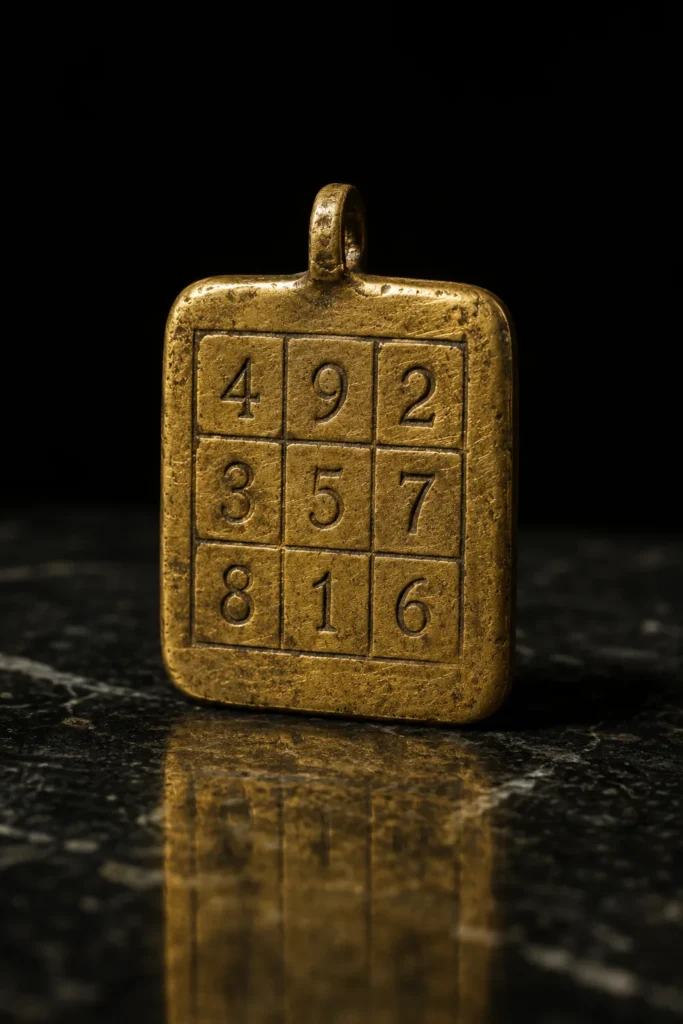
The simplest protective means in this collection: 41 layers of fine gold 999, platinum, silver and silicon, manufactured in Ruhla, Thuringia. It requires no activation, is bound to no person, and is effective within a radius of around 50 meters, even without being worn.

All protective means at a glance →