Menshen: the door gods and their protective images on the front door
By Ralf Ittermann · last reviewed on
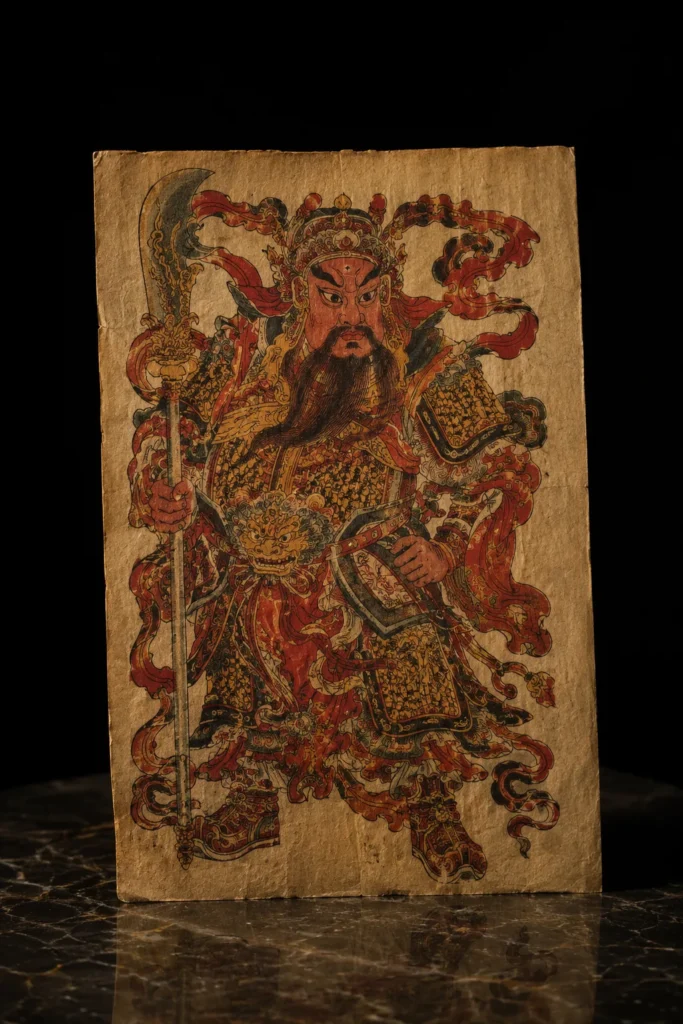
Menshen are the door gods of Chinese folk religion. Their protective images are pasted in pairs onto the two leaves of the front door. As guardians of the threshold, they are meant to keep harmful spirits and misfortune away from the house.
Classification
Menshen are the door gods of the folk religion of China. The Chinese word that underlies them means roughly gods of the door.
The Menshen are not a single deity, but a group of protective figures associated with the door. Various figures can take on the role of the door gods.
In practice, the door gods appear above all as images. These images are pasted onto the two leaves of the front door, one figure on each leaf.
The task of the Menshen is the protection of the threshold. As guardians of the door, they are meant to prevent harmful spirits and misfortune from entering the house.
In religious studies, the Menshen are a good example of the protection of the threshold. The door is the boundary between outside and inside, and it is secured by its own protective figures.
This page presents the Menshen as door protection. It describes their origin, their form and their use, and places them within the protective tradition of China.
The door as a protected threshold
The Menshen can only be understood once one knows the meaning of the door. The door is more than a mere passage.
The door is the boundary between the outside and the inside, between the world outside and the protected space of the house. At this boundary it is decided who and what enters the house.
It was precisely at this point that the house was regarded as vulnerable. Where something can enter, misfortune can enter too. The threshold is therefore a place that requires particular protection.
This idea is not limited to China. Many cultures know their own protection of the door and the threshold, through signs, through objects or through protective figures.
In China this protection of the threshold has taken on an especially rich form. Besides the Menshen, it also includes talismans on the door, protective verses and further signs.
The Menshen are the most important form of this door protection. As gods of the door, they exist specifically to watch over and secure the vulnerable threshold of the house.
Origin of the door gods
The idea of protective figures at the door is ancient in China. From early on, Chinese tradition knew figures that were associated with the door.
An early tradition tells of two figures who guarded harmful spirits and rendered them harmless. Their images or names were placed on the door in order to protect the house.
Over time, further figures were added as door gods. Often historical or legendary persons known for their bravery became door gods.
A well-known tradition connects a pair of door gods with two brave generals. They are said to have served a ruler as guardians, and their images on the door were meant to secure the ruler’s sleep.
Such traditions reveal a basic pattern. Whoever was regarded in life as a brave guardian could become a door god after death and watch over the house at the threshold.
The Menshen thus grew from several roots. Old ideas of spirit guardians and the veneration of brave historical figures merged into the conception of the door gods.
The form of the door god images
The Menshen appear above all as images. These door god images have a distinctive form.
The door gods are usually depicted as powerful warriors. They wear armour and weapons and stand in a defensive, commanding posture.
Their appearance is impressive and at times fearsome. With a stern expression, strong features and sometimes a long beard, they are meant to instil fear in harmful spirits.
The images are colourful and richly designed. Strong colours, above all red, and a lavish ornamentation of the robes and armour characterise the depictions.
The door gods always appear as a pair. One figure is pasted onto each of the two door leaves, and the two figures are often turned towards each other or designed as mirror images.
This form of the door god images, the defensive pair of warriors in strong colours, developed over a long period. It combines the deterrent effect of the defensive figure with the festive ornamentation of the front door.
The door gods through the year
The Menshen are closely connected with the Chinese cycle of the year, especially with the New Year festival. Putting up the door god images is part of the customs of the turn of the year.
For the Chinese New Year, the house is decorated and prepared for the new year. This decoration includes the images of the door gods, which are pasted onto the front door.
The images are often renewed at the turn of the year. The old images of the past year are replaced by fresh ones, so that the new year begins under fresh protection.
Besides the door god images, other protective and lucky signs are also placed on the door at New Year. These include written banners with lucky verses and further signs.
The Menshen thus belong to the customs that accompany the turn of the year. Putting up the images is a recurring, festive act.
This connection with the cycle of the year gives the Menshen a firm place in daily life. They are not only protective images, but also a familiar part of the festive culture of China.
The door gods as guardians
The task of the Menshen is that of a guardian. They stand at the door like guards at a gate and control who and what enters.
The protective effect of the door gods rests on their defensive appearance. As powerful, armed warriors, they are meant to instil fear in harmful spirits and keep them away from the door.
The Menshen thus belong to the warding means of protection. They act through their impressive, at times fearsome form, which deters evil.
At the same time, the door gods are figures of veneration. They are gods of folk religion, to whom people turn in trust of their protection.
In this dual nature, the Menshen resemble the gate guardians and threshold guardians of other cultures. In many places the entrance is protected by defensive guardian figures.
The Menshen are the Chinese form of this threshold guardian. As gods of the door, they combine the deterrent watch with the veneration owed to a protective deity.
Door gods and other means of door protection
The Menshen are not the only means of protection of the Chinese front door. The door was secured by a range of signs and objects.
Among these further means of door protection is the Bagua mirror, which is often placed above the door. The page on the Bagua mirror describes this means of protection in more detail.
Likewise, written banners with lucky verses belong to the means of door protection. They are placed on both sides of the door and combine protection with the wish for a good year.
The Fu talisman, the Daoist paper talisman, is also placed on the door. It belongs to the written means of protection of the threshold.
Often several of these means are used together. A front door may bear at the same time the door god images on the leaves, a mirror above and written banners at the sides.
The Menshen are the most important form among these means. While mirror and talisman are above all signs and objects, the door gods are protective figures to whom the watch of the threshold is specifically entrusted.
The protection of the threshold across cultures
The Menshen can be considered within the wider context of threshold protection. The protection of the door is a widespread idea that is found in many cultures.
Numerous cultures know their own protection of the door and the threshold. They use signs, objects or protective figures for this, placed at the entrance.
Often it is defensive guardian figures that secure the entrance. At temples, palaces and houses, powerful guardian figures stand in many places on both sides of the gate.
The Menshen belong to this group of threshold guardians. They secure the front door, just as elsewhere guardian figures or protective signs secure the entrance.
What is distinctive about the Menshen is their form. They are not sculptural figures, but printed or painted images that are pasted in pairs onto the door leaves.
The Menshen are thus the Chinese form of threshold protection. They combine the widespread idea of the guardian of the threshold with China’s own form of the paired door god image.
Reception today
The Menshen are to this day a living part of Chinese culture. Especially at the New Year festival, the door god images can be seen on many front doors.
The images are today printed and sold in great numbers. At the turn of the year they are acquired and pasted onto the front doors, in China and in Chinese communities throughout the world.
The door god images are at the same time an object of Chinese folk art. The traditional woodcut by which the images were produced is a distinct and esteemed art form.
For religious studies, the Menshen are an instructive example. They show how the protection of the threshold, the veneration of protective figures and the festive culture of the turn of the year are connected with one another.
A factual account names the Menshen as what they are, protective figures of Chinese folk religion whose images watch over the front door and are meant to keep misfortune away from the threshold.
The Menshen are thus a striking example of a Chinese door protection. In them are joined the veneration of brave guardian figures, the protection of the vulnerable threshold and the festive ornamentation of the front door at the turn of the year.
Literature (selection)
Related key terms: Menshen door gods protective images front door threshold protection New Year festival guardian China door god image.
iWell Guard and protective traditions
iWell Guard stands in the cultural-historical line of portable protective objects to which the Menshen also belong. A modern companion for people who live with protective symbols: made in Germany, 41 layers of solid gold, platinum and silver, with a 30-day right of return.
Personal experiences may vary. Not a medical device. No healing promise.