iWell Guard

El Sombrerón, the braid-plaiter under the giant hat

El Sombrerón is a spirit of Guatemalan tradition.

The hat conceals him, the serenade slowly wears her out.

SpiritCentral America

Table of Contents

El Sombrerón, spirit of Central American tradition
El Sombrerón

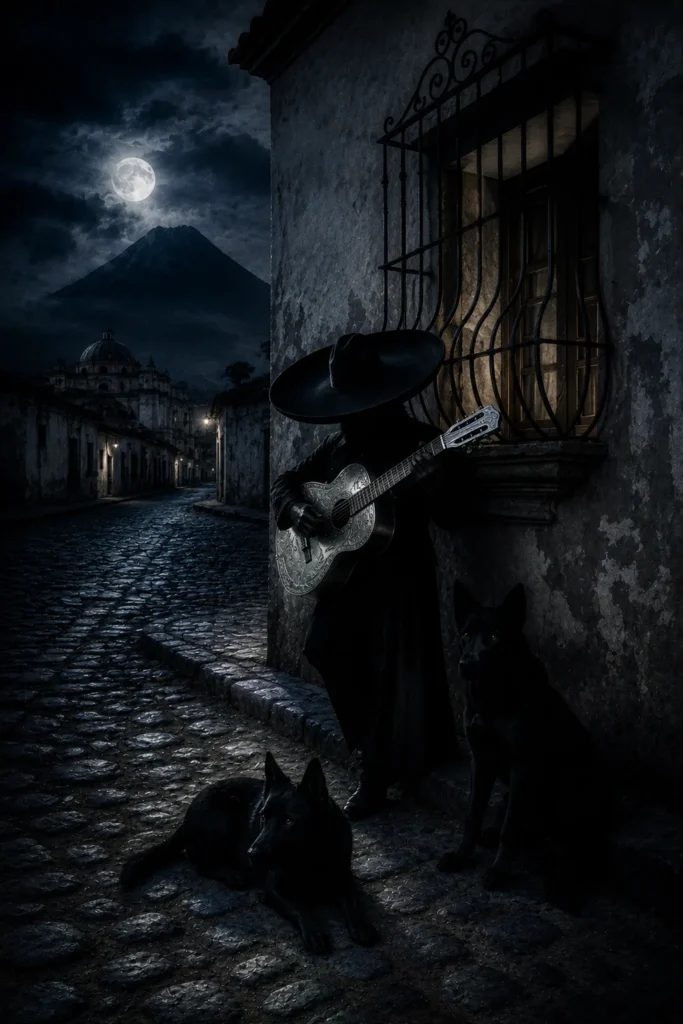
El Sombrerón, the man with the big hat, is a Guatemalan bogeyman figure who woos young women with long, dark hair at night. As a small man dressed in black with an oversized hat, he serenades them with guitar songs beneath their window and plaits their braids while they sleep, until they can no longer rest, refuse food and waste away.

The legend is widespread in the Guatemalan highlands, especially around Antigua, and survives as a syncretic tradition combining Maya-Quiché beliefs with Spanish colonial elements. Miguel Ángel Asturias set the material down in literary form in 1930 in his Leyendas de Guatemala, making it a fixed part of Guatemalan national folklore.

At a glance: El Sombrerón

Type: Nocturnal wooing and bogeyman spirit that pursues women with long hair
Origin: Guatemalan folk belief, syncretic from Maya-Quiché and Spanish colonial motifs
Texts: fixed in literary form by Miguel Ángel Asturias, Leyendas de Guatemala, 1930
Period: colonial era to the present, alive both orally and in literature
Appearance: small man dressed entirely in black with an oversized black hat, often with a guitar and two black dogs

Area of origin and sources

Period of the Texts

Guatemalan folk belief, set down in literary form in 1930 by Miguel Ángel Asturias: the oral tradition reaches back further and remains alive today.

Area of Diffusion

Guatemala, particularly Antigua and the highlands, with offshoots across large parts of Central America.

Sources

Good, thanks in part to its literary fixation by Asturias and the collection by Celso A. Lara Figueroa.

Name and variants

Spanish: The name means the man with the big hat, from sombrero. Other names in Guatemala include Tzipitío, along with its closeness to the Duende, the Iberian goblin.

Appearance and behaviour

Appearance

El Sombrerón appears as a small man, dressed entirely in black, with an oversized black hat that hides his face, along with loud boots, a belt and shiny jewellery, often a guitar and two black dogs. The huge hat stands for anonymity and eeriness, the guitar for seduction through music, and the braids for entanglement, binding and control.

Effect

El Sombrerón brings nocturnal serenades under the window and bewitches the object of his desire: sleeplessness, refusal of food, obsession and wasting away, in some versions also madness or death. At night he can be heard by his clattering boots and guitar, and his compulsion to be recognised also drives him to braid the manes and tails of horses and, if necessary, dogs.

Profile: El Sombrerón

The most important aspects of the man with the large hat at a glance.

Cultural Context

Guatemalan frightening figure, syncretistically formed from Maya-Quiché beliefs and the Iberian duende tradition, canonised in literature by Miguel Ángel Asturias.

Relates To

Young women with long, dark hair and large eyes, whom he courts at night.

Depiction

Small man dressed entirely in black with an oversized black hat, a guitar and two black dogs.

Function

Seduction through serenades and braiding hair, driving the victim into sleeplessness and wasting away.

Forms of Warding

Cutting the hair with the church’s blessing, along with holy water, prayer and blessing.

Related

The weeping La Llorona as a gender-inverted parallel, along with the Spanish Santa Compaña and the Catalan Pesanta as further nocturnal figures named in the dossier.

The legend of Susana and the compulsion to braid

The name El Sombrerón means the man with the large hat, from sombrero. In Guatemala the figure also bears the name Tzipitío and stands in close relation to the duende, the Iberian house spirit and goblin. The legend combines Maya-Quiché beliefs with Spanish colonial elements into a syncretistic tradition.

Its best-known narrative core is the legend of Susana: a girl with long hair and large eyes is courted at night by El Sombrerón, who braids her plaits so tightly in her sleep that she can no longer rest, refuses food and wastes away, until her parents cut off her hair and bring it to the church for blessing. Miguel Ángel Asturias fixed this material in literature in 1930 in his Leyendas de Guatemala.

National folklore between school and Halloween

El Sombrerón is a central figure of Guatemalan national folklore, canonised in literature by Miguel Ángel Asturias and present in school, popular culture, children’s books and Halloween culture. As a Guatemalan legend, his fame extends far beyond the highlands into the wider Central American region.

From a religious-studies perspective, El Sombrerón is a textbook case of colonial syncretism: indigenous Maya-Quiché night and spirit beliefs merge with the Iberian duende and Catholic defensive practice through blessing and prayer. His social function is the warning and control of young women with regard to going out at night, hairstyle and sexuality, typical of frightening figures with an educational undertone.

The haircut and the church's blessing

Well documented is the cutting of the hair as the core rescue in the Susana legend: short hair makes the woman less attractive to the figure, the cut hair is brought to the church, sprinkled with holy water and entrusted to prayer. Alongside this are religious intervention through prayer and blessing, a worn amulet as a protective sign, and the light of a protective candle, to which the hair is entrusted in the church. A frequently mentioned onion remedy could not be confirmed as well documented in the research; only the haircut with the church’s blessing is attested.

The duende and the closeness to La Llorona

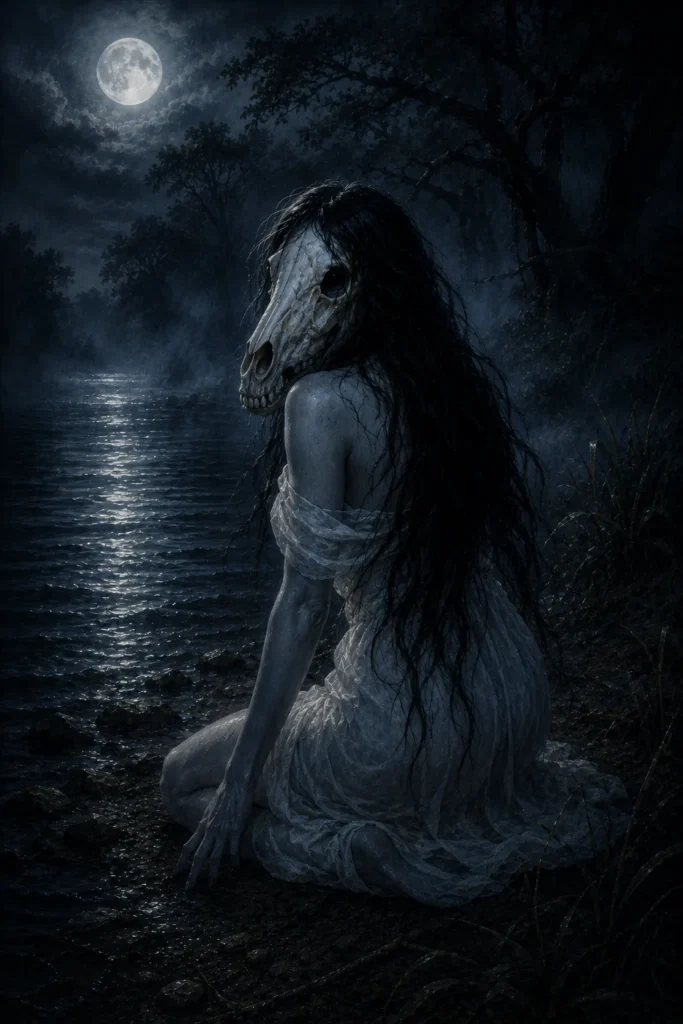
The closest relative is the duende, the Iberian-Latin American house spirit and goblin who pursues women; El Sombrerón is often classified as a duende type himself. In terms of motif, as a spirit that drives the woman into obsession, there is a gender-inverted closeness to the weeping and seductive female-spirit family around La Llorona.

Frequently asked questions about El Sombrerón

Whom does El Sombrerón seek out?

Mainly young women with long, dark hair and large eyes.

How is the victim saved?

By cutting the hair and receiving the church’s blessing with holy water and prayer.

Is he the same as a duende?

He is classified as a duende type; Tzipitío is an alternative name.

Further links

Recommended internal links:

Literature (selection)

A selection of key sources and studies:
  • Asturias, Miguel Ángel: Leyendas de Guatemala. Madrid 1930.
  • Lara Figueroa, Celso A.: Leyendas y casos de la tradición oral de la ciudad de Guatemala. Guatemala 1984.

Further standard works in the bibliography.

As a Guatemalan legend, El Sombrerón remains above all the man with the large hat: a figure who courts with serenades and hair-braiding, and whose victims only find rest again through a haircut and the church’s blessing.

Classification & Protection

IIILEVEL
The Protection Compass assigns this being to influence level III, Burdensome influence.

Against its influence, cross-cultural tradition names these protective means:

Compare in the Protection Compass →

Recommended protective means

iWell Guard

The simplest protective means in this collection: 41 layers of fine gold 999, platinum, silver and silicon, manufactured in Ruhla, Thuringia. It requires no activation, is bound to no person, and is effective within a radius of around 50 meters, even without being worn.

All protective means at a glance →