Soucouyant, the blood-sucking fire witch without skin
By Ralf Ittermann · last reviewed on
Soucouyant is a demoness of Caribbean tradition.
A skinless fire witch who sucks blood at night as a fireball.
Soucouyant is the fiery blood-sucker of Caribbean folklore. By day she lives reclusively as an old woman, but at night she sheds her skin, stores it in a mortar, and flies out as a fireball to suck the blood of those asleep. As a Caribbean vampire, she leaves bruises on her victims’ arms, necks and legs.
If a victim loses too much blood, they die or, according to the logic of contagion in the tradition, become a Soucouyant themselves. Linguistically, the name is rooted in French Creole; related are Soukougnan from the francophone Antilles and Loogaroo, which is connected to the French loup-garou.
Type: Skinless fire witch and blood-sucker
Origin: Diaspora syncretism of Caribbean slavery history
Texts: Attestations from the 19th century, academically studied
Period: 19th century to the present
Appearance: an old woman by day, a fiery ball without skin at night

Context of the tradition
Period of the Texts
Attestations go back to the 19th century and have been academically studied, among others by Giselle Liza Anatol.
Area of Diffusion
Trinidad and Tobago, along with the Lesser Antilles and the francophone Antilles, form the core area of the tradition.
Sources
Solid: the source material ranges from early collections such as those by Elsie Clews Parsons to academic studies by Anatol and Besson.
Name and variants
French Creole: The name Soucouyant comes from French Creole. Related forms are Soukougnan on the francophone Antilles and Loogaroo, which is related to the French loup-garou.
Appearance and behaviour
Appearance
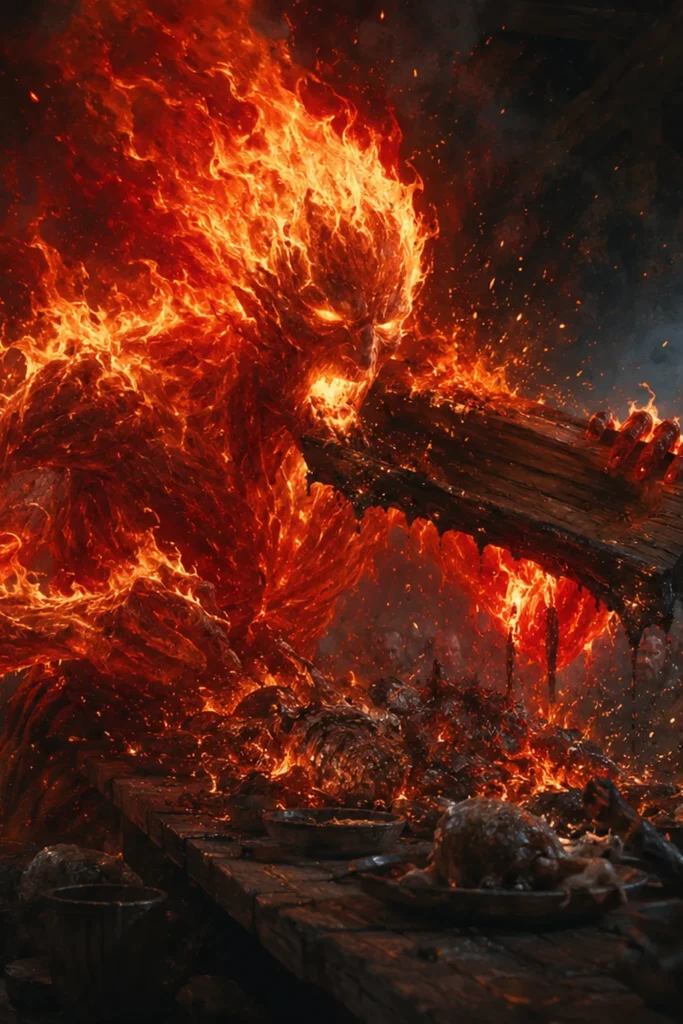
By day, the Soucouyant lives reclusively as an unremarkable old woman. At night she sheds her skin and keeps it in a mortar; her night form is a glowing, skinless fireball that flies silently through the darkness. The shed skin is the central motif: her vulnerability lies precisely in the separation of skin and fiery body.
Effect
At night, the Soucouyant slips through cracks, keyholes and the smallest openings into houses and sucks the blood from the arms, necks and legs of sleeping people, leaving bruises by morning. In tradition, these marks serve as a folk explanation for unexplained marks. If a victim loses too much blood, they die or become a Soucouyant themselves.
Profile: Soucouyant
The most important aspects of the fire witch at a glance.
Diaspora syncretism of Caribbean slavery history, in which European vampire and witch myths merge with West African beliefs.
Sleeping people, whose blood she sucks at night as a fireball, leaving bruises.
By day a reclusive old woman, at night a fiery ball without skin; the shed skin lies ready in the mortar.
Blood theft by night with possible contagion: whoever loses too much blood dies or becomes a Soucouyant themselves.
Scatter rice or sand in front of the house, place salt at the entrances and in the hidden skin, to prevent her return.
A syncretism figure of the slavery diaspora
The Soucouyant is a syncretism figure of the slavery diaspora, in which European vampire and witch myths merge with West African beliefs. There is a strong connection to the Yoruba Aje, the blood-sucking witch who transforms at night, and to the Bahamian Hag. The name comes from French Creole; related forms are Soukougnan on the francophone Antilles and Loogaroo, which is related to the French loup-garou.
In tradition, the Soucouyant trades blood with Bazil, the demon in the silk cotton tree, for evil powers. The fireball is her night form, while the old, socially isolated woman is the figure of suspicion bearing the witch stigma: whoever was regarded as an outsider easily fell under suspicion of being a Soucouyant.
Stage, literature and interpretation
The Soucouyant is a fixed figure of Caribbean storytelling culture and stage tradition in Trinidad, Grenada and Barbados. She appears in literature in the work of Nalo Hopkinson, and academically in that of Giselle Liza Anatol.
From a religious-studies perspective, the Soucouyant is a classic diaspora syncretism figure combining African witch beliefs and European vampire beliefs. She embodies colonial fear and social control, in which the isolated old woman becomes both scapegoat and witch.
Rice, salt and the hidden skin
Well attested is the counting compulsion: if rice or sand is scattered around the house or at a crossroads, the Soucouyant must pick up every single grain and is thus delayed until sunrise. Herbs such as mugwort also count among the traditional means against the nocturnal fire witch. Salt at all entrances keeps her away; if the hidden skin is rubbed with coarse salt or filled with it, the Soucouyant can no longer return to her skin and perishes. Holy water is also regarded as a sign used against the fire witch.
Witches and vampiresses compared
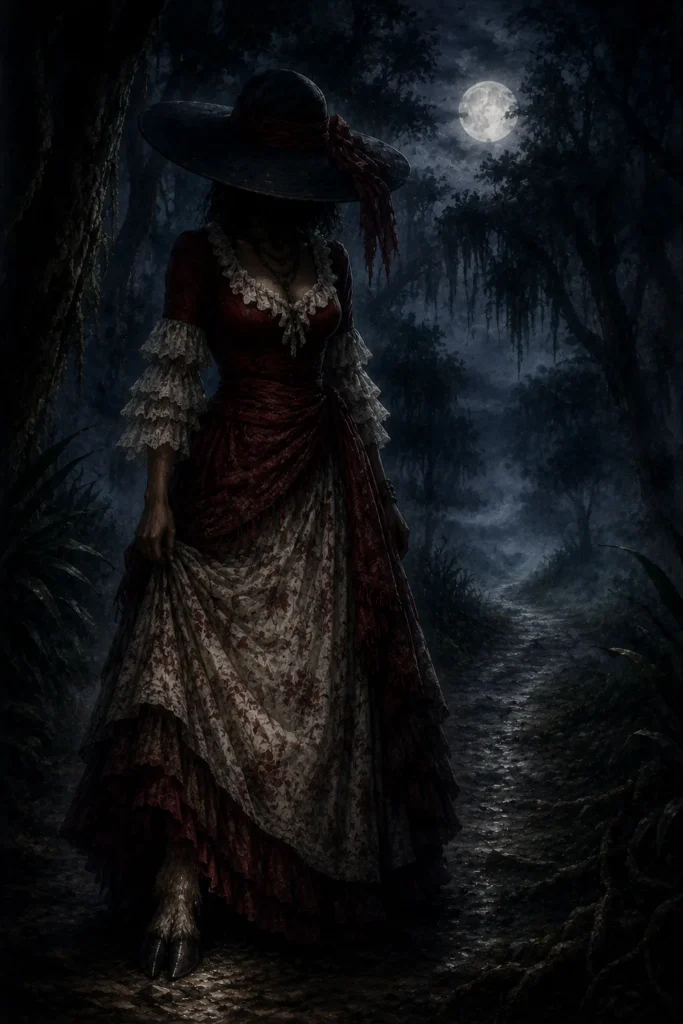
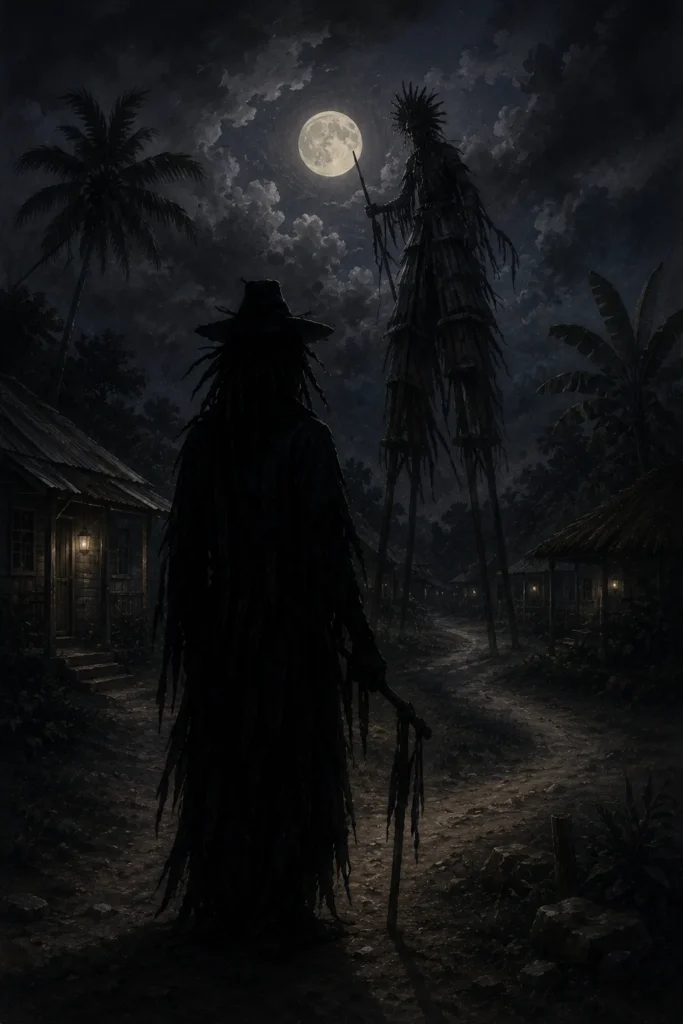
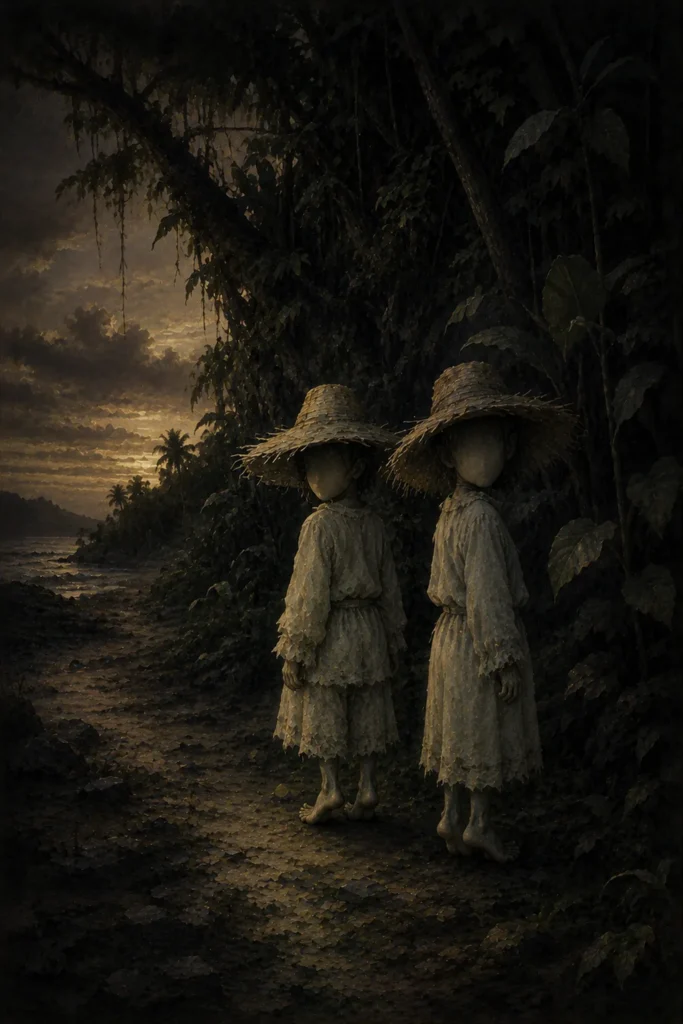
In West Africa, the Soucouyant corresponds to the Ashanti vampire witch Obayifo and the Yoruba Aje, as well as to the forest vampire Sasabonsam. In Europe, she is related to the witch and vampire, and to the Old Hag of sleep paralysis. Within the Caribbean spirit world, she stands alongside the shapeshifter Lagahoo, the faceless Douen and the hoofed La Diablesse, from whom she is clearly distinguished by her fixed blood-theft ritual of shed skin and fireball.
Frequently asked questions about the Soucouyant
Is the Soucouyant always a woman?
Traditionally yes, an old woman; in more recent versions she also appears male or younger.
How can she be recognised?
By the fireball at night, and by the fact that salt on her hidden skin prevents her return.
Why rice and salt?
Rice creates a compulsion to count that delays her until daybreak, and salt makes the shed skin unwearable.
Further links
Further reading:
- Jumbie, Lagahoo – Caribbean spirits for comparison
- Douen, La Diablesse – further figures of the Caribbean night
- Sasabonsam – the West African forest vampire as a model
- Salt, Mugwort, Holy Water – traditional protective means
- Protection Compass – an overview of protective means
Literature (selection)
Further standard works in the bibliography.
As a skinless fire witch and Caribbean vampire, the Soucouyant remains one of the most distinctive figures of the Antilles: a blood-drinker through and through, whose power ends precisely where her shed skin meets salt.