Rolling Calf, the chain spirit of Jamaica's country roads
By Ralf Ittermann · last reviewed on
Rolling Calf is a spirit of Jamaican tradition.
A fire-eyed calf with a rattling chain on lonely roads. The Rolling Calf is known as a chain spirit of Jamaica’s country roads, and the text below places it within that island tradition.
Rolling Calf is a particularly dangerous Jamaican duppy: a spirit in the shape of a fire-eyed calf or bull that drags a rattling chain behind it. As a Jamaican duppy, it is considered the restless spirit of a person who led a sinful life, such as a cheat, a thief or an occultist; a widespread interpretation also sees it as the spirit of a butcher, or a punishment for the mass slaughter of animals.
According to Martha Warren Beckwith, who conducted her fieldwork between 1919 and 1922, Rolling Calves dwell in the roots of kapok trees, in bamboo thickets, in caves and in abandoned houses. At night the being roams lonely roads and crossroads and harasses travellers, its rattling chain announcing it from afar.
Type: Vengeful road spirit in the form of a calf or bull
Origin: Jamaican duppy belief
Texts: ethnographically documented by Martha Warren Beckwith, fieldwork 1919 to 1922
Period: attested early, still alive today
Appearance: monstrous calf or bull with fiery glowing red eyes and a rattling chain

Textual history
Period of the Texts
Attested early and still alive in Jamaican storytelling tradition today: the fundamental ethnographic documentation comes from Martha Warren Beckwith’s fieldwork of 1919 to 1922.
Area of Diffusion
Jamaica, especially the rural roads and crossroads of the island, where the Rolling Calf causes mischief at night.
Sources
Good: Martha Warren Beckwith’s fieldwork and further overview works on Caribbean folklore document the being comprehensively.
Name and variants
Jamaican Creole: Here, rolling means roaming about, not rolling. The name thus describes a calf that restlessly roams the roads, not one that rolls around.
Form and effect
Appearance
The Rolling Calf appears as a monstrous calf or bull with fiery glowing red eyes, dragging a heavy, rattling chain behind it. The fire eyes and the chain are a hell and damnation motif with Christian overtones.
Effect
The Rolling Calf pursues and harasses night-time travellers on lonely roads; its rattling chain announces it from afar. It cannot cross crossroads, which gives its victims a chance to escape: whoever reaches a crossroads before the being catches up is safe.
Profile: Rolling Calf
The key aspects of the fire-eyed road spirit at a glance.
Part of Jamaican duppy belief, the spirit world of deceased people in Caribbean folklore.
Night-time travellers on lonely roads, taken by surprise by a rattling chain and glowing eyes.
Monstrous calf or bull, fiery glowing red eyes, a heavy chain rattling behind it.
Pursuit and harassment of travellers; interpreted as a punitive existence for a sinful life or for the mass slaughter of animals.
Drawing ten crosses in the path, cracking a tarred whip, carrying an open Bible or reaching a crossroads.
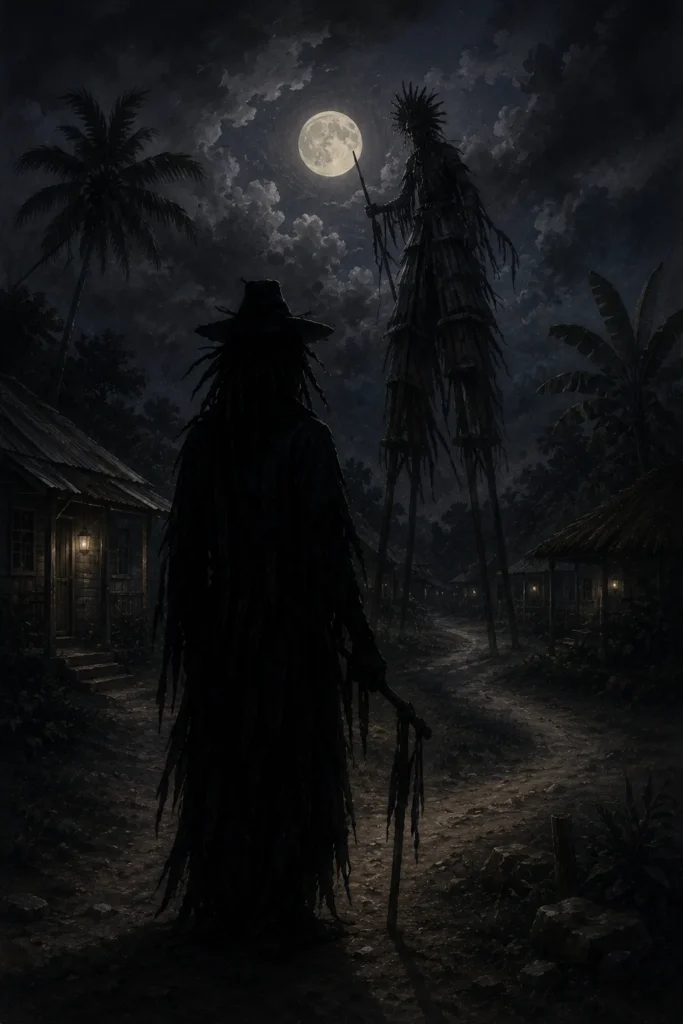
The Jumbie, the Caribbean umbrella term for evil spirits, alongside the European hellhound Black Shuck and the shapeshifter Lagahoo.
The penitent duppy and its rattling chain
The Rolling Calf is the restless spirit of a person who led a sinful life, such as a cheat, a thief or an occultist. A widespread interpretation sees it as the spirit of a butcher, or a punishment for the mass slaughter of animals: whoever incurred blood guilt in life must atone for it in death as a fire-eyed calf. In this name, rolling means roaming about, not rolling.
According to Martha Warren Beckwith, whose fieldwork took place between 1919 and 1922, Rolling Calves dwell in the roots of kapok trees, in bamboo thickets, in caves and in abandoned houses. From there they set out at night to roam the roads and crossroads of the island.
Road fear, the press and classification
The Rolling Calf is a fixed part of Jamaican duppy tales and the press, and to this day shapes the island’s popular fear of roads and nights.
From a religious studies perspective, the Rolling Calf is a diaspora syncretism of West African spirit belief, the duppy, and Christian logic of sin and punishment. It is at once a moral figure of punishment, the evil person or butcher, and a colonial night-fear figure of threshold places such as crossroads and country roads.
Ten crosses and the saving crossroads
Several tricks against the Rolling Calf are well documented in the sources: drawing ten crosses in the road, cracking a tarred whip in the left hand, and carrying an open Bible. The tarred whip stands here for cold iron, which is considered protective, while salt and consecrated signs generally serve as protection against the Duppy. A worn amulet also counts among the traditional means. Safest of all, however, is whoever reaches a crossroads before the being catches up: the Rolling Calf cannot cross it and must abandon the pursuit.
Hellhounds and Penitent Spirits Compared
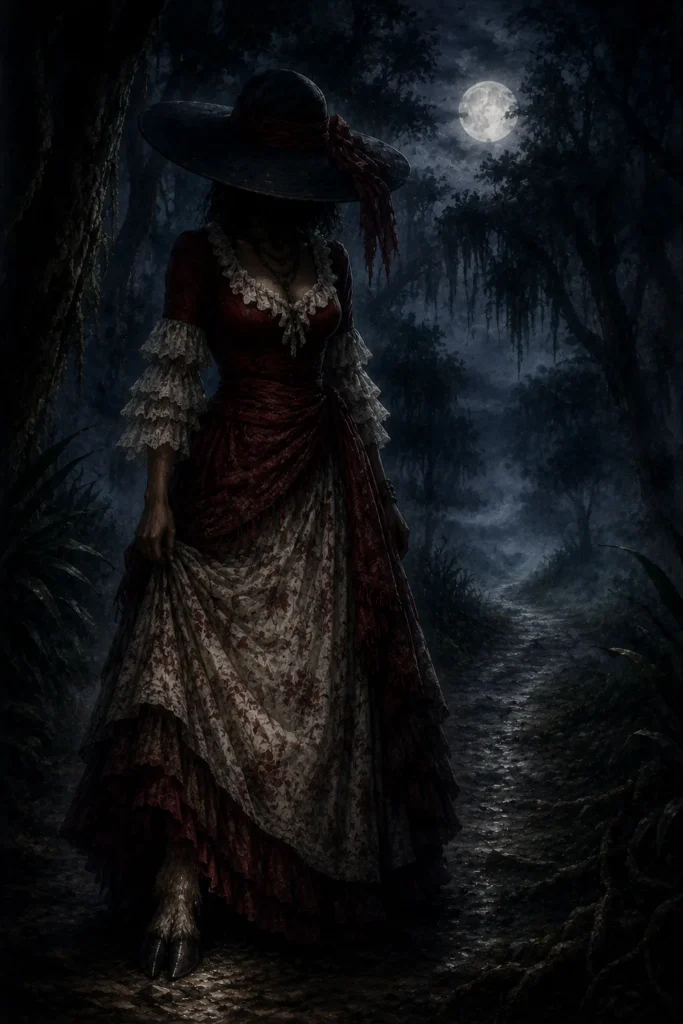
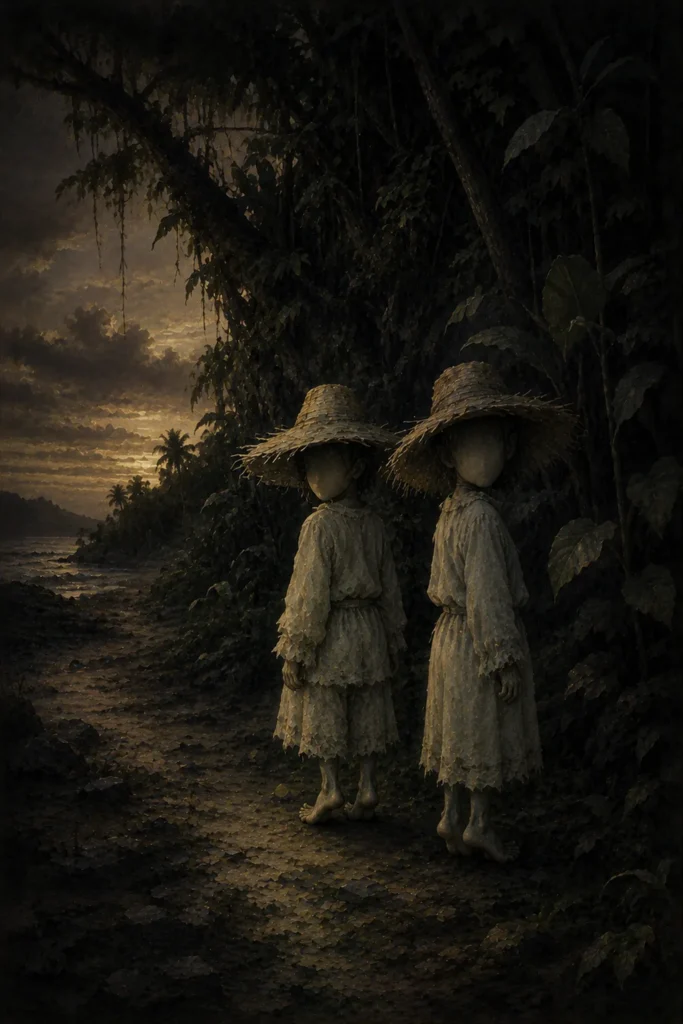
The Rolling Calf belongs to the broader category of the Jamaican Duppy, the island’s class of spirits, and corresponds to European hellhounds and black spectral dogs such as the Black Shuck. Motivically close to it are wandering, chain-rattling penitent spirits. Within the Caribbean spirit world, it takes its place alongside threshold and road figures such as the faceless Douen and the hoofed La Diablesse, who lure their victims off the road by other means.
Frequently Asked Questions About the Rolling Calf
What is a Rolling Calf?
A particularly dangerous Duppy in the shape of a calf or bull with fiery red glowing eyes and a rattling chain.
How can it be stopped?
By cracking a tarred whip, drawing ten crosses in the road, carrying an open Bible, and by reaching a crossroads.
Why is it associated with a butcher?
In folk belief, the Rolling Calf is considered a punishment for the mass slaughter of animals.
Further links
Further reading:
- Jumbie – the Caribbean umbrella term for evil spirits
- Lagahoo, Black Shuck – related shapeshifters and hellhounds
- Douen, La Diablesse – other Caribbean road and threshold spirits
- Salt, Amulet, Iron – traditional protective means
- Protection Compass – protective means at a glance
Literature (selection)
Further standard works in the bibliography.
As a Jamaican Duppy and fire-eyed calf of the country roads, the Rolling Calf remains one of the island’s best-known figures of dread: a road spirit whose rattling chain warns travellers before the saving crossroads is reached.