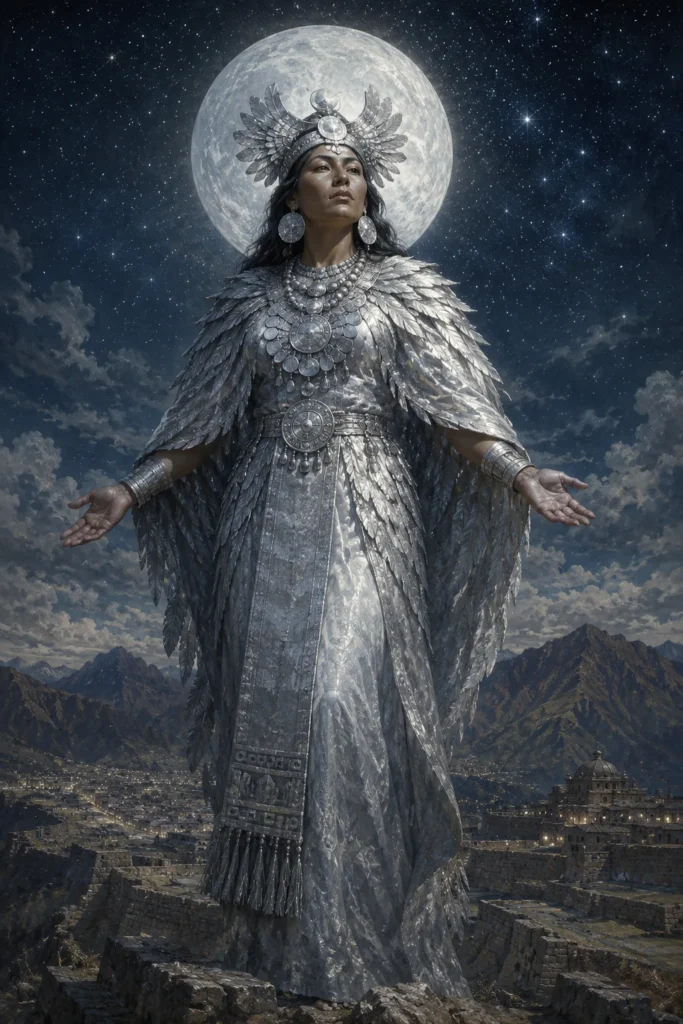
Salkantay: the untamed one of the Cordillera Vilcabamba
By Ralf Ittermann · last reviewed on
Apu Salkantay is a mountain god of the Quechua tradition.
The wild guardian and giver of water of the Cusco region.
Apu Salkantay is a mountain roughly 6271 metres high in the Cordillera Vilcabamba near Machu Picchu and one of the most significant Apus of the Cusco region. His name means the wild one or the untamed one; he is regarded as guardian of the region and as a giver of water.
His veneration reaches from Inca times to the present. In modern Andean rituals, Salkantay is often named among the most important Apus, according to local tradition frequently ranking behind Ausangate, and is honoured with despacho ceremonies.
Type: protective Apu, weather and water regulator
Origin: Cordillera Vilcabamba, Cusco region
Texts: well documented ethnographically, hardly any summit finds
Period: Inca times to today, living veneration
Appearance: striking glaciated double peak

Context of tradition
Period of the Texts
The veneration of Salkantay is rooted in Inca times and remains alive to this day; it belongs among the actively maintained mountain cults of the Andes.
Area of Diffusion
The Cordillera Vilcabamba in the Cusco region: the mountain rises near Machu Picchu above the valleys of the surrounding communities.
Sources
Well documented ethnographically; concrete Inca-era summit finds, however, are largely lacking, which splits the source material into two.
Name and variants
Quechua: sallqa, wild, untamed or shy; Salkantay is therefore interpreted as the wild one. The popular connection to an avalanche element is secondary and uncertain.
Form and effect
Appearance
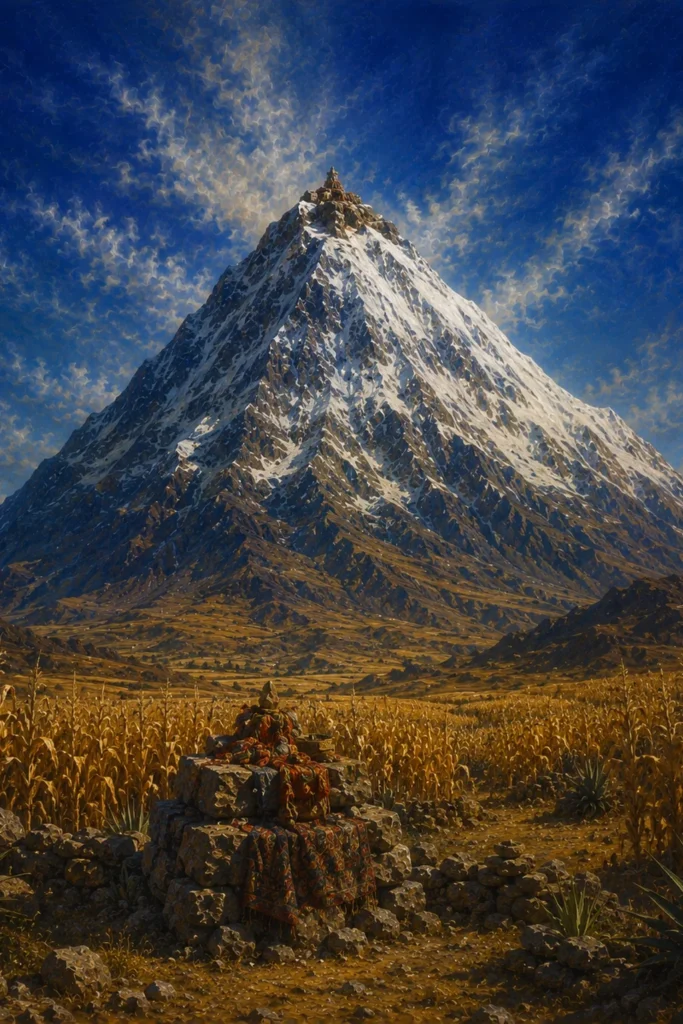
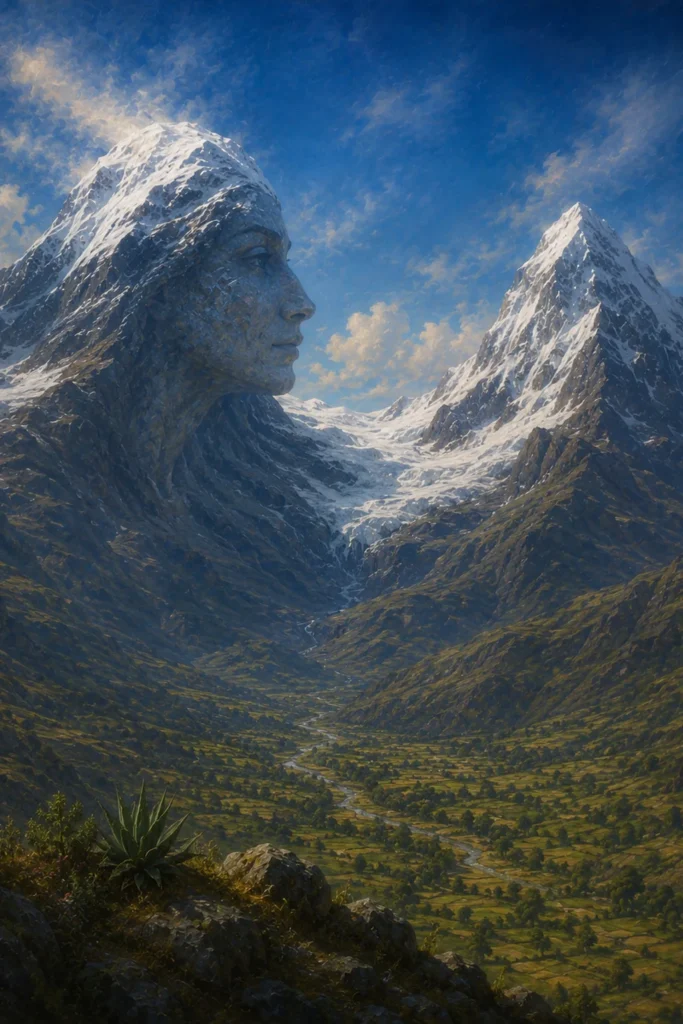
Salkantay is a striking, glaciated double peak. He is regarded as guardian of the region and, in modern Andean spirituality, is read as a male, wild counterpart to gentler Apus.
Effect
As an Apu, Salkantay is the protective lord as well as weather and water regulator of the surrounding communities. Fields and pastures depend on his glacier; the farmers’ cult is directed towards him accordingly.
Profile: Apu Salkantay
The key facts about the wild Apu of the Cusco region.
One of the most significant Apus of the Cusco region; in modern Andean rituals often named right at the front, according to local tradition frequently behind Ausangate.
The farmers and communities of the Cusco region, whose weather and water the mountain is understood, in Andean belief, to govern.
Glaciated double peak of about 6271 metres in the Cordillera Vilcabamba, within sight of Machu Picchu.
Protection of the region, regulation of weather and water; the mountain’s wild character is regarded here as a force, not as malice.
Despacho and pago ceremonies with coca leaves, llama fat and chicha; Inca-era summit offerings are not securely documented for this mountain.
Apu Verónica and Apu Ausangate as neighbours in the Cusco area; in Aymara territory, the Apu corresponds to the Achachila.
Sallqa: what the wild one's name tells us
Quechua sallqa means wild, untamed or shy, which is why Salkantay is interpreted as the wild one. The popular connection to an avalanche element, by contrast, is secondary and uncertain; the interpretation as avalanche mountain circulates but is not linguistically secure.
In modern Andean rituals, Salkantay is often named as one of the most important Apus. His rank, however, is shaped regionally: according to local tradition he frequently ranks behind Ausangate, who in Cusco is usually regarded as the highest-ranking Apu. The mountain is nonetheless important far beyond its immediate surroundings.
From mountain trail to trekking name
Salkantay gives its name to the popular Salkantay trek to Machu Picchu and is today heavily charged with tourism and spirituality.
From a religious-studies perspective, Apu Salkantay is a living, wild-connoted protective Apu. Important clarifications: his ranking as the most important Apu is regional and context-dependent, with Ausangate often regarded as highest-ranking in Cusco; and the etymology avalanche mountain is popular but not linguistically secure.
Despacho and pago on the wild mountain
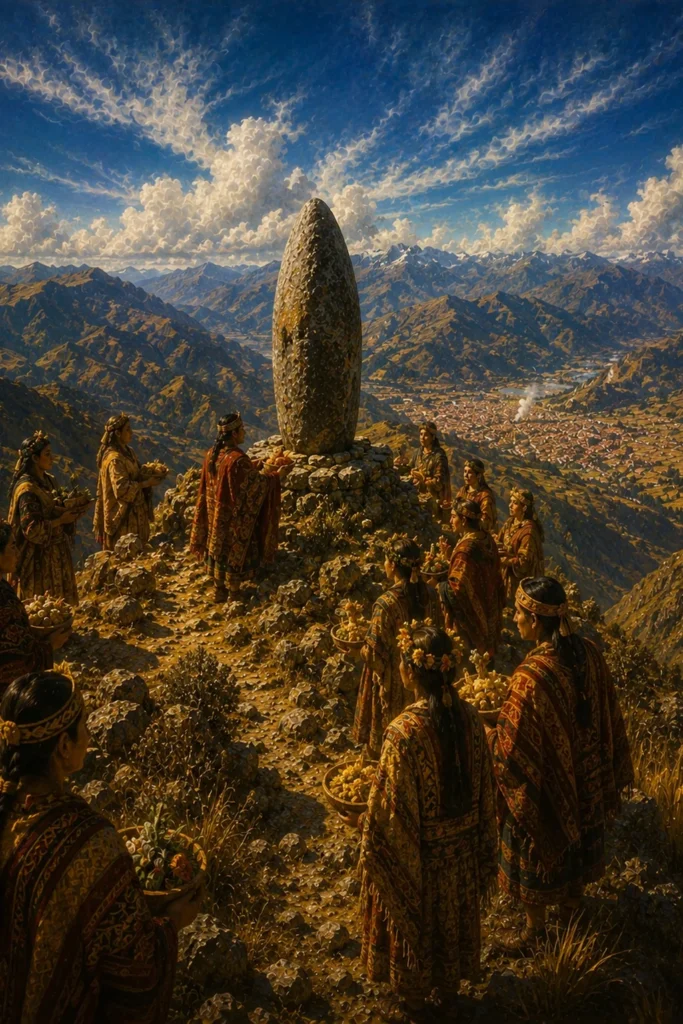
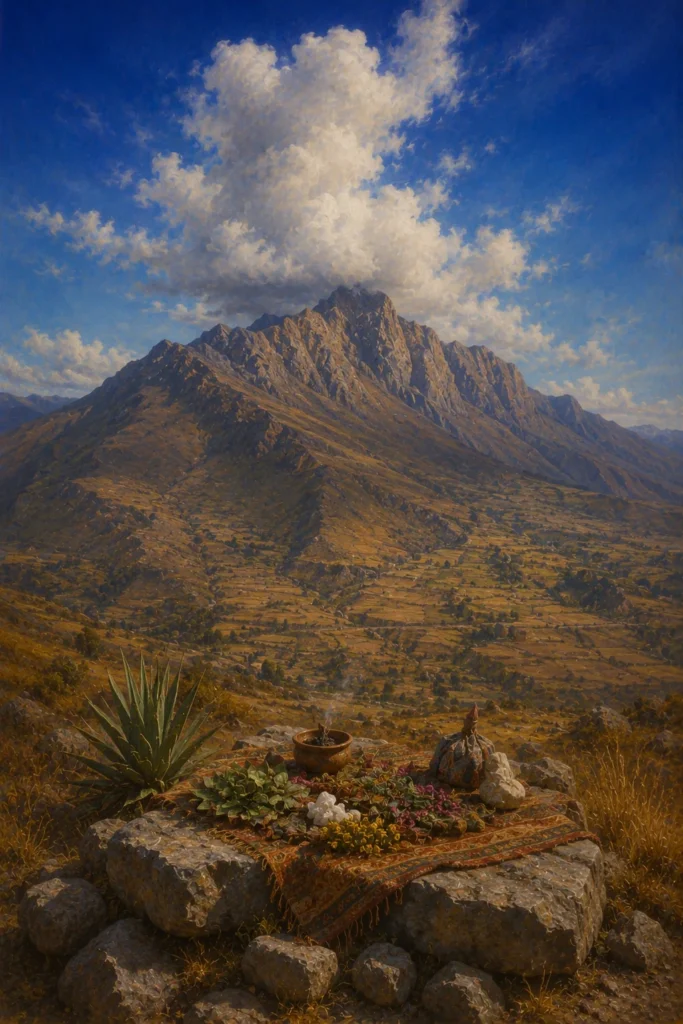
Today despacho and pago ceremonies take place, in which coca leaves, llama fat and chicha are offered as gifts to the Apu. Concrete Inca-era summit offerings, however, are not securely documented for this mountain; this gap should honestly be noted as open. Here, the living cult carries the tradition forward far more than archaeology does.
Salkantay among the mountain powers of the Andes
Apu Salkantay stands alongside Apu Ausangate and Apu Verónica as a significant Apu of the Cusco region. As an Apu, he corresponds to the Achachila of the Aymara and is connected to the earth mother Pachamama, to whom the despacho offerings are likewise directed.
Frequently asked questions about Apu Salkantay
What does Salkantay mean?
The wild one or the untamed one, from sallqa, wild and untamed. The interpretation avalanche mountain is popular but not linguistically secure.
Is Salkantay the most important Apu of Cusco?
The ranking is context-dependent; in Cusco, Ausangate is often regarded as the highest-ranking Apu. Salkantay nonetheless counts among the most significant mountains of the region.
Are there summit offering finds?
Concrete Inca-era summit offerings are not securely documented for Salkantay; the veneration is above all documented ethnographically.
Further links
Further reading:
- Apu Verónica – the water Apu of the Cordillera Urubamba
- Achachila – the Aymara counterpart to the Apu
- Pachamama – the earth mother of the Andes
- Smoke cleansing, Amulet – protective forms with Andean equivalents
- Protection Compass – protective means at a glance
Literature (selection)
Further standard works in the bibliography.
As mountain god near Cusco, Salkantay unites two faces: he is the wild Apu of the Cordillera Vilcabamba, whose name carries the untamed, and at the same time the reliable guardian who governs weather and water for the communities.