Apu Pitusiray, the petrified daughter of the kuraka
By Ralf Ittermann · last reviewed on
Apu Pitusiray is a mountain goddess of the Quechua tradition.
The female half of the mountain pair above the Sacred Valley.
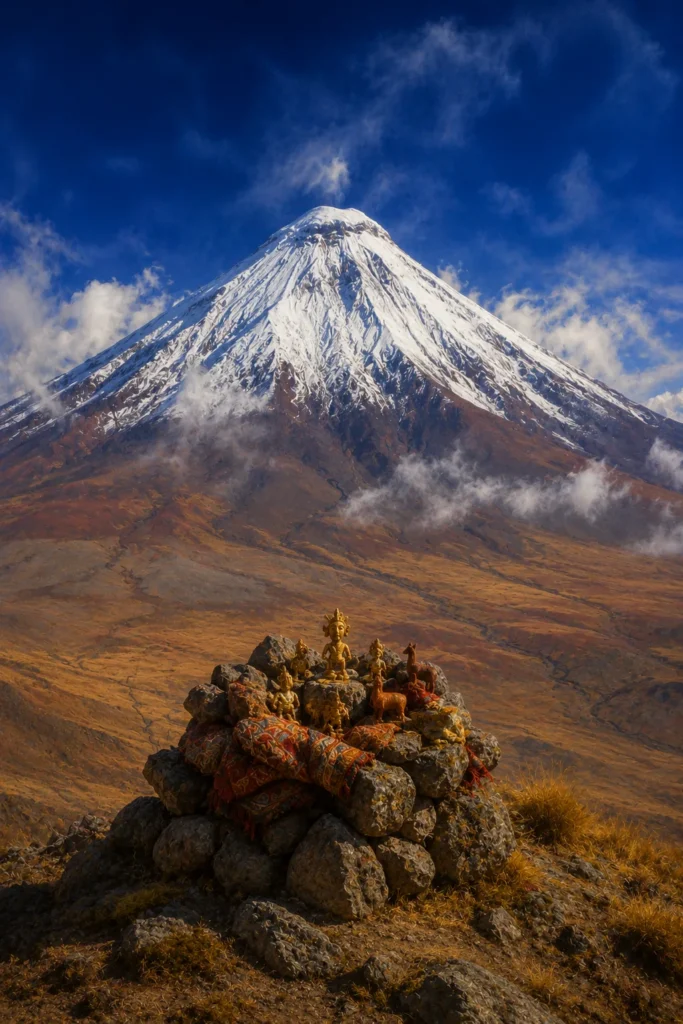
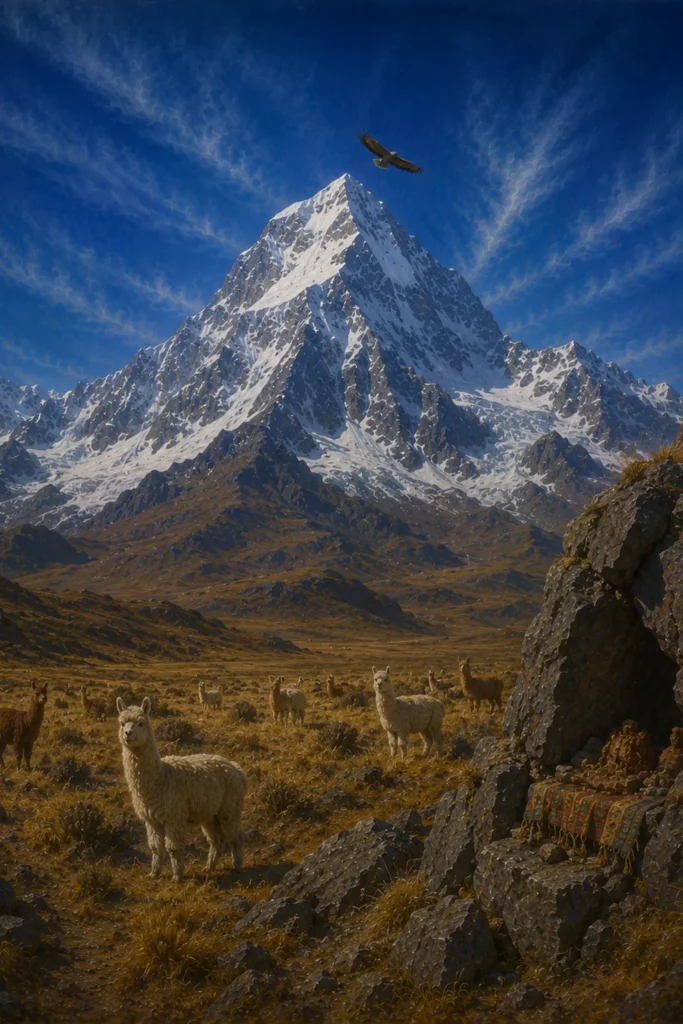
Apu Pitusiray is a glaciated mountain peak behind Calca in the Sacred Valley, female-connoted and regarded as a pair together with the neighbouring mountain Sawasiray. For the fields of Calca she is a giver of water and fertility.
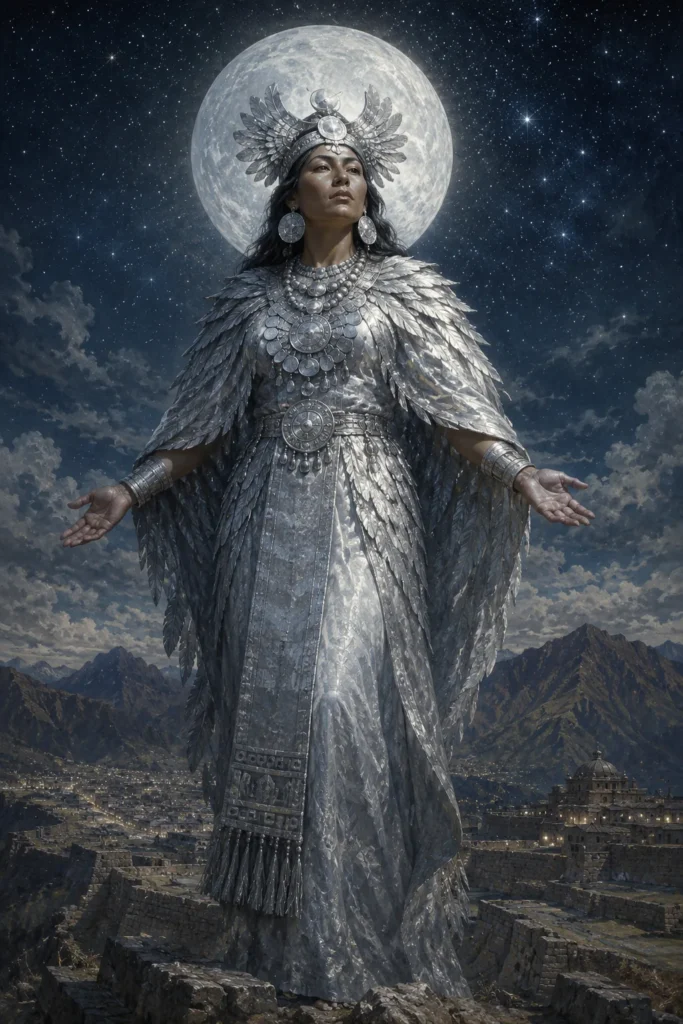
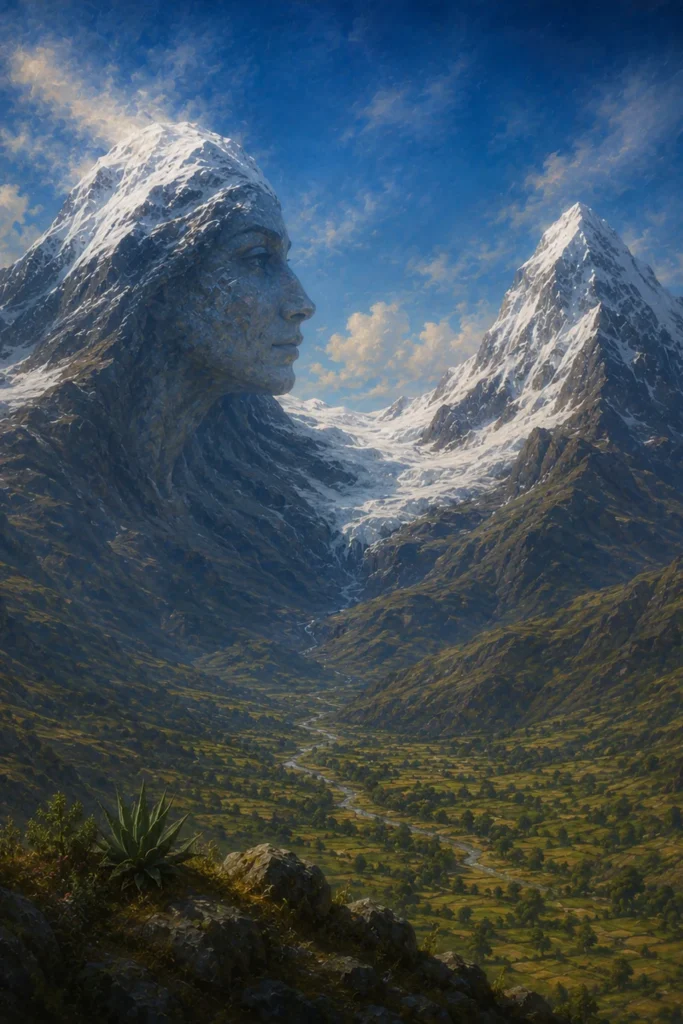
A local legend tells of a petrified pair of lovers who have gazed at each other across the valley ever since: in it, Pitusiray is held to be the petrified daughter of a kuraka.
Type: female-connoted protective and fertility Apu
Origin: Urubamba Valley, Cusco region
Texts: legend, landscape study, ethnographic reports
Period: pre-Columbian to present
Appearance: glaciated twin peak, roughly 4900 to 5000 metres
Legend and tradition
Period of the Texts
Rooted in pre-Columbian times and carried by oral legend and modern landscape study; a documented Inca source for the lovers’ tale is lacking.
Area of Diffusion
The Urubamba Valley in the Cusco region: Calca and the Sacred Valley, over which the twin peak rises.
Sources
Moderate: a landscape study by Ortiz Luna and ethnographic works stand against a great deal of touristic legend material.
Name and variants
Quechua: the etymology is disputed. A common link is with siray or sira, to sew or to join, in the motif of joining together; interpretations such as ‘the toothed one’ or ‘the striped one’ are considered folk etymology and uncertain.
Form and legend
Appearance
Pitusiray is a glaciated twin peak and female-connoted, as the female half of the pair with Sawasiray, connected with fertility, water and ancestor worship. The legend regards her as the petrified daughter of a kuraka.
Effect
As an Apu, Pitusiray protects relationships and family harmony in the local narrative motif and is a giver of water and fertility for the fields of Calca.
Profile: Apu Pitusiray
The mountain deity of Calca and her legend in brief.
Female-connoted Apu of the Sacred Valley; the Sawasiray-Pitusiray complex is treated academically as a sacred landscape, ancestor and water sanctuary.
Calca and the Sacred Valley: the fields she waters, and, in the narrative motif, relationships and family harmony.
Glaciated twin peak; the legend regards it as the petrified daughter of a kuraka, gazing towards her counterpart.
Giver of water and fertility, connected with ancestor worship and the springs of the sacred landscape.
Rock and spring sanctuaries in the surrounding area; despacho and water rituals are plausible, but a Capacocha on the mountain itself is not confirmed.
Other Andean petrified-lovers mountain myths; structurally, the water and fertility cult of Apu Ausangate.
Sawasiray and Pitusiray: the mountain pair of Calca
The name is usually linked to siray or sira, to sew or to join, in the motif of joining together; other interpretations are considered folk etymology. The heights also vary depending on the source: for Pitusiray often around 4900 to 5000 metres, for Sawasiray around 5800 metres. The Sawasiray-Pitusiray complex is treated academically as a pre-Columbian sacred landscape, ancestor and water sanctuary.
Alongside this, the tale lives on: the daughter of a kuraka and her lover are said to have turned to stone and to have gazed at each other across the valley ever since. This legend is oral tradition, colourful, retold many times over, and heavily embellished by touristic marketing.
Tourism, legend and classification
Pitusiray is popularly marketed as the Andean Romeo and Juliet; the touristic retellings are heavily embellished and should be treated critically.
In religious studies, Apu Pitusiray is a regional cult well embedded in ethnohistory, with much touristic legend material. Three clarifications: height figures and etymology circulate inconsistently. The lovers’ legend is oral tradition, not a documented Inca source. And Pitusiray is not identical with Sawasiray, but forms a pair with him.
Spring sanctuaries and water rituals
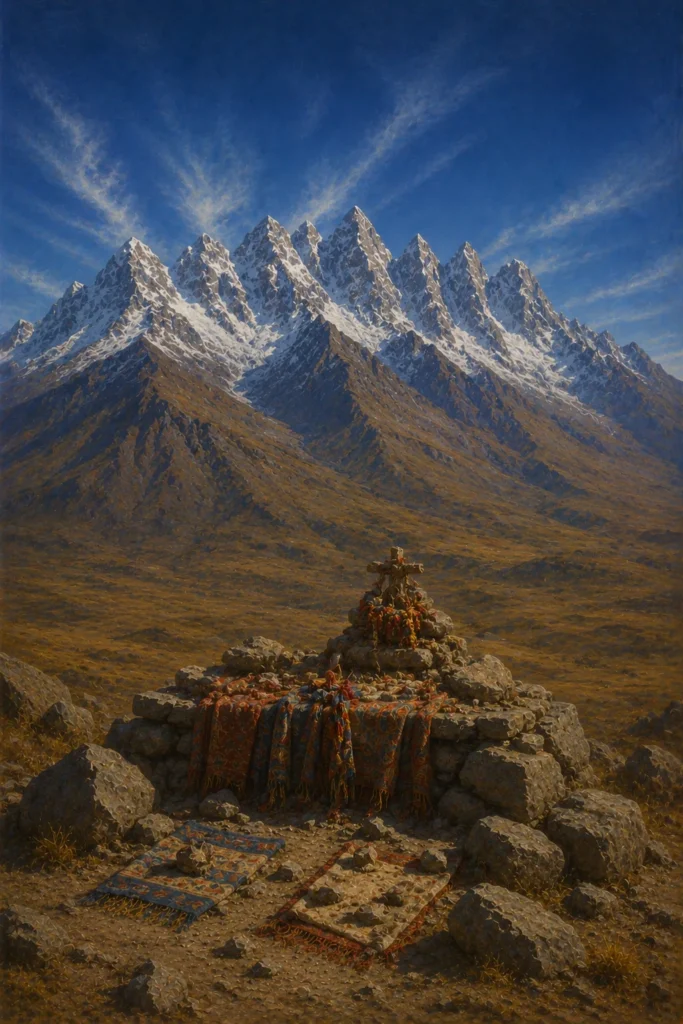
The sacred landscape around the mountain pair includes rock and spring sanctuaries; despacho and water rituals are plausible, with coca leaves serving as a medium for the offerings in Andean practice. A specific Inca-era Capacocha on Pitusiray itself, however, is not confirmed by evidence; this remains honestly open. The cult of the mountain goddess is thus above all one of springs, water and fertility.
Mountain pairs and love legends of the Andes
Pitusiray stands alongside other petrified-lovers mountain myths of the Andes and is structurally close to the fertility and water cult of Apu Ausangate. In the same region rises Apu Pachatusan as the world pillar of Cusco. As a female mountain deity, her role touches on that of the earth mother Pachamama, the great giver of fertility.
Frequently asked questions about Apu Pitusiray
Is Pitusiray female?
Yes, she carries female connotations as the female half of the pair with Sawasiray.
What does the legend say?
A pair of lovers is said to have turned to stone and have gazed at each other across the valley ever since; in the legend, Pitusiray is the petrified daughter of a kuraka.
Are there summit offering finds?
An Inca-era capacocha on Pitusiray itself is not securely documented.
Further links
Further reading:
- Apu Pachatusan – the world pillar in the same region of Cusco
- Apu Salkantay – a great Apu of the Cusco region
- Pachamama – the earth mother of the Andes
- Smoke cleansing, Amulet – traditional protective means
- Protection Compass – protective means at a glance
Literature (selection)
Further standard works in the bibliography.
As a mountain goddess near Calca, Apu Pitusiray unites two faces: the giver of water to the fields, and the heroine of a tale in which a petrified pair of lovers remain forever joined across the valley.