Seven peaks, one Apu: Pichu Pichu
By Ralf Ittermann · last reviewed on
Apu Pichu Pichu is a mountain god of the Quechua tradition.
Volcano near Arequipa with the youngest known Capacocha sacrifice. Seven peaks are said to form one Apu in this tradition, among them Pichu Pichu.
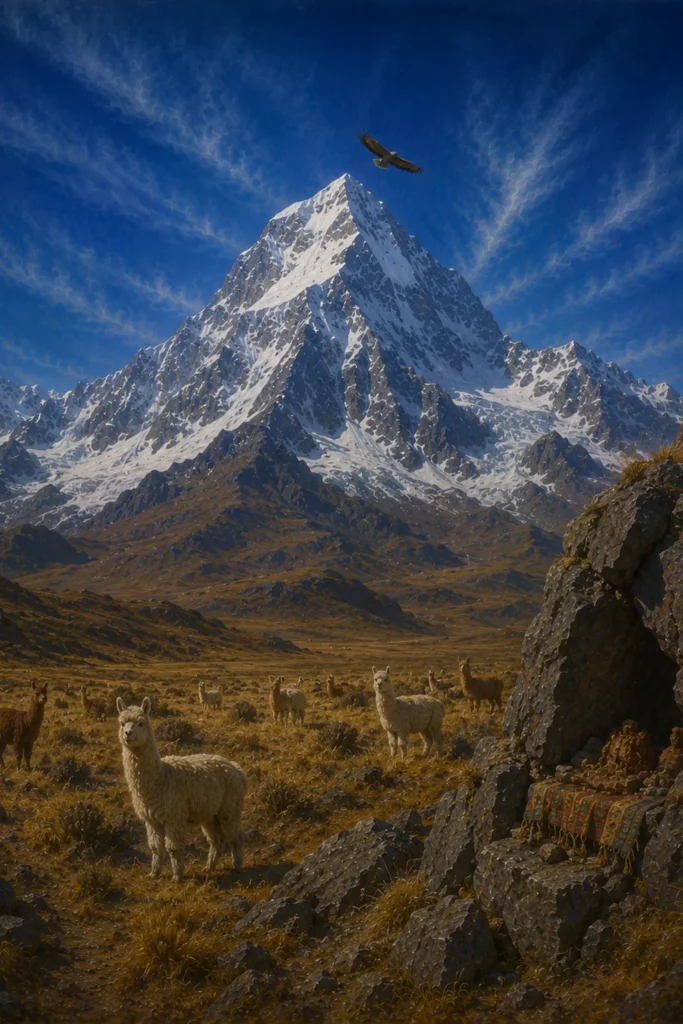
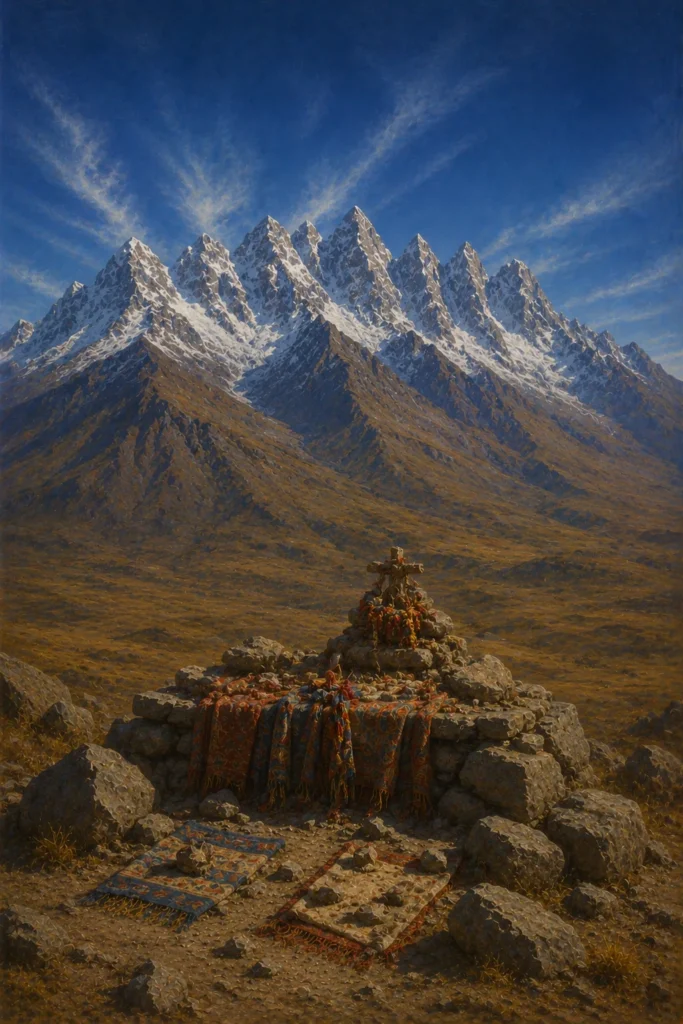
Apu Pichu Pichu is an eroded volcano with seven peaks around thirty kilometres east of Arequipa; the highest measures about 5664 metres. Its saw-tooth and ridged profile shapes the region’s horizon as well as its name.
The mountain is a well-documented Inca-period Capacocha sacrificial site with several child and adolescent burials; the individual known as Pichu Pichu 2, about three and a half years old, is regarded as the youngest known Capacocha sacrifice.
Type: Apu, patron protector, giver of rain and water
Origin: Arequipa region, southern Peru
Texts: Inca-period Capacocha, modern archaeology
Period: Inca era to the present
Appearance: eroded volcano with seven peaks, up to about 5664 metres
Historical Background
Period of the Texts
Used in the Inca period as a high-ranking sanctuary; the finds of 1965 and 1996 firmly anchor the mountain in modern high-altitude archaeology.
Area of Diffusion
Around thirty kilometres east of Arequipa in southern Peru; as an Apu, the mountain watches over the city’s surroundings.
Sources
Very good: archaeologically confirmed by the finds of 1965 and the excavations of 1996, published among others by Socha, Reinhard and Chávez Perea.
Name and variants
Quechua: The name is a reduplication, usually interpreted as peak-peak or many-peaked mountain, from pikchu, peak or pyramidal mountain summit; the derivation is uncertain.
Appearance and behaviour
Appearance
Pichu Pichu has a characteristic saw-tooth and ridged profile; its many peaks gave the mountain its name. As an Apu, it is regarded as a guardian over the surroundings of Arequipa.
Effect
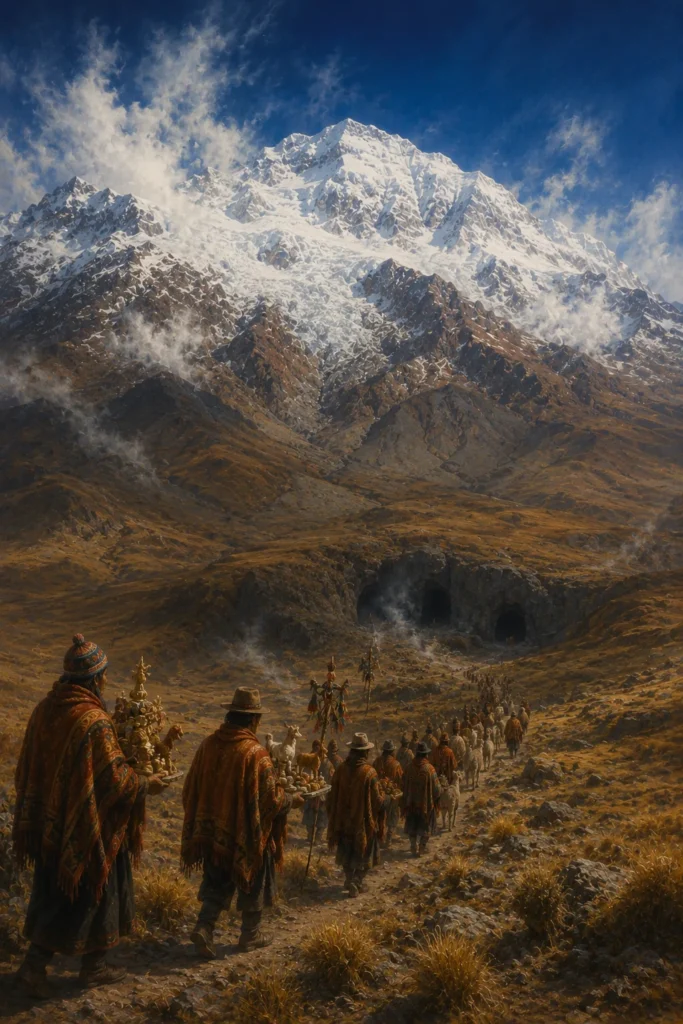
The Apu is a patron protector as well as a giver of rain and water; in the Inca state religion, it was a high-ranking sanctuary and destination of ritual high-altitude pilgrimages.
Profile: Apu Pichu Pichu
The seven-peaked guardian of Arequipa in brief portrait.
High-ranking sanctuary of the Inca state religion and destination of ritual high-altitude pilgrimages in the Capacocha landscape of southern Peru.
The surroundings of Arequipa, over which the Apu is considered a guardian and to which it grants rain and water.
Eroded volcano with a characteristic saw-tooth and ridged profile of seven peaks.
Patron protector as well as giver of rain and water; in the Inca period the receiving site of the Capacocha, the highest state sacrifice.
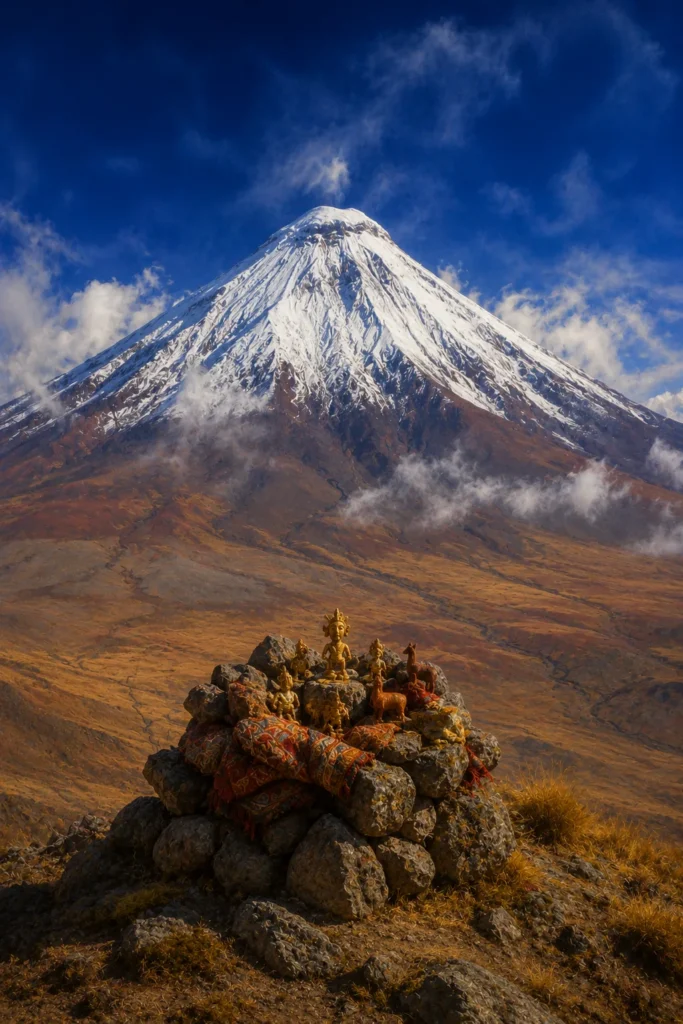
Archaeologically confirmed: child sacrifices, precious-metal figurines, textiles and Spondylus; today’s despacho practice at the mountain is plausible but scarcely documented in writing.
Not to be confused with Machu Picchu: both names contain the element pikchu, but refer to different places.
From the 1965 find to Pichu Pichu 2
In 1965, a girl’s skull with gold, silver and ceramic grave goods was found at the summit; in 1996, several child and adolescent burials followed. The individual known as Pichu Pichu 2, about three and a half years old, has since been regarded as the youngest known Capacocha sacrifice.
The finds show the mountain as a high-ranking sanctuary of the Inca state religion and as a destination of ritual high-altitude pilgrimages. The name, however, remains uncertain: a Quechua reduplication of pikchu, peak or pyramidal mountain summit, usually interpreted as peak-peak or many-peaked mountain.
High-altitude archaeology and classification
Pichu Pichu is a firm part of the high-altitude archaeology associated with Reinhard and Socha; the finds are housed in the Museo Santuarios Andinos in Arequipa.
From a religious-studies perspective, Apu Pichu Pichu is an archaeologically well-documented Capacocha mountain. Two clarifications: it is not to be confused with Machu Picchu, which contains the same element pikchu but is a different place. And the 5664 metres are the highest of seven peaks, not a single summit.
Child sacrifices and current practice
What is well documented by sources is the Inca-era Capacocha, archaeologically confirmed with child sacrifices, precious-metal figurines, textiles and Spondylus shell. For the present day, caution is warranted: a local despacho practice on the mountain, with coca leaves as a customary offering, is plausible, but compared with mountains such as Ausangate or Apu Salkantay it is less independently documented, so it is likely but poorly recorded in writing.
The Capacocha landscape of southern Peru
Apu Pichu Pichu stands alongside Apu Misti, Apu Ampato and Apu Sara Sara in the same southern Peruvian Capacocha landscape. The Aymara counterpart of the Apu is the Achachila; like all Apus, Pichu Pichu is also connected with the earth mother Pachamama.
Frequently asked questions about Apu Pichu Pichu
What does Pichu Pichu mean?
A reduplication, usually peak-peak or many-peaked mountain, from pikchu, peak; the derivation is uncertain.
What was found on the mountain?
Several Inca-era sacrifices of children and adolescents, including Pichu Pichu 2, the youngest known Capacocha victim.
Is this the same as Machu Picchu?
No. Both names contain the element pikchu, but they refer to different places.
Further links
Further reading:
- Apu Misti and Apu Ampato – Capacocha mountains of the same region
- Apu Sara Sara – another sacrificial mountain of southern Peru
- Achachila – the ancestral mountain of the Aymara
- Pachamama – the earth mother of the Andes
- Smoke cleansing, amulet – traditional protective means
- Protection Compass – overview of protective means
Literature (selection)
Further standard works in the bibliography.
Among the mountains of southern Peru, Apu Pichu Pichu is a double monument: as a volcano near Arequipa its jagged ridge shapes the landscape, and as a Capacocha sacrificial site it preserves the memory of the Inca state’s youngest victims.