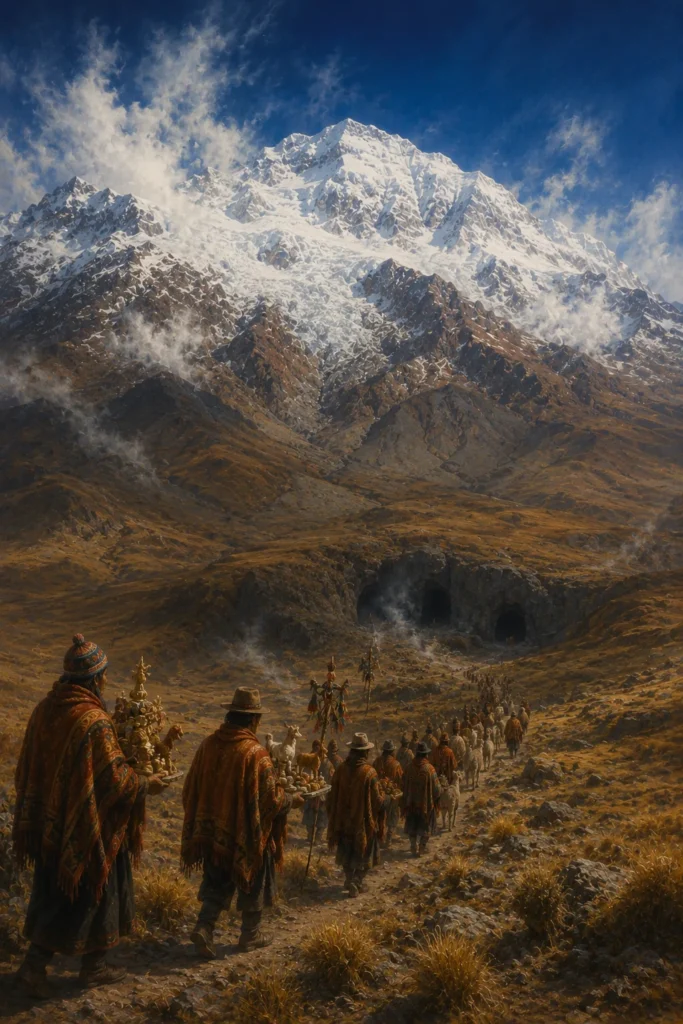
Apu Wamanrasu is a mountain god of Quechua tradition.
Lord over herds, weather and the dead of Huancavelica.
Apu Wamanrasu is a mountain about 5300 metres high in the Chunta range in the border area of Huancavelica, and the mightiest Apu or Wamani of the region. The herding communities venerate him as lord over their herds, the weather and the dead of the community.
His name means Falcon Snow Mountain, and the falcon is more than a namesake in the central Peruvian area: waman or wamani there denotes the mountain deity itself. Ethnographically, the cult is documented above average.
Type: Wamani, lord over livestock, weather and the dead
Origin: Chunta range, Huancavelica, central Peru
Texts: ethnographically well documented, monographs by Arroyo Aguilar
Period: living cult in the present
Appearance: Wamani conceived as anthropomorphic, with falcon association
The cult is alive in the present and is among the mountain cults of central Peru best described ethnographically.
The Chunta range in the border area of Huancavelica in central Peru; the bearers of the cult are the herders of the highlands.
Good: above all Sabino Arroyo Aguilar has explored the mountain in monographs, including the burials in rock niches beneath the summit.
Quechua: waman, falcon or peregrine falcon, and rasu, snow or snow peak; Wamanrasu means falcon snow mountain. The falcon, waman or wamani, is at the same time the name of the mountain deity itself in the central Peruvian region.
Appearance
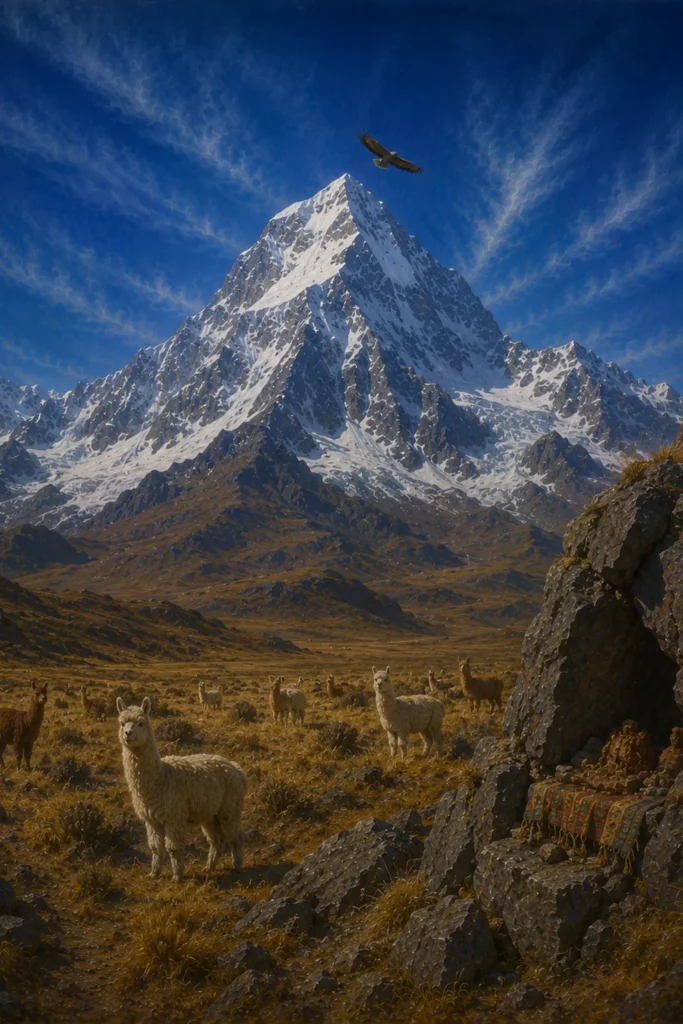
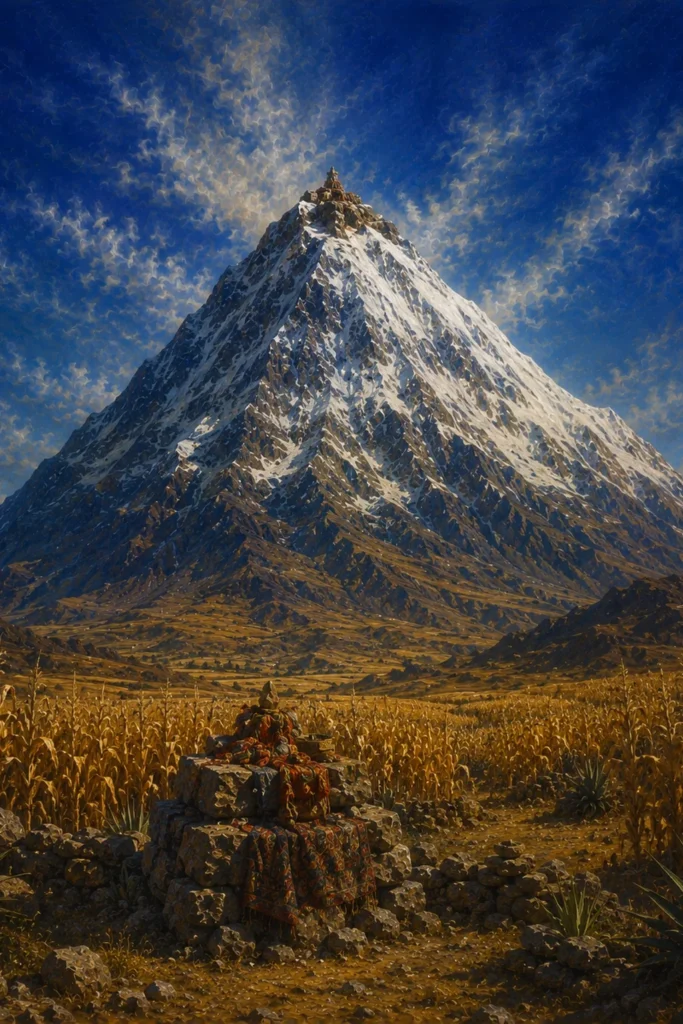
Wamanrasu is envisaged as an anthropomorphic Wamani with falcon associations; the mountain itself is a snow peak of the Chunta range.
Effect
As a Wamani, Wamanrasu protects the herds of alpaca and llama and the pastures, mediates with the ancestors and the dead, and is a weather power of the highlands.
The lord of the herds and of the dead, presented concisely.
The most powerful Wamani of its region, rooted in the central Andean Wamani cult of Ayacucho and Huancavelica.
The highland herders with their alpaca and llama herds, their pastures, the weather, and the dead of the community.
An anthropomorphic Wamani with falcon associations; the mountain measures, depending on the source, approximately 5298 to 5304 metres.
Herd protection, weather power, and mediation with the dead: the Wamani keeps the connection between the living and the ancestors open.
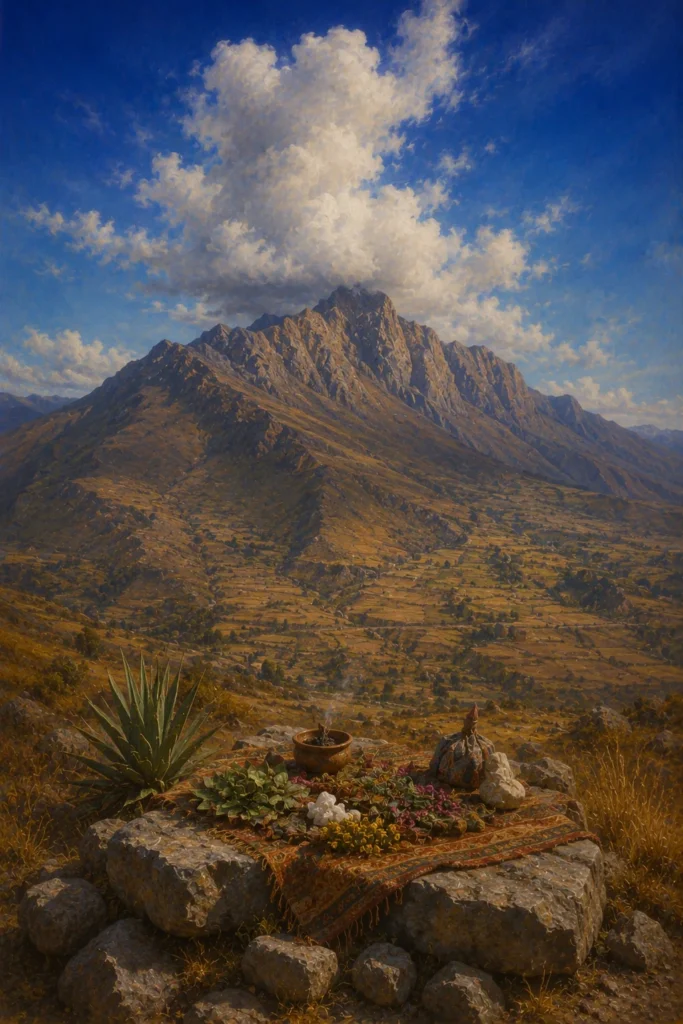
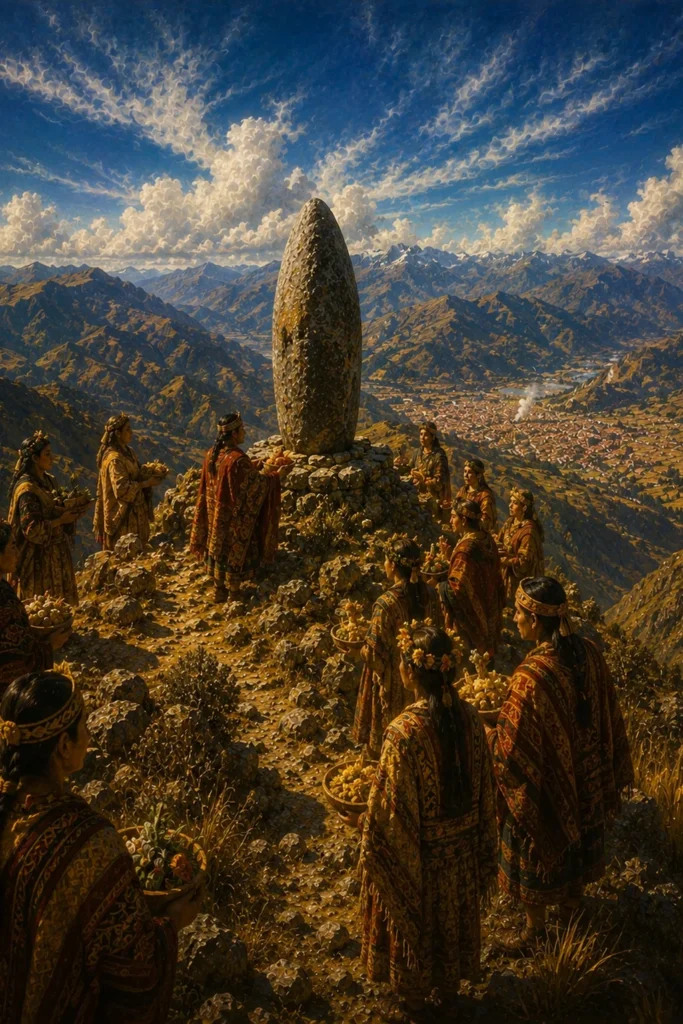
Pago and despacho offerings made by the herders; burials and a cult of the dead are documented at rock shelters on the mountain.
The Apu concept of the south, as embodied for instance by Apu Salkantay; in the Aymara region, the Achachila serves as the ancestral mountain.
Quechua waman means falcon or peregrine falcon, rasu means snow or snow peak; Wamanrasu means falcon snow mountain. The falcon is more than an image here: in the central Peruvian region, wamani is the term for the mountain deity itself, so that the name of the mountain and the name of the god are interlinked.
Wamanrasu is unusually well documented ethnographically, above all through Sabino Arroyo Aguilar, who described burials in rock niches beneath the summit as well as the herding and death cult. This allows an unusually precise account of how a living mountain cult combines herding economy, weather interpretation, and remembrance of the dead.
In Peruvian anthropology, Wamanrasu serves as a case study of the cultural identity of the ancient Andean herders; internationally, the mountain is little known.
From a religious-studies perspective, Apu Wamanrasu is a regional but soundly monographically documented living cult. Important clarifications: the height varies between about 5298 and 5304 metres; the spelling variants Huamanrazo, Huamanrasu, and Wamanrasu refer to the same mountain; and here Wamani is not merely a synonym for Apu, but the central Peruvian term for the mountain deity.
Concretely attested are pago and despacho offerings made by the highland herders, in which coca leaves, llama fat, and chicha are given to the Wamani. In addition, there is a documented connection between burials and a death cult at rock shelters on the mountain, described by Arroyo Aguilar: the mountain that protects the herds also receives the dead of the community.
Apu Wamanrasu belongs to the central Andean Wamani cult of Ayacucho and Huancavelica and is related to the Apu concept of the south, as represented by mountains such as Apu Salkantay. In the Aymara region, the Wamani corresponds to the Achachila; the cult is also linked to the earth mother Pachamama.
What does Wamanrasu mean?
Falcon snow mountain, from waman, falcon, and rasu, snow; waman is at the same time the name of the mountain deity.
What is a Wamani?
The central Peruvian term for the mountain deity, here more than merely a synonym for Apu.
What connects him with the dead?
Burials and a death cult are documented at rock shelters on the mountain; the Wamani mediates with the ancestors.
Recommended internal links:
Further standard works in the bibliography.
The falcon snow mountain unites what defines Andean pastoral religion: as the most powerful Wamani of Huancavelica, Wamanrasu watches over the herds, governs the weather, and keeps the connection to the dead of the community open.
Against its influence, cross-cultural tradition names these protective means:
Compare in the Protection Compass →Recommended protective means
The simplest protective means in this collection: 41 layers of fine gold 999, platinum, silver and silicon, manufactured in Ruhla, Thuringia. It requires no activation, is bound to no person, and is effective within a radius of around 50 meters, even without being worn.
Related Beings

Oonawieh Unggi, allegedly the oldest Cherokee wind. Origin, the genuine wind term unole and its c...

Buga is the high god of the Tungus-speaking Evenki, identified with heaven and the universe. Clas...

Rama, the seventh avatar of Vishnu, is the hero of the Ramayana and an emblem of dharmic kingship...

Umibōzu, the giant black monk's head from calm seas: yōkai of seafarers, the Tokuzō legend, the b...

Aura, the personification of the cool breeze. Origin, the late-antique myth in Nonnus, and the re...

Yuan-gui, the spirit of someone who died wrongfully in China. Origin, the search for justice, and...