Apu Pachatusan, support of the three worlds
By Ralf Ittermann · last reviewed on
Apu Pachatusan is a mountain god of the Quechua tradition.
The pillar of the world near Cusco, connecting the three worlds.
Apu Pachatusan is a mountain about 4,842 metres high, northeast of Cusco. His name means support or pillar of the world, and this is exactly how he is understood: as the axis that connects the three worlds of Andean cosmology.
Unlike the great sacrificial mountains of southern Peru, Pachatusan is attested mainly through ethnography: as the protective Apu of the surrounding communities and as a symbol of stability and order.
Type: protective Apu, symbol of stability and order
Origin: northeast of Cusco, Cusco region
Texts: predominantly ethnographic tradition, few summit finds
Period: Inca era to the present
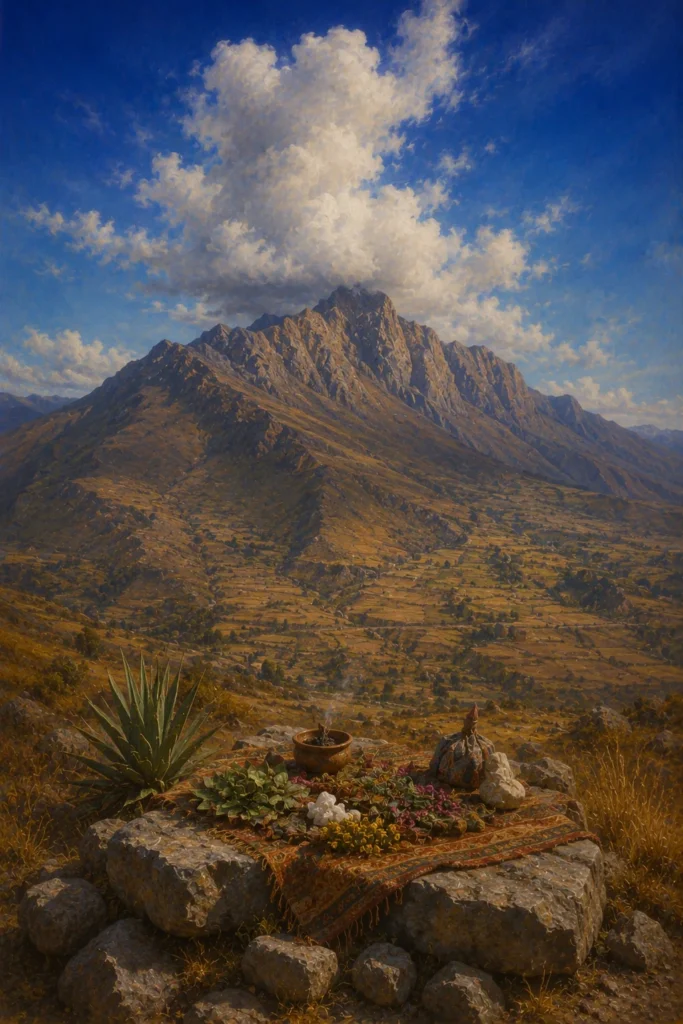
Appearance: elongated mountain ridge, about 4,842 metres
Context of tradition
Period of the Texts
The tradition extends from the Inca era to the present day, but is predominantly ethnographic; Inca-era summit finds are largely lacking.
Area of Diffusion
Northeast of Cusco in the Cusco region; the mountain is venerated above all by the surrounding communities.
Sources
Moderate: hardly any summit finds; knowledge rests on ethnography and studies such as Bauer’s work on the sacred landscape of Cusco.
Name and variants
Quechua: pacha means world, earth or time, tusan or tuqsi means support or pillar: Pachatusan is the support or pillar of the world. The name carries the mountain’s whole programme within it.
Description
Appearance
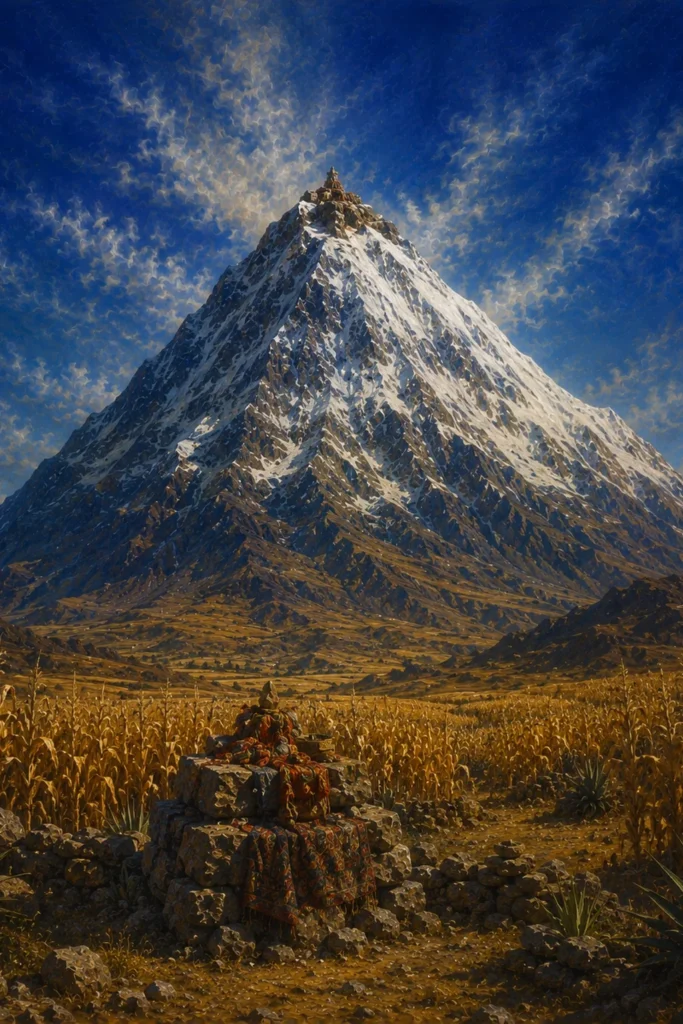
Pachatusan is not a cone but an elongated mountain ridge; symbolically he is regarded as the pillar that supports the cosmos.
Effect
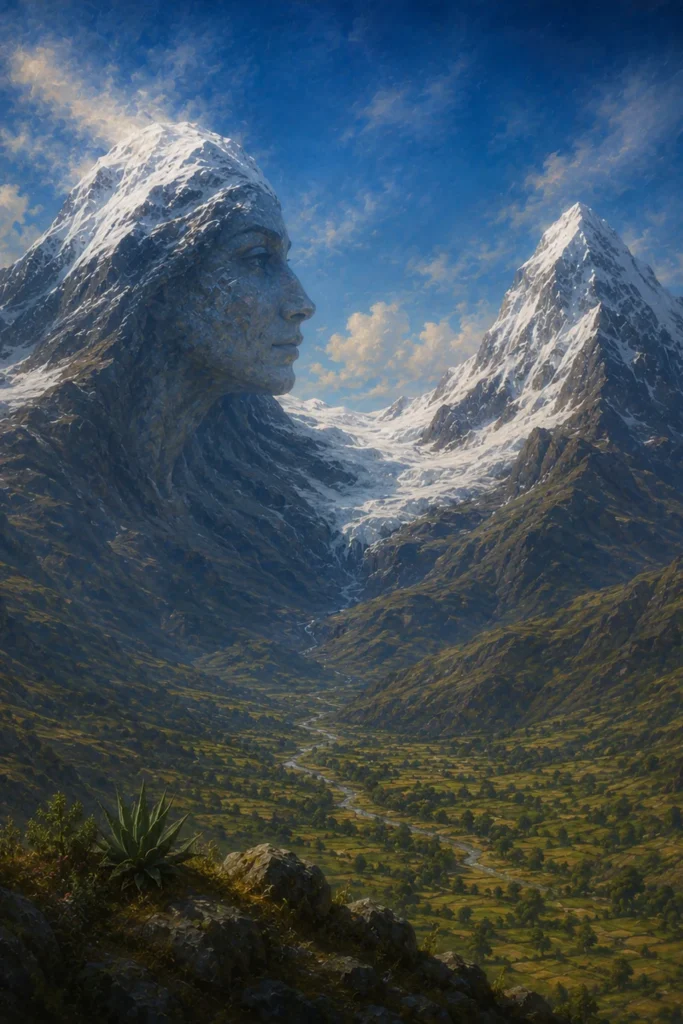
As an Apu, Pachatusan is the protective lord of the surrounding communities as well as a symbol of stability and order. Understood as an axis mundi, he connects the three worlds: Hanan Pacha above, Kay Pacha here, Uku Pacha below.
Profile: Apu Pachatusan
The pillar of the world in the Cusco region, in its essential features.
A locally significant Apu of the Cusco region, understood in Andean cosmology as an axis mundi.
The surrounding communities, whose protective lord he is, and the order of the world, which by his very name he supports.
Elongated mountain ridge; the image of the pillar lies in the name and in the cosmology, not in a striking silhouette.
The connection of the three worlds: Hanan Pacha above, Kay Pacha here and Uku Pacha below.
Despacho and pago ceremonies, pilgrimages and mountain rituals; an Inca-period sacrificial practice specific to this mountain is not securely documented.
The Apus of the Cusco region such as Ausangate and Salkantay; as Apu, the Achachila of the Aymara.
Pacha and tusan: a name as cosmology
Quechua pacha means world, earth or time, tusan or tuqsi means support or pillar: Pachatusan is the pillar of the world. In Andean cosmology, it is interpreted as an axis connecting the three worlds, Hanan Pacha above, Kay Pacha here and Uku Pacha below.
Honesty belongs to the state of the sources: direct Capacocha summit finds are not documented for Pachatusan, and its cosmological role is attested mainly ethnographically and through tradition. Its significance is thus of a different kind than that of the great sacrificial mountains; it lies in the name, in the interpretation and in the living veneration by the communities.
Modern interpretation and classification
Pachatusan is a popular destination for spiritual hikes and mystically themed tourist offers around Cusco.
From a religious-studies perspective, Apu Pachatusan illustrates the interpretation of a mountain as a world axis. Three clarifications: the pronounced three-worlds-axis interpretation is partly a modern, neo-Andean reading. The concrete Inca-period cult significance is less well documented than for the great Capacocha summits. And the height varies in the sources at around 4842 metres.
Mountain rituals at Pachatusan today
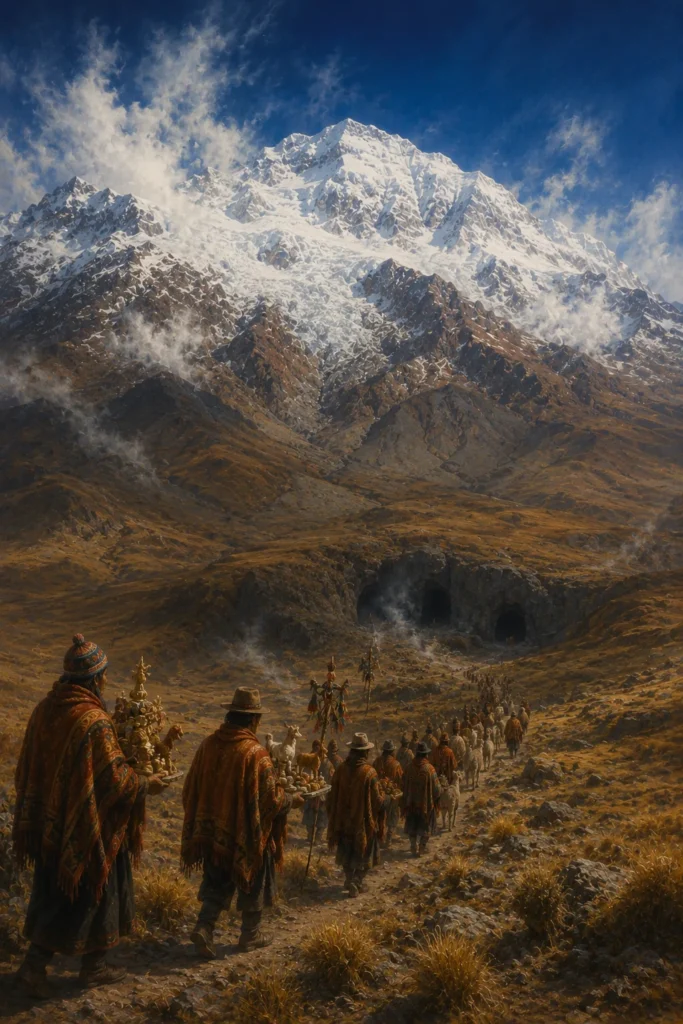
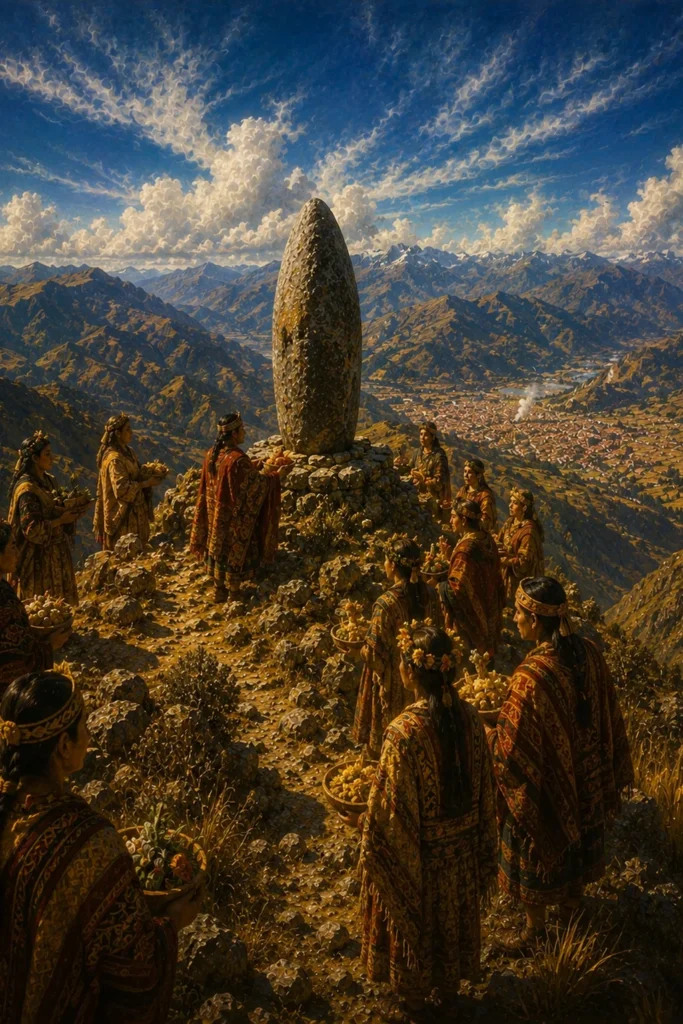
Today, despacho and pago ceremonies, pilgrimages and mountain rituals take place at Pachatusan, with coca leaves as the central mediator of the offerings. An Inca-period sacrificial practice specific to this mountain, however, is not securely documented; this remains honestly open. Veneration here lives less from the past than from the present of the communities, who continue to bring the mountain their offerings.
World pillar and neighbouring Apus
In the Cusco region, Pachatusan stands alongside Apu Ausangate and Apu Salkantay, the other great Apus of the region. Its counterpart in the Aymara tradition is the Achachila; as a sustaining force of the world, its role touches upon that of the earth mother Pachamama, who shares the same word root pacha in her name.
Frequently asked questions about Apu Pachatusan
What does Pachatusan mean?
Support or pillar of the world, from pacha, world, earth or time, and tusan, support.
Is the world-axis interpretation old?
It is partly a modern, neo-Andean reading; the Inca-period cult significance is poorly documented.
Are there summit-sacrifice finds?
Direct Capacocha summit finds are not documented for Pachatusan.
Further links
Further reading:
- Apu Salkantay – another great Apu of the Cusco region
- Apu Pitusiray – mountain goddess of the Sacred Valley in the same region
- Achachila – the Aymara counterpart to the Apu
- Pachamama – the earth mother of the Andes
- Smoke cleansing, Amulet – traditional protective means
- Protection Compass – protective means at a glance
Literature (selection)
Further standard works in the bibliography.
As a mountain god near Cusco, Apu Pachatusan needs neither summit sacrifices nor oracles: his rank lies in the name itself, which declares him the pillar of the universe, the support that, according to Andean belief, holds the three worlds together.