iWell Guard

Mama Simona: A Young Mountain Goddess over Cusco

Apu Mama Simona is mountain goddess of the Quechua tradition.

A female-conceived protective lady over the city of Cusco.

GoddessQuechua

Table of Contents

Apu Mama Simona, the female patroness of Cusco
Apu Mama Simona

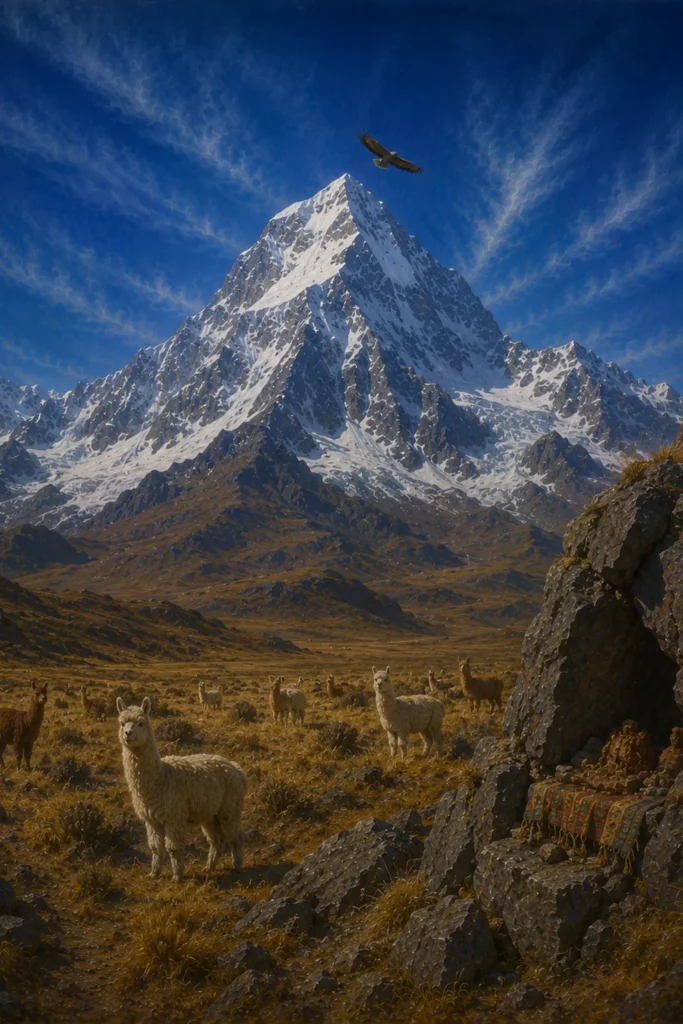
Apu Mama Simona is a low mountain range northwest of Cusco, popularly regarded as a female Apu and protective spirit of the city. She is associated with fertility, protection and the balance of male and female forces of nature.

To be honest in classification: the evidence base is thin and strongly oral and tourism-shaped. This is more likely a more recent Apu construction than a deeply documented pre-Columbian cult, which this page openly states.

Overview: Apu Mama Simona

Type: local protective lady with fertility connection
Origin: northwest of Cusco, Cusco region
Texts: hardly any specialist literature, predominantly oral and tourism-related sources
Period: predominantly recent, more recent construction
Appearance: low, city-adjacent mountain with a female-read silhouette

Historical Background

Period of the Texts

The tradition is predominantly oral and shaped by tourism; much suggests a more recent construction rather than an old body of texts.

Area of Diffusion

The Ccorca area northwest of Cusco, near Saqsayhuaman; the point of reference for the veneration is above all the city of Cusco itself.

Sources

Very thin: in the cited specialist literature, Mama Simona is barely traceable; no dedicated academic monograph can be found.

Name and variants

Quechua and Spanish: The name is a hybrid of Mama, Quechua for mother and a female honorific, and the Spanish-sounding proper name Simona; the origin is therefore uncertain. Folk narratives partly trace it back to a hacienda owner or a powerful healer named Simona.

Beings and effect

Appearance

Mama Simona has a silhouette softly read as female; a woman’s face is said to be recognisable in the summit rock, a folk motif of interpretation. She is not a high peak, but a low, city-adjacent mountain.

Effect

As Cusco’s local protective lady, Mama Simona is thought of energetically and in terms of fertility, standing for the balance of male and female forces of nature.

Profile: Apu Mama Simona

An overview of Cusco’s protective lady and her narrow source base.

Tradition

Popularly regarded as a female Apu; the evidence base is oral and tourism-related, and the construction is presumably recent.

Relates To

The city of Cusco and the spiritual practice of its residents and visitors; the reference is local, not regional.

Depiction

Low mountain range in the Ccorca area near Saqsayhuaman; a woman’s face is popularly recognised in the summit rock.

Sphere of Influence

Protection and fertility for Cusco as well as the imagined balance of male and female forces of nature.

Practices

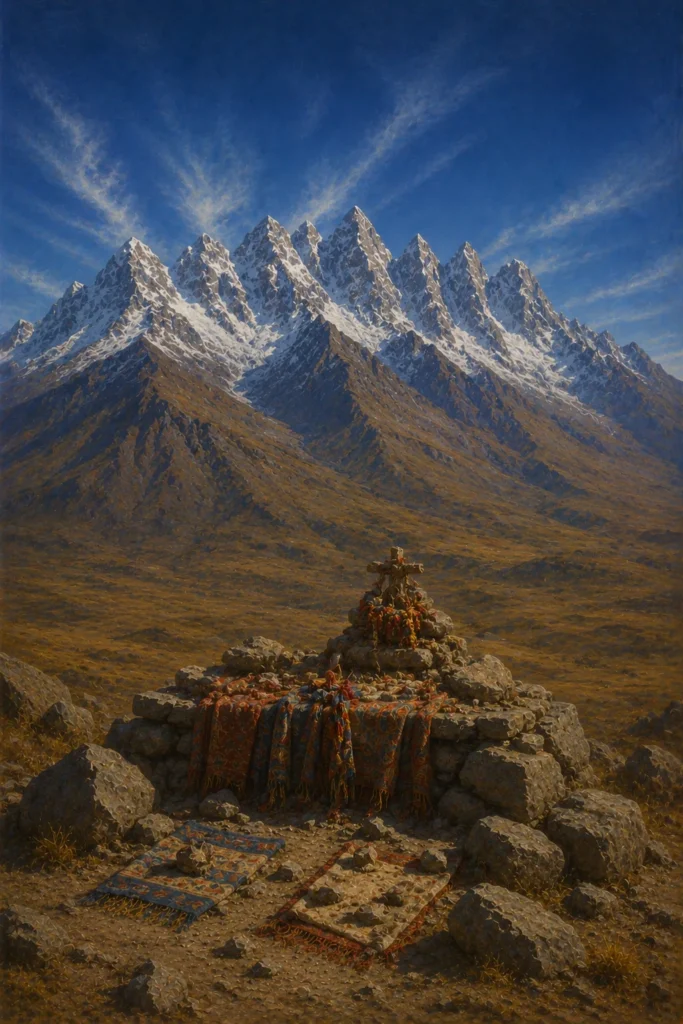
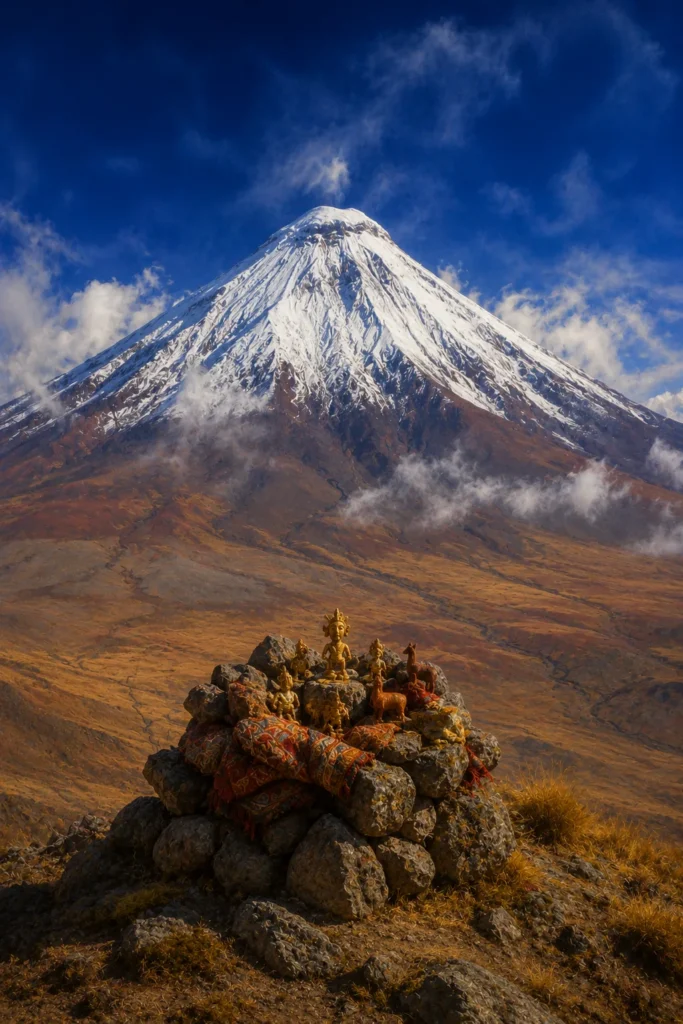
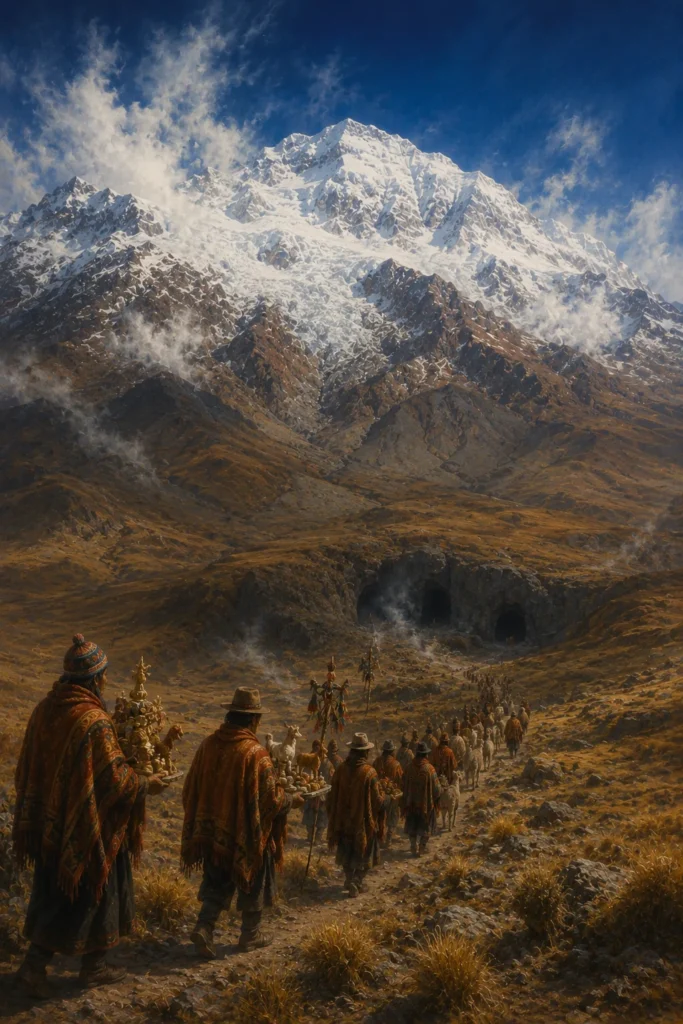
Despacho and Pago practices as well as modern, neo-Andean and tourism-shaped ceremonies; no Inca-era sacrificial site is known.

Parallels

Other mountains in the Cusco area read as female; structurally, she is close to the Pachamama-related protective figures.

Mama Plus Simona: A Hybrid Name

The name is a hybrid of Mama, Quechua for mother and a female honorific, and the Spanish-sounding proper name Simona; for this reason alone the origin is uncertain. Folk narratives partly trace it back to a hacienda owner or a powerful healer named Simona, but this remains legend, not etymology.

The mountain lies in the Ccorca area near Saqsayhuaman and is not a high peak, but a low, city-adjacent mountain. In the cited specialist literature, Mama Simona is barely traceable; the available works only provide the general Apu and Pachamama context into which the figure fits.

A Young Cult in the Light of Criticism

Mama Simona is a destination for hiking and spiritual tourism; the label female Apu is strong in the media.

From a religious-studies perspective, Apu Mama Simona has the thinnest evidence base of the Apus treated here, predominantly oral and tourism-related. Important clarifications: the name is not purely Quechua; the Simona derivation is legend, not etymology; and the claim that this is a central pre-Columbian Cusco Apu is overstated, since its real significance today is above all local and spiritual-touristic.

Despachos for the Lady over Cusco

What is documented above all are Despacho and Pago practices, in which coca leaves convey the offering to the Apu, along with modern, neo-Andean and tourism-shaped ceremonies; concretely, all of this is only weakly and predominantly recently attested. No confirmed Inca-era sacrificial site is known, which should be honestly noted: the cult of Mama Simona is a cult of the present.

Mountains read as female in the Cusco region

Mama Simona stands alongside other Apus and Cerros read as female in the Cusco region and is structurally close to the female protective figures grouped around the earth mother Pachamama. She shares the concept of the venerated mountain with the Aymara Achachila and the great Apus such as Apu Salkantay.

Frequently asked questions about Mama Simona

Is Mama Simona a female Apu?

She is popularly described this way, yet the evidence is thin and her female status is not confirmed.

Where does the name come from?

From Mama, mother, and the Spanish-sounding proper name Simona; the derivation from a healer or hacienda owner is legend, not etymology.

Is she an ancient pre-Columbian Apu?

This claim is overstated; her real significance today is above all local and spiritual-touristic.

Further links

Recommended internal links:

Literature (selection)

A selection of key sources and studies:
  • Allen, Catherine J.: The Hold Life Has. Coca and Cultural Identity in an Andean Community. Washington 2002.
  • Bolin, Inge: Rituals of Respect. Austin 1998.

Further standard works in the bibliography.

Whether Mama Simona, as the female Apu of Cusco, is an ancient power or a recent interpretation is not settled by the thin body of sources; as the mountain goddess of the city, she has nonetheless found a firm place in Cusco’s living practice.

Classification & Protection

ILEVEL
The Protection Compass assigns this being to influence level I, Minor influence.

Against its influence, cross-cultural tradition names these protective means:

Compare in the Protection Compass →

Recommended protective means

iWell Guard

The simplest protective means in this collection: 41 layers of fine gold 999, platinum, silver and silicon, manufactured in Ruhla, Thuringia. It requires no activation, is bound to no person, and is effective within a radius of around 50 meters, even without being worn.

All protective means at a glance →