iWell Guard

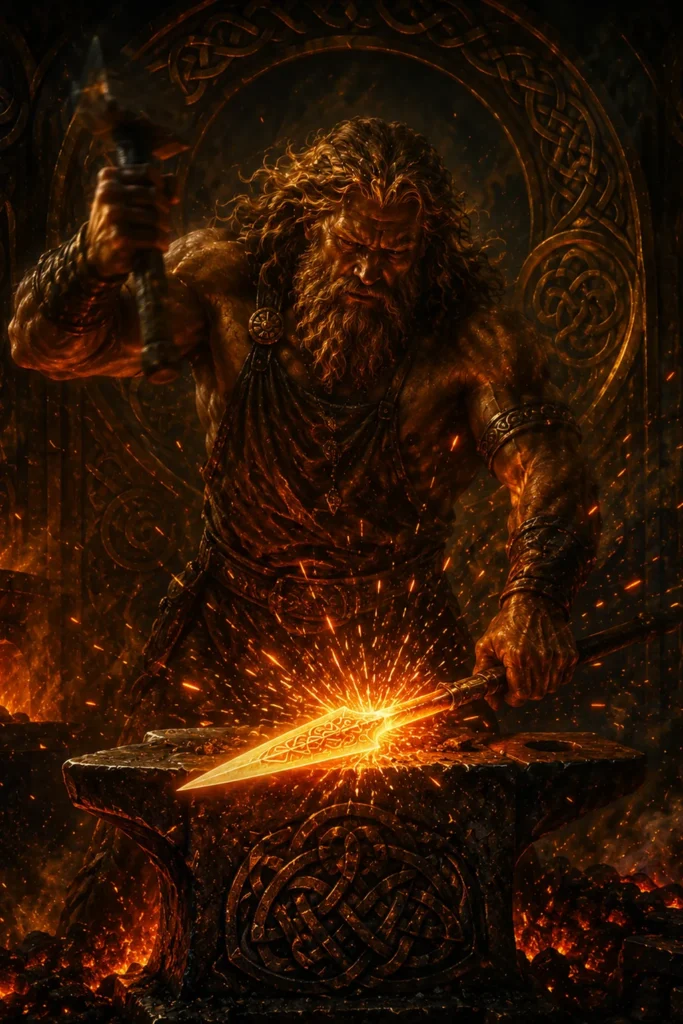
Goibniu, smith of the Tuatha Dé Danann

Goibniu is a god of Irish tradition.

Weaponsmith of the gods, brewer of the ale of immortality.

Table of Contents

Goibniu, the smith god of Irish mythology
Goibniu

Goibniu is the smith and fire god of the Tuatha Dé Danann in Irish mythology. He forges the weapons of the gods and brews the ale that grants the gods immortality; his name lives on in medieval protective formulas against illness.

Goibniu belongs to the triad of smiths of the Tuatha Dé Danann, together with Luchta, the wright, and Credne, the metalworker. His most important role appears in the tale of the second Battle of Mag Tuired, where he forges the weapons for the fight against the Fomori.

At a glance: Goibniu

Type: smith and fire god of the Tuatha Dé Danann
Origin: Ireland, Celtic cultural sphere
Texts: Middle Irish literature, especially the Battle of Mag Tuired
Period: Middle Irish literature, surviving in blessing formulas
Appearance: divine smith at forge and anvil

Historical Classification

Period of the Texts

Middle Irish literature, especially the tale of the second Battle of Mag Tuired; also Old and Middle Irish medieval charms.

Area of Diffusion

Ireland and the Celtic cultural sphere; in Wales the smith Gofannon preserves the same figure.

Sources

Good: Goibniu holds a firm place in the mythological cycle, established through Elizabeth A. Gray’s edition and the reference works.

Name and variants

Old Irish: goba means smith; Goibniu is the divine smith. The name thus names his craft directly, the forging at hearth and anvil.

Description

Appearance

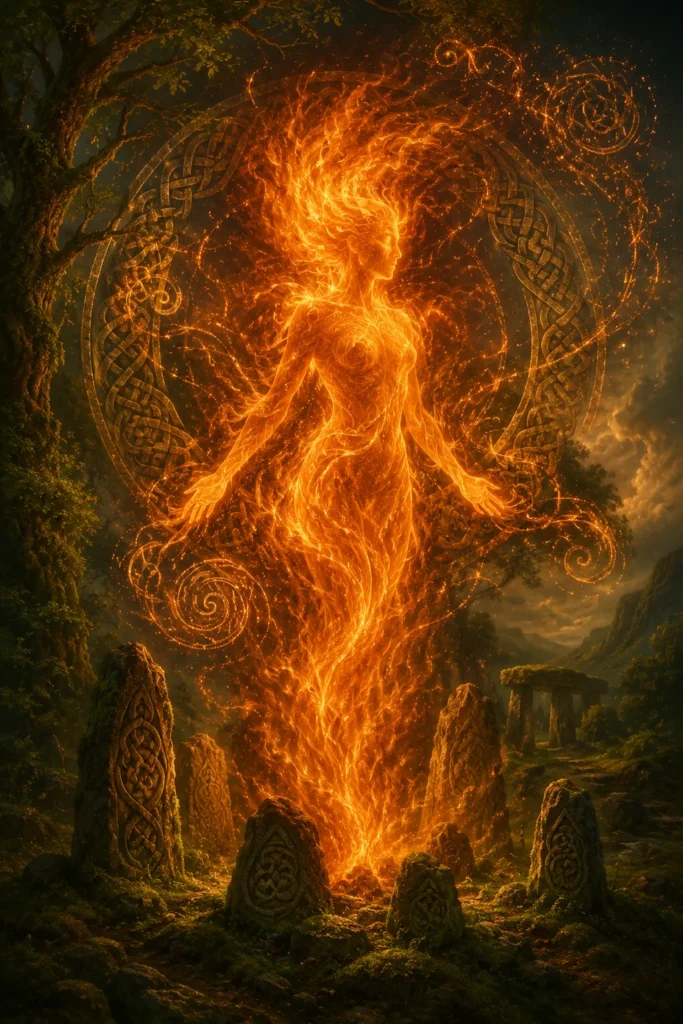
Goibniu is the god at forge and anvil, whose fire shapes the weapons of the gods. His fire is the creative, skilled fire of the forge; he embodies craft, strength and the transforming power of the embers.

Effect

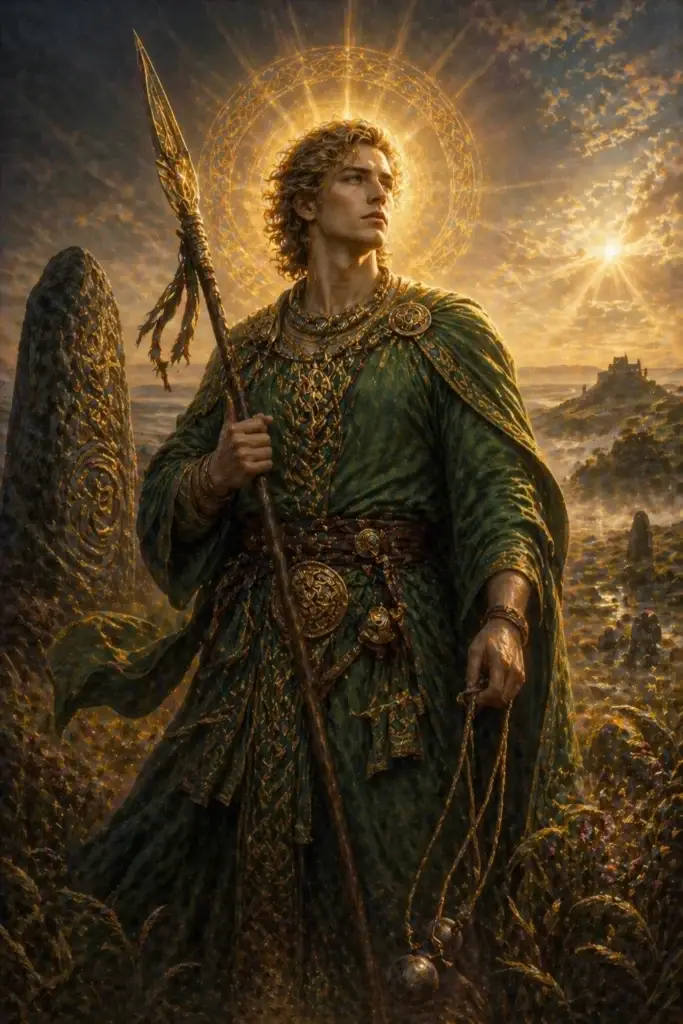
In the Battle of Mag Tuired, Goibniu forges spearheads and blades, completing them with three hammer blows, so that the gods are invincibly armed. He also brews the ale of Goibniu’s feast, which protects those who drink it from age and death.

Profile: Goibniu

The key aspects of the blacksmith god at a glance.

Cultural Context

Member of the triad of smiths of the Tuatha Dé Danann, together with Luchta, the wright, and Credne, the metalworker.

Responsible for

The arming of the gods in the fight against the Fomori, and the feast whose ale protects against age and death.

Depiction

Divine smith at forge and anvil, who completes spearheads and blades with three hammer blows.

Function

Creative forge fire: from metal come weapons, from ingredients the drink of immortality.

Cult

No formal temple cult; medieval Irish charms invoked Goibniu against thorns, splinters and illness.

Parallels

The Welsh Gofannon, the Greek Hephaestus and the Roman Vulcanus; along with the Germanic Wieland.

Three hammer blows for Mag Tuired

Old Irish goba means smith; Goibniu is the divine smith. He belongs to the Tuatha Dé Danann’s triad of craftsmen alongside Luchta, the wright, and Credne, the metalworker.

His most important role appears in the tale of the second battle of Mag Tuired, where he forges the weapons for the fight against the Fomori: spearheads and blades that he completes with three hammer blows, so that the gods are armed invincibly. He also brews the ale of Goibniu’s feast, which protects those who drink it from age and death.

Survival and classification

Goibniu is firmly embedded in Celtic mythology and appears in modern fantasy and Neopaganism as a Celtic god of the forge. The Welsh Gofannon preserves the same figure in Wales.

From a religious-studies perspective, Goibniu embodies the creative forge fire that turns metal into weapons and ingredients into the drink of immortality. He is a prime example of the smith god as culture-bringer and of the link between fire, craft and supernatural potency.

Charms against thorns and illness

No formal temple cult is recorded for Goibniu. However, his name survives in medieval charms: Old and Middle Irish incantations, preserved among others in a manuscript from St Gallen, invoke Goibniu against thorns, splinters and illness. These healing and protective charms show that the smith god was popularly invoked as a helper against ills.

Smith gods compared

Goibniu corresponds to the Welsh smith Gofannon, the Greek Hephaestus and the Roman Vulcanus as a divine smith. As a master of creative fire, he stands alongside the smith gods of many cultures, including the Germanic Wieland the Smith.

Frequently asked questions about Goibniu

Who was Goibniu?

The smith and fire god of the Tuatha Dé Danann, who forged the weapons of the gods.

What is the feast of Goibniu?

A banquet at which Goibniu brews an ale that protects the gods from age and death.

Was he invoked against illness?

Yes. Medieval Irish charms, for instance in a manuscript from St Gallen, invoked him against splinters and illness.

Further links

Recommended internal links:

Literature (selection)

A selection of key sources and studies:
  • Cath Maige Tuired. The Second Battle of Mag Tuired. Middle Irish.
  • Gray, Elizabeth A.: Cath Maige Tuired. The Second Battle of Mag Tuired. Dublin 1982.
  • MacKillop, James: Dictionary of Celtic Mythology. Oxford 1998.

Further standard works in the bibliography.

As the Irish god of the forge, Goibniu combines fire and smithcraft of the Tuatha Dé Danann in a single figure: his blades made the gods invincible, his ale protected them from age and death, and his name still aided against illness in medieval charms.

Classification & Protection

ILEVEL
The Protection Compass assigns this being to influence level I, Minor influence.

Against its influence, cross-cultural tradition names these protective means:

Compare in the Protection Compass →

Recommended protective means

iWell Guard

The simplest protective means in this collection: 41 layers of fine gold 999, platinum, silver and silicon, manufactured in Ruhla, Thuringia. It requires no activation, is bound to no person, and is effective within a radius of around 50 meters, even without being worn.

All protective means at a glance →