Szélatya, wind father and wind king of the fairy tales
By Ralf Ittermann · last reviewed on
Szélatya is a god of Hungarian folk tradition.
The giant who covers the wind hole in the mountain with his hat.
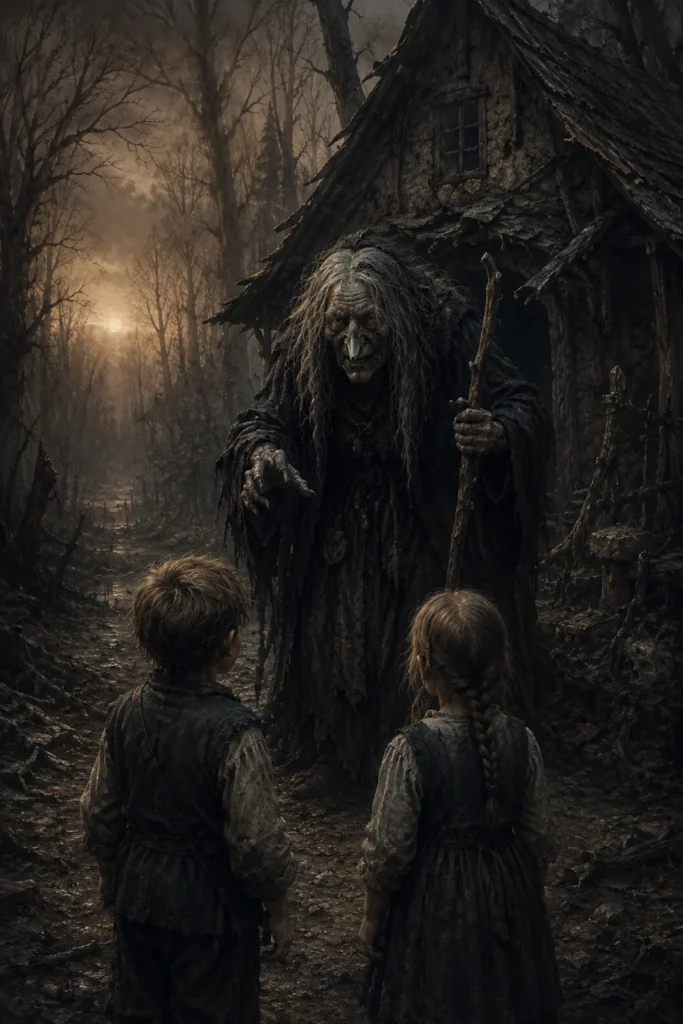
Szélatya, also written more simply as Szelatya, is the male personification of the wind in Hungarian folk belief. In the genuine material, the figure is attested chiefly as wind king or wind son: a giant who covers the wind hole in the mountain with his hat and produces wind when he lifts it.
Unlike the wind mother Szélanya, who manages the winds from her cave, the wind father is the lord who releases or withholds them. An important point of classification: this figure is genuine as a fairy-tale motif; the independent wind god Szélatya with Turkic trappings, by contrast, is a modern construction.
Type: Wind father, wind king, male personification of the wind
Origin: Hungarian folk belief, collected in the 19th and 20th centuries
Texts: Ethnographic lexicon, fairy tales, collections of incantations
Period: Collections from the 19th and 20th centuries
Appearance: Wind king or giant at the wind hole with the hat motif

Source context
Period of the Texts
Hungarian folk belief concerning the wind was collected in the 19th and 20th centuries; the male wind personification is recorded there as wind king and wind son.
Area of Diffusion
The Hungarian-speaking area: there, the wind king appears in fairy tales and folk belief, at the same wind hole in the mountain as the wind mother.
Sources
Genuine as a fairy-tale and folk-belief figure, not as a deity: the ethnographic lexicon lists wind king and wind son as personification and fairy-tale motif; the god Yel Ata is a Turkic-Tengrist overlay.
Name and variants
Hungarian: szél means wind, atya or apa father, hence wind father; alongside these stand szélkirály, wind king, and szél fiú, wind son. The male personification actually attested in folk belief is the wind king or wind son.
Nature and effect
Appearance
In the genuine material, it is the wind king or giant at the wind hole with the hat motif: he covers the wind hole in the mountain with his hat and produces wind when he lifts it. The description of a youthful, handsome man with silver weapons is a Turkic and neo-pagan overlay.
Effect
Szélatya is the lord over the winds, releasing or withholding them; he belongs to the same illness-bringing wind complex as the wind mother. A distinct father role is not sharply delineated in the material on illness and incantation; the actor there is usually the wind in a generic sense, the beautiful women, the witch or the devil.
Profile: Szélatya
The key aspects of the wind father at a glance.
Male wind personification of Hungarian folk belief, listed in the ethnographic lexicon as wind king and wind son, and internationally anchored in fairy-tale typology.
The winds themselves: the wind king releases or withholds them, depending on whether he covers the wind hole in the mountain with his hat.
Wind king or giant at the wind hole with the hat motif; the youthful, handsome man with silver weapons is a modern overlay.
Lord over the winds in fairy tales; in belief about illness he recedes behind the generic wind, the beautiful women, witch and devil.
The same defence as with the wind mother: throw an axe into the whirlwind, do not spit into it, do not curse the wind, send the affliction away.
Szélanya manages the winds from her cave; Szélatya releases or withholds them. The god Yel Ata is the Turkic overlay.
Wind king, wind son and the hat motif
Szél means wind, atya or apa father, hence wind father; alongside these stand szélkirály, the wind king, and szél fiú, the wind son. The male personification actually attested in folk belief is the wind king or wind son, listed in the ethnographic lexicon as personification and fairy-tale motif: a giant covers the wind hole in the mountain with his hat and produces wind when he lifts it.
To be distinguished from this is the second layer: Szélatya as an independent god, as Yel Ata with silver weapons and thunder horses, son of Kayra, is a Turkic-Tengrist overlay and not Hungarian folk belief. The genuine material knows no wind god, only a fairy-tale figure at the wind hole.
Between ethnography and Turanism
As with the wind mother, reception is split: ethnographically the figure counts as a personification, while in neo-pagan and Turanist circles it counts as a wind god; there is also a fairy-tale reception of the wind king, whom the hero encounters.
From a religious-studies perspective, the wind king and the wind son are genuine folk-belief and fairy-tale personifications. An important clarification: Szélatya as a wind god with silver weapons and a Turkic pantheon is a modern Turanist-neo-pagan construction, reinforced by Ipolyi’s romantic reconstruction, and is not attested as an independent Hungarian deity.
Defence within the illness-bringing wind complex
No documented cult exists. The defence is the same as for the Wind Mother: throw an axe into the whirlwind, do not spit into it, do not curse the wind, and send the personified evil away. A conjuring formula specifically naming Szélatya or the Wind King as the invoked instance cannot be found as a secure record; in the texts it is the wind itself that is addressed.
From Aiolos to Yel Ata: parallels
The closest relative is Szélanya, the Wind Mother: she is the keeper of the winds in her cave, while the Wind Father, as Wind King, releases or withholds the winds; both are personifications of the same wind complex, not a divine couple. Szélatya corresponds to the Turkic-Altaic Yel Ata; the wind hole and the cave recall the Greek Aiolos and his bag of winds. In terms of fairy-tale typology he belongs to the international type of the Wind King whom the hero encounters; as a northern counterpart of a lord of the winds, the Sámi Bieggolmai may be named.
Frequently asked questions about Szélatya
Who is Szélatya?
The Wind Father, attested in genuine Hungarian folk belief mainly as Wind King or Wind Son: the lord who releases or withholds the winds.
Is he an independent god?
No: attested as a fairy-tale figure, not as a deity; the wind god with Turkic attributes is a modern construction.
What is the hat motif?
A giant covers the wind hole in the mountain with his hat and produces wind whenever he lifts it.
Further links
Further reading:
- Szélanya – the Wind Mother as the female counterpart
- Aiolos – the Greek lord of the winds with his bag of winds
- Bieggolmai – the Sámi wind man
- Iron, Salt, Amulet – traditional protective means
- Protection Compass – an overview of protective means
Literature (selection)
Further standard works in the bibliography.
As the Hungarian Wind Father and Wind King of folk belief, Szélatya represents the male side of wind personification: the giant at the wind hole, whose hat decides between storm and calm, a fairy-tale figure, not a cult god.