iWell Guard

Szélanya, the wind mother at the wind hole

Szélanya is a goddess of Hungarian folk tradition.

The wind mother who governs the winds from the mountain.

GoddessHungary

Table of Contents

Szélanya, the wind mother of Hungarian folk belief
Szélanya

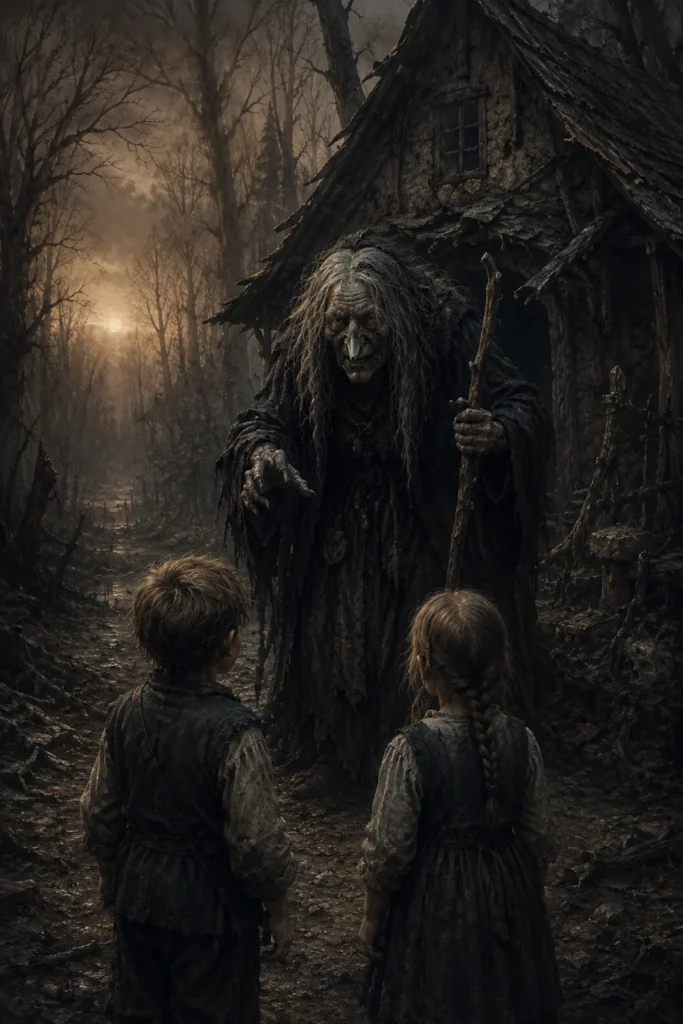
Szélanya, also written more simply as Szelanya, is the wind mother of Hungarian folk belief: a personification of the wind who sits as an old woman in a cave at the wind hole and manages the winds from there.

Important for classification: Szélanya is genuinely attested as a fairy-tale and folk-belief motif, not as a cult deity. The wind goddess with a Turkic pantheon circulating online is a modern construction. The actually influential complex of folk belief is the illness-bringing wind, against which the Hungarian incantations are directed.

At a glance: Szélanya

Type: Wind mother, personification of the wind
Origin: Hungarian folk belief, collected in the 19th and 20th centuries
Texts: ethnographic lexicon, incantation collections, fairy tales
Period: oldest incantation record 1516, collections from the 19th and 20th centuries
Appearance: old woman in a cave at the wind hole

Context of Tradition

Period of the Texts

Hungarian folk belief concerning the wind was collected in the 19th and 20th centuries; the oldest textual record of the incantation type is the Szelestei incantation of 1516.

Area of Diffusion

The Hungarian-speaking area: there the wind mother is at home as a fairy-tale and folk-belief figure, alongside the wind son and wind king.

Sources

Genuinely attested as a fairy-tale and folk-belief figure, not as a deity: the Hungarian ethnographic lexicon and the incantation collection by Éva Pócs; Ipolyi’s mythological systematisation of 1854 is considered speculative.

Name and variants

Hungarian: szél means wind, anya mother, hence wind mother; the texts often use szél anyja, the mother of the wind. The ethnographic lexicon lists under the entry wind the personifications Szélanya, wind son and wind king, who blow from a hole in a mountain.

Appearance and behaviour

Appearance

In the genuine material, Szélanya is an old woman or mother in a cave or at the wind hole who manages the winds. In one variant, the wind mother lives in her cave with five wind sons.

Effect

As a narrative figure, Szélanya is mistress and manager of the winds. The actually influential complex is the illness-bringing wind: it was said that someone had been struck by the wind; illnesses were considered brought by the wind, the witches’ wind, or the wind of the beautiful women. The whirlwind is regarded as a wind of hell in which witches and devils dance.

Profile: Szélanya

The most important aspects of the wind mother at a glance.

Cultural Context

Personification of the wind in Hungarian folk belief, listed alongside the wind son and wind king as a fairy-tale motif in the ethnographic lexicon.

Responsible for

The winds, which she manages from a hole in a mountain; in folk belief she belongs to the complex of the illness-bringing wind.

Depiction

Old woman or mother in a cave at the wind hole; in one variant with five wind sons at her side.

Sphere of Influence

Mistress and manager of the winds; the whirlwind is regarded as a wind of hell, illnesses as brought by the wind.

Forms of Warding

Throwing an axe or knife into the whirlwind, not spitting into it, not cursing the wind; along with the incantations that send the wind’s affliction away.

Related

Szélatya as the male counterpart, the Slavic wind mothers as well as the Turkic-Altaic Yel Ana as a subsequently attached layer.

From the wind hole in the mountain to the wind goddess of the internet

Szél means wind, anya mother; in the texts the figure often appears as szél anyja. The Hungarian ethnographic lexicon lists under the entry wind the personifications Szélanya, wind son and wind king, who blow from a hole in a mountain; in one variant the wind mother lives in a cave with five wind sons. There she is explicitly classified as a personification and fairy-tale motif.

A second layer was added later: Arnold Ipolyi’s mythological systematisation of 1854 is considered speculative and over-interpreted, and the modern notion of a Hungarian wind goddess builds on its legacy. Anyone wishing to understand the wind mother must separate the two layers: the genuine folk-belief motif of the old woman at the wind hole and the later systematisation into a deity.

Divided reception and classification

Reception is divided: academically, Szélanya is regarded as a personification motif, whereas popularly and among neopagans she is seen as a wind goddess in a reconstructed Turanian pantheon; online, the two levels are constantly conflated.

From a religious-studies perspective, the personified female wind, szél anyja, is genuine folk belief in fairy tales and notions of illness. Important clarification: the wind goddess Szélanya, daughter of Kayra, with her own cult, is by contrast a romantic systematisation in Ipolyi’s legacy and a modern Turanist-neopagan invention, not attested as a deity.

Axe, taboo and ráolvasás: warding off the wind

An attested cult of Szélanya does not exist. What is attested is practical warding off: it was taboo to curse the wind; an axe or knife was thrown into the whirlwind and one did not spit into it. In the incantations, the ráolvasás against wind-borne illnesses, the personified affliction is sent away, told to return to where it came from. The oldest textual record is the Szelestei incantation of 1516. A fixed formula invoking Szélanya as a named deity is not reliably attested.

Wind mothers and wind figures compared

The next counterpart is found closer to home: Szélatya, the wind father and wind king, the male personification of the same wind complex; the wind mother manages the winds from her cave, while the wind king releases or withholds them. Szélanya corresponds to the Slavic wind mothers, among them the Polish Wietrzyca; the Turkic-Altaic Yel Ana is the layer that was attached later. Sending away the personified wind of illness is a widespread type of incantation; as a more distant counterpart of a wind lord, the Sami Bieggolmai may be mentioned.

Frequently asked questions about Szélanya

Who is Szélanya?

The wind mother, a personification of the wind in Hungarian folk belief and in fairy tales. She manages the winds from a hole in a mountain.

Is she a real goddess?

As a figure of fairy tale and folk belief, yes; as a cult goddess with a Turkic pantheon, she is a modern construction.

What is ráolvasás?

An incantation in which the personified wind affliction is addressed and sent away, told to return to where it came from.

Further links

Recommended internal links:

Literature (selection)

A selection of key sources and studies:
  • Magyar néprajzi lexikon, Volume 4, entry szél. Budapest 1981.
  • Pócs, Éva (ed.): Magyar ráolvasások. Budapest 1985.
  • Ipolyi, Arnold: Magyar Mythologia. Pest 1854.

Further standard works in the bibliography.

As the Hungarian wind mother and mistress of the winds, Szélanya belongs to the fairy tales and incantations of folk belief: not a cult goddess, but a figure who still shows how a people turned the wind into a person.

Classification & Protection

IILEVEL
The Protection Compass assigns this being to influence level II, Noticeable influence.

Against its influence, cross-cultural tradition names these protective means:

Compare in the Protection Compass →

Recommended protective means

iWell Guard

The simplest protective means in this collection: 41 layers of fine gold 999, platinum, silver and silicon, manufactured in Ruhla, Thuringia. It requires no activation, is bound to no person, and is effective within a radius of around 50 meters, even without being worn.

All protective means at a glance →