Aiolos, keeper of the winds on the floating island
By Ralf Ittermann · last reviewed on
Aiolos is a god of Greek tradition.
Gatekeeper of the winds and giver of the wind-bag of the Odyssey.
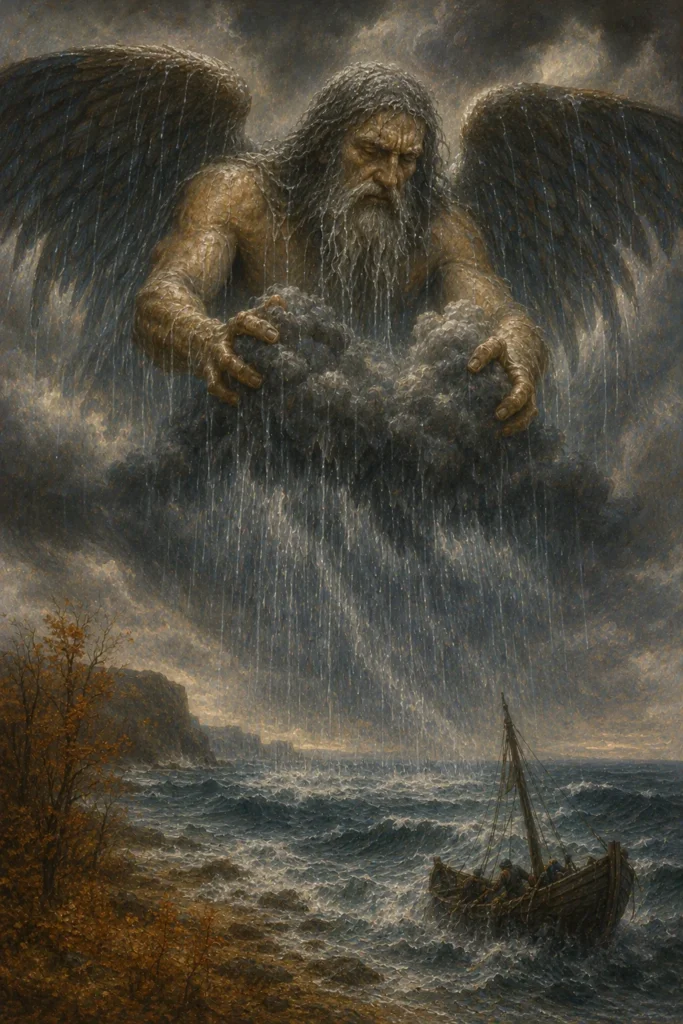
In Greek mythology, Aiolos is the keeper of the winds, appointed to rule over them by Zeus. In Homer’s Odyssey, Book 10, he dwells on the floating island of Aiolia and gives Odysseus a bag made of ox-hide, in which all the storm winds are confined.
His status is noteworthy: in Homer, Aiolos is a mortal, not a wind god. Only in post-Homeric tradition, above all in Virgil, is he elevated to a divine king of the winds who tames them within a mountain cave.
Type: Keeper and lord of the winds, post-Homeric divine wind king
Origin: Greek mythology, key passage in Homer’s Odyssey
Texts: Odyssey, Book 10; Virgil, Aeneid, Book 1; Diodorus
Period: 8th century BC to the imperial era
Appearance: a royal figure who tames the winds within a cave

Textual history
Period of the Texts
The attestations range from Homer to Roman poetry, from the 8th century BC to the imperial era.
Area of Diffusion
The Greek cultural sphere, including the Aeolian or Lipari Islands, which were regarded as the realm of the lord of the winds.
Sources
Good: the key passages appear in the Odyssey and the Aeneid, alongside the euhemeristic interpretation in Diodorus.
Name and variants
Greek: Aíolos, ‘the swiftly moving’ or ‘the shimmering one’, fitting the shifting nature of the winds. One epithet is Hippotades, son of Hippotes.
Form and effect
Appearance
In Homer, Aiolos is not described physically; in Virgil, he sits enthroned with a sceptre, taming the winds within a mountain cave. His most distinctive attribute is the wind-bag or wind-sack.
Effect
Aiolos manages the winds, locking them away and releasing them; he is a mediator and gatekeeper, not a blowing wind himself. Diodorus interprets him euhemeristically as a pious king of Lipara who predicted the winds from volcanic smoke.
Profile: Aiolos
The key aspects of the wind lord at a glance.
A literary-mythical figure of Greek epic, appointed by Zeus as keeper of the winds, with no altar or offerings of his own.
Sailors and their sailing winds: Aiolos decides which winds may blow and which remain locked away.
A royal figure on the floating island of Aiolia; in Virgil, he sits enthroned with a sceptre before the cave of the winds.
Gatekeeper and mediator: he locks the winds away and sets them free, but does not blow himself.
No cult of his own is attested. The significance of Aiolos lies in the narrative of mastering the winds, not in ritual.
Not a brother, nor the father, of the Anemoi: the wind gods descend from Astraios, while Aiolos is merely their keeper.
From the Host of the Odyssey to Virgil's Wind King
The name Aíolos means ‘the swiftly moving’ or ‘the shimmering one’. The key passage is Homer’s Odyssey, Book 10: Aiolos dwells on the floating island of Aiolia and has been made keeper of the winds by Zeus. Odysseus receives from him the ox-hide wind-bag with the storm winds confined inside; his companions suspect it contains gold and open it.
In Virgil’s Aeneid, Book 1, the host has become a divine king of the winds, who, at Juno’s request, unleashes a storm against Aeneas. Diodorus, in turn, interprets Aiolos euhemeristically as a pious king of Lipara who predicted the winds from volcanic smoke.
Legacy in Language and Art
Through Virgil, Aiolos became the fixed wind king of European art. He lives on in the terms Aeolian harp and aeolian, meaning shaped by wind, as well as in the name of the Aeolian Islands.
From a religious-studies perspective, Aiolos illustrates the transition from a keeper figure to a wind god. Three clarifications: in Homer he is a keeper, not a god; his deification is post-Homeric. He is not identical with the ancestor of the Aeolians, the son of Hellen; there are three distinct figures bearing this name. And the wind-bag contained storm winds, not gold.
Narrative Rather Than Ritual
No cult of Aiolos is attested; that must be stated honestly. He is a purely literary-mythical figure without altars or offerings. His significance lies in the narrative of mastering the winds: whoever, like Odysseus, calls on him experiences hospitality and receives the winds bundled together, yet must reckon with the possibility that human curiosity will loosen the bond.
Lords of the Wind in Other Traditions
As keeper of the winds, Aiolos stands structurally alongside the Iroquois wind ruler Gaoh, who holds the four animal winds in check, and the Egyptian lord of the wind. Within the Greek world, he must be distinguished from the Anemoi, the actual wind gods, including Boreas and Zephyros. The motif of the wind-bag or wind-knot is also widespread in seafaring tradition.
Frequently Asked Questions about Aiolos
Was Aiolos a wind god?
In Homer, he is a mortal and keeper of the winds; only in post-Homeric tradition, above all in Virgil, is he elevated to a divine king of the winds.
What was in the wind-bag?
The storm winds, which Aiolos had confined for Odysseus. His companions suspected it held gold and opened the bag.
Is he the ancestor of the Aeolians?
No. That is a different figure of the same name; there are three distinct Aioloi.
Further links
Further reading:
- Greece – all beings of the Greek cultural sphere
- Anemoi – the wind gods over whom Aiolos rules
- Boreas, Zephyros – two of the four main winds
- Amulet, protective candle, salt – traditional protective means
- Protection Compass – protective means at a glance
Literature (selection)
Further standard works in the bibliography.
As lord of the winds, Aiolos is less a weather god than an officeholder: the wind-bag of the Odyssey turns the storm into something that can be managed, yet which comes loose again through a single careless movement of the hand.