Zephyros, herald of spring with a dark side
By Ralf Ittermann · last reviewed on
Zephyros is a god of the Greek tradition.
Mild herald of spring with deadly jealousy in myth.
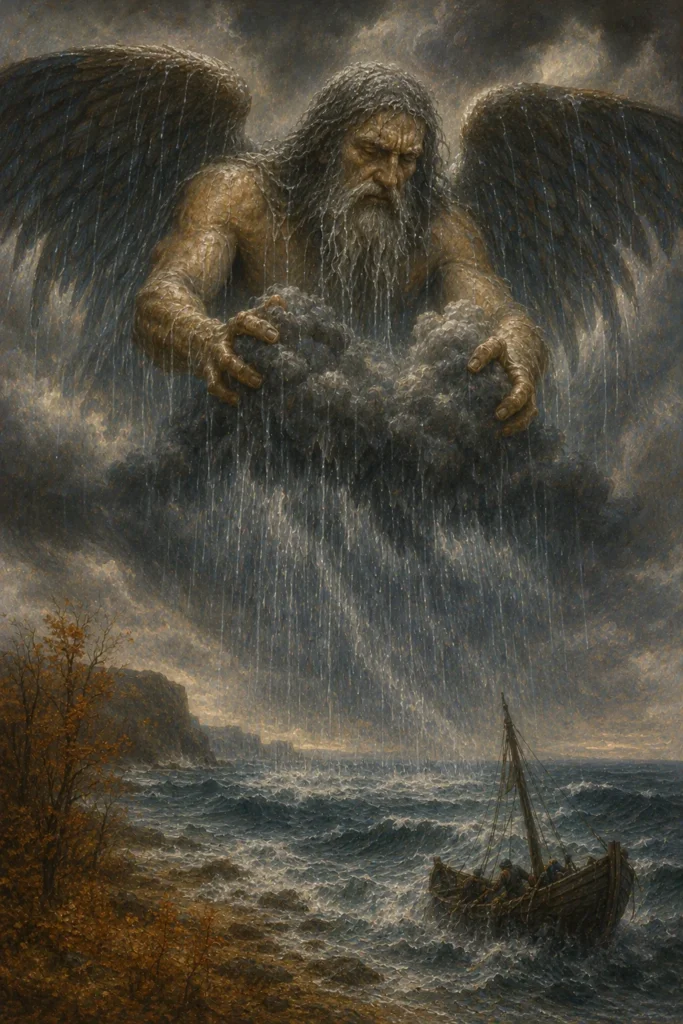
Zephyros, Roman Favonius, is the Greek god of the mild, fertile west wind and one of the four main winds. He brings spring and sires immortal horses.
His dark side is shown by the myth of the death of Hyakinthos: out of jealousy, Zephyros deflected the discus thrown by Apollo with a gust of wind, killing the youth.
Type: god of the mild west wind, one of the four main winds
Origin: Greek mythology, son of Astraios and Eos
Texts: Homer, Iliad; Ovid, Fasti; Pausanias
Period: Hesiod and Homer through to the Imperial era
Appearance: handsome, winged youth

Historical Classification
Period of the Texts
Attested from Hesiod and Homer through to the Imperial era; cult evidence ranges from Bacchylides to Pausanias.
Area of Diffusion
The Greek cultural sphere; cult sites are attested at Lakiadai on the Sacred Way and on Rhodes.
Sources
Good: attested multiple times with cult, from the Iliad through Ovid’s Fasti to Pausanias’s evidence of an altar.
Name and variants
Greek: Zéphyros, west wind, often associated with the darkness of the west. Roman Favonius, the favouring one.
Appearance and symbolism
Appearance
Zephyros is a handsome, winged youth; in mosaics he appears as the personification of spring with a fruit basket.
Effect
He embodies mildness, spring and fertility: as a mild spring wind he awakens growth and favours travel. In the Hyakinthos myth he shows deadly jealousy, and in the Iliad he sires Achilles’ immortal horses, Xanthos and Balios, with the harpy Podarge.
Profile: Zephyros
The key aspects of the west wind at a glance.
One of the four main winds of the Greeks, son of Astraios and Eos, Roman Favonius.
Farmers and seafarers: he brings spring, helps with winnowing grain and provides sailing wind.
Handsome, winged youth; in mosaics the personification of spring with a fruit basket, in Botticelli the one blowing at the left edge of the picture.
Mildness, spring and fertility; in myth also the gust of wind that deflects the discus onto Hyakinthos.
Altar on the Sacred Way at Lakiadai, a sanctuary on Rhodes, offerings by the Argonauts for a sailing wind.
The Roman Favonius; as a favourable wind he is close to the cool Egyptian north wind Qebui.
Hyakinthos, Chloris and the horses of Achilles
Zephyros is the son of Astraios and Eos, according to Hesiod. In the Iliad he sires Achilles’ immortal horses, Xanthos and Balios, with the harpy Podarge; in Ovid he is linked with the nymph Chloris or Flora, in Alcaeus with Iris.
His darkest myth is the death of Hyakinthos: out of envy at Apollo’s love for the youth, Zephyros deflected the thrown discus with a gust of wind and killed him. The herald of spring thus carries a jealous, deadly dark side.
From Botticelli to the English zephyr
The abduction or courtship of Zephyros for Chloris and Flora is popular in art; on Botticelli’s Birth of Venus, the winged Zephyros blows on the left. The English word zephyr still denotes a mild breeze today.
From a religious-studies perspective, Zephyros represents the largely favourable wind god with a dark side. Three clarifications: his wife is, depending on the source, Chloris and Flora or Iris, which is not a contradiction but different traditions. Xanthos and Balios are the horses of Achilles, not Zephyros’s own. And the altar is located at Lakiadai, not in Eleusis itself.
Altars for the favourable wind
Zephyros demonstrably received cult worship: Pausanias mentions an altar of Zephyros on the Sacred Way between Athens and Eleusis near the place Lakiadai. In Bacchylides, Eudemos on Rhodes dedicates a sanctuary to Zephyros as thanks for the winnowing of grain, and the Argonauts made offerings to him for a sailing wind.
Favourable winds in comparison
Frequently asked questions about Zephyros
Which wind is Zephyros?
The west wind, Roman Favonius, mild and fertile, herald of spring.
How did he kill Hyakinthos?
Out of jealousy, he deflected the discus thrown by Apollo with a gust of wind, so that it struck Hyakinthos fatally.
Who is his wife?
Depending on the source, Chloris and Flora or Iris; these are different traditions, not a contradiction.
Further links
Further reading:
- Greece – all beings of the Greek cultural sphere
- Anemoi – the wind gods at a glance
- Boreas, Skiron – the north wind and another wind of the Tower of the Winds
- Protective candle, amulet, incense burning – traditional protective means
- Protection Compass – protective means at a glance
Literature (selection)
Further standard works in the bibliography.
As the Greek west wind, Zephyros carries spring to Hellas, yet his myth tells that even a mild spring breeze can kill: between the basket of fruit and the discus throw lies only a single gust.