iWell Guard

Euros, a latecomer among the principal winds

Euros is a god of the Greek tradition.

The warm east wind, still missing in Hesiod.

Table of Contents

Euros, the East Wind of the Greeks
Euros

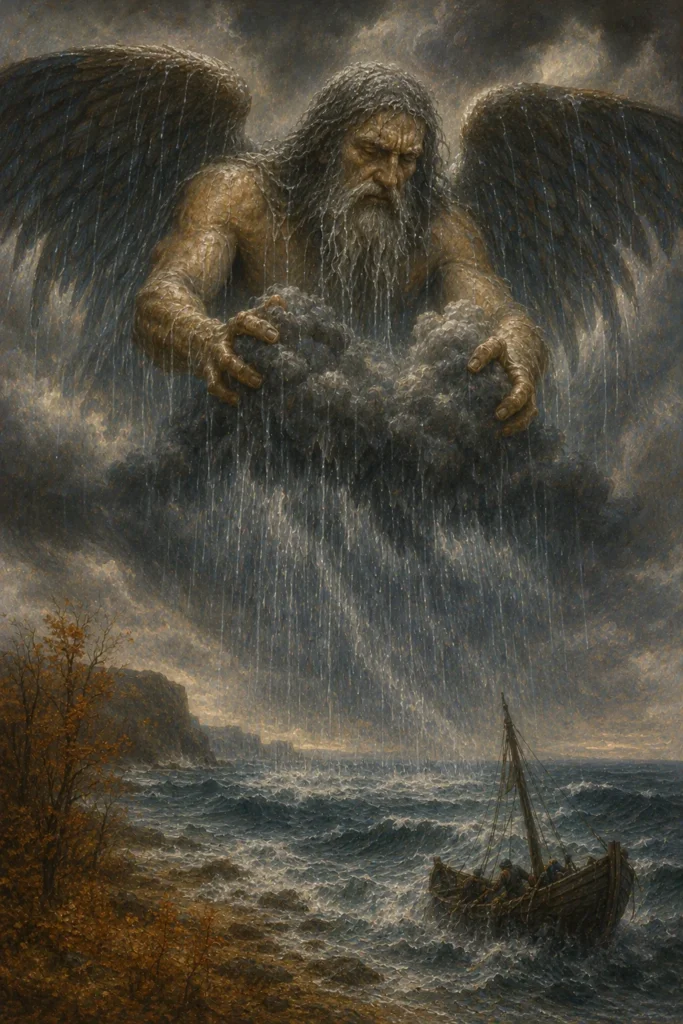
Euros, Roman Eurus, is the Greek god of the warm east wind and is counted among the four principal winds. In the sources he is regarded as the warm rain wind of the east, who stirs up storms in interplay with other winds.

His special status is notable: as the only principal wind, Euros is absent in Hesiod, and only later authors make him a son of Astraios. He had no cult of his own.

At a glance: Euros

Type: god of the warm east wind, youngest of the four principal winds
Origin: Greek mythology, only listed as son of Astraios at a late stage
Texts: Homer, Odyssey; Nonnus, Dionysiaca; Latin poetry
Period: Homer to the imperial period, still absent in Hesiod
Appearance: personified autumn, fiery wind in the east

Context of tradition

Period of the Texts

Attested from Homer to the imperial period; in Hesiod, Euros is still absent, and only Nonnus gives him the same parents as the other winds.

Area of Diffusion

The Greek cultural sphere; his mythical location lies in the far east, near the palace of Helios.

Sources

Moderate: Homer and Latin poetry mention him, but a cult of his own is absent; the source material is thinner than that of his brothers.

Name and variants

Greek: Eûros, east wind, probably related to eurýs, wide, referring to the wide eastern sky. Roman Eurus, sometimes equated with Vulturnus.

Description

Appearance

On the Antioch mosaic Euros personifies autumn; in Nonnus he is fiery and dwells near the palace of Helios in the far east.

Effect

Euros is a warm, often rain-bringing east wind, who stirs up storms in interplay with other winds. Already Homer describes in the Odyssey how Euros and Notos clash; in Latin poetry he is a fixed topos of storm and seafaring.

Profile: Euros

The key aspects of the east wind at a glance.

Cultural Context

The fourth principal wind of the Greeks, yet the youngest in the family tree: in Hesiod he is still entirely absent.

Object of Influence

Seafaring and weather of the east: a warm, often rain-bringing wind, dangerous in interplay with others.

Depiction

Personification of autumn on the Antioch mosaic; in Nonnus fiery and dwelling in the far east.

Function

Storm and seafaring topos of poetry: already in the Odyssey, Euros clashes with Notos.

Cult

Not attested. The only trace is a papyrus fragment that calls Euros a saviour of Sparta.

Comparables

The Roman Eurus and Vulturnus; typologically the Egyptian east wind god Henkhisesui, without historical connection.

The missing son of Astraios

Eûros means east wind and is probably related to eurýs, wide, referring to the wide eastern sky. His family tree is notable: Euros is the only principal wind whom Hesiod does not name as a son of Astraios in the Theogony; there only Zephyros, Boreas and Notos appear. Only later authors such as Nonnus give him these parents.

In poetry, however, he is present early on: already Homer describes in the Odyssey how Euros and Notos clash, and Latin epic made Eurus a fixed part of its storm scenes.

The afterlife of Eurus

In Latin poetry, Euros is a fixed storm and seafaring topos; today the name is present in meteorology and popular culture.

From a religious-studies perspective, Euros shows that not all four cardinal winds are equally old or equally established. Two clarifications: Euros is not consistently East, in some wind roses he shifts towards Southeast. And he is missing from Hesiod’s list of Astraios’s sons, making him the least religiously established of the four main winds.

Saviour of Sparta without an altar

No cult of his own is attested for Euros. The only trace is a Strasbourg papyrus fragment that calls him a saviour of Sparta, a local or occasional invocation, not an established cult. Otherwise, he belongs to the collective offerings for the Anemoi, where the winds were honoured together.

East winds here and on the Nile

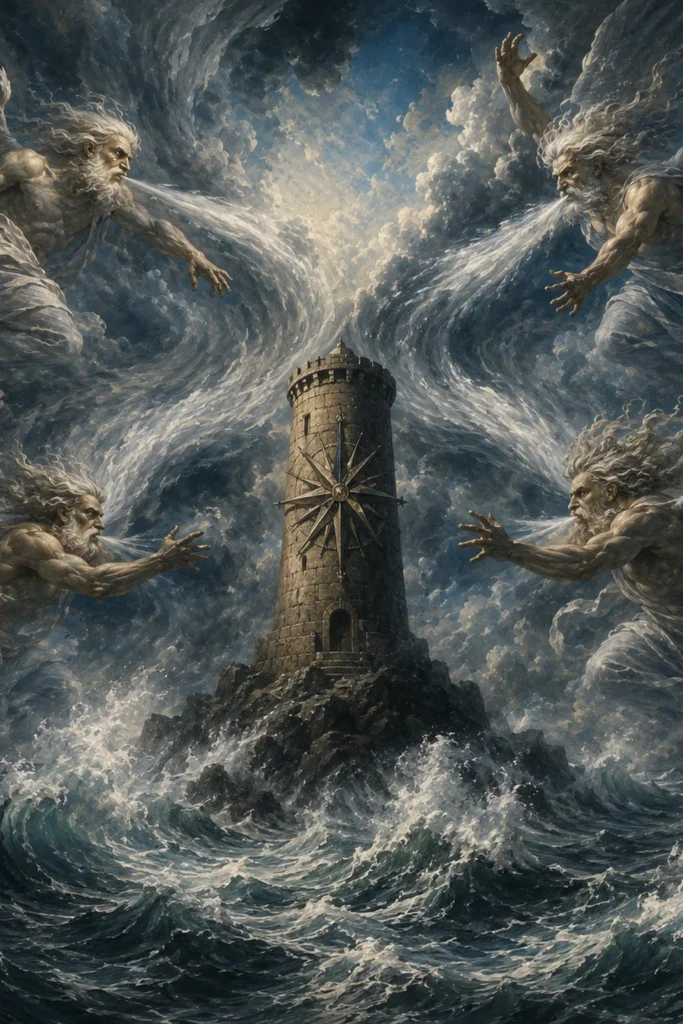
Euros belongs to the Anemoi; his brothers are Boreas, Notos and Zephyros. In the eight-part wind rose of the Tower of the Winds, Apeliotes stands beside him. As an east wind, Euros is also typologically opposite the Egyptian east wind god Henkhisesui, without any historical connection.

Frequently asked questions about Euros

Which wind is Euros?

The east wind, Roman Eurus, warm and often rain-bringing; in some wind roses shifted towards Southeast.

What makes Euros special?

He is the only main wind missing from Hesiod, and has no cult of his own.

Was Euros worshipped?

No, no cult of his own is documented; only a local invocation as saviour of Sparta has been passed down.

Further links

Recommended internal links:

Literature (selection)

A selection of key sources and studies:
  • Hesiod: Theogonie. 8th century BC.
  • Homer: Odyssee, Buch 5. 8th century BC.
  • Nonnos: Dionysiaka. 5th century.

Further standard works in the bibliography.

As the Greek east wind, Euros remains the latecomer of the family: a warm rain wind with a firm place in poetry, but without a father in Hesiod and without an altar of his own.

Classification & Protection

IILEVEL
The Protection Compass assigns this being to influence level II, Noticeable influence.

Against its influence, cross-cultural tradition names these protective means:

Compare in the Protection Compass →

Recommended protective means

iWell Guard

The simplest protective means in this collection: 41 layers of fine gold 999, platinum, silver and silicon, manufactured in Ruhla, Thuringia. It requires no activation, is bound to no person, and is effective within a radius of around 50 meters, even without being worn.

All protective means at a glance →