The Anemoi: Greece's Winds as a Divine Family
By Ralf Ittermann · last reviewed on
The Anemoi are gods of Greek tradition.
Four main winds with their own cult, from Boreas to Zephyros. The Anemoi were worshipped as the Wind Gods of the Greeks, each tied to a cardinal direction. Grouped as a divine family, Greece’s winds are known collectively as the Anemoi, and this overview explains how the group is understood.
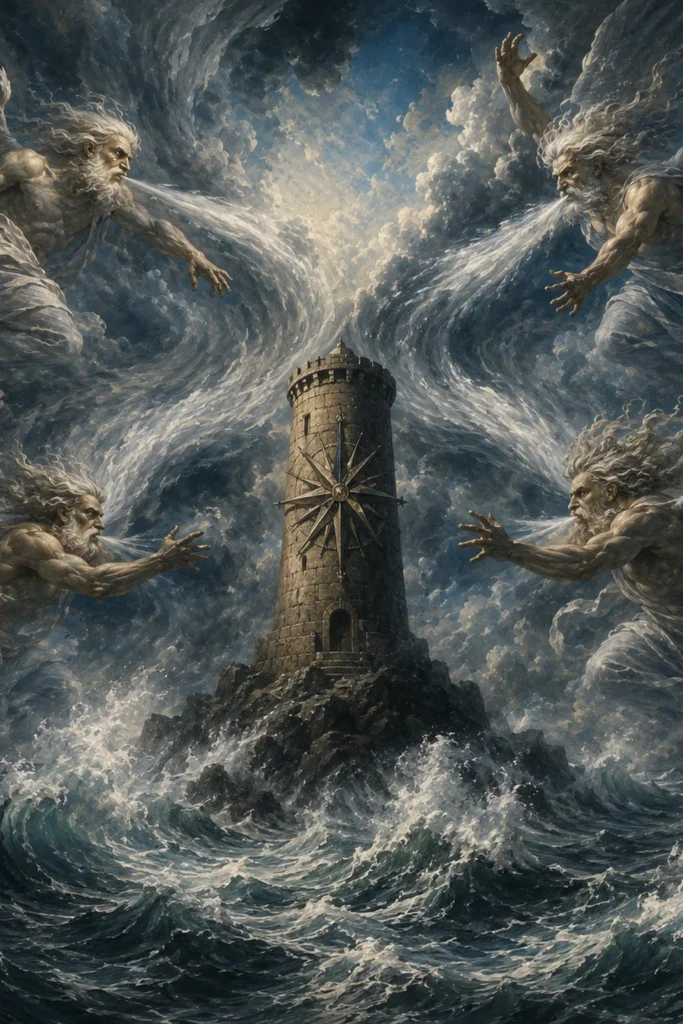
The Anemoi, in Latin Venti, are the wind gods of Greek mythology as a collective. The four main winds are Boreas in the north, Zephyros in the west, Notos in the south and Euros in the east. They bring seasonal winds, churn up the sea and were venerated with their own offerings.
This page provides an overview of the divine family; each individual wind has its own page with its myths, iconography and cult evidence.
Type: Wind gods as a collective, four main winds and further directional winds
Origin: Greek mythology, the favourable winds as sons of Astraios and Eos
Texts: Hesiod, Theogony; Homer; Pausanias; Orphic Hymns
Period: Hesiod and Homer through to the imperial era
Appearance: winged men or wind-horses
Region of origin and sources
Period of the Texts
Attested from Hesiod and Homer through to the imperial era; cult evidence ranges from Aristophanes to Pausanias.
Area of Diffusion
The entire Greek cultural area: wind altars are attested in, among other places, Titane, Delphi and Koroneia.
Sources
Good: attested multiple times with genuine cult evidence, from the Theogony through Aristophanes and Virgil to Pausanias and the Orphic Hymns.
Name and variants
Greek: Anemoi, the plural of ánemos, wind; in Latin Venti. The Roman equivalents of the four main winds are Aquilo, Favonius, Auster and Eurus.
Appearance
Appearance
Two traditions exist side by side: human-shaped, winged gods with a cave on the Thracian mountains, or horse-shaped wind-horses. Iconic is the Tower of the Winds in Athens with eight individualised wind gods and their attributes.
Effect
The Anemoi bring seasonal winds and weather conditions, churn up the seas and fan funeral pyres. As wind-horses they impregnate mares and, together with Harpies, sire immortal horses.
Profile: the Anemoi
The key aspects of the wind gods at a glance.
A distinct class of gods within Greek religion with genuine cult practice; the favourable winds are regarded as sons of Astraios and Eos.
Sailors, farmers and cult communities: harvests, seafaring and weather conditions depended on the Anemoi.
Winged men with individual attributes, as at the Tower of the Winds in Athens, or horse-shaped wind-horses.
Seasonal winds and weather conditions; the destructive storm winds, by contrast, stem from Typhoeus.
Black lambs for harmful winds, white ones for favourable winds; wind altars in Titane, Delphi and Koroneia.
The Harpies as female storm beings; typologically related to the Vedic Vayu and wind deities of other cultures.
From Three Strong-hearted Winds to the Eight-fold Circle
In Hesiod, Theogony 378 to 380, Eos bore Astraios only three strong-hearted winds: Zephyros, Boreas and Notos; Euros is missing there and is only added later. The Theogony thereby separates the good, god-sent seasonal winds from the destructive storm winds that stem from Typhoeus. Homer names the winds at the banquet in Thrace.
The Tower of the Winds in Athens extends the circle to eight directional winds: alongside the four main winds, it includes Apeliotes, Kaikias, Lips and Skiron, each with its own attributes.
From the Tower of the Winds to the Wind Rose
The Tower of the Winds shaped the modern iconography of the wind rose and compass; the Anemoi are a standard topic in the history of mythology and meteorology.
From a religious-studies perspective, the Anemoi illustrate the personification of the winds as a distinct class of gods with genuine cult practice. Three clarifications belong here: in Hesiod there are only three winds, with Euros added later. Only the favourable winds are sons of Astraios; the storm winds stem from Typhoeus. And the father is Astraios, not Aiolos, who is merely the keeper of the winds.
Wind Offerings and Wind Altars
Unlike many personifications, the Anemoi received genuine offerings: black lambs were sacrificed for harmful winds, white ones for favourable winds, as recorded by Aristophanes and Virgil. In Titane near Sicyon there was a wind altar where, according to Pausanias, a priest made offerings at four pits one night each year. Wind altars are also attested in Delphi and Koroneia, alongside the Orphic Hymns to the Winds.
Venti, Harpies and Distant Relatives
The Anemoi correspond directly to the Roman Venti. Related to them are the Harpies as female storm beings; typologically, without any historical connection, the Anemoi are close to wind deities of other cultures such as the Vedic Vayu. To be distinguished from the collective is Aiolos, keeper of the winds: he commands the winds, but is not their father.
Frequently Asked Questions about the Anemoi
Who are the four main winds?
Boreas in the north, Zephyros in the west, Notos in the south and Euros in the east, in Roman terms Aquilo, Favonius, Auster and Eurus.
How many winds does Hesiod name?
Only three: Zephyros, Boreas and Notos. Euros is missing there and is only added later.
Who is the father of the Anemoi?
Astraios, with the goddess Eos; Aiolos, by contrast, is merely the keeper of the winds.
Further links
Literature (selection)
Further standard works in the bibliography.
As Greek wind gods with their own cult, the Anemoi order the sky: the four main winds occupy the cardinal directions, the Tower of the Winds extends the circle, and each of these figures bears its own face.