Sajama, the hurled head of Mururata
By Ralf Ittermann · last reviewed on
Sajama is a god of Aymara tradition.
Bolivia’s highest mountain, in myth a severed head. The myth tells how the hurled head became a mountain in its own right. Sajama is venerated in Bolivia as a mountain god, and the following account explains its place within this mountain worship.
At about 6542 metres, Sajama is Bolivia’s highest mountain, an extinct stratovolcano in the country’s oldest national park and a sacred Achachila. Numerous archaeological sites lie on its slopes, and living veneration is documented to this day.
The beheading legend gives him his place in myth: Sajama is said to be the severed head of Mururata, the beheaded one, hurled far across the Altiplano. As recently as 1997, a religious ceremony was held before an ice core drilling, so as not to anger the mountain deities.
Type: Highest mountain Achachila of Bolivia, extinct stratovolcano
Origin: Aymara region in the Department of Oruro, Bolivia
Texts: pre-Inca archaeology, ethnography of the living cult
Period: Late Intermediate Period to the present
Appearance: near-perfect, ice-covered volcanic cone

Historical Background
Period of the Texts
The surrounding area is pre-Inca: around forty archaeological sites, mostly from the Late Intermediate Period, surround the mountain; the cult lives on to this day.
Area of Diffusion
The Department of Oruro near the Chilean border; the mountain gave its name to Bolivia’s oldest national park.
Sources
Well documented: archaeology and the living cult are recorded; however, the mountain-specific offering ethnography remains thinner than that of Illimani.
Name and variants
Aymara: The etymology is disputed. Suggestions include an Aymara term meaning west, as well as the popular interpretation the exile or the expelled one, which fits the beheading legend.
Appearance and symbolism
Appearance
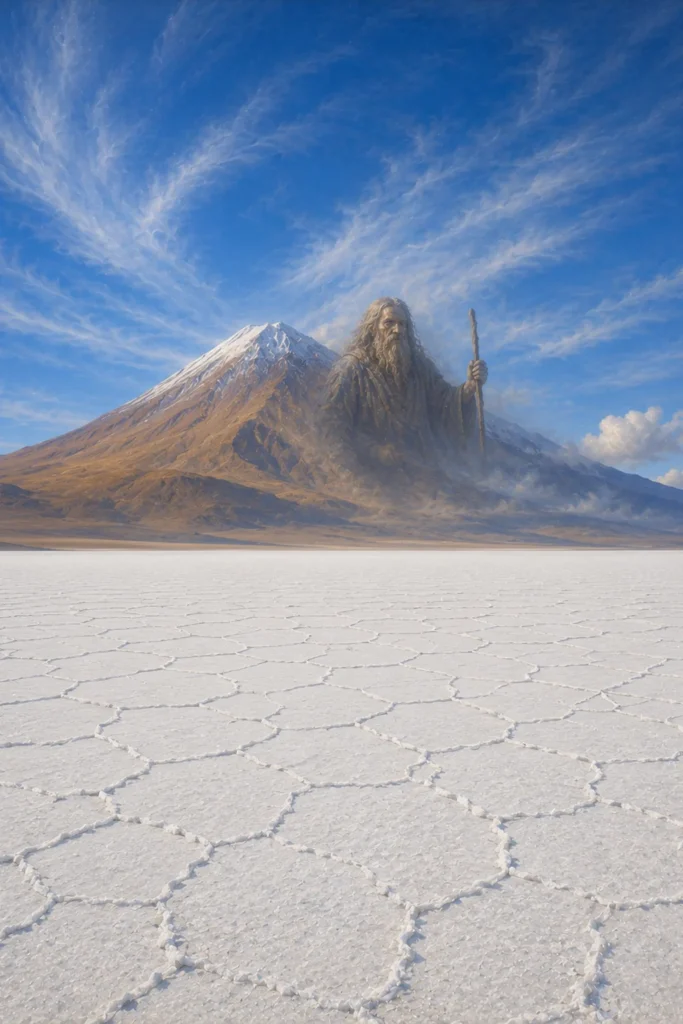
Sajama is a near-perfect, ice-covered cone, visible from afar and depicted on the Bolivian fifty-boliviano banknote. At its foot, the tree Polylepis tarapacana grows at the highest tree line on Earth.
Effect
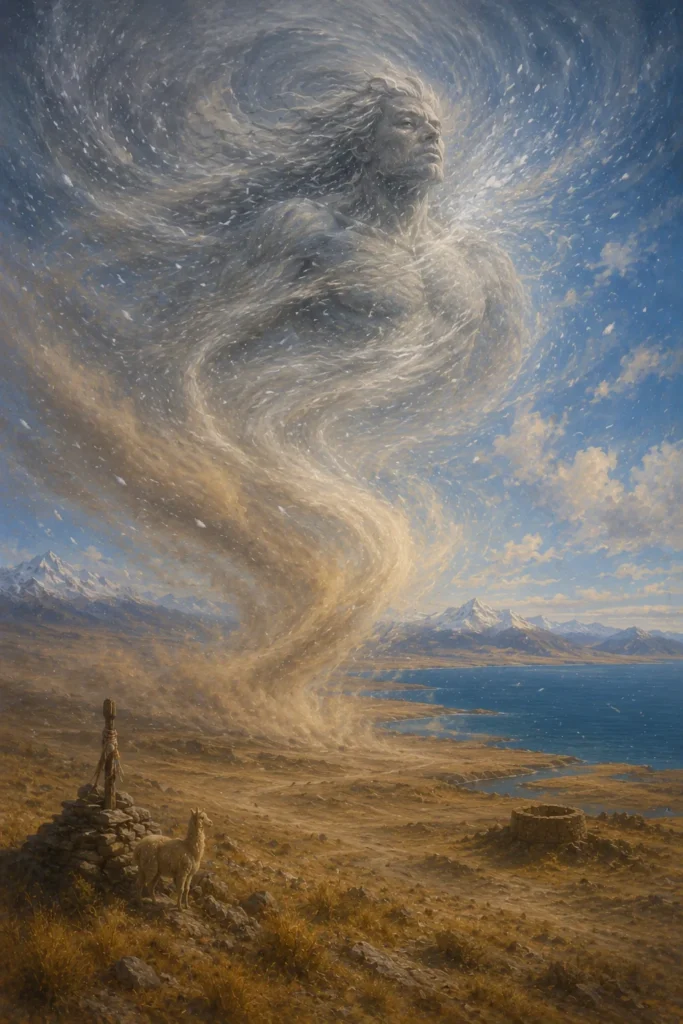
As an Achachila, Sajama is a protective lord and master over water and weather. The beheading legend makes him the severed head of Mururata, hurled far across the Altiplano by Illimani or, in popular versions, by the Creator; the neighbouring Payachatas are considered children of Sajama and Anallaxchi.
Profile: Sajama
The key aspects of the highest mountain Achachila at a glance.
Highest mountain Achachila of Bolivia, surrounded by chullpa burial towers and pukara fortifications from pre-Inca times.
Water and weather for the region; as a national symbol, his significance extends as far as the fifty-boliviano banknote.
Near-perfect, ice-covered volcanic cone above the Puna, with the highest tree line on Earth at its foot.
Protective Achachila and lord of weather; in myth the severed head of Mururata and, with Anallaxchi, parent of the Payachatas.
Waxtʼa and mesa with coca leaves, llama fat, llama foetus and alcohol; Sajama is named in the invocations.
Sajama is not Tunupa: the volcano at the Salar de Uyuni is a different mountain and considerably lower.
Beheading legend and archaeology
The etymology is disputed; suggestions include an Aymara term meaning West as well as the popular interpretation of the banished or expelled one, fitting the beheading legend: Sajama is said to be the severed head of Mururata, hurled far across the Altiplano.
The mountain lies in the Department of Oruro near Chile and is surrounded by around forty archaeological sites, including chullpa burial towers and pukara fortifications, mostly from the Late Intermediate Period. How seriously the mountain’s sacredness is still taken today was shown in 1997: before an ice core drilling, a religious ceremony was held so as not to anger the mountain deities.
Climate archive, national park and classification
Sajama became scientifically known through the 1997 ice core climate archive and drew media attention in 2001 due to a high-altitude football match; tourism in the national park is growing.
In religious studies, Sajama is the highest mountain achachila in Bolivia, set within an archaeologically rich environment. Three clarifications: Sajama is not Tunupa, and the 6542 metres belong to Sajama, not to the Volcán Tunupa. No confirmed Capacocha summit find exists; what is documented are pre-Inca chullpas and pukaras at its foot. And it should not be confused with Illimani, since Sajama is a volcano in Oruro, whereas Illimani is not a volcano and lies near La Paz.
Waxtʼa at the sacred volcano
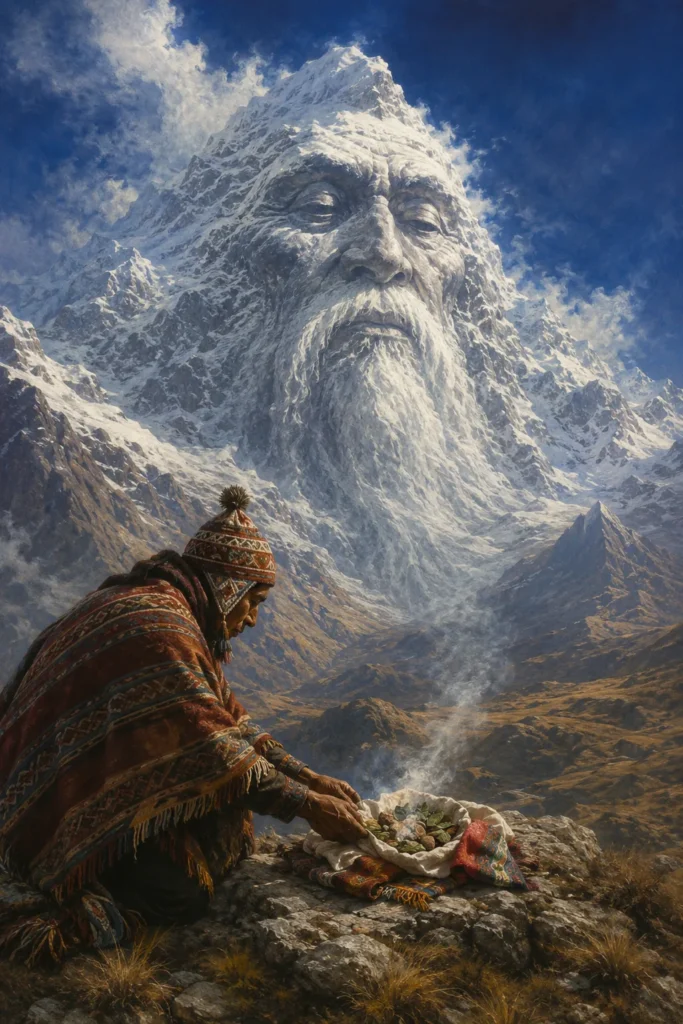
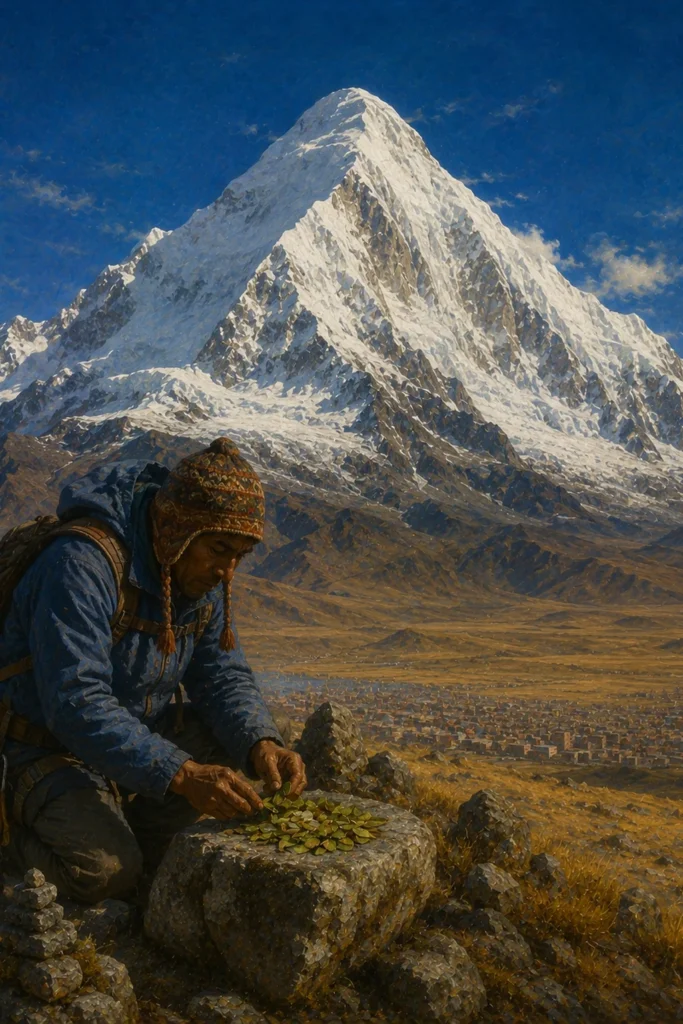
Documented are the usual Aymara forms of the waxtʼa and the mesa with coca leaves, llama fat, llama foetus and alcohol; Sajama is named in the invocations. The mountain-specific offering ethnography is thinner than for the Illimani, though; that belongs honestly to the record. Still, the fact that a ceremony was held specifically before the 1997 ice core drilling shows how present the respect for the mountain has remained.
Neighbours, namesakes, confusions
Frequently asked questions about Sajama
How high is Sajama?
About 6542 metres; it is the highest mountain in Bolivia, an extinct stratovolcano.
What does the beheading legend say?
Sajama is regarded as the severed head of Mount Mururata, hurled far across the Altiplano.
Are there Capacocha finds?
No confirmed summit find; documented are pre-Inca chullpas and pukaras at its foot.
Further links
Further reading:
- Achachila – the Aymara type of ancestral mountain spirit
- Illimani – the protective mountain of La Paz
- Tunupa – the often confused volcano at the Salar de Uyuni
- Smoke cleansing, Amulet – traditional protective means
- Protection Compass – protective means at a glance
Literature (selection)
Further standard works in the bibliography.
As the highest mountain in Bolivia and both an achachila and a volcano in one, Sajama unites myth, archaeology and climate research on a single peak above the Puna.