Illampu, protector of the Sorata valley
By Ralf Ittermann · last reviewed on
Illampu is a god of Aymara tradition.
Protective Achachila of Sorata, entwined with a legend of gold. Illampu is honoured as protector of the Sorata valley and its people.
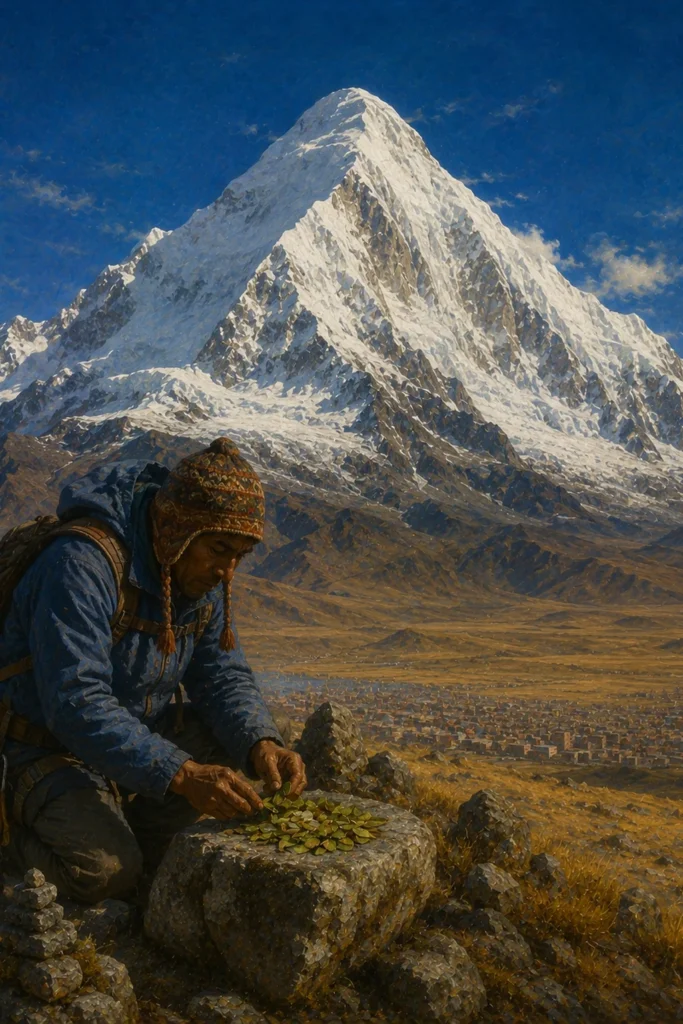
Illampu is a mountain about 6368 metres high in the Cordillera Real above the small town of Sorata, and the region’s protective Achachila. Together with the slightly higher Ancohuma it forms a massif often simply called Sorata.
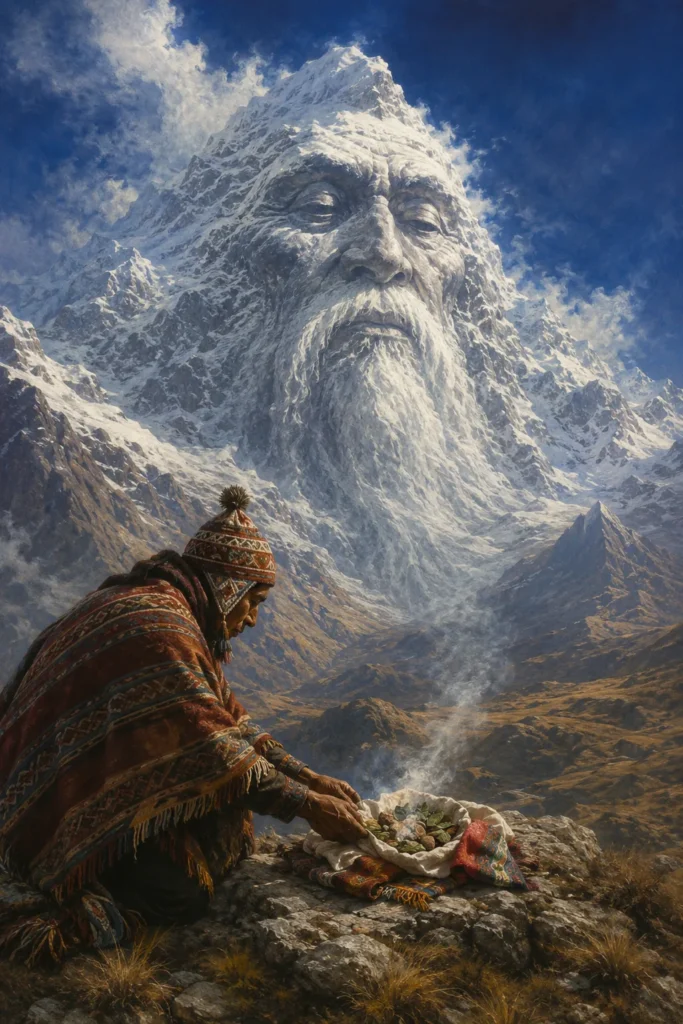
Within the logic of the Achachila cult, Illampu is regarded as lord of rain, fertility and protection for the region. Linked to it is a legend of a treasure and city of gold surrounding Sorata and the Gruta de San Pedro; an early testimony to the myth is Fernando Diez de Medina’s Nayjama of 1950.
Type: Protective Achachila of the Sorata region
Origin: Aymara region of the Cordillera Real, Bolivia
Texts: Diez de Medina’s Nayjama 1950, ethnography of the Achachila cult
Period: mythological attestation 20th century, living cult
Appearance: glaciated twin massif above the Sorata valley

Context of tradition
Period of the Texts
The earliest tangible mythological attestation dates from the 20th century, Fernando Diez de Medina’s Nayjama of 1950; the cult itself is a living presence.
Area of Diffusion
The Cordillera Real around the small town of Sorata in Bolivia; the glaciated massif towers above the green valley.
Sources
Moderate: The general Achachila cult is documented, but Illampu-specific offering ethnography remains thin and should be marked as an open gap.
Name and variants
Aymara: The etymology is uncertain; there is likely a connection to the word family illa, amulet or sacred bundle, or illapa, lightning and thunder, though the exact segmentation is not clear. The popular interpretation king of the mountains is tourism etymology.
Mountain and massif
Appearance
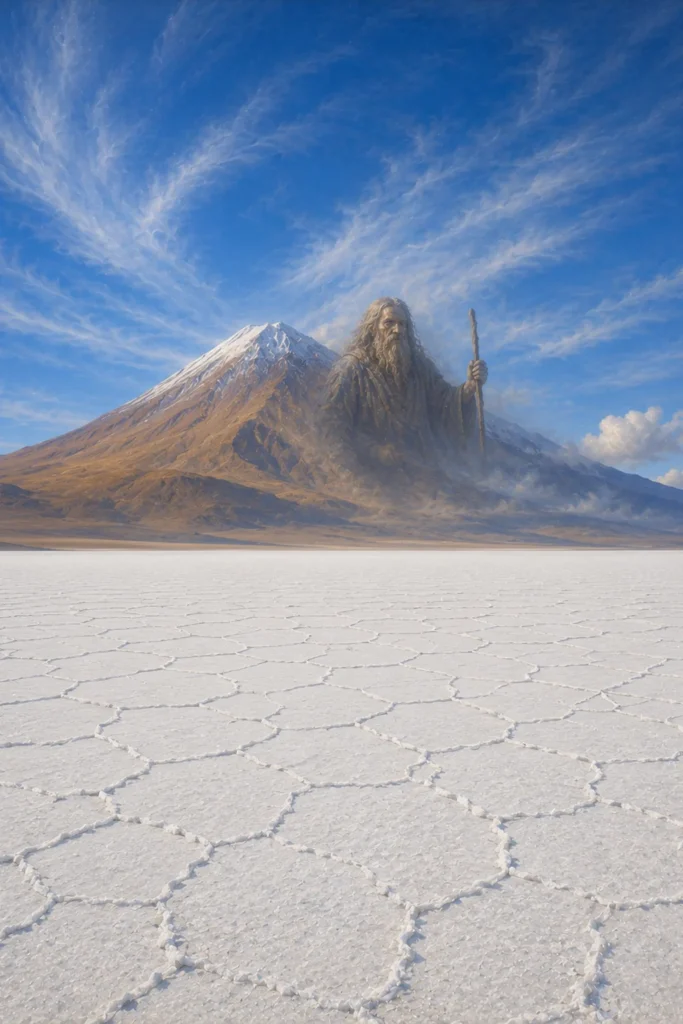
Illampu is a glaciated twin massif above the green Sorata valley, often called the pearl of the Altiplano. Its partner Ancohuma, Janqʼu Uma, white water, is even higher at about 6427 metres.
Effect
In Achachila logic, Illampu is the lord of rain, fertility and protection for the Sorata region: he holds the water and the harvests of the valley in his hand.
Profile: Illampu
The key aspects of the protective mountain at a glance.
Protective Achachila of the Sorata region following the Aymara pattern of ancestral mountains, present in the invocations of the Altiplano alongside Illimani and Sajama.
Rain, fertility and protection for the Sorata valley and its farmers.
Glaciated twin massif with Ancohuma above the green valley, celebrated as the pearl of the Altiplano.
Lord of rain, fertility and protection in the Achachila logic of the Aymara.
The general Aymara forms are documented: challa, mesa, the llama offering wilancha and coca offerings; a mountain-specific offering ethnography is thin.
Illampu is not Ancohuma: the two form a massif, yet the higher neighbour, called white water, remains a separate peak.
From illa and illapa: name and gold legend
The etymology is uncertain; there is likely a connection to the word family illa, amulet or sacred bundle, or illapa, lightning and thunder. The popular interpretation king of the mountains, by contrast, is tourism etymology. Illampu and Ancohuma form a massif, with Ancohuma being higher at about 6427 metres; an early mythological attestation is Fernando Diez de Medina’s Nayjama of 1950.
Associated with the region is a treasure and gold-city legend around Sorata and the Gruta de San Pedro, with Inca tunnels and hidden Illampu gold. The historical core: Larecaja and Sorata were a real gold-mining area during the Inca period; the tunnel legends themselves are folklore.
Tourism, tradition and classification
Sorata is touristic, but less crowded than Huayna Potosí; the oral tradition is alive, but shaped by tourism. Among mountaineers, Illampu is also regarded as one of the technically hardest peaks in Bolivia.
From the perspective of religious studies, Illampu shows a living but tourism-shaped Achachila cult. Three clarifications: Illampu is not Ancohuma, yet the two form a massif, with Ancohuma being higher. The interpretation king or the strong one is tourism etymology. And the gold-city tunnels are legend, not evidence of a cult.
Challa, mesa and wilancha
The general Aymara forms are documented: the libation challa, the mesa, the llama offering wilancha and coca offerings. An Illampu-specific offering ethnography is thin and should honestly be marked as an open gap. Those visiting the Gruta de San Pedro are more likely to encounter the treasure legend than a documented mountain cult; both belong to the religious landscape of Sorata, but should be kept apart.
Neighbouring mountains and the earth mother
Frequently asked questions about Illampu
What is Illampu?
A mountain of the Cordillera Real above Sorata and the protective Achachila of the region.
Is Illampu the same as Ancohuma?
No, but the two form a massif; Ancohuma, white water, is higher at about 6427 metres.
Is the gold-city legend true?
Sorata was a real gold-mining area during the Inca period, but the Inca-tunnel legends are folklore.
Further links
Further reading:
- Achachila – the ancestral mountain-spirit type of the Aymara
- Illimani, Sajama – the great neighbouring Achachilas of Bolivia
- Smoke cleansing, Amulet – traditional protective means
- Protection Compass – protective means at a glance
Literature (selection)
Further standard works in the bibliography.
As the mountain god of Sorata and Achachila of the Cordillera Real, Illampu unites what shapes the Andean world: real glaciers, a living cult and a legend of hidden gold.