Phong, the serving wind of Vietnam
By Ralf Ittermann · last reviewed on
Phong is a god of Vietnamese tradition.
Than Gio, the serving wind of the Heavenly Ruler. Tradition classifies him as the serving wind of Vietnam. Phong is the wind spirit of Vietnam, and this portrayal shows the context in which this figure has been handed down.
Phong, usually called Than Gio, is the Vietnamese wind spirit. To be classified honestly: this is not a high deity prominently venerated in a cult, but a generic folk-belief figure without a major cult tradition of its own, conceived as a servant of the ruler of heaven.
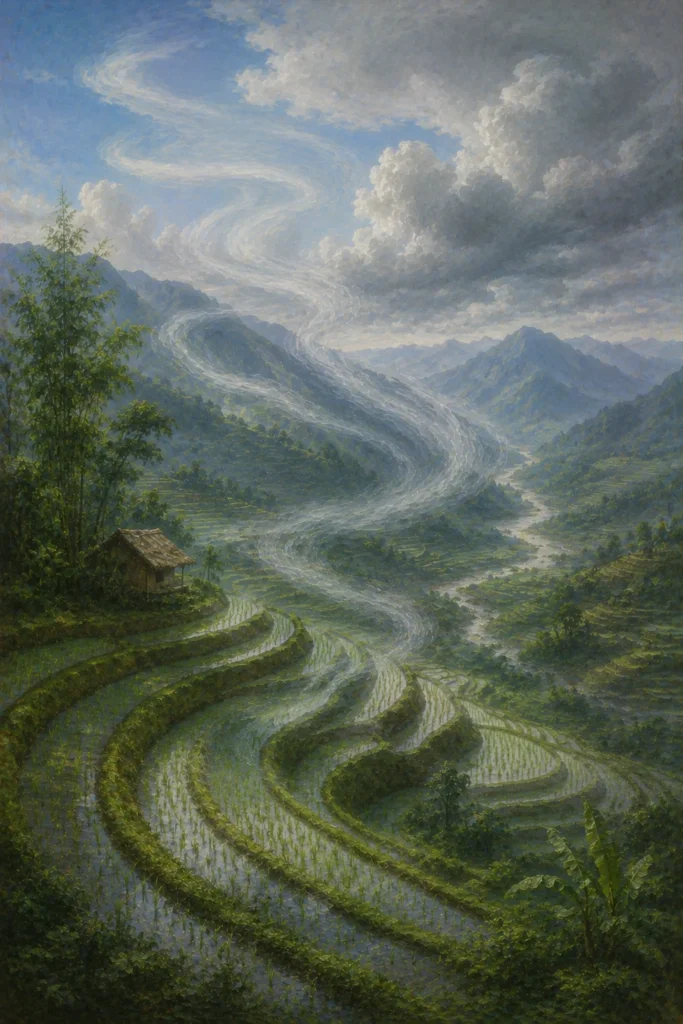
As a serving force of nature, Than Gio disperses the heat, drives rain clouds along and supports the crops. No documented iconography exists, and no independent temple cult is recorded; the wind is only addressed embedded within weather and rain rituals.
Type: Wind spirit of folk belief, servant of the ruler of heaven
Origin: Vietnamese folk belief
Texts: Folk tales, Lĩnh Nam chích quái, folkloric compilations
Period: Folk belief, thinly documented
Appearance: no documented iconography
Historical Classification
Period of the Texts
The wind spirit belongs to Vietnamese folk belief and is thinly documented; folk tales featuring a wind spirit exist, but are narrative in nature, not an organised cult.
Area of Diffusion
Vietnam; the idea draws on the celestial bureaucratic order, in which natural forces are conceived as officials of the ruler of heaven.
Sources
Weak: Than Gio is a marginal figure without his own cult. The bearded iconography found in travel blogs is unsubstantiated; that must be stated honestly.
Name and variants
Vietnamese: Than means god or spirit, gio wind, so wind-god or wind-spirit. Phong is the Sino-Vietnamese word for wind, not a confirmed proper name. Importantly, Than Gio is not part of the Tu Phap system, which encompasses cloud, rain, thunder and lightning, but not wind.
Description
Appearance
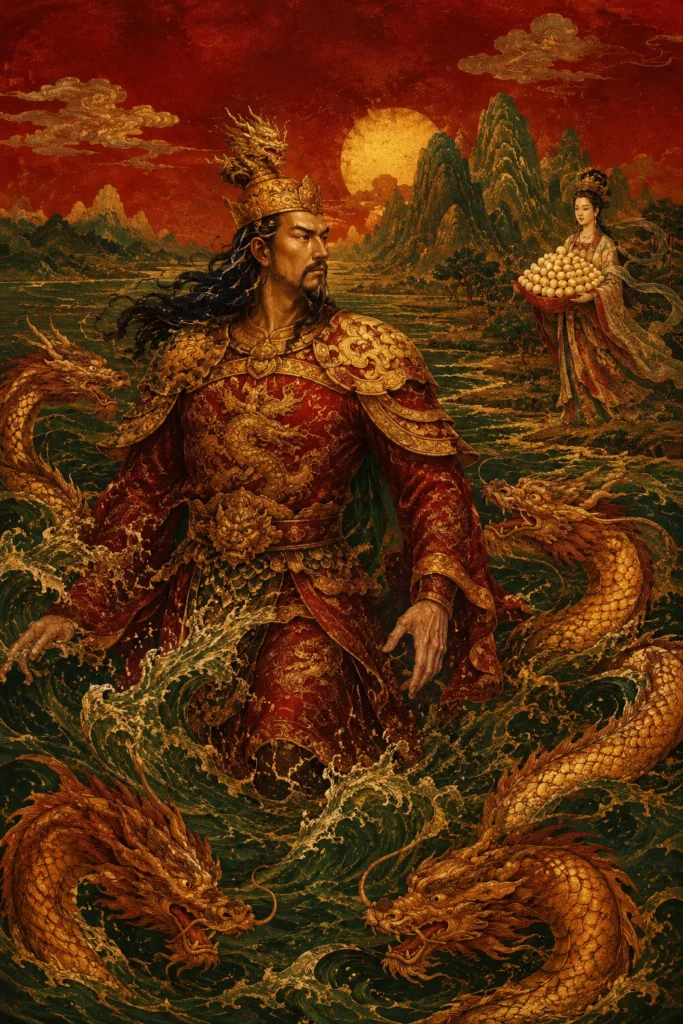
No documented iconography exists. The popular description as a powerful man with a wild beard comes from travel blogs and wikis, not from documented tradition.
Effect
As a serving force of nature, Than Gio disperses the heat, drives rain clouds and supports the crops; this is a generic attribution. In the cosmological conception, he is an official or servant of the ruler of heaven, Ong Troi or Ngoc Hoang.
Profile: Phong
The most important aspects of the wind spirit at a glance.
Vietnamese folk belief: a generic wind figure within the celestial bureaucratic order, not a member of the Tu Phap system.
Weather and crops: the wind disperses the heat and drives the rain clouds across the land.
No documented iconography; the powerful man with a wild beard is an invention of travel blogs and wikis.
Serving force of nature without malice, official of the ruler of heaven Ong Troi or Ngoc Hoang.
No temple cult of his own; the wind is only addressed embedded within weather and rain rituals. Alleged protective formulas are unsubstantiated.
A wind in the celestial bureaucratic order
Than means god or spirit, gio wind; Phong is the Sino-Vietnamese word for wind and not a confirmed proper name. Important for clarification: Than Gio is not part of the Tu Phap system, which encompasses cloud, rain, thunder and lightning, but not wind.
In the cosmological conception, Than Gio is an official or servant of the ruler of heaven, Ong Troi or Ngoc Hoang, a minor post within the celestial bureaucratic order. Folk tales featuring a wind spirit exist, but are narrative in nature and do not establish an organised cult.
Marginal figure of the compilations
In modern compilations, travel blogs and fan wikis, Than Gio is listed as a Vietnamese wind god, usually without a primary source and sometimes mistakenly conflated with the Tu Phap system; academically, he is marginal.
From a religious-studies perspective, Than Gio as a serving force of nature is not malevolent, though the classification itself is uncertain due to the thin evidential basis. Three clarifications are important: he is not part of the Tu Phap. Phong is the word for wind, not a proper name. And there is no temple cult of his own; he should honestly be treated as a thinly documented marginal figure.
Weather rituals instead of a cult of his own
An independent Than Gio temple cult is not documented; the wind is only addressed embedded within weather and rain rituals. Alleged protective formulas or amulets specifically against the wind spirit are not attested in any serious source; that must be stated honestly. Anyone approaching the topic thus encounters no dreaded lord of storms, but a quiet functional figure of weather belief.
Than Gio and the wind gods of East Asia
Conceptually, Than Gio is close to the Chinese Feng Bo, that is the wind lord Fei Lian, since the Vietnamese conception draws on the celestial bureaucratic order. Unlike Fujin or the Japanese wind deity Shinatobe, however, he has no cult or pictorial tradition of his own; the Philippine monsoon wind Habagat is also documented with a markedly clearer profile.
Frequently asked questions about Phong
Is Phong a major Vietnamese wind god?
No. It is a generic folk-belief figure without a cult of its own, conceived as a servant of the ruler of heaven.
Is Than Gio part of the Tu Phap system?
No. This encompasses cloud, rain, thunder and lightning, but not wind.
Is Phong a proper name?
No. Phong is the Sino-Vietnamese word for wind; the figure itself is usually called Than Gio.
Further links
Further reading:
- Fei Lian – the Chinese wind lord Feng Bo as a conceptual model
- Shinatobe – the Japanese wind deity with a living cult
- Habagat – the Philippine monsoon wind
- Amulet, protective candle, salt – traditional protective means
- Protection Compass – protective means at a glance
Literature (selection)
Further standard works in the bibliography.
As the Vietnamese wind god, Phong, the Than Gio of folk belief, is a deliberately quiet figure: not a lord of temples, but a serving wind that disperses heat and drives rain clouds over the fields.