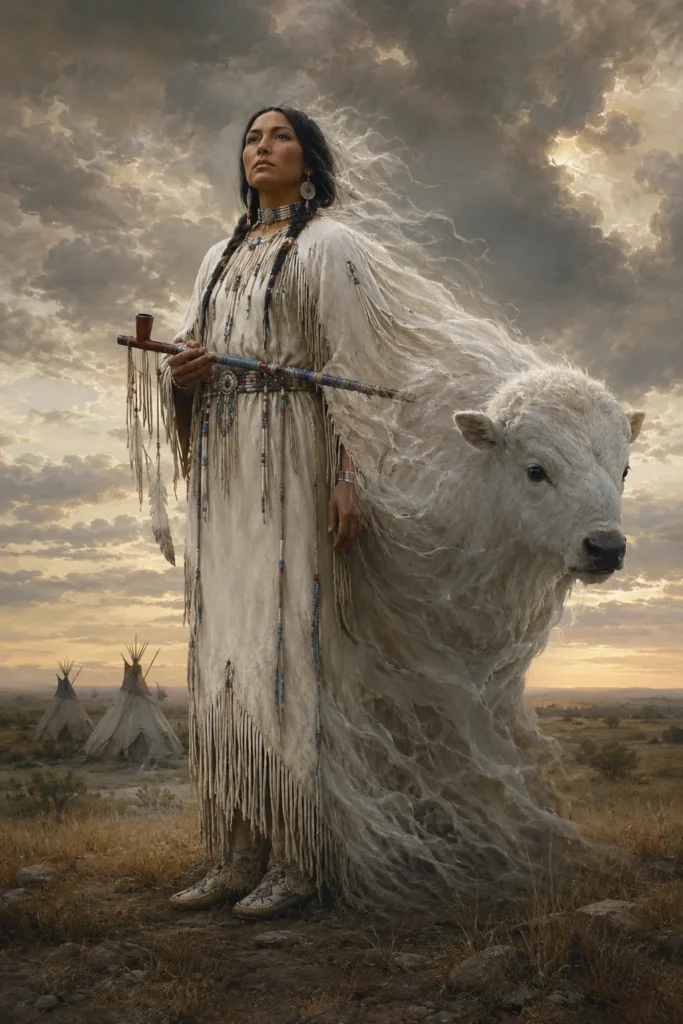
Taku Skanskan, the power behind all that moves
By Ralf Ittermann · last reviewed on
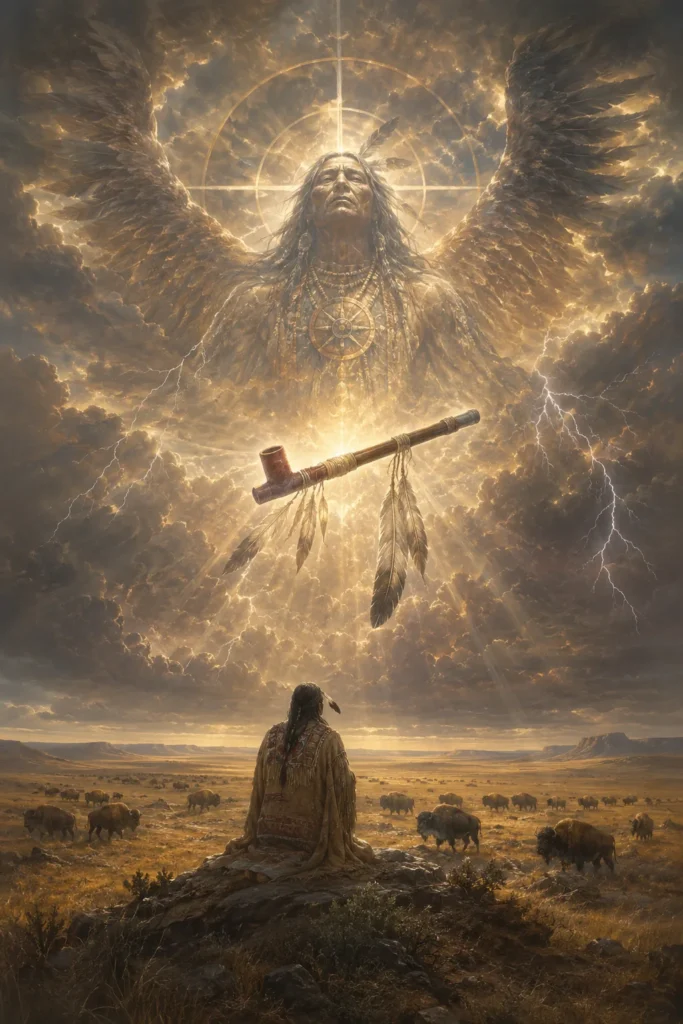
Taku Skanskan is god of Lakota tradition, conceived as a force rather than a person.
Skan: the sky and the movement that animates all things. Rather than a person, Taku Skanskan is conceived as the power behind all that moves.
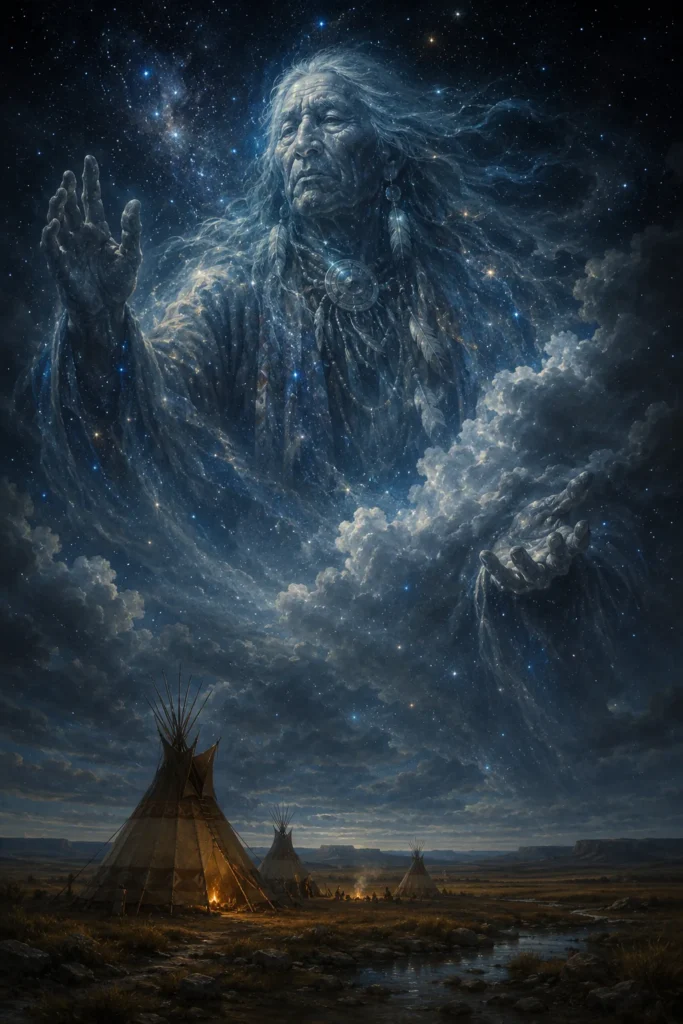
Taku Skanskan, or Skan for short, is in Lakota thought the sky and the pervading energy of movement and life: that which moves and which gives movement to all things in motion. He is one of the highest forces of the Wakan Tanka complex and is closely linked to wind and sky.
His symbolic colour is blue, and one of his epithets is Nagi Tanka, great soul. The systematic account of him derives largely from James R. Walker, who carried out fieldwork at Pine Ridge around 1900; this source situation shapes everything that can be said about Skan today.
Type: Cosmic force of order and life associated with sky and movement
Origin: Lakota, northern Plains
Texts: Records of James R. Walker from Pine Ridge, around 1900
Period: Lakota tradition, systematically documented around 1900
Appearance: not anthropomorphic, the sky and the pervading movement

Origin and sources
Period of the Texts
Lakota tradition; the systematic documentation stems from James R. Walker’s fieldwork at Pine Ridge around 1900 and is in part reconstructed.
Area of Diffusion
The Lakota of the northern Plains; Skan belongs to the cosmology and ritual of this region.
Sources
Moderate: predominantly Walker’s records, above all Lakota Belief and Ritual and Lakota Myth, partly reconstructed in literary form.
Name and variants
Lakota: Taku Škaŋškaŋ means roughly that which moves, or that which gives movement to all things in motion; Skan is the shamanic short form. One epithet is Nagi Tanka, great soul; the symbolic colour is blue.
Nature and effect
Appearance
Skan has no fixed anthropomorphic form. He is the sky itself and the pervading energy of movement and life; his colour is blue.
Effect
Skan brings about all movement and force. At birth he bestows the nagi, the spirit, and judges it after death. He is the animating, ordering force behind wind and sky.
Profile: Taku Skanskan
The key aspects of the force of sky and movement at a glance.
One of the highest forces of the Lakota’s Wakan Tanka complex, closely linked to wind and sky; systematically presented by Walker.
All movement and force. At birth Skan bestows the nagi, the spirit, which he also judges after death.
Not anthropomorphic: Skan is the sky itself and the pervading energy of movement; his symbolic colour is blue.
The animating and ordering force behind wind and sky; that which gives movement to all things in motion.
There is no separable protective practice associated with Skan; veneration is embedded within the Sun Dance and shamanic invocation. Details are omitted out of respect.
The wind father Tate stands below Skan in Lakota cosmology; typologically related is the animating principle found in other cultures.
Walker, Sword and the Wakan Tanka scheme
Taku Škaŋškaŋ means roughly that which moves, or that which gives movement to all things in motion. The systematic account derives largely from James R. Walker’s fieldwork at Pine Ridge around 1900. It is important to note that Skan’s hierarchical position within the ordered Wakan Tanka scheme belongs to the system that Walker, together with informants such as George Sword, distilled in literary form.
Within this cosmology, Skan stands above the wind Tate: while Tate personifies the wind and appears as the father of the wind directions, Skan is the more comprehensive force that makes movement possible in the first place. The ordering of the winds is thus an application of the principle Skan embodies.
Popular image and critical assessment
Skan is popularly known as a deity of sky and movement, often without reference to Walker’s origin for the systematic account.
From a religious-studies perspective, Skan reflects the conception of sky and movement as the highest life force. It is important to clarify that his exact rank order is not ancient, widely shared theology but essentially Walker’s synthesis; Lakota sacred knowledge was vision-based and was not standardised into a fixed doctrinal system.
Veneration without a distinct protective practice
There is no separable protective practice associated with Skan; veneration is embedded within the Sun Dance and shamanic invocation. Out of respect for protected Lakota ceremonial knowledge, details are treated here with restraint. Those who wish to approach this figure are best guided by the documented sources, not by re-enacted rituals.
Skan, Tate and the Lakota wind family
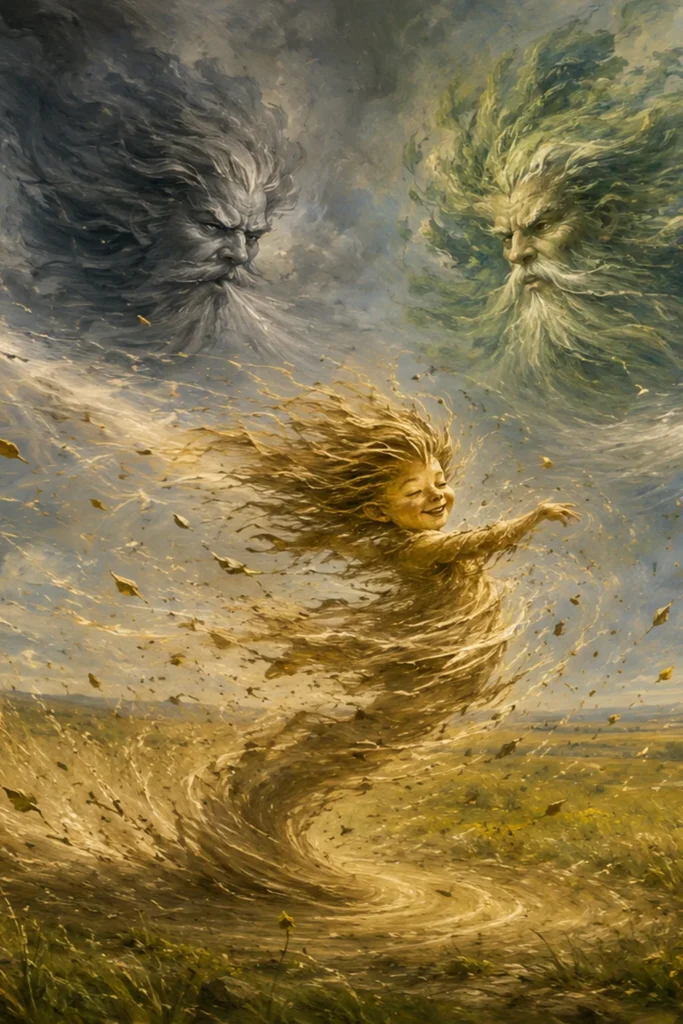
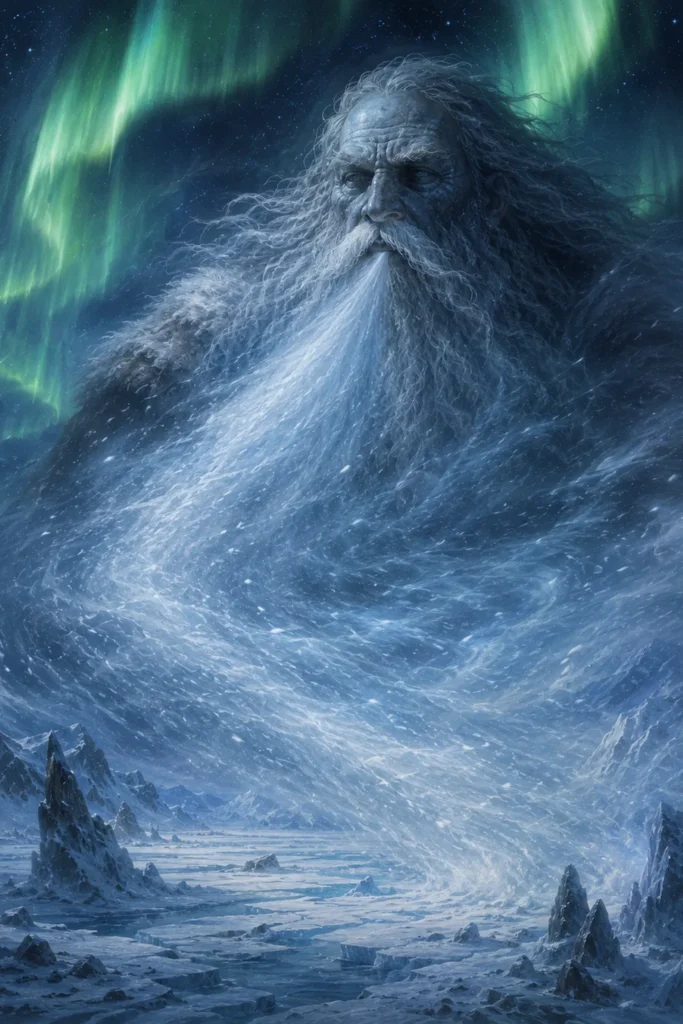
Skan is conceptually related to the animating principle or anima mundi of other cultures, though only typologically, without historical derivation. Within Lakota cosmology he stands above the wind Tate, the father of the wind directions. Belonging to the same body of tradition are the north-wind giant Waziya and the whirlwind Yum; unlike these wind figures, Skan is not a weather phenomenon but the force behind all movement.
Frequently asked questions about Taku Skanskan
What does Taku Skanskan mean?
Roughly that which moves, or that which gives movement to all things in motion. Skan is sky and force of movement at once; the short form Skan comes from shamanic speech.
What does Skan bestow at birth?
The nagi, the spirit, which he also judges after death.
Is his rank order ancient?
It is essentially Walker’s synthesis. Lakota sacred knowledge was vision-based and was not standardised into a fixed doctrinal system.
Further links
Further reading:
- Tate – the wind father, who stands below Skan in the cosmology
- Waziya, Yum – further wind figures of Lakota tradition
- Sage, Amulet, Protective candle – signs of reverence and protection
- Protection Compass – protective means at a glance
Literature (selection)
Further standard works in the bibliography.
Among the Lakota, Taku Skanskan is sky and movement combined: not a weather god, but the very principle of the living. Even after all source-critical assessment, Skan remains the great force to which tradition attributes all that moves.